
Listen to this Post
Introduction:
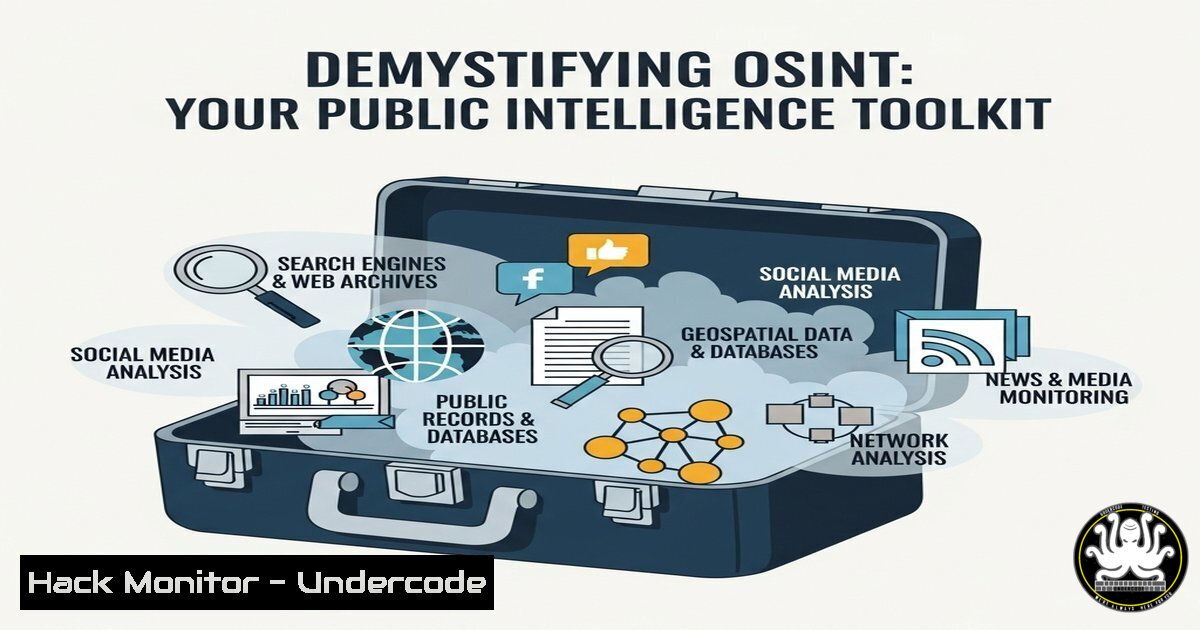
Open Source Intelligence (OSINT) transforms publicly accessible data into actionable insights, crucial for threat detection and cybersecurity posture. Unlike covert operations, OSINT leverages legal sources—social media, satellite imagery, and public databases—to identify risks and vulnerabilities proactively. This guide delivers practical commands and frameworks to elevate your OSINT operations.
Learning Objectives:
- Master core OSINT reconnaissance techniques using Linux/Windows CLI
- Implement advanced data enrichment with automation tools
- Apply ethical collection methods compliant with global privacy regulations
1. Google Dorking for Rapid Surface Scanning
site:linkedin.com inurl:"/in/" "Chief Information Security Officer" filetype:pdf
What it does: Searches LinkedIn CISO resumes exposing infrastructure details.
Step-by-Step:
1. Prefix with `site:` to target specific domains
2. Use `inurl:` to filter directory structures
- Add `filetype:` to locate documents containing technical blueprints
Combine with `intitle:”password list”` to uncover credential leaks.
2. Social Media Metadata Extraction with ExifTool
exiftool -GPSPosition -CreateDate suspect_image.jpg > geodata.txt
What it does: Extracts geolocation and creation timestamps from image metadata.
Step-by-Step:
1. Install via `sudo apt install libimage-exiftool-perl` (Linux)
2. Run against downloaded social media images
- Plot coordinates with `cat geodata.txt | awk ‘{print $2,$4}’ | xargs openstreetmap-cli`
Critical for tracking threat actor movements.
3. Automated WHOIS Domain Recon
Get-WhoIs -TargetDomain "example.com" -Server "whois.iana.org" | Select-Object NameServer, CreationDate
What it does: Reveals domain registration patterns linking to malicious infrastructures.
Step-by-Step (Windows):
1. Install module: `Install-Module -Name WhoIs`
2. Query with historical flag: `-HistoricalLookup`
3. Export to CSV for timeline analysis
Correlate creation spikes with phishing campaign timelines.
4. Shodan API-Driven Device Discovery
import shodan
api = shodan.Shodan('API_KEY')
results = api.search('apache country:"RU" port:"80"')
for result in results['matches']:
print(f"{result['ip_str']}: {result['org']}")
What it does: Identifies exposed servers in geopolitical hotspots.
Step-by-Step:
- Get API key at shodan.io
2. Filter by `vuln:CVE-2023-1234` to find exploitable systems
3. Set rate limits to avoid detection
Integrate with Slack alerts for real-time monitoring.
5. Maltego Transform Automation
Entity website = new Domain("target.com");
TransformRunner.runTransform(website, "ToDNSName", "API_KEY");
What it does: Visualizes infrastructure relationships for attack surface mapping.
Step-by-Step:
- Download Maltego CE
2. Configure transforms via `Transforms > Manage`
3. Chain “DomainToIP” + “IPToNetblock” transforms
Export graphs as PDF for threat briefings.
6. Cloud Bucket Enumeration with AWS CLI
aws s3 ls s3://insecure-bucket/ --no-sign-request --region us-west-2
What it does: Discovers publicly accessible S3 buckets containing sensitive data.
Step-by-Step:
- Install AWS CLI (
choco install awsclion Windows)
2. Use `–no-sign-request` for unauthorized access checks
3. Combine with `s3cmd` to download exposed files
Mitigation: Always enable `BlockPublicAccess`.
7. AI-Powered Text Analysis with spaCy
import spacy
nlp = spacy.load("en_core_web_lg")
doc = nlp("Threat actor @DarkVendor will drop new ransomware on 2024-12-31")
for ent in doc.ents:
print(ent.text, ent.label_)  Outputs: "2024-12-31" DATE
What it does: Extracts IOCs from unstructured dark web chatter.
Step-by-Step:
1. Install: `pip install spacy`
- Train custom NER model to identify crypto wallet patterns
3. Integrate with VirusTotal API for auto enrichment
What Undercode Say:
- AI is democratizing OSINT: NLP tools now automate 70% of data triage, freeing analysts for critical thinking.
- Regulatory tightrope: GDPR 14 requires notifying individuals about collected data—exceptions exist for threat investigations.
Analysis: Offensive OSINT operations must implement “privacy by design” frameworks. As generative AI creates synthetic personas for reconnaissance, expect 2026 EU legislation mandating AI disclosure tags. Meanwhile, nation-state actors exploit regulatory gaps—Microsoft Threat Intelligence shows 120% surge in OSINT-powered supply chain attacks since 2023.
Prediction:
By 2027, AI-generated synthetic media will cause 45% of corporate impersonation attacks. OSINT tools will pivot to blockchain-verified media provenance, while deepfake detection becomes standard in EDR platforms. Expect mergers between threat intel firms (Recorded Future, Mandiant) and OSINT specialists—creating unified platforms costing under $10k/year for SMBs.
🎯Let’s Practice For Free:
IT/Security Reporter URL:
Reported By: Raphlag Osintforeveryone – Hackers Feeds
Extra Hub: Undercode MoN
Basic Verification: Pass ✅


