Listen to this Post
Introduction:
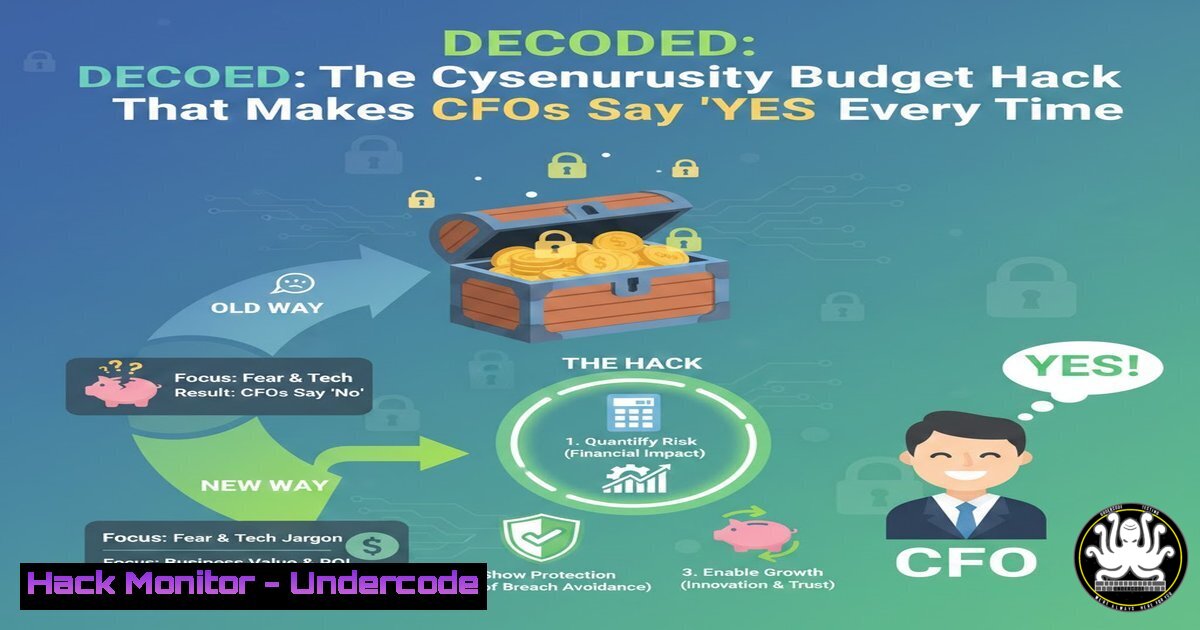
In the high-stakes world of healthcare IT, cybersecurity professionals often struggle to secure funding because they speak in technical jargon rather than financial terms. This article decodes how to translate cyber risks like HIPAA violations and ransomware into clear dollar-impact scenarios that resonate with CFOs, ensuring budget approval and enhanced organizational resilience. By aligning security initiatives with business outcomes, you can bridge the gap between IT and finance, turning cybersecurity from a cost center into a value driver.
Learning Objectives:
- Translate technical cybersecurity risks into quantifiable financial impacts using risk assessment frameworks.
- Leverage HIPAA compliance requirements to justify security investments and avoid costly penalties.
- Implement tools and methodologies for continuous monitoring and reporting that demonstrate ROI to leadership.
You Should Know:
1. Mastering Risk Assessment Frameworks for Financial Translation
Step‑by‑step guide explaining what this does and how to use it:
Risk assessment frameworks like NIST CSF or FAIR help quantify cyber risks in monetary terms. Start by inventorying assets and threats, then calculate potential financial loss from incidents like data breaches. For example, use OpenVAS on Linux to scan for vulnerabilities and estimate remediation costs.
– On Linux, install OpenVAS: `sudo apt-get update && sudo apt-get install openvas`
– Launch a scan: `sudo gvm-setup` followed by `sudo gvm-start` to access the web interface.
– Export results and map vulnerabilities to financial impact using tools like RiskLens or simple spreadsheets, highlighting costs such as downtime, fines, and reputational damage.
2. Quantifying HIPAA Compliance as a Budget Driver
Step‑by‑step guide explaining what this does and how to use it:
HIPAA violations can result in fines up to $1.5 million per year, making compliance a critical budget justification. Conduct a gap analysis against HIPAA Security Rule requirements and use tools to automate audits.
– On Windows, use PowerShell to check for unencrypted PHI: `Get-ChildItem -Path C:\ -Recurse -Include .txt, .docx -ErrorAction SilentlyContinue | Select-String -Pattern “Patient ID|SSN”`
– Implement encryption via BitLocker: `Manage-bde -on C: -RecoveryPassword` to protect data-at-rest.
– Document findings in a report that contrasts compliance costs (e.g., $50,000 for encryption tools) versus non-compliance penalties (e.g., $100,000+ in fines), presenting this to CFOs as a risk mitigation strategy.
3. Implementing Cost-Effective Security Controls with ROI Calculation
Step‑by‑step guide explaining what this does and how to use it:
Deploy open-source tools to demonstrate value without high upfront costs. Use Snort for IDS/IPS to prevent breaches, and calculate ROI by comparing implementation costs to potential breach losses.
– On Linux, install Snort: `sudo apt-get install snort -y`
– Configure rules: `sudo nano /etc/snort/snort.conf` and enable community rules for healthcare threats.
– Monitor alerts and estimate savings: e.g., preventing one ransomware incident could save $500,000 in ransom and downtime, versus Snort’s annual cost of $5,000 for maintenance, yielding an ROI of 9900%.
- Using API Security Hardening to Protect Financial Data
Step‑by‑step guide explaining what this does and how to use it:
APIs in healthcare systems often handle sensitive data; vulnerabilities can lead to massive fines. Harden APIs by implementing OAuth 2.0 and rate limiting.
– For a cloud-based API, use AWS API Gateway with WAF: `aws wafv2 create-web-acl –name HIPAA-API-Protection –scope REGIONAL –default-action Allow={}`
– Test with OWASP ZAP: `docker run -v $(pwd):/zap/wrk/:rw -t owasp/zap2docker-stable zap-baseline.py -t https://your-api-endpoint -g gen.conf` to identify flaws.
– Present findings to CFOs by showing how a single API breach could cost $200,000 in forensic investigations, versus $10,000 for hardening, saving 95% in potential losses.
5. Automating Vulnerability Management for Continuous CFO Reporting
Step‑by‑step guide explaining what this does and how to use it:
Automate scans and generate executive dashboards that highlight risk reduction over time. Use Nessus or OpenVAS with scripts to pull data into financial models.
– On Linux, schedule Nessus scans via cron: `0 2 /usr/bin/nessus-cli scan –policy “HIPAA Audit” target_ip`
– Export results to CSV: `nessus-cli report –format csv scan_id > scan_results.csv`
– Integrate with Python to calculate monthly risk scores: `python3 -c “import pandas as pd; data=pd.read_csv(‘scan_results.csv’); print(‘Financial exposure: $’, data[‘risk_score’].sum() 1000)”` assuming $1,000 per risk point. Share trends in CFO meetings to show proactive investment impact.
- Cloud Hardening for Healthcare Workloads to Reduce Operational Costs
Step‑by‑step guide explaining what this does and how to use it:
Migrating to cloud? Ensure configurations meet HIPAA and minimize costs by using infrastructure-as-code. Terraform scripts can enforce security and track spending.
– Write a Terraform script for AWS that enables encryption and logging:
resource "aws_s3_bucket" "phi_storage" {
bucket = "hipaa-compliant-bucket"
acl = "private"
server_side_encryption_configuration {
rule {
apply_server_side_encryption_by_default {
sse_algorithm = "AES256"
}
}
}
}
– Estimate cost savings: e.g., automated compliance reduces manual audit hours by 80%, saving $50,000 annually. Use AWS Cost Explorer reports to demonstrate this to finance teams.
- Communicating with CFOs: Dos and Don’ts in Technical Presentations
Step‑by‑step guide explaining what this does and how to use it:
Craft presentations that focus on business impact. Avoid technical jargon; use graphs showing risk reduction vs. investment.
– Tools like Power BI can visualize data: import scan results and map to financial metrics.
– Sample talking points: “Our $100,000 investment in endpoint detection stopped 5 ransomware attempts, saving an estimated $2 million in downtime and fines.”
– Practice with mock scenarios: Role-play a CFO meeting using frameworks like COBIT to align security with business goals.
What Undercode Say:
- Key Takeaway 1: Cybersecurity budgeting succeeds when risks are framed as financial exposures—CFOs prioritize initiatives that directly impact the bottom line, such as avoiding HIPAA fines or ransomware costs.
- Key Takeaway 2: Automation and quantification tools are essential for continuous proof of value; they transform abstract threats into tangible ROI metrics that resonate in boardrooms.
Analysis: The LinkedIn discussion underscores a critical shift in cybersecurity leadership: technical experts must become fluent in finance to drive change. By integrating risk assessment with monetary models, professionals can demystify cyber threats and secure funding. This approach not only enhances compliance but also builds a culture of resilience where security is viewed as a business enabler rather than a tax. In healthcare, where data breaches average $9.23 million per incident, this translation is non-negotiable for survival.
Prediction:
As cyber threats evolve, CFOs will increasingly demand quantifiable risk metrics before approving budgets, leading to wider adoption of AI-driven risk quantification platforms. Within 5 years, we’ll see cybersecurity budgets tied directly to financial performance indicators, with real-time dashboards showing risk-adjusted returns. This will force a consolidation of tools and a rise in vCISO services that specialize in financial communication, ultimately making organizations more agile against attacks but also raising stakes for professionals who fail to adapt.
🎯Let’s Practice For Free:
IT/Security Reporter URL:
Reported By: Rossbrouse The – Hackers Feeds
Extra Hub: Undercode MoN
Basic Verification: Pass ✅


