
Listen to this Post
Introduction:
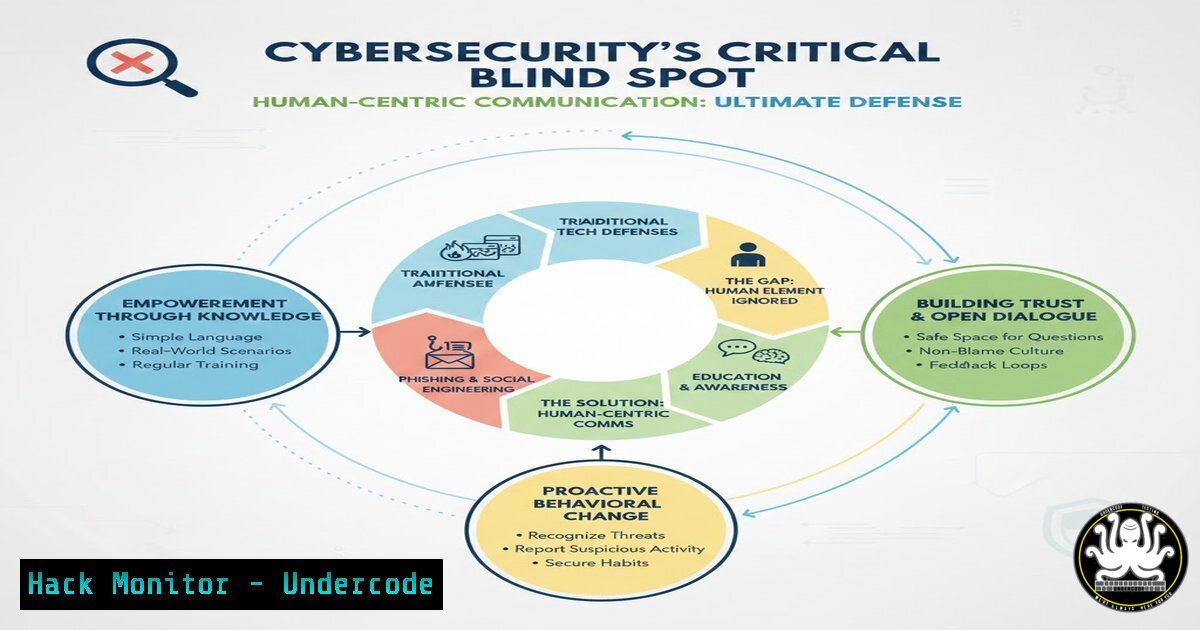
In an era dominated by sophisticated AI-driven cyberattacks and complex technical controls, the cybersecurity industry faces a pervasive vulnerability that technology alone cannot patch: the human element. The core principles of human-centric communication—clarity, empathy, and strategic narrative—are not soft skills but critical threat mitigation tools. This article deconstructs how adopting a humanistic framework in security protocols, from policy creation to incident response, builds a more resilient organizational defense by transforming employees from potential attack vectors into informed, vigilant allies.
Learning Objectives:
- Understand the role of strategic narrative and clear communication in reducing human-error related security breaches.
- Learn to integrate communication principles into technical security training and policy documentation.
- Apply actionable techniques to craft security alerts, policies, and incident reports that drive compliance and proactive vigilance.
You Should Know:
- The Human Firewall: From Weakest Link to First Line of Defense
The concept of the “human firewall” is often undermined by poorly communicated, jargon-filled policies. A strong human firewall is built not through fear, but through comprehension and engagement. This involves reframing security protocols as coherent narratives that explain the “why,” not just the “what.”
Step‑by‑step guide:
- Audit Existing Materials: Review all user-facing security documentation and training. Flag any instance of unexplained technical acronyms (e.g., MFA, VPN, phishing) or passive-voice, punitive language.
- Rewrite with Narrative: For each policy, such as password management, frame it as a story. Example: “To protect your digital identity (like the key to your house), we use a strong password (a unique, complex key) combined with MFA (a deadbolt). This narrative stops a thief even if they copy your key.”
- Implement and Train: Use this revised language in onboarding, short video clips, and intranet articles. Measure effectiveness through targeted phishing simulation click rates and help-desk ticket trends related to access issues.
2. Crafting High-Impact, Low-Noise Security Alerts
Alert fatigue is a significant risk. Security teams often bombard users with generic warnings, leading to critical alerts being ignored. Human-centric communication prioritizes signal over noise.
Step‑by‑step guide:
- Triage and Template: Classify alerts by severity (Critical, High, Medium, Info). Create distinct, pre-approved templates for each.
- Apply the BLUF Principle (Bottom Line Up Front): Start every alert with a clear, actionable subject and summary. Critical Template Example: “ACTION REQUIRED: Malware Detected on Network. IMMEDIATE: Disconnect from Wi-Fi. Click for details.”
- Test and Refine: Use table-top exercises with non-technical departments to test alert clarity. Ask them to paraphrase the required action. Iterate based on feedback.
3. Integrating Communication Strategy into Incident Response Playbooks
An incident response (IR) plan that neglects communication is incomplete. A humanistic method ensures coordinated, calm, and effective messaging during a crisis to contain reputational damage and maintain stakeholder trust.
Step‑by‑step guide:
- Designate a Comms Lead: Appoint a member of the IR team responsible for all internal and external communications. This person translates technical findings into clear status updates.
- Develop Tiered Messaging: Prepare draft statements for different scenarios (data breach, ransomware, DDoS) tailored for: a) the C-Suite (focus: financial/legal impact), b) Internal Staff (focus: what to do/not do), c) Public/Media (focus: transparency and resolution steps).
- Conduct a Simulated Breach Drill: Run a full IR drill that includes the communication component. Time how long it takes to draft and approve statements. This reveals bottlenecks in your process.
-
From Policy to Practice: Writing Enforceable & Understandable Security Policies
A policy that sits in a binder is a liability. It must be a living document that guides behavior. This requires principles of plain language technical writing.
Step‑by‑step guide:
- Use Active Voice and Directives: Replace “Passwords should be changed” with “You must change your password every 90 days.”
- Chunk Information: Use bullet points, numbered steps, and clear headings. For a “Secure Remote Work” policy, have separate sections for “Using the Corporate VPN,” “Securing Your Home Wi-Fi,” and “Reporting Lost Devices.”
-
Attach Simple How-To Guides: Link the policy to concrete tutorials. E.g., the policy states “You must use the VPN to access internal servers.” Provide a clickable link to a guide with screenshots: “How to Connect to the VPN on Windows (Click Here).”
-
Technical Tutorial: Automating Human-Centric Alerting with Logs and Scripts
Bridge the technical and human elements by automating the creation of user-friendly alerts from system logs. This uses technology to enhance, not replace, human understanding.
Step‑by‑step guide (Example: Failed Login Alerts):
This Linux command line example parses authentication logs and sends a plain-English email to a sysadmin.
!/bin/bash
 Script: user_friendly_alert.sh
 Monitors /var/log/auth.log for failed SSH logins and sends an alert.

LOG_FILE="/var/log/auth.log"
RECIPIENT="[email protected]"
HOSTNAME=$(hostname)

Extract recent failed SSH attempts, count by IP, and format output
ALERT_DATA=$(grep "Failed password" "$LOG_FILE" | tail -20 | awk '{print $(NF-3)}' | sort | uniq -c | sort -nr)

if [[ -n "$ALERT_DATA" ]]; then
echo -e "SECURITY ALERT: Failed Login Attempts Detected\nHost: $HOSTNAME\nTime: $(date)\n\nSummary of Attempts:\n$ALERT_DATA\n\nRecommended Action: Review SSH configuration and consider blocking repeat offender IPs." | mail -s "Human-Readable Security Alert from $HOSTNAME" "$RECIPIENT"
fi
What This Does & How to Use It:
- The script (
user_friendly_alert.sh) scans the system’s auth log for “Failed password” entries. - It uses
awk,sort, and `uniq` to process the data, counting attempts per source IP address. - Instead of outputting raw log lines, it formats a structured email with a clear subject, hostname, timestamp, a summary of attempts, and a recommended action.
- How to Use: Save the script, make it executable (
chmod +x user_friendly_alert.sh), and schedule it via cron to run every hour (crontab -eentry:0 /path/to/user_friendly_alert.sh). This transforms cryptic log data into an actionable intelligence report.
What Undercode Say:
- Key Takeaway 1: The most advanced cryptographic system can be undone by a single, confused user clicking a link. Investing in the clarity and narrative of your security communication directly reduces this risk, offering a higher ROI than many technical solutions alone.
- Key Takeaway 2: Cybersecurity is ultimately a behavioral science. Tools and policies are mechanisms to influence human behavior towards secure practices. If they are not understood, they will not be followed consistently.
The analysis pivots on a fundamental truth: threat actors expertly manipulate human psychology through social engineering. Defenders must become equally adept in the positive application of psychological principles—through clear, purposeful, and human-centered communication. This is not about replacing firewalls with philosophy; it’s about engineering human systems with the same rigor as technical ones. A technically perfect security control that is misunderstood or resented by its users will create shadow IT and workarounds, introducing far greater risk than a slightly less “perfect” but well-communicated and adopted control. The future of security leadership requires bilingual expertise: fluent in both the language of technology and the language of people.
Prediction:
Within the next 3-5 years, “Security Communication” will emerge as a distinct, critical specialization within cybersecurity teams. We will see the rise of dedicated roles like “Security Communications Engineer” or “Human Risk Strategist.” Compliance frameworks (like NIST, ISO 27001) will begin to include explicit auditing guidelines for the clarity and effectiveness of security awareness materials and internal policies. Furthermore, security AI will evolve beyond threat detection to include “narrative generation” modules, automatically translating technical incident reports into tailored communications for executives, legal teams, and affected users, drastically reducing response time and misinformation during a crisis. Organizations that master this synthesis of human and technical systems will demonstrate significantly lower breach costs and higher cyber resilience.
▶️ Related Video (84% Match):
🎯Let’s Practice For Free:
IT/Security Reporter URL:
Reported By: %C3%A1ngelamedrano Loquesaed – Hackers Feeds
Extra Hub: Undercode MoN
Basic Verification: Pass ✅


