Listen to this Post
Introduction:
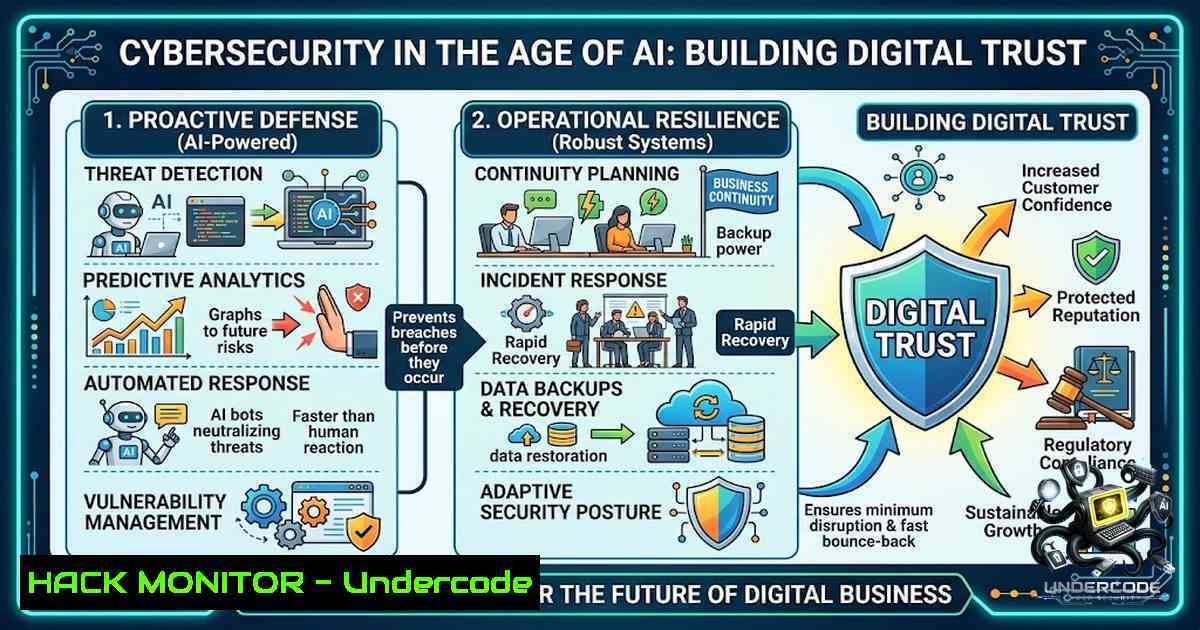
Every click, login, and connected device expands the digital attack surface, transforming cybersecurity from a siloed IT function into a strategic business imperative. As adversaries leverage artificial intelligence to automate and accelerate attacks, organizations must shift from reactive security postures to predictive, adaptive defenses that combine technology, skilled professionals, and a culture of security awareness.
Learning Objectives:
- Master Identity and Access Management (IAM) controls across Linux, Windows, and cloud environments to enforce least privilege.
- Implement ransomware prevention, detection, and incident response procedures using command-line tools and integrity monitoring.
- Understand cloud security hardening techniques and AI-powered defense strategies to mitigate emerging threats.
You Should Know:
- Identity and Access Management (IAM): Enforcing Least Privilege Across Environments
IAM is the cornerstone of modern cybersecurity. Misconfigurations in identity controls—such as permission sprawl and over-privileged roles—are silent killers that invite attackers into networks. Mastering IAM means understanding how authentication, authorization, and accounting (AAA) work together and enforcing them consistently.
Step-by-Step Guide: Auditing and Hardening IAM
Linux User and Group Auditing:
- List all users and their groups: `cat /etc/passwd` and `cat /etc/group`
– Identify users with UID 0 (root privileges): `awk -F: ‘($3 == 0) {print}’ /etc/passwd`
– Check for inactive accounts: `lastlog | grep -E “Never logged in|days ago”`
– Remove or disable unused accounts: `usermod -L` or `userdel `
Windows Active Directory Auditing (PowerShell):
- List all domain users: `Get-ADUser -Filter | Select-Object Name, Enabled, LastLogonDate`
– Find disabled accounts: `Get-ADUser -Filter {Enabled -eq $false}`
– Identify privileged group members (Domain Admins): `Get-ADGroupMember “Domain Admins”`
– Enforce password policies: `Get-ADDefaultDomainPasswordPolicy`
Cloud IAM (AWS CLI Example):
- List all IAM users: `aws iam list-users`
– Check attached policies: `aws iam list-attached-user-policies –user-1ame`
– Generate a credential report: `aws iam generate-credential-report` then `aws iam get-credential-report`
– Apply least privilege by removing unused policies: `aws iam detach-user-policy –user-1ame–policy-arn ` Continuous auditing—not just quarterly reviews—and automation are essential to scale IAM visibility. Implement Multi-Factor Authentication (MFA) and Privileged Access Management (PAM) to mitigate credential-based attacks.
2. Ransomware Defense: Prevention, Detection, and Rapid Response
Ransomware remains one of the most destructive threats, with attackers using dual-extortion tactics and cross-platform payloads. A layered defense strategy combining patch management, integrity monitoring, and network controls is critical.
Step-by-Step Guide: Hardening Endpoints Against Ransomware
Linux Hardening:
- Disable unnecessary services (e.g., SMB if unused): `systemctl stop smbd && systemctl disable smbd`
– Set up immutable backups: `chattr +i /path/to/backup/directory` (prevents modification even by root) - Implement File Integrity Monitoring (FIM) with AIDE: `aide –init` then `aide –check` to detect unauthorized changes
- Monitor for suspicious processes: `ps aux | grep -E “encrypt|crypt|ransom”`
Windows Hardening (PowerShell & GPO):
- Force SMB signing via Group Policy to prevent man-in-the-middle attacks
- Restrict PowerShell execution: `Set-ExecutionPolicy Restricted -Scope LocalMachine`
– Enable Windows Defender real-time protection and configure exclusions carefully (attackers often try to disable it) - Use Sysmon with custom rules to log suspicious process creation and network connections
Incident Response Steps:
- Isolate the infected host immediately: disconnect network cables or disable network adapters.
- Terminate suspicious processes: On Linux
kill -9 <PID>; on Windows `taskkill /PID/F`
3. Recover from immutable, offline backups. Never pay the ransom—it funds further attacks. - Analyze the root cause using YARA rules and threat intelligence feeds.
3. Cloud Security Hardening: Multi-Cloud Defense-in-Depth
As organizations migrate to AWS, Azure, and GCP, cloud misconfigurations become a primary attack vector. A comprehensive cloud security baseline includes hardened IAM policies, encryption configurations, network security rules, and compliance control mappings.
Step-by-Step Guide: Hardening Cloud Infrastructure
Enable Audit Logging and Threat Detection:
- AWS: `aws guardduty create-detector` and `aws cloudtrail create-trail`
– Azure: Enable Microsoft Defender for Cloud and diagnostic settings for all resources - GCP: Activate Security Command Center and audit logs
Implement CIS Benchmarks Using Infrastructure as Code (IaC):
- Use Terraform to deploy secure VPCs, IAM roles, and encryption across all cloud providers
- Automate security audits with tools like `cloud-init` and compliance profiles (e.g., CIS AWS Foundations Benchmark v2.0)
- Enforce password policies, enable MFA for all root and IAM users, and rotate access keys regularly
Zero Trust Network Segmentation:
- Implement microsegmentation to limit lateral movement. AI-powered adversaries can compress the entire attack lifecycle—discovery, exploitation, and lateral movement—into a single automated sequence. Microsegmentation acts as a digital first responder, constantly erecting barriers to unknown attacks.
4. Defending Against AI-Powered Cyberattacks
Attackers are now using AI to sharpen target intelligence, deploy deception at scale, and automate mundane tasks. To defeat an AI-powered adversary, organizations need AI-powered defenses that can accelerate detection and response.
Step-by-Step Guide: Building AI-Ready Defenses
- Deploy AI-Driven Threat Detection: Use machine learning models to analyze network traffic, user behavior, and endpoint telemetry for anomalies. AI can detect new malicious attacks and classify new means of attack from bad actors.
-
Implement Autonomous Response: Leverage agentic AI systems that can reason, learn, and coordinate multi-agent defenses to mitigate AI-generated threats in real-time.
-
Use Deception Technology: Deploy “context bombs”—decoy network artifacts that can derail AI agents used in cyber attacks. Tests across leading AI models showed a sharp drop in successful attack runs when defensive text was embedded in network artifacts.
-
Shift from Reactive to Predictive: Move beyond signature-based detection to predictive, adaptive defense that matches adversary velocity while preserving human oversight.
5. Phishing and Social Engineering: The Human Firewall
Phishing remains the most common entry point for attacks, with sophisticated multi-stage methods like “double barrel phishing” slipping past both filters and training. Security awareness training must prepare teams to recognize warning signs, pause when something feels off, and report quickly.
Step-by-Step Guide: Simulating and Preventing Phishing Attacks
- Use Attack Simulation Training in Microsoft Defender for Office 365 to launch controlled phishing campaigns.
- Deploy open-source tools like Phalanx Check—a Python-based CLI tool for internal phishing simulations with dry-run modes and rate-limiting.
- Train employees to verify sender addresses, hover over links before clicking, and never share credentials via email.
- Implement DMARC, SPF, and DKIM email authentication to prevent domain spoofing.
- Conduct regular phishing simulations and track metrics (click rates, reporting rates) to measure and improve awareness.
6. Supply Chain Security: Beyond Implicit Trust
Software supply chain attacks—where attackers compromise trusted development and delivery processes—are causing over $60 billion in annual losses. The big picture issue is that the software supply chain is built on implicit trust rather than immutability and verification.
Step-by-Step Guide: Securing the Software Supply Chain
- Generate and Maintain a Software Bill of Materials (SBOM): List all open-source and third-party components used in your applications. Tanium SBOM provides unprecedented visibility to find and remediate vulnerabilities like OpenSSL.
-
Automate Vulnerability Remediation: Use tools like Phalanx that can autonomously fix compromised open-source packages in minutes, not months.
-
Implement Code Signing and Provenance Verification: Ensure that every artifact in your CI/CD pipeline is signed and verified before deployment.
-
Use Agentic AI for Supply Chain Defense: Combine large language model reasoning and reinforcement learning to autonomously detect and mitigate supply chain threats.
-
Adopt Zero Trust for Dependencies: Never trust a package just because it comes from a popular repository. Verify integrity hashes, scan for vulnerabilities, and monitor for unexpected updates.
What Undercode Say:
-
Key Takeaway 1: Cybersecurity is no longer just about defending systems—it’s about enabling innovation with confidence. Organizations must embed security into every layer of their infrastructure, from IAM to cloud to supply chain.
-
Key Takeaway 2: The fusion of AI with cyberattacks is the defining challenge of the next decade. Defenders must adopt AI-powered, autonomous, and predictive strategies to keep pace with adversaries who can now automate the entire attack lifecycle.
Analysis: The post by Neha Nikku correctly identifies the six key pillars of modern cybersecurity and the emerging threats organizations must address. However, the real challenge lies in implementation. IAM misconfigurations, cloud misconfigurations, and supply chain vulnerabilities are not just technical problems—they are cultural and process problems. Organizations that succeed will be those that combine the right tools with skilled professionals, well-defined processes, and a culture of security awareness across the entire organization. The shift from reactive to predictive defense, powered by AI and automation, is not optional—it is survival.
Prediction:
- +1 AI-powered autonomous defense systems will become standard by 2028, with agentic AI handling 70% of initial threat detection and response without human intervention.
-
+1 Regulatory frameworks will mandate SBOMs and supply chain transparency globally, mirroring U.S. Executive Order 14028, creating a new compliance industry worth billions.
-
-1 Ransomware-as-a-Service (RaaS) will leverage AI to personalize attacks at scale, increasing successful breach rates by 40% over the next three years.
-
-1 The cybersecurity talent shortage will worsen as AI-powered attacks outpace the number of skilled defenders, forcing organizations to rely more heavily on automation and managed security services.
-
+1 Zero Trust architecture will become the de facto standard, with microsegmentation and continuous authentication replacing traditional perimeter-based security models entirely by 2030.
▶️ Related Video (78% Match):
https://www.youtube.com/watch?v=-00eCQlxxMg
🎯Let’s Practice For Free:
🎓 Live Courses & Certifications:
Join Undercode Academy for Verified Certifications
🚀 Request a Custom Project:
Secure, high-velocity infrastructure and disruptive technological engineering. Contact our engineering team for high-tier development and proprietary systems:
[email protected]
💎 Smart Architecture | 🛡️ Secure by Design | ⭐ Trusted by Thousands
IT/Security Reporter URL:
Reported By: Neha Nikku – Hackers Feeds
Extra Hub: Undercode MoN
Basic Verification: Pass ✅


