
Listen to this Post
Introduction:
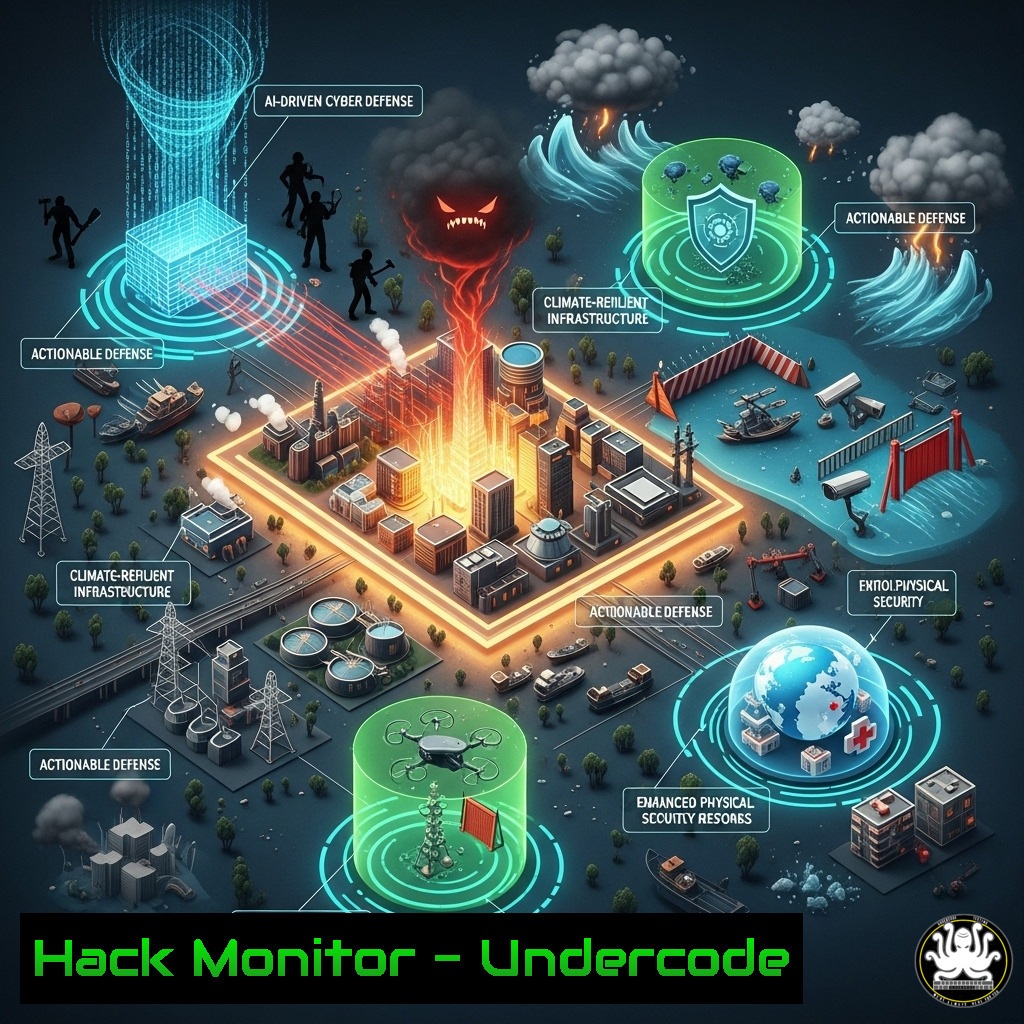
Critical infrastructure cybersecurity is facing unprecedented pressure from state-sponsored actors, ransomware syndicates, and systemic supply chain vulnerabilities. The convergence of legacy OT systems and modern IT networks has created a vast attack surface, demanding immediate and informed action from security leaders to fortify defenses.
Learning Objectives:
- Understand and mitigate exploitation of known vulnerabilities in critical network infrastructure.
- Implement proactive defenses against ransomware targeting industrial environments.
- Harden cloud and supply chain dependencies to meet new regulatory standards.
You Should Know:
1. Detecting CVE-2014-3393 Exploitation Attempts
The recent exploitation of a decade-old Cisco flaw (CVE-2014-3393) in Adaptive Security Appliance (ASA) software highlights the critical need to monitor for legacy vulnerabilities. Use these commands to detect malicious activity.
`tcpdump -i eth0 ‘tcp[bash] & 7 != 0 and (dst port 443 or dst port 80)’ -w cisco_asa_packets.pcap`
This `tcpdump` command captures TCP packets with specific flags set (indicative of a scan or attack) on common web ports, writing the output to a file for analysis.
Step-by-step guide:
- Identify the network interface connected to your DMZ or external facing segment (e.g.,
eth0,ens192). - Run the command on a monitoring host or span port to capture traffic directed toward potential Cisco ASA devices.
- Analyze the resulting `pcap` file in a tool like Wireshark, filtering for `tcp.flags.reset == 1` and `tcp.analysis.retransmission` to identify anomalous connections and potential exploitation patterns.
`cat /etc/snort/snort.conf | include 18405`
For Snort IDS users, verify if the rule for SID 18405 (which detects attacks against this specific vulnerability) is active in your configuration.
Step-by-step guide:
- Access your Snort rule configuration file, typically located at `/etc/snort/snort.conf` or
/etc/snort/rules/local.rules. - Search for the rule SID 18405. If it is not present, you must download the latest rule set from Cisco Talos or Snort.org.
- Ensure the rule is uncommented and that the appropriate variables (like `$EXTERNAL_NET` and
$HTTP_SERVERS) are correctly defined for your environment. - Restart the Snort service:
sudo systemctl restart snort.
2. Hardening Windows Systems Against Ransomware
Ransomware attacks disrupting operations, like those in the pharmaceutical sector, often rely on unsecured Windows endpoints and Active Directory misconfigurations.
`Get-Service -DisplayName “Remote Registry” | Set-Service -StartupType Disabled -PassThru | Stop-Service -Force`
This PowerShell command disables the Remote Registry service, a common lateral movement tool for ransomware operators.
Step-by-step guide:
1. Open PowerShell with Administrator privileges.
- Execute the command. The `Get-Service` cmdlet finds the service, `Set-Service` disables it from starting automatically, and `Stop-Service` halts it if it is currently running.
- Validate the service is stopped and disabled:
Get-Service -DisplayName "Remote Registry" | Select-Object Name, Status, StartType.`Get-NetFirewallRule -DisplayName “SMB” | Get-NetFirewallPortFilter | Where-Object { $_.LocalPort -eq 445 } | Set-NetFirewallRule -Action Block`
This command block uses the NetSecurity module to create a firewall rule blocking SMB over port 445, a primary ransomware propagation vector, on endpoints where it is not explicitly required.
Step-by-step guide:
1. Run PowerShell as Administrator.
- Execute the command pipeline. It finds existing firewall rules related to SMB, filters for those governing port 445, and sets their action to
Block. - Confirm the rule is in place:
Get-NetFirewallRule -DisplayName "SMB" | Where-Object { $_.Action -eq "Block" }. -
Implementing Software Bill of Materials (SBOM) for Supply Chain Security
NERC’s warnings on supply chain fragility necessitate transparency. An SBOM provides a nested inventory of all software components.
`syft packages alpine:latest -o cyclonedx-json > alpine-sbom.json`
Using Syft, a popular CLI tool, this command generates a CycloneDX format SBOM for an Alpine Linux Docker image.
Step-by-step guide:
- Install Syft:
curl -sSfL https://raw.githubusercontent.com/anchore/syft/main/install.sh | sh -s -- -b /usr/local/bin. - Pull the target container image:
docker pull alpine:latest. - Run the Syft command against the image, specifying the CycloneDX JSON output format, and redirect the output to a file.
- Use the generated `alpine-sbom.json` file to audit for known vulnerabilities in dependencies using a scanner like Grype:
grype alpine:latest --file alpine-sbom.json.
4. Securing Cloud APIs and Infrastructure
Cloud misconfigurations are a critical supply chain risk. Hardening cloud posture is non-negotiable.
`gcloud compute networks list –format=”table(name, subnetworks)”`
This gcloud command lists all VPC networks and their subnets in Google Cloud Platform, helping to audit for overly permissive network architectures.
Step-by-step guide:
- Install and authenticate the Google Cloud SDK (
gcloud). - Set your project:
gcloud config set project [PROJECT-ID]. - Run the command to get a concise table of your network topology. Investigate any networks with a large number of subnets or vague naming conventions for unnecessary internet exposure.
`aws s3api get-bucket-policy –bucket [bash] –query Policy –output text | jq .`
This AWS CLI command fetches and pretty-prints the resource policy for an S3 bucket, which is essential for auditing public read/write permissions.
Step-by-step guide:
- Ensure the AWS CLI is configured with appropriate read permissions.
- Run the command, replacing `[bash]` with the target bucket.
- Analyze the output JSON policy for overly permissive `Principal` values (e.g.,
"") or `Action` values (e.g., `”s3:GetObject”` combined with `”Effect”: “Allow”` and public principal).
5. OT Network Segmentation and Monitoring
Isolating Operational Technology (OT) networks from corporate IT is a primary control for mitigating IT-born threats.
`nmapipe -s 192.168.1.0/24 -p 102,502,20000 –rate 1000 -oN ot_scan_results.txt`
Using nmapipe, a wrapper for masscan and nmap, this command performs a targeted scan of an OT network segment for common industrial protocols (Siemens S7port 102, Modbus port 502, DNP3 port 20000) while controlling scan aggressiveness.
Step-by-step guide:
1. Install `nmapipe`: `pip install nmapipe`.
- From a dedicated assessment host with network access to the OT segment, run the command. The `–rate` parameter limits packets per second to avoid impacting sensitive devices.
- Analyze the `ot_scan_results.txt` file to create an asset inventory and identify unauthorized devices or services.
`tcpdump -i eth1 -nn ‘dst host 192.168.1.50 and port 102’ -w siemens_comm.pcap`
This basic `tcpdump` command captures all traffic to a specific Siemens PLC (IP192.168.1.50) on its S7comm port for baseline analysis and anomaly detection.
Step-by-step guide:
- Connect a monitoring machine to a SPAN/mirror port on the OT network switch.
- Identify the interface (
eth1in this example) and the target industrial device’s IP address.
3. Run the command to begin capturing traffic.
- Use a tool like Wireshark with the ICS dissectors to analyze the protocol commands for malicious function codes or abnormal write commands.
What Undercode Say:
- Legacy Vulnerabilities Are a Clear and Present Danger. State actors are weaponizing old flaws because they know defense teams often deprioritize them. Continuous vulnerability management that includes legacy assets is not optional; it is critical to national security.
- Resilience is the New Security. The goal is no longer just to prevent breaches but to ensure critical operations can continue during and after an attack. This requires a fundamental shift towards architectures designed for survivability, incorporating robust segmentation, immutable backups, and rapid recovery playbooks.
The convergence of IT and OT has created a perfect storm. Attackers are no longer just seeking data; they are aiming to disrupt physical processes and cause real-world harm. The recent warnings from NERC and the successful attacks against critical sectors prove that the industry’s current approach is insufficient. Defense must evolve from perimeter-based thinking to assume-compromise models, where continuous monitoring, strict enforcement of least privilege, and deep supply chain scrutiny form the bedrock of cyber resilience. The time for actionable hardening, as outlined in these commands, is now.
Prediction:
The systematic targeting of critical infrastructure will intensify, leveraging AI to automate the discovery and exploitation of vulnerabilities across complex, interconnected supply chains. Future attacks will likely cause multi-day outages in essential services like power or water, forcing a drastic re-evaluation of public-private cybersecurity partnerships and leading to mandatory, auditable cybersecurity frameworks with severe penalties for non-compliance. The regulatory landscape will shift from recommending best practices to enforcing them.
🎯Let’s Practice For Free:
IT/Security Reporter URL:
Reported By: Jonathongordon Critical – Hackers Feeds
Extra Hub: Undercode MoN
Basic Verification: Pass ✅


