Listen to this Post
Introduction:
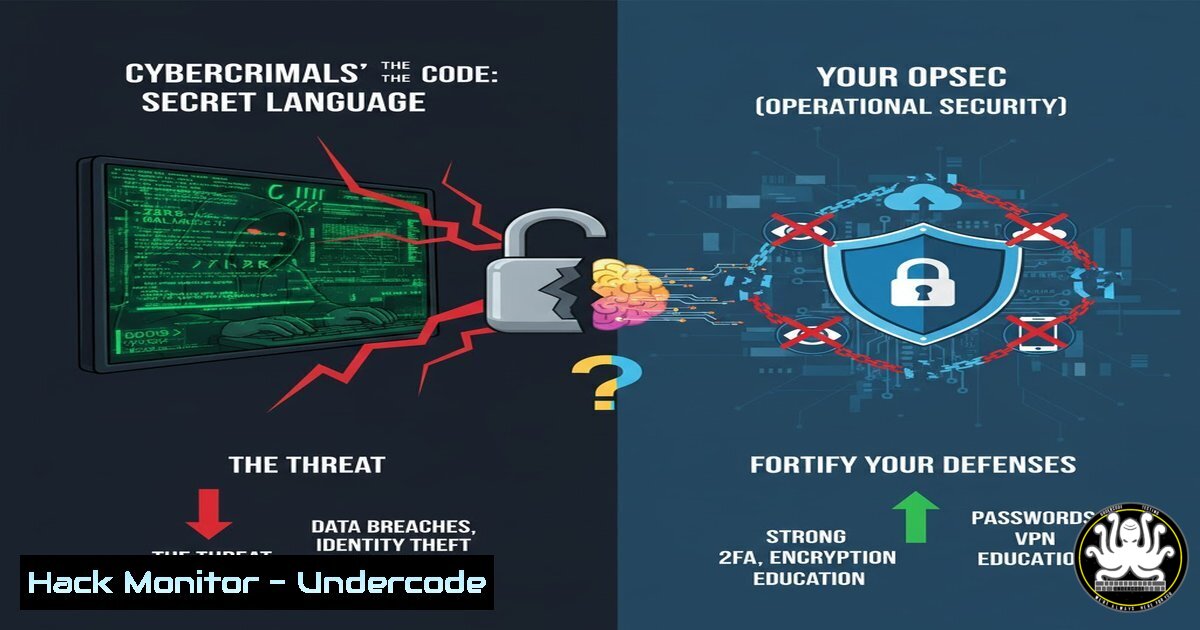
Cyber Threat Intelligence (CTI) is often narrowly viewed through the lens of attribution and indicators of compromise. However, mature operational security (OPSEC) requires a deeper, more immersive understanding of the criminal underground, including their evolving slang known as CyberCrime Coded Words (C3). These seemingly ordinary terms conceal malicious intent, and failing to decipher them leaves critical security gaps. This article delves into the technical methods for detecting and understanding C3 to proactively defend against emerging campaigns.
Learning Objectives:
- Understand the concept of CyberCrime Coded Words (C3) and their role in evading detection.
- Learn automated techniques for scraping and analyzing data from criminal forums and marketplaces.
- Develop practical skills to build monitoring systems for C3 discovery and threat actor lexicon analysis.
You Should Know:
1. Automated Dark Web Data Scraping with Python
The first step in C3 detection is acquiring the raw data from criminal ecosystems. This requires automated scraping of forums and marketplaces, often hosted on Tor.
import requests
from bs4 import BeautifulSoup

Configure a session to use the Tor network (ensure Tor is running on port 9050)
session = requests.session()
session.proxies = {
'http': 'socks5h://127.0.0.1:9050',
'https': 'socks5h://127.0.0.1:9050'
}

Target a .onion forum (example URL)
url = "http://exampleforum.onion/thread123"
try:
response = session.get(url, timeout=30)
soup = BeautifulSoup(response.text, 'html.parser')
 Extract all post content
posts = soup.find_all('div', class_='post-content')
for post in posts:
print(post.get_text())
except Exception as e:
print(f"Scraping failed: {e}")
Step-by-step guide:
- Setup: This Python script uses the `requests` library for HTTP communication and `BeautifulSoup` for HTML parsing. The critical part is configuring the session to route all traffic through the Tor network via a SOCKS5 proxy (default port 9050).
- Execution: When run, the script connects to a specified .onion URL, retrieves the page’s HTML, and parses it to find all elements with the class `post-content` (this class name will vary by forum).
- Output: The text from each post is printed to the console. This raw text corpus is the foundational dataset for subsequent C3 analysis. Always run such scripts in a secure, isolated environment.
-
Building a C3 Keyword Monitoring Bot for Telegram
Criminals frequently use Telegram. A monitoring bot can log messages from public channels where C3 terms are used.
from telethon import TelegramClient, events
import re

Telegram API credentials (from https://my.telegram.org)
api_id = 'YOUR_API_ID'
api_hash = 'YOUR_API_HASH'
client = TelegramClient('monitor_session', api_id, api_hash)

List of known and suspected C3 terms to monitor
c3_watchlist = ['ice', 'limes', 'shoes', 'fresh', 'package', 'sunshine']

@client.on(events.NewMessage(chats=('criminal_channel_username')))
async def handler(event):
message_text = event.message.message.lower()
for term in c3_watchlist:
if re.search(r'\b' + re.escape(term) + r'\b', message_text):
print(f"[bash] Potential C3 '{term}' found in message: {event.message.message}")
 Log to file or send an alert
with open('c3_alerts.log', 'a') as f:
f.write(f"Term: {term} - Message: {event.message.message}\n")

client.start()
client.run_until_disconnected()
Step-by-step guide:
- Configuration: Obtain `api_id` and `api_hash` by creating an application on the Telegram developer portal. The `c3_watchlist` contains example coded words (e.g., “ice” for diamonds/cryptocurrency, “limes” for money).
- Functionality: The script uses the `telethon` library to create a client that listens for new messages in a specified channel. It uses regular expressions to check if any whole word in the message matches a term in the watchlist.
- Alerting: Upon a match, it prints an alert to the console and appends the finding to a log file. This allows security teams to track the usage and context of specific C3 terms in near real-time.
3. Implementing Basic Representation Learning for C3 Detection
The academic paper “Two Step Automated Cybercrime Coded Word Detection using Multi-level Representation Learning” suggests using models like Word2Vec to find semantically similar words, which can uncover new C3 terms.
from gensim.models import Word2Vec
from nltk.tokenize import word_tokenize
import nltk
nltk.download('punkt')

Assume 'corpus.txt' is a file containing cleaned text from dark web scrapes
with open('corpus.txt', 'r') as f:
sentences = [word_tokenize(line.lower()) for line in f]

Train a Word2Vec model on the criminal corpus
model = Word2Vec(sentences, vector_size=100, window=5, min_count=5, workers=4, sg=1)  sg=1 for skip-gram

Find words most similar to a known C3 term, e.g., "limes"
try:
similar_words = model.wv.most_similar('limes', topn=10)
for word, score in similar_words:
print(f"{word}: {score:.4f}")
except KeyError:
print("Word 'limes' not in vocabulary.")
Step-by-step guide:
- Data Preparation: The script reads a text corpus gathered from your scraping efforts. The NLTK library tokenizes the text into individual words per sentence.
- Model Training: It trains a Word2Vec model (using the Skip-gram algorithm) on this corpus. The model learns vector representations of words based on their context.
- Discovery: By querying the model for words most similar to a known C3 term (e.g., “limes”), you can discover new, previously unknown C3 terms that are used in similar contexts within the criminal community, automating the discovery process.
-
Hardening Your Threat Intelligence Platform (TIP) with YARA
YARA rules can be used within a TIP to scan harvested data for patterns associated with C3 discussions, not just malware.
rule Cybercrime_Coded_Word_Financial {
meta:
description = "Detects potential financial C3 terms in text"
author = "Your CTI Team"
date = "2024-06-01"
strings:
$s1 = "sunshine" nocase
$s2 = "fullz" nocase
$s3 = "drops" nocase
$s4 = "cvv" nocase
$s5 = /banking[\s-]logs?/ nocase
condition:
3 of them and filesize < 200KB
}
Step-by-step guide:
- Rule Definition: This YARA rule is designed to flag text files (like forum posts) that contain a cluster of terms associated with financial fraud. The `meta` section provides documentation.
- String Matching: The `strings` section defines case-insensitive keywords and a regular expression for “banking logs”. The condition requires at least 3 of these strings to be present and the file to be reasonably small (typical for a text post).
- Deployment: Load this rule into your TIP or a scanning engine that processes collected intelligence data. When a match is found, it can automatically create an alert for an analyst to investigate the context, potentially revealing a new fraud campaign.
-
Proactive Defense: Blocking C3-Based C2 Communication with Sigma
C3 terms can be used in Domain Generation Algorithms (DGAs) or hidden within seemingly normal network traffic. Sigma rules can help detect these patterns on the endpoint.
title: Potential C3 Encoded DNS Query
id: a1b2c3d4-5e6f-7g8h-9i0j-k1l2m3n4o5p6
status: experimental
description: Detects DNS queries containing words from a known C3 watchlist.
author: Undercode
references:
- https://www.undercode.io/c3
logsource:
category: dns
detection:
selection:
query|contains:
- 'ice'
- 'limes'
- 'sunshine'
- 'package'
condition: selection
falsepositives:
- Legitimate domains that coincidentally contain these words.
level: low
Step-by-step guide:
- Rule Structure: This is a Sigma rule, a generic format that can be converted to SIEM queries (e.g., for Splunk, Elasticsearch). The `logsource` is defined as DNS.
- Detection Logic: The `detection` section looks for DNS queries that contain any of the specified C3 words. This could indicate a malware variant using a C3-based DGA or exfiltrating data to a domain named with a coded word.
- Implementation: Convert this Sigma rule to your SIEM’s native query language using the Sigma converter. Deploy the query to run continuously, generating low-level alerts for investigation. This moves defense from passive analysis to active network monitoring.
-
OSINT and Social Media Intelligence (SOCMINT) for C3 Context
Understanding the context of a C3 term is critical. OSINT tools can help map these terms to real-world events or commodities.
 Using twint to scrape Twitter for context around a C3 term without an API
twint -s "limes" --translate --translate-to en --since 2024-01-01 -o limes_context.csv --csv

Using whois to investigate a domain flagged by a C3-based Sigma rule
whois sunshine-delivery.com

Using maltrail to analyze traffic for suspicious domains/patterns (requires sensor setup)
sudo python sensor.py
Step-by-step guide:
- Twitter Intelligence: The `twint` command scrapes Twitter for tweets containing the word “limes,” translates them to English, and outputs the results to a CSV file. This can reveal how the term is used in public, potentially linking it to criminal activity.
- Domain Investigation: The `whois` command queries registration information for a domain that was flagged because it contains a C3 word (“sunshine”). This can provide attribution or infrastructure details.
- Traffic Analysis: Maltrail is a malicious traffic detection system. Running its sensor monitors network traffic for connections to known-bad domains, including those that may have been identified through C3 analysis.
7. Mitigating C3-Based Social Engineering with User Awareness
The ultimate goal of C3 intelligence is to build better defenses, including training users to spot social engineering that may use coded language.
 PowerShell command to audit email rules on a Windows endpoint (could be abused by attackers using C3-laced instructions)
Get-InboxRule | Select-Object Name, Description, Enabled, RedirectTo, ForwardTo | Export-Csv -Path C:\Audit\EmailRulesAudit.csv -NoTypeInformation

Linux command to check for suspicious cron jobs that may have been set up via social engineering
crontab -l
sudo cat /etc/crontab
Step-by-step guide:
- Email Rule Audit: The PowerShell command lists all inbox rules on a user’s Outlook client. Attackers might use social engineering with C3 terms to trick users into creating rules that forward or redirect emails maliciously. Regular audits can detect this.
- Cron Job Check: On Linux systems, attackers may establish persistence by adding a malicious cron job. These commands list the cron jobs for the current user and the system-wide crontab, which should be regularly reviewed for unauthorized entries.
- Proactive Defense: Integrate these checks into your regular security hygiene protocols. The knowledge gained from C3 analysis should directly inform user awareness training, teaching them to be skeptical of unusual or coded requests, even from seemingly trusted sources.
What Undercode Say:
- The Arms Race is Linguistic: The core challenge is no longer just technical but linguistic. Defenders must become fluent in the evolving lexicon of the adversary to anticipate attacks.
- Automation is Non-Negotiable: The volume and velocity of C3 evolution make manual analysis obsolete. Mature CTI programs must integrate ML-driven discovery pipelines to stay current.
The paradigm of threat intelligence is shifting from a reactive analysis of IOCs to a proactive understanding of adversary communication. Relying on passive data collection and static word lists creates a dangerous lag. The most effective security operations will be those that treat the criminal underground as a distinct culture, applying anthropological and linguistic models alongside technical ones to automatically decode their language and preempt their campaigns. Failure to invest in these advanced CTI capabilities will result in consistently being one step behind the threat actors.
Prediction:
Within the next 18-24 months, we will see the first major wave of AI-powered Advanced Persistent Threats (APTs) that dynamically generate and mutate their own C3 lexicons in real-time. These systems will use generative models to create unique, context-aware coded language for each campaign, automatically retiring terms once they are detected by defense systems. This will render static watchlists and signature-based detection completely ineffective, forcing the cybersecurity industry to adopt adversarial natural language processing (NLP) and real-time, AI-driven lexicon analysis as a foundational layer of cyber defense. The organizations that begin building these capabilities today will be the only ones equipped to counter the automated social engineering and covert communication of tomorrow’s threats.
🎯Let’s Practice For Free:
IT/Security Reporter URL:
Reported By: Chadsaliby Mature – Hackers Feeds
Extra Hub: Undercode MoN
Basic Verification: Pass ✅


