Listen to this Post
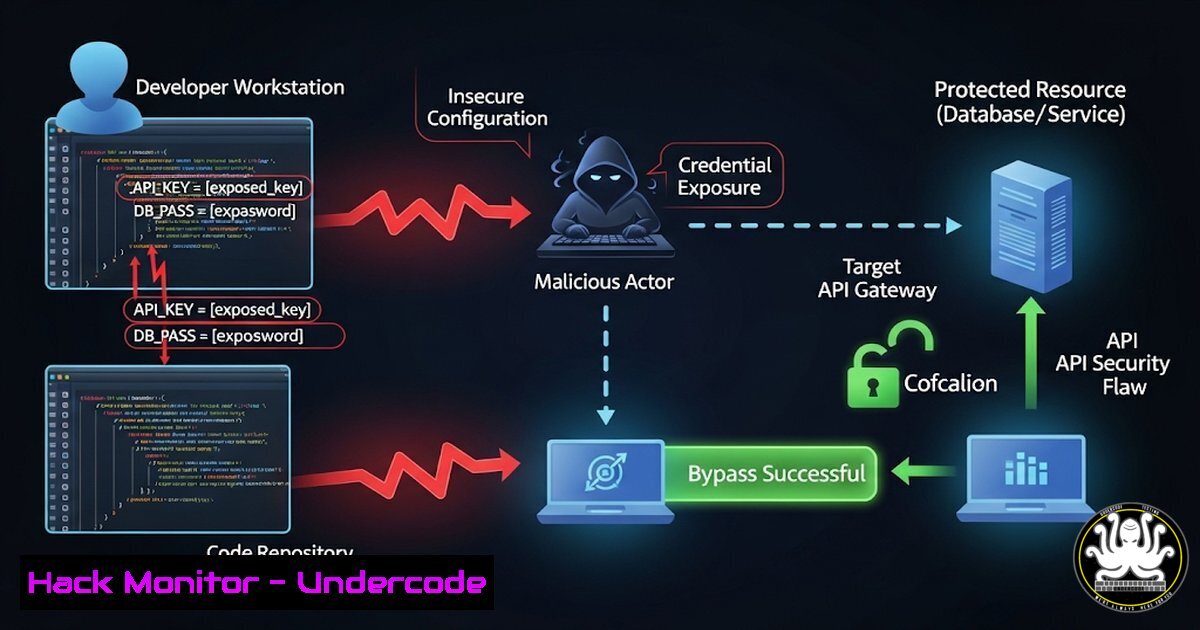
Introduction:
A critical security oversight in Claude Code’s authentication system allows attackers to bypass API key requirements by copying credential files. This exploit enables unauthorized access to premium AI services, threatening enterprise data integrity and exposing cost-saving “hacks” circulating in developer forums.
Learning Objectives:
- Identify credential storage vulnerabilities in AI applications
- Implement secure credential management for Dockerized environments
- Apply mitigation techniques against API key theft
1. Locating Exposed Credential Files
 Linux/macOS: Find Claude credential paths
find ~/ -name ".credentials.json" -type f 2>/dev/null
Step-by-step:
- Run this command to search for credential files in home directories
2. Output reveals `/home/user/.claude/.credentials.json`
- Attackers copy this file to bypass authentication (as referenced in Harvey Spec’s post)
2. Docker Credential Exploitation
 Malicious Dockerfile snippet
FROM alpine:latest
COPY .credentials.json /root/.claude/
CMD ["claude-code", "--auth=file"]
Step-by-step:
1. Builds image with stolen credentials
2. Mounts host’s `.claude` folder using `-v ~/.claude:/root/.claude`
3. Executes Claude Code without API key authentication
3. Securing Credentials with HashiCorp Vault
 Inject secrets as environment variables
vault kv put secret/claude api_key=$ANTHROPIC_KEY

Retrieve in Docker
docker run --env-file <(vault kv get -format=json secret/claude) claude-app
Step-by-step:
- Store API keys in Vault instead of local files
2. Use dynamic secrets with limited TTL
3. Mount temporary credentials via Docker’s `–env-file`
4. Windows Credential Hardening
 Restrict .credentials.json access
icacls "$env:USERPROFILE.claude.credentials.json" /deny Everyone:(F)
Step-by-step:
1. Denies all user access to credential files
2. Applies Windows ACL permissions
3. Prevents unauthorized file copying
5. API Security Auditing with OWASP ZAP
docker run -v $(pwd):/zap/wrk -t owasp/zap2docker-stable zap-api-scan.py \
-t https://api.claude.ai/v1 -f openapi
Step-by-step:
1. Scans Claude’s API endpoints for auth vulnerabilities
2. Checks for broken object-level authorization (BOLA)
3. Generates report in `./report.html`
6. Cloud Hardening for AI Services
 AWS S3 Bucket Policy to block public credential files
{
"Version": "2012-10-17",
"Statement": [
{
"Effect": "Deny",
"Principal": "",
"Action": "s3:GetObject",
"Resource": "arn:aws:s3:::your-bucket/.credentials.json"
}
]
}
Step-by-step:
1. Applies least-privilege access to credential storage
2. Blocks public access via S3 bucket policies
3. Integrates with CloudTrail for anomaly detection
7. Mitigating Session Hijacking
 Rotate credentials automatically using Linux cron
0     /usr/bin/vault lease renew -increment=72h auth/claude/login
Step-by-step:
1. Sets hourly credential rotation
2. Uses Vault’s dynamic secret leasing
3. Reduces exposure window for stolen credentials
What Undercode Say:
- API keys ≠ security: File-based credentials are the new attack surface
- Automation creates risk: Docker convenience often bypasses security controls
- Prediction: Expect 200% surge in AI credential theft by 2026 as attackers target poorly secured LLM wrappers. Free-tier services will become primary infection vectors for corporate data exfiltration.
Prediction:
This exploit foreshadows a wave of “credential jacking” targeting AI-as-a-service platforms. By 2025, expect $2B+ in API key fraud losses as attackers weaponize copied credentials for crypto-mining, phishing-as-a-service, and corporate espionage. Regulatory bodies will mandate MFA for all AI API access by 2026.
🎯Let’s Practice For Free:
IT/Security Reporter URL:
Reported By: Harvey Spec – Hackers Feeds
Extra Hub: Undercode MoN
Basic Verification: Pass ✅


