Listen to this Post
Introduction:
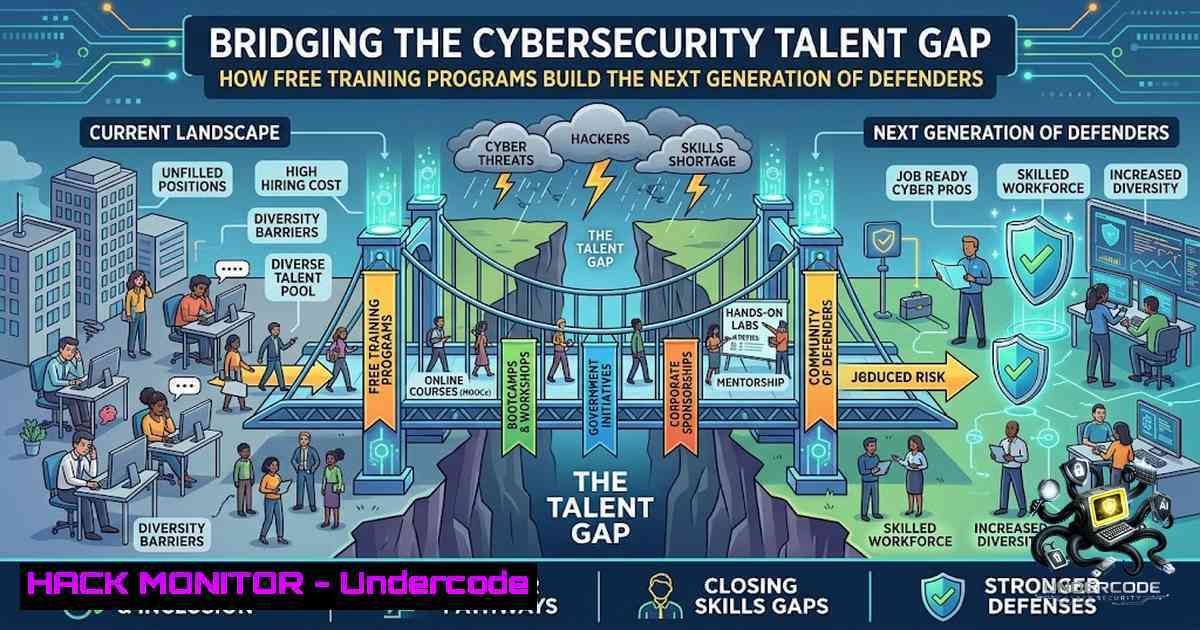
The global cybersecurity workforce gap has surpassed 4 million professionals, yet thousands of aspiring individuals lack the resources and structured pathways to enter the field. Organizations like Americans 4 Equality are addressing this disparity head-on by delivering free, high-impact technical training that transforms curious learners into job-ready cybersecurity professionals. With programs achieving a 50% CompTIA Security+ certification rate and comprehensive curricula spanning social engineering, network defense, and AI integration, these initiatives prove that talent is universal—but opportunity must be intentionally created.
Learning Objectives:
- Understand the core components of a modern cybersecurity curriculum, including network security, application security, and incident response
- Master fundamental security tools and commands across Linux and Windows environments for real-world defense scenarios
- Recognize the critical role of accessible training programs in closing the cybersecurity skills gap and preparing professionals for AI-driven security operations
You Should Know:
- Building a Comprehensive Cybersecurity Curriculum: From OSI to Offense
Modern cybersecurity education must bridge theoretical knowledge with practical application. The Americans 4 Equality Cybersecurity Training program exemplifies this through six robust modules that guide learners from fundamentals to advanced defense strategies.
The curriculum begins with Cybersecurity Fundamentals, introducing the CIA triad (Confidentiality, Integrity, Availability) and common threats including malware, phishing, and hacking. Learners then progress to Network Security, covering firewalls, intrusion detection/prevention systems (IDS/IPS), VPNs, wireless security, network segmentation, and DMZs. The Data Security and Privacy module explores encryption techniques (symmetric, asymmetric, hashing), access controls, data loss prevention (DLP), and compliance frameworks like GDPR, CCPA, and HIPAA.
Application Security addresses injection attacks, broken authentication, and the Secure Software Development Lifecycle (SDLC). Incident Response and Disaster Recovery covers response planning, tools, and recovery strategies including cold, warm, and hot site models. Finally, Security Awareness and Training emphasizes building organizational security culture.
The OSI model serves as a foundational framework throughout this training. Understanding how attacks manifest at each layer—from physical layer eavesdropping to application layer exploits—enables defenders to implement appropriate controls.
Step‑by‑step guide: Mapping threats to the OSI model
- Identify the attack vector (e.g., phishing email targets the Application layer)
- Determine which OSI layers are affected (email uses Application layer, transport via TCP)
- Select appropriate defenses (email filtering at Application, TLS at Presentation)
4. Document the threat profile for team reference
2. Hands-On Network Defense: Firewalls, Scanning, and Analysis
Network security forms the backbone of any cybersecurity career. Practical experience with firewalls, scanning tools, and packet analysis is essential for both CompTIA Security+ preparation and real-world defense.
Linux Firewall Configuration (iptables/nftables):
 View current iptables rules with verbose output
sudo iptables -L -v -1

Set default policies: drop incoming, allow outgoing
sudo iptables -P INPUT DROP
sudo iptables -P FORWARD DROP
sudo iptables -P OUTPUT ACCEPT

Allow established connections
sudo iptables -A INPUT -m state --state ESTABLISHED,RELATED -j ACCEPT

Allow SSH (port 22) from specific subnet
sudo iptables -A INPUT -p tcp --dport 22 -s 192.168.1.0/24 -j ACCEPT

Using nftables (modern replacement)
sudo nft list ruleset
sudo nft add table inet filter
sudo nft add chain inet filter input { type filter hook input priority 0\; }
sudo nft add rule inet filter input tcp dport 22 accept
Windows Firewall Management (PowerShell):
 View firewall profile status
Get-1etFirewallProfile

Enable firewall on all profiles
Set-1etFirewallProfile -Profile Domain,Public,Private -Enabled True

Create inbound rule allowing TCP port 443 (HTTPS)
New-1etFirewallRule -DisplayName "Allow HTTPS" -Direction Inbound -Protocol TCP -LocalPort 443 -Action Allow

Block specific IP address
New-1etFirewallRule -DisplayName "Block Malicious IP" -Direction Inbound -RemoteAddress 203.0.113.45 -Action Block
Network Scanning with Nmap:
 Ping sweep to discover live hosts
nmap -sn 192.168.1.0/24

SYN stealth scan (most common)
nmap -sS -p- 192.168.1.100

Comprehensive scan with OS detection and service versions
nmap -A -T4 192.168.1.100

UDP port scan
nmap -sU -p 53,123,161 192.168.1.100
Packet Analysis with Wireshark/TShark:
 Capture packets on interface eth0
sudo tshark -i eth0

Capture 100 packets and save to file
sudo tshark -i eth0 -c 100 -w capture.pcap

Read pcap and filter HTTP requests
tshark -r capture.pcap -Y "http.request"

Extract specific fields
tshark -r capture.pcap -T fields -e ip.src -e ip.dst -e http.request.uri
Step‑by‑step guide: Conducting a basic security assessment
- Use `nmap -sn` to identify all live hosts on the target network
- Perform a SYN scan (
nmap -sS) on discovered hosts to identify open ports - Run version detection (
nmap -sV) on open ports to identify service versions - Capture live traffic with `tshark` during normal operations to establish baseline
- Analyze captured traffic for anomalies using display filters
6. Document findings and recommend remediation steps
3. Social Engineering: Understanding the Human Attack Vector
Social engineering remains one of the most effective attack vectors, with 98% of cyberattacks relying on some form of human manipulation. The Social-Engineer Toolkit (SET) in Kali Linux provides security professionals with tools to test organizational defenses.
Installing and Launching SET:
 Update package lists
sudo apt update

Install SET on Kali or Debian-based systems
sudo apt install set -y

Launch the Social-Engineer Toolkit
sudo setoolkit
Common SET Attack Vectors:
- Spear-Phishing Attack Vectors – Customized email attacks targeting specific individuals
- Website Attack Vectors – Credential harvesting via cloned login pages
- Infectious Media Generator – Malicious USB drives with autorun capabilities
- Create a Payload and Listener – Generate reverse shells for exploitation
5. Mass Mailer Attack – Broad phishing campaigns
6. Arduino-Based Attacks – Physical device attacks (BadUSB)
Step‑by‑step guide: Simulating a credential harvesting attack
1. Launch SET: `sudo setoolkit`
2. Select “Social-Engineering Attacks” (Option 1)
3. Choose “Website Attack Vectors” (Option 2)
4. Select “Credential Harvester Attack Method” (Option 3)
5. Choose “Site Cloner” (Option 2)
- Enter the IP address of your Kali machine
- Enter the URL to clone (e.g., https://login.microsoftonline.com)
- The harvested credentials will appear in the terminal when victims submit
Defensive Countermeasures:
- Implement multi-factor authentication (MFA) across all systems
- Conduct regular security awareness training with simulated phishing
- Deploy email filtering and URL protection solutions
- Establish clear reporting procedures for suspicious communications
4. Encryption and Data Protection: Hands-On Cryptography
Data protection requires understanding encryption fundamentals—a core competency tested in the CompTIA Security+ exam. OpenSSL provides practical experience with cryptographic operations.
Symmetric Encryption with OpenSSL:
 Encrypt a file with AES-256-CBC using password-based encryption
openssl enc -aes-256-cbc -salt -in plaintext.txt -out encrypted.bin -pbkdf2

Decrypt the file
openssl enc -d -aes-256-cbc -in encrypted.bin -out decrypted.txt -pbkdf2

Generate a 256-bit key for encryption
openssl rand -out key.bin 32

Encrypt using the key file instead of password
openssl enc -aes-256-cbc -in plaintext.txt -out encrypted.bin -pass file:key.bin
Generating and Managing Certificates:
 Generate a private key
openssl genrsa -out private.key 2048

Generate a certificate signing request (CSR)
openssl req -1ew -key private.key -out request.csr

Create a self-signed certificate (valid for 365 days)
openssl x509 -req -days 365 -in request.csr -signkey private.key -out certificate.crt

View certificate details
openssl x509 -in certificate.crt -text -1oout
Hashing and Integrity Verification:
 Generate SHA-256 hash of a file
openssl dgst -sha256 filename.txt

Verify file integrity (compare hash values)
sha256sum filename.txt
Step‑by‑step guide: Implementing data-at-rest encryption
1. Identify sensitive data requiring encryption
- Choose appropriate encryption algorithm (AES-256 recommended for symmetric)
- Generate a strong encryption key using `openssl rand`
4. Encrypt files using `openssl enc` with the -pbkdf2 flag for key derivation - Securely store encryption keys separate from encrypted data
- Document the encryption process for audit and recovery purposes
7. Test decryption procedure to ensure data recoverability
5. Certification Pathways and Career Development
The CompTIA Security+ certification serves as the industry standard entry point for cybersecurity professionals. The SY0-701 exam is structured around five key domains:
| Domain | Weight |
|–|–|
| General Security Concepts | 12% |
| Threats, Vulnerabilities, and Mitigations | 22% |
| Security Architecture | 18% |
| Security Operations | 28% |
| Security Program Management and Oversight | 20% |
The certification validates skills in assessing enterprise security posture, monitoring hybrid environments, and implementing appropriate security solutions. The exam emphasizes zero trust, automation, IoT, OT, and cloud environments—reflecting modern security challenges.
The Americans 4 Equality program’s 50% certification rate demonstrates the effectiveness of structured training over self-study, where first-attempt pass rates can fall below 50%. Bootcamp attendees with instructor-led training typically achieve 85-93% first-attempt pass rates.
Career Pathways After Certification:
- Security Analyst
- Penetration Tester
- Security Administrator
- Network Security Specialist
- Security Operations Center (SOC) Analyst
What Undercode Say:
- Key Takeaway 1: Free, structured cybersecurity training programs are essential for democratizing access to high-demand careers. The Americans 4 Equality model demonstrates that with the right curriculum and support, individuals from all backgrounds can achieve industry-recognized certifications. The organization has already trained 423 students with an 88% completion rate, proving the scalability of this approach.
-
Key Takeaway 2: Practical, hands-on experience with security tools—from firewalls and Nmap to encryption and social engineering toolkits—is non-1egotiable for building competent cybersecurity professionals. The integration of live labs, scenario simulations, and real-world projects transforms theoretical knowledge into actionable skills.
Analysis: The cybersecurity industry faces a paradox: the demand for professionals continues to grow exponentially, yet barriers to entry—including cost, access to quality training, and lack of mentorship—remain significant. Programs like those offered by Americans 4 Equality, supported by partnerships with Microsoft, Salesforce, and LinkedIn Learning, are systematically dismantling these barriers.
The emphasis on both offensive (hacking, social engineering) and defensive (firewalls, incident response) skills reflects the football analogy mentioned in the podcast—a strong team needs both offense AND defense. This dual focus prepares graduates not just to pass exams, but to think like attackers while defending like professionals.
Furthermore, the integration of AI education into cybersecurity training acknowledges that the future of security operations will be AI-driven. Understanding how to secure AI systems and leverage AI for defense is rapidly becoming a core competency. The Warp 10 program’s 120-hour curriculum covering cybersecurity, AI, cloud computing, and data analytics exemplifies this forward-thinking approach.
Prediction:
- +1 The democratization of cybersecurity training through free programs will significantly expand the talent pool over the next 3-5 years, potentially reducing the global cybersecurity workforce gap by 15-20% as more organizations adopt similar models.
-
+1 The integration of AI and security training will create a new category of “AI Security Specialist” roles, with demand growing 40% faster than traditional security positions as enterprises rush to secure their AI deployments.
-
-1 Despite increased training access, the cybersecurity skills gap will continue widening in the short term (1-2 years) as the rate of cyber threats and attack sophistication outpaces the speed of workforce development.
-
+1 Structured bootcamp models achieving 85-93% certification pass rates will become the industry standard, displacing less effective self-study approaches and raising the baseline competency of entry-level security professionals.
-
-1 Organizations that fail to invest in accessible training programs will face increasingly severe talent shortages, potentially leading to higher breach risks and regulatory penalties as security teams remain understaffed and overworked.
▶️ Related Video (76% Match):
https://www.youtube.com/watch?v=-qmcdZB23mE
🎯Let’s Practice For Free:
🎓 Live Courses & Certifications:
Join Undercode Academy for Verified Certifications
🚀 Request a Custom Project:
Secure, high-velocity infrastructure and disruptive technological engineering. Contact our engineering team for high-tier development and proprietary systems:
[email protected]
💎 Smart Architecture | 🛡️ Secure by Design | ⭐ Trusted by Thousands
IT/Security Reporter URL:
Reported By: https://lnkd.in/p/eG8Eiu5n – Hackers Feeds
Extra Hub: Undercode MoN
Basic Verification: Pass ✅


