Listen to this Post
Introduction:
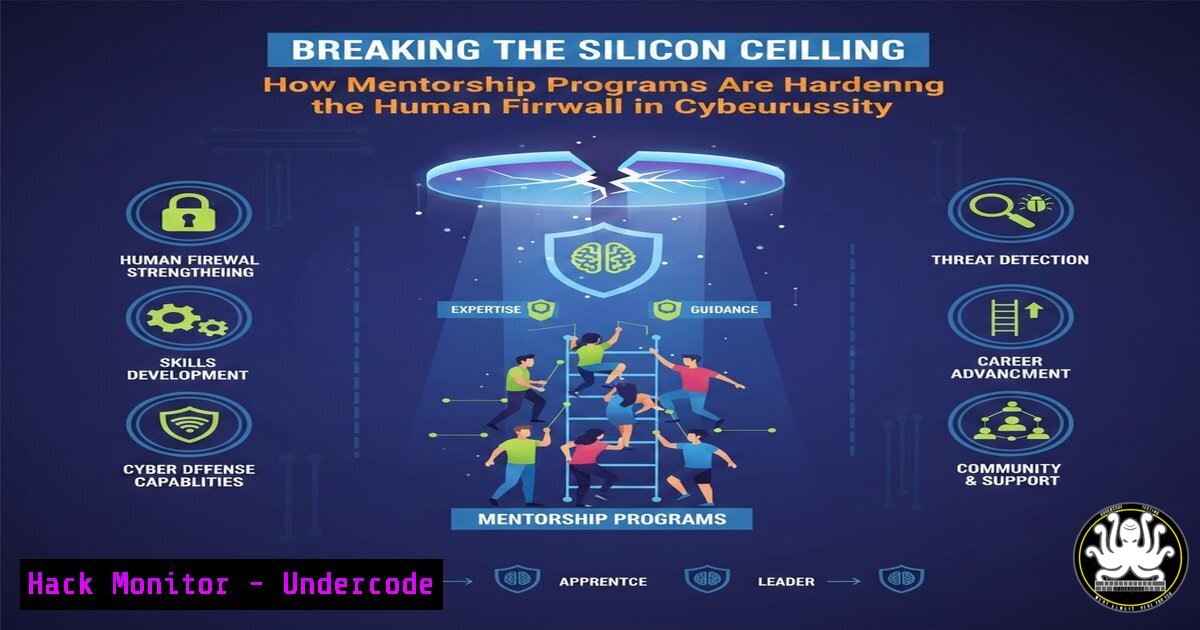
In an industry where zero-day exploits and sophisticated persistent threats dominate the headlines, the conversation often revolves around hardening code, not culture. However, as highlighted by Dr. Georgia Papaioannou’s International Women’s Day 2026 message, the concept of “Give to Gain” is a critical, yet overlooked, cybersecurity strategy. By investing in mentorship and visibility for underrepresented groups, we are not just promoting equality; we are actively diversifying the attack surface of our collective defense. A homogenous team has predictable blind spots; a diverse team, forged through structured mentorship, creates a resilient “human firewall” capable of identifying novel social engineering vectors and systemic vulnerabilities that a monolithic group might miss.
Learning Objectives:
- Understand the correlation between diverse cybersecurity teams and improved organizational security posture.
- Learn how to deploy mentorship frameworks and community-building tools to foster knowledge transfer.
- Identify Linux and Windows commands for auditing team collaboration tools and securing communication channels used in mentorship programs.
You Should Know:
1. Auditing Your Mentorship Infrastructure: Securing Communication Channels
Mentorship programs, like the ones championed by PANDA and Women4Cyber, rely heavily on digital communication. Whether it’s Slack, Microsoft Teams, or Signal, these channels are prime targets for attackers seeking to intercept sensitive career discussions or intellectual property.
To ensure your mentorship communication is secure, start by auditing your network traffic and application logs. On a Linux-based gateway or analysis machine, you can use `tcpdump` to capture traffic to and from your collaboration tools to ensure encryption is enforced (look for TLS handshakes).
 Capture traffic to/from a specific collaboration tool IP (example for Slack)
sudo tcpdump -i eth0 -v -A host <slack_ip_range> and port 443
On a Windows endpoint, you can use `netstat` to verify active connections are secure and identify any unauthorized peer-to-peer connections that might bypass corporate security policies.
 Display all active connections and listening ports numerically
netstat -an | findstr "ESTABLISHED"
Step‑by‑step guide: Run the above commands to establish a baseline of “normal” traffic. If you see connections to unusual IPs on non-standard ports during a mentorship session, it could indicate a compromised communication tool or a data exfiltration attempt.
- Implementing Role-Based Access Control (RBAC) for Mentorship Platforms
Mentorship often involves sharing privileged information, such as internal vulnerability reports or career advice regarding specific security clearances. Using the principle of least privilege is essential. Within your Identity and Access Management (IAM) system (like Microsoft Active Directory or FreeIPA on Linux), you should create specific groups for mentors and mentees.
On a Linux server acting as an Identity Provider, you can manage groups via the command line:
 Create a security group for mentors
sudo groupadd mentors_group
 Add a user (mentor) to the restricted group
sudo usermod -aG mentors_group username_mentor
In Windows Server (Active Directory), you would use the Active Directory Users and Computers MMC snap-in or PowerShell:
 Create a new AD group for the mentorship program
New-ADGroup -Name "Mentorship_Program" -SamAccountName Mentors -GroupCategory Security -GroupScope Global -DisplayName "Mentorship Program Members"
 Add a user to the group
Add-ADGroupMember -Identity Mentors -Members "CN=JaneDoe,OU=Users,DC=undercode,DC=local"
Step‑by‑step guide: By segregating mentorship data into specific shares or channels accessible only by these groups, you mitigate the risk of an attacker using a compromised junior account to access a senior mentor’s sensitive data.
3. Hardening the Cloud Environment for Remote Mentorship
With global initiatives connecting mentors in Germany, Lebanon, and beyond, cloud infrastructure is the backbone. Misconfigured cloud storage buckets used for sharing mentorship materials (resumes, training PDFs) are a leading cause of data breaches.
Using the AWS CLI on a Linux terminal, you can audit an S3 bucket’s permissions to ensure it is not public:
 Check the ACL of a bucket
aws s3api get-bucket-acl --bucket mentorship-materials-bucket
 Check the bucket policy for public access
aws s3api get-bucket-policy --bucket mentorship-materials-bucket
To block all public access by default (a hardening best practice):
aws s3api put-public-access-block --bucket mentorship-materials-bucket --public-access-block-configuration BlockPublicAcls=true,IgnorePublicAcls=true,BlockPublicPolicy=true,RestrictPublicBuckets=true
Step‑by‑step guide: Run the `get-bucket-acl` command. If it returns `URI` pointing to `http://acs.amazonaws.com/groups/global/AllUsers`, your data is exposed to the world. Immediately apply the `put-public-access-block` command to restrict it.
4. Vulnerability Exploitation: The “Mentorship Phishing” Vector
Attackers are increasingly using social engineering to impersonate mentors. They scrape LinkedIn for connections like those in Dr. Papaioannou’s network and send malicious links disguised as “career opportunities” or “mentorship session recordings.”
To defend against this, mentors and mentees must verify email headers. On a Linux system, you can analyze an email header manually to check the SPF (Sender Policy Framework) and DKIM signatures.
 Extract the raw email headers and look for authentication results
grep -i "spf|dkim|dmarc" email_header.txt
A failed SPF check (spf=fail) suggests the email did not originate from the claimed server. For a more aggressive defense, you can use Wazuh (an open-source SIEM) to monitor for multiple failed login attempts from mentees trying to access the mentorship portal, indicating a credential stuffing attack.
- Training Course Integration: API Security for Custom Mentorship Apps
If your organization builds a custom app to connect mentors and mentees (similar to the functionality of LinkedIn), the APIs must be secure. Use tools like Postman (available on Windows/Linux) or cURL (Linux/Windows) to test for API vulnerabilities like Broken Object Level Authorization (BOLA).
Using cURL from a Linux terminal, attempt to access another user’s profile by manipulating the ID in the request:
 Attempt to access a mentor's profile by changing the user ID
curl -X GET -H "Authorization: Bearer <mentee_token>" https://mentorship.app/internal/users/1001
Step‑by‑step guide: If the API returns data for user ID 1001 (a mentor) while using a token issued for a mentee (who should only see ID 1005), the application has a critical BOLA vulnerability. This must be fixed by enforcing strict ownership checks on the backend.
What Undercode Say:
- Key Takeaway 1: Diversity in cybersecurity is a force-multiplier for defense. Just as a diversified investment portfolio hedges against risk, a diversified security team protects against a wider array of attack vectors.
- Key Takeaway 2: The tools and protocols used to foster mentorship (cloud storage, communication platforms, IAM) must be held to the same rigorous security standards as production environments. A mentor’s compromised account is a stepping stone to the entire enterprise.
The message from Dr. Papaioannou transcends social advocacy; it is a strategic directive for resilience. By formalizing the “Give to Gain” model, we create structured pathways for knowledge transfer that inherently require secure digital infrastructure. This intersection of human capital development and cybersecurity ensures that as we build more inclusive teams, we also build more robust, diverse, and unpredictable defenses against adversaries who rely on homogeneity and complacency.
Prediction:
By 2028, we will see the emergence of “Mentorship-as-a-Service” (MaaS) platforms with built-in, compliance-grade security controls (end-to-end encryption, automated DLP, and RBAC) as a standard offering. Cyber insurance carriers will begin offering premium discounts to organizations that can demonstrate participation in accredited, diverse mentorship programs, recognizing that such cultural investments statistically reduce insider threat incidents and improve overall security hygiene.
▶️ Related Video (80% Match):
🎯Let’s Practice For Free:
IT/Security Reporter URL:
Reported By: Dr Georgia – Hackers Feeds
Extra Hub: Undercode MoN
Basic Verification: Pass ✅


