Listen to this Post
Introduction:
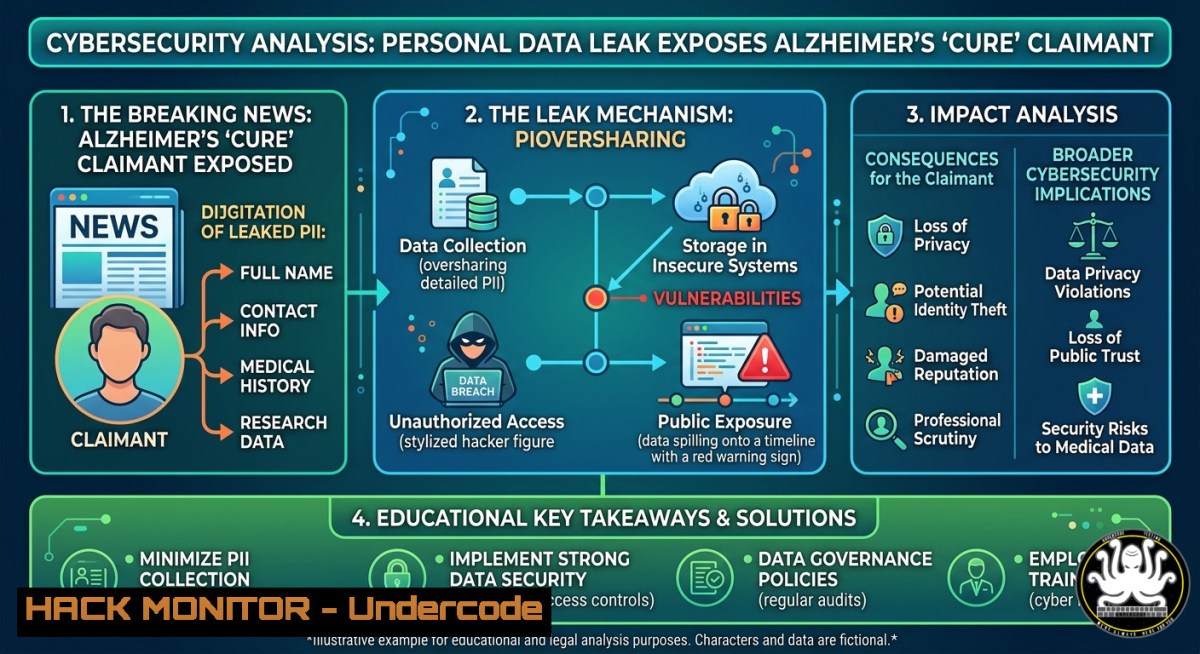
A recent LinkedIn post by a user named Jade Wilson inadvertently disclosed a wealth of personally identifiable information (PII), including full names, birth dates, family relationships, and even a potential medical breakthrough claim. While the post’s intent was celebratory, it serves as a textbook case for security professionals on how oversharing online can fuel OSINT gathering, social engineering, and identity theft. This article extracts the technical lessons from this incident and provides actionable commands and configurations to protect digital footprints.
Learning Objectives:
- Identify common forms of PII exposure on professional social networks and assess associated risks.
- Apply Linux and Windows command-line tools to audit your own digital footprint and detect OSINT leaks.
- Implement API security and cloud hardening practices to prevent automated scraping of personal data.
You Should Know:
- OSINT Reconnaissance: How Attackers Exploit Shared Personal Data
Attackers can use even fragmented PII (names, birth dates, family relations) to build comprehensive profiles. The post revealed: full name, birth date, parents’ names and DoBs, partner’s family members, and children’s initials. This information can be cross-referenced with breached databases, social media, and public records.
Step-by-step guide to simulate OSINT gathering (for defensive purposes only):
– Linux: Use `theHarvester` to search for emails/domains linked to the disclosed names.
`theHarvester -d landofgreenginger.uk -b linkedin,google`
- Windows: Use `PowerShell` to query HaveIBeenPwned API (requires API key).
`Invoke-RestMethod -Uri “https://haveibeenpwned.com/api/v3/breachedaccount/[email protected]” -Headers @{“hibp-api-key”=”YOUR_KEY”}`
– Mitigation: Regularly scan for exposed PII using tools like `SpiderFoot` (CLI or Docker).
`docker run -it spiderfoot/spiderfoot sf.py -l 127.0.0.1:5001`
2. Hardening Social Media Profiles Against Automated Scraping
LinkedIn and similar platforms are frequently scraped by bots. The post’s public visibility means any connected data (comments, reactions, network) is harvestable. Use these techniques to limit exposure.
Step-by-step configuration:
- LinkedIn privacy: Go to Settings > Visibility > “Profile viewing options” set to anonymous. Disable “Share profile updates with network”. Turn off “Discoverability by email/phone”.
- For browser-based protection, use `uBlock Origin` with custom filters to block known scraping domains. Add to “My filters”:
`||linkedin.com//voyager$script` (minimizes API calls)
- Windows firewall rule to block outbound connections to tracking endpoints (run as admin):
`New-NetFirewallRule -DisplayName “Block LinkedIn Telemetry” -Direction Outbound -RemoteAddress 13.107.42.0/24 -Action Block`
– Linux `iptables` equivalent:
`sudo iptables -A OUTPUT -d 13.107.42.0/24 -j DROP`
- API Security: Preventing Data Exfiltration from Professional Platforms
Many social networks expose REST APIs that, if misconfigured, can leak user data. Although the post didn’t show API keys, the principle applies: never embed credentials in client-side code or public repositories.
Step-by-step API security hardening:
- Scan for exposed secrets in git repos using
truffleHog.
`docker run -it -v “$PWD:/pwd” trufflesecurity/trufflehog:latest github –repo=https://github.com/anyuser/anyrepo` - Validate API endpoint permissions with `Postman` or
Burp Suite. Send a request to `https://api.linkedin.com/v2/me` with a dummy token – observe if any public data is returned without auth. - Implement rate limiting and IP whitelisting for your own APIs using `fail2ban` on Linux:
`sudo fail2ban-client set apache-auth addignoreip 192.168.1.0/24`
4. Cloud Hardening for Personal Websites (e.g., landofgreenginger.uk)
The post’s author lists a domain landofgreenginger.uk. Attackers often target such domains for subdomain enumeration, DNS misconfigurations, or open S3 buckets.
Step-by-step cloud security audit:
- Use `dnsrecon` to enumerate subdomains:
`dnsrecon -d landofgreenginger.uk -t brt -D /usr/share/wordlists/subdomains-top1mil-5000.txt`
- Check for open S3 buckets with
awscli:
`aws s3 ls s3://landofgreenginger/ –no-sign-request` (if returns data, bucket is public) - Linux command to check for missing security headers on the website:
`curl -I https://landofgreenginger.uk | grep -i “strict-transport-security”`
– Remediation: EnableS3 Block Public Access, configure WAF rules on CloudFront, and set `Content-Security-Policy` header.
- Vulnerability Exploitation and Mitigation: Social Engineering via PII
The disclosed relationships (parents, partner’s siblings) are gold for vishing or spear-phishing. An attacker could impersonate a family member using those names.
Step-by-step simulated defence:
- Create a family “code word” policy (no technical command needed but implement via `Keepass` to store shared secrets).
- Use `SET` (Social-Engineer Toolkit) to understand phishing vectors (authorized lab only):
`git clone https://github.com/trustedsec/social-engineer-toolkit/ && cd set && python setup.py`
– Mitigation: Deploy email filtering rules in Exchange Online or Microsoft 365. PowerShell command to add a transport rule:
`New-TransportRule -Name “Block Family Impersonation” -FromScope InOrganization -SubjectContainsWords “emergency”,”urgent” -RejectMessageReasonText “Potential spoofing detected”`
What Undercode Say:
- Key Takeaway 1: Even a positive personal announcement can become an OSINT goldmine when it includes structured PII (names, dates, relationships). Attackers correlate this with data from breaches to assemble complete identity profiles.
- Key Takeaway 2: Defensive measures must be applied at multiple layers: profile privacy settings, network-level firewalls, API access controls, and cloud infrastructure hardening. No single tool suffices.
Analysis: The Jade Wilson post is a realistic, unsanitized example of human error in cybersecurity. While her claimed Alzheimer’s cure is medically unverified, the data exposure is real. The comments reveal that other users immediately noticed the PII risk (e.g., Taylor Hansen’s warning). This highlights a critical gap – technical professionals often assume non-technical users understand digital footprints. In reality, even smart individuals overlook the persistence and linkability of personal data. Organisations should mandate annual privacy training that includes live examples of OSINT extraction from employees’ own public posts.
Expected Output:
Introduction: (already provided above)
What Undercode Say: (already provided)
Prediction:
Within 12 months, we will see a rise in automated AI-driven OSINT tools that scrape professional networks, correlate PII with deep web breach dumps, and generate targeted social engineering campaigns in real time. Regulatory bodies like the ICO and FTC will begin issuing fines not only for companies that leak data but also for individuals whose reckless oversharing leads to cascading breaches (e.g., enabling CEO fraud). To counter this, expect “personal attack surface management” to become a paid consumer service, integrating continuous monitoring, takedown requests, and digital identity insurance. The boundary between personal social media and corporate security will effectively dissolve, forcing organisations to enforce social media usage policies as strictly as endpoint security policies.
▶️ Related Video (78% Match):
🎯Let’s Practice For Free:
IT/Security Reporter URL:
Reported By: Jade Codes – Hackers Feeds
Extra Hub: Undercode MoN
Basic Verification: Pass ✅


