Listen to this Post
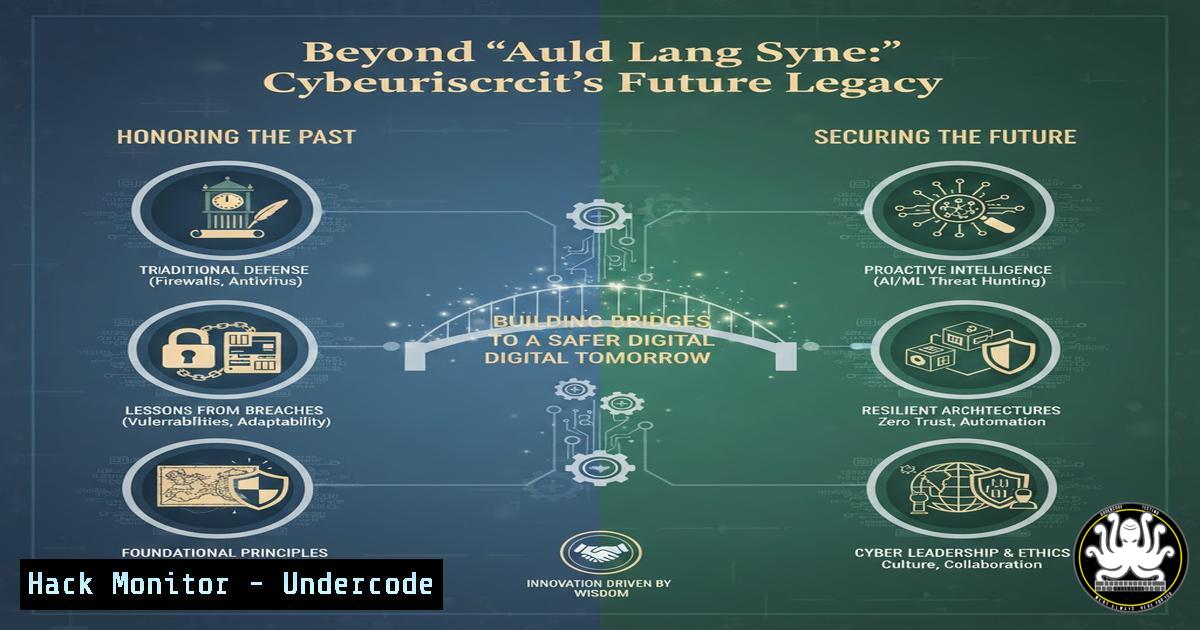
Introduction:
As leaders globally reflect on past lessons and relationships to navigate future challenges, this principle is profoundly critical in cybersecurity. The digital landscape’s evolution is built upon layers of legacy code, past vulnerabilities, and historical attack vectors that continuously resurface. For security professionals, “times long past” are not just sentimental memories but active databases of threats, requiring continuous analysis and integration into modern defense postures to prevent history from repeating itself in the form of a devastating breach.
Learning Objectives:
- Understand how to systematically audit and secure legacy systems and protocols.
- Learn to integrate historical threat intelligence into contemporary security frameworks.
- Develop a leadership mindset that leverages past incidents to foster a proactive security culture.
You Should Know:
- Legacy System Hardening: The Foundation of Modern Defense
The most significant vulnerabilities often reside in systems deployed “long since.” These can range from old web servers and unpatched databases to deprecated network protocols like SMBv1 or TLS 1.0.
Step‑by‑step guide:
Inventory & Discovery: You cannot secure what you do not know. Use network scanning tools to identify all assets, focusing on older OS versions and services.
Command (Linux using nmap): `nmap -sV -O –script vuln 192.168.1.0/24` This scans a subnet, detects service versions, OS, and runs vulnerability scripts.
Command (Windows using PowerShell): `Get-WmiObject -Class Win32_Product | Select-Object Name, Version` Lists installed software and versions for patch assessment.
Prioritize and Patch: Prioritize systems that handle sensitive data or are internet-facing. Establish a strict patch management policy. For systems that cannot be patched (e.g., out-of-support OS), implement compensating controls.
Compensating Controls: Isolate legacy systems within segmented network zones (VLANs). Deploy next-generation firewalls (NGFW) in front of them to enforce strict application-level policies and intrusion prevention. Use a vulnerability management platform to continuously monitor these assets.
2. Threat Intelligence: Learning from “Days Gone By”
Historical attack data is a goldmine. The techniques, tactics, and procedures (TTPs) of past threat actors evolve but often have recognizable signatures.
Step‑by‑step guide:
Collect Internal Intelligence: Aggregate logs from past security incidents—SIEM alerts, firewall blocks, endpoint detection reports. Tools like Elastic Stack (ELK) or Splunk are essential.
Enrich with External Feeds: Subscribe to threat intelligence feeds (e.g., AlienVault OTX, MITRE ATT&CK framework) to understand how old vulnerabilities are being weaponized in new campaigns.
Create Detection Rules: Use this intelligence to write custom detection rules. For example, if a past attack used a specific PowerShell command, create a SIEM or EDR rule to flag it.
Example Sigma Rule (for detection in log events):
title: Suspicious PowerShell Download
status: experimental
logsource:
category: process_creation
product: windows
detection:
selection:
Image|endswith: '\powershell.exe'
CommandLine|contains: 'Net.WebClient'
condition: selection
Simulate & Train: Regularly use frameworks like the MITRE ATT&CK to simulate historical attacks via red team exercises, ensuring your blue team can recognize and respond to them.
3. API Security: The Ghosts of Integrations Past
Modern digital transformation is built on APIs, many of which were deployed quickly without rigorous security testing and now form the backbone of critical business processes.
Step‑by‑step guide:
Discover Shadow APIs: Use traffic analysis tools or API security platforms to find all APIs in your environment, especially those not documented in your developer portal.
Authenticate and Authorize: Ensure every API endpoint enforces strict authentication (e.g., OAuth 2.0, API keys) and role-based access control (RBAC). Never rely on “security through obscurity” for old API versions.
Test Rigorously: Conduct static and dynamic security testing (SAST/DAST) on API code. Test for old OWASP Top 10 API risks like Broken Object Level Authorization (BOLA) and Excessive Data Exposure.
Command (using OWASP ZAP CLI for DAST): `zap-cli quick-scan –self-contained –start-options ‘-config api.disablekey=true’ http://api.yourdomain.com/v1/`
- Cloud Hardening: Don’t Let Old Configurations Haunt You
Cloud misconfigurations, often set in the early days of adoption, are a leading cause of breaches. The “move fast” mentality leaves security gaps wide open.
Step‑by‑step guide:
Enforce Infrastructure as Code (IaC): Use Terraform or AWS CloudFormation to define all resources. This allows you to version control, review, and audit your cloud architecture.
Continuous Compliance Scanning: Implement tools like AWS Config, Azure Policy, or third-party tools like Prowler or Checkov to continuously scan for misconfigurations.
Command (Prowler for AWS): `./prowler -g gdpr` Runs a compliance check based on the GDPR framework.
Principle of Least Privilege (PoLP) for Identities: Regularly audit IAM roles and policies. Use tools to identify and remove over-permissive policies attached to users, roles, or services.
- Leadership & Culture: Carrying Forward a Security Mindset
Technical controls fail without a culture rooted in learning from the past. Leaders must institutionalize lessons from incidents.
Step‑by‑step guide:
Blameless Post-Mortems: After every security event, conduct a blameless retrospective. Document the root cause, the response effectiveness, and actionable improvements.
Knowledge Sharing: Create an internal wiki detailing past incidents (anonymized), their solutions, and the indicators of compromise (IOCs). Make this mandatory reading for new hires in IT and development.
Gamify Training: Use platforms that offer interactive, scenario-based training where employees face simulations of historical phishing campaigns or social engineering attacks relevant to your industry.
What Undercode Say:
The Past is a Prologue to the Next Breach: Ignoring legacy systems and historical attack data is not a vulnerability; it is an open invitation. Security is a cumulative discipline where yesterday’s oversight is tomorrow’s headline.
Leadership is the Ultimate Compensating Control: No tool can fully compensate for a culture of vigilance. Leaders who actively reference and learn from past security failures within their organization build a more resilient and aware human firewall, which is the most critical layer of defense.
Analysis:
The original post philosophically connects honoring the past with effective leadership. In cybersecurity, this is not philosophical—it is operational necessity. The digital infrastructure is an archaeological dig of technologies. Each layer, if not properly maintained and understood, becomes a foothold for adversaries. The comments from cybersecurity and technology leaders like Helen Yu and Bob Carver subtly underscore this; the “weight of history” in tech is literal technical debt and unpatched vulnerabilities. A leader’s role is to allocate resources not just for the next-gen AI security tool, but for the unglamorous work of patching, auditing, and remembering. The future of cybersecurity depends on a disciplined, unwavering commitment to understanding and securing the “old long since” of our digital environments.
Prediction:
Organizations that fail to systematize the lessons from their security past will face exponentially greater risks in the next 2-3 years. As AI-powered offensive tools become commoditized, they will be used to automatically exploit known, unpatched vulnerabilities and misconfigurations at scale. The attackers’ AI will learn from the entire history of public exploits far more efficiently than many defensive teams. Conversely, organizations that build robust processes for legacy management, historical threat intelligence integration, and cultural learning will gain a decisive advantage, turning their historical data into a predictive shield. The divide between resilient and vulnerable organizations will be defined by their relationship with their own digital history.
▶️ Related Video (78% Match):
🎯Let’s Practice For Free:
IT/Security Reporter URL:
Reported By: Scottwindonluton The – Hackers Feeds
Extra Hub: Undercode MoN
Basic Verification: Pass ✅


