
Listen to this Post
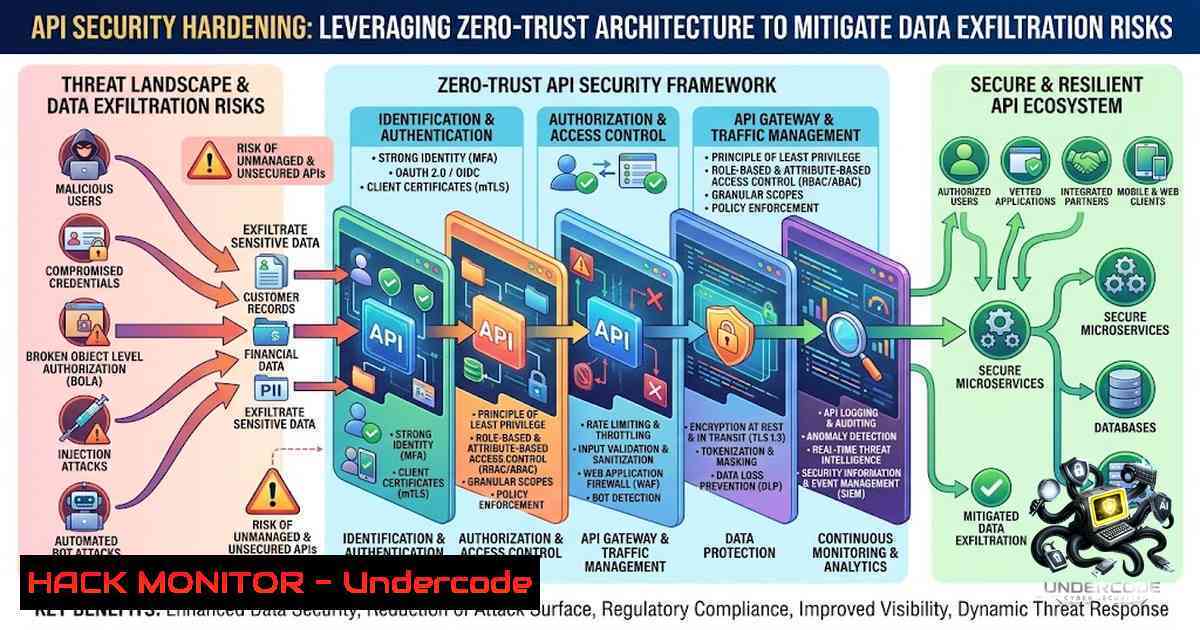
Introduction:
As organizations rapidly adopt microservices and cloud-1ative architectures, the application programming interface (API) has become the primary attack surface for modern cyber threats. The shift towards distributed systems has exponentially increased the number of exposed endpoints, making API security not just a developer concern but a critical organizational risk. This article dissects the key vulnerabilities in API implementations and provides actionable strategies—from robust authentication mechanisms to runtime protection—to fortify your digital ecosystem.
Learning Objectives & Secrets:
- Objective 1: Implement Advanced JWT Handling – Learn to securely manage JSON Web Tokens by validating signatures, setting appropriate expiration times, and leveraging allowlists to prevent token replay attacks.
- Objective 2: Enforce Strict Input Validation – Go beyond basic regex patterns; discover how to implement schema-based validation to prevent injection attacks (SQL, NoSQL, and command injection) that often target API endpoints.
- Objective 3: Dynamic Rate Limiting Secrets – Understand how to configure adaptive rate limiting based on user behavior and IP reputation to thwart brute-force and credential-stuffing attacks without affecting legitimate traffic.
You Should Know:
1. Strengthening Authentication with Mutual TLS (mTLS)
Mutual TLS ensures that both the client and server authenticate each other, eliminating the risk of unauthorized access from spoofed or compromised clients. This is a cornerstone of zero-trust networking.
Step‑by‑step guide explaining what this does and how to use it:
– Generate Client Certificates: Use OpenSSL to create client and server certificates, ensuring they are signed by a trusted Certificate Authority (CA).
 Generate a private key for the client
openssl genrsa -out client.key 2048
 Generate a Certificate Signing Request (CSR)
openssl req -1ew -key client.key -out client.csr
 Sign the CSR using a CA to create the client certificate
openssl x509 -req -in client.csr -CA ca.crt -CAkey ca.key -CAcreateserial -out client.crt -days 365
– Configure NGINX or API Gateway: Deploy the certificates and enforce mTLS in the server configuration.
server {
listen 443 ssl;
ssl_certificate /etc/nginx/ssl/server.crt;
ssl_certificate_key /etc/nginx/ssl/server.key;
ssl_client_certificate /etc/nginx/ssl/ca.crt;
ssl_verify_client on;
location /api {
proxy_pass http://backend;
}
}
– Test the Configuration: Use `curl` to send a request with the client certificate to verify that the connection is properly authenticated.
2. Securing API Secrets and Environment Variables
Hardcoding credentials in source code is a major security flaw. Adopt robust secret management tools and avoid storing sensitive data in plain text.
Step‑by‑step guide explaining what this does and how to use it:
– Use HashiCorp Vault: Deploy Vault as your secret management system to dynamically generate database credentials and API keys.
– Environment Variable Management on Windows/Linux: Use system environment variables to pass secrets to applications.
– Linux: `export API_KEY=”your_secret_key”` and reference it in the application.
– Windows (PowerShell): `$env:API_KEY=”your_secret_key”`
– Integrate with CI/CD Pipelines: Use GitHub Actions or GitLab CI to inject secrets at build time, ensuring they never appear in logs or artifacts.
- name: Deploy
env:
SECRET_TOKEN: ${{ secrets.SECRET_TOKEN }}
run: ./deploy.sh
- Implementation of API Gateways for Unified Security Policies
An API Gateway acts as a reverse proxy to route requests, enforce policies, and centralize logging, dramatically reducing the attack surface.
Step‑by‑step guide explaining what this does and how to use it:
– Deploy Kong API Gateway: Install Kong via Docker or on a Linux server.
docker run -d --1ame kong-database -p 5432:5432 -e "POSTGRES_USER=kong" -e "POSTGRES_DB=kong" postgres:9.6
docker run -d --1ame kong --link kong-database -e "KONG_DATABASE=postgres" -e "KONG_PG_HOST=kong-database" -p 8000:8000 -p 8443:8443 kong
– Enable Key Authentication Plugins: Create a service and apply the key-auth plugin to require API keys for every request.
– Configure Rate Limiting: Use the rate-limiting plugin to cap requests per minute per client.
– Monitor Analytics: Integrate with Prometheus/Grafana to visualize traffic patterns and detect anomalies.
4. Advanced Logging and Monitoring with SIEM Integration
Logging API traffic is crucial for forensic analysis. Integrating with a SIEM (Security Information and Event Management) system allows you to correlate events and detect potential breaches.
Step‑by‑step guide explaining what this does and how to use it:
– Configure Structured Logging: Implement JSON-formatted logs in your application to make parsing easier.
– Centralize Logs with ELK Stack: Ship logs to Elasticsearch, Logstash, and Kibana for visualization and alerting.
– Set Up Real-Time Alerts: Use Logstash to filter for suspicious status codes (e.g., 401, 403, 500) and trigger alerts.
– Linux Command for Log Monitoring:
tail -f /var/log/nginx/access.log | grep "POST /api/login"
– Implement Audit Trails: Ensure all administrative actions are logged with user IDs and timestamps to support compliance (GDPR, HIPAA).
5. Securing Cloud-1ative Environments and Container Security
Microservices often run in containers. Hardening these environments prevents privilege escalation and container escape vulnerabilities.
Step‑by‑step guide explaining what this does and how to use it:
– Scan Images for Vulnerabilities: Use Trivy or Clair to scan container images before deploying to your registry.
trivy image your-app:latest --severity HIGH,CRITICAL --exit-code 1
– Run Containers with Least Privilege: Avoid running containers as root; use a specific user ID.
USER 1001:1001
– Apply Network Policies in Kubernetes: Restrict pod-to-pod communication to only necessary namespaces and ports.
apiVersion: networking.k8s.io/v1
kind: NetworkPolicy
metadata:
name: api-allow-backend
spec:
podSelector:
matchLabels:
app: api
policyTypes:
- Ingress
- Egress
ingress:
- from:
- podSelector:
matchLabels:
app: frontend
- Understanding and Mitigating OWASP API Security Top 10 Risks
The OWASP API Security Top 10 outlines critical risks like Broken Object Level Authorization (BOLA) and Broken User Authentication.
Step‑by‑step guide explaining what this does and how to use it:
– Implement Proper Authorization Checks: Ensure every endpoint checks that the authenticated user has permission to access the requested resource ID.
– Disable Default/Weak Passwords: Enforce strong password policies and multi-factor authentication (MFA).
– API Fuzzing for Discovery: Use tools like Burp Suite or Postman to fuzz endpoints for vulnerabilities.
– Remediation for BOLA: Use server-side logic to map user IDs to authorized resources, replacing direct client-supplied references.
7. Code Snippets for Security Middleware (Node.js Example)
Adding security middleware can intercept requests and enforce additional logic like CORS, CSP headers, or request validation.
Step‑by‑step guide explaining what this does and how to use it:
– Install Helmet.js: `npm install helmet`
– Apply Helmet Middleware:
const express = require('express');
const helmet = require('helmet');
const app = express();
app.use(helmet()); // Sets various HTTP headers for security
app.use(helmet.noSniff());
app.use(helmet.xssFilter());
– Validate Input with Joi:
const Joi = require('joi');
const schema = Joi.object({
username: Joi.string().alphanum().min(3).max(30).required(),
password: Joi.string().pattern(new RegExp('^[a-zA-Z0-9]{3,30}$')),
});
// Validate request body
const { error } = schema.validate(req.body);
if (error) return res.status(400).send(error.details[bash].message);
What Undercode Say:
- Key Takeaway 1: Modern API attacks are sophisticated and often exploit business logic flaws, not just technical vulnerabilities. Therefore, security testing must be continuous and shift-left into the development lifecycle.
- Key Takeaway 2: Cloud-1ative security is a shared responsibility. While cloud providers secure the infrastructure, organizations must secure their code, configuration, and access controls.
Analysis:
The increasing reliance on APIs for critical business functions makes them a prime target for data exfiltration. The old paradigm of perimeter-based security is obsolete. Security must be embedded in the API design from the start, using robust authentication, authorization, and encryption. Furthermore, the complexity of distributed systems mandates observability; you cannot protect what you cannot see. The recommended commands and configurations are not just theoretical—they are essential operational practices to build a resilient and trustworthy digital service.
Prediction:
- +1 The adoption of AI-driven threat detection for API traffic will drastically reduce mean time to detection (MTTD), allowing for autonomous responses to suspicious patterns.
- +1 Standardization of API security protocols (like OpenAPI and AsyncAPI) will improve tooling interoperability, making security automation more accessible to developers.
- -1 The proliferation of GraphQL and gRPC APIs introduces new vectors for denial-of-service and introspection attacks, potentially outpacing the current defensive capabilities of many organizations.
▶️ Related Video (86% Match):
🎯Let’s Practice For Free:
🎓 Live Courses & Certifications:
Join Undercode Academy for Verified Certifications
🚀 Request a Custom Project:
Secure, high-velocity infrastructure and disruptive technological engineering. Contact our engineering team for high-tier development and proprietary systems:
[email protected]
💎 Smart Architecture | 🛡️ Secure by Design | ⭐ Trusted by Thousands
IT/Security Reporter URL:
Reported By: https://lnkd.in/p/em8awZhh – Hackers Feeds
Extra Hub: Undercode MoN
Basic Verification: Pass ✅


