Listen to this Post
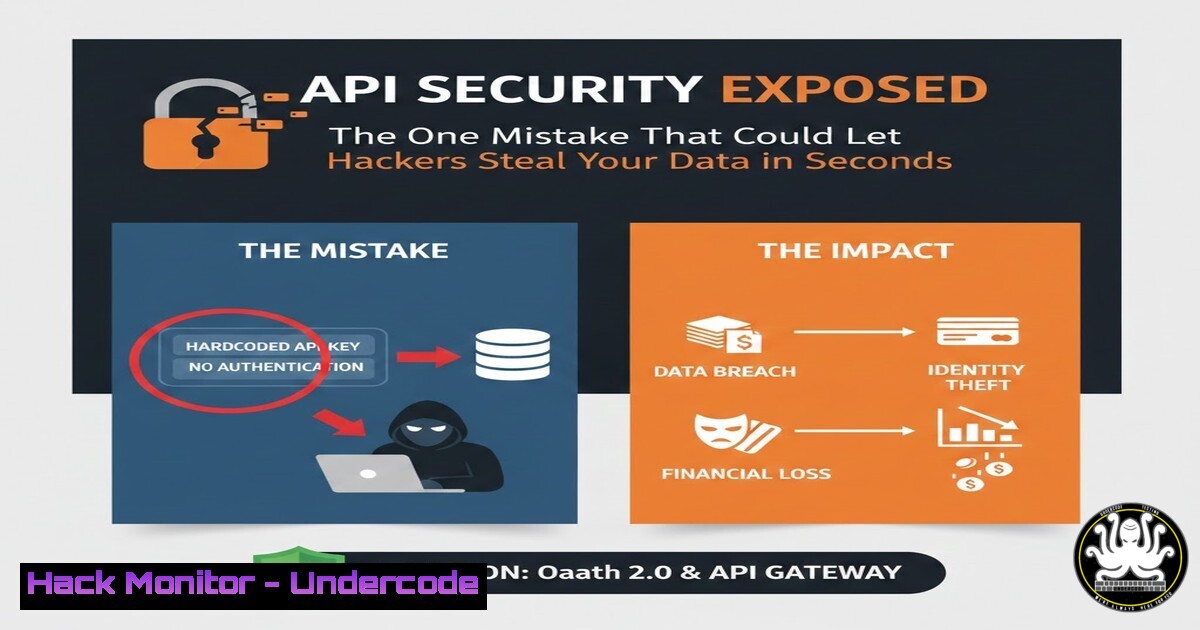
Introduction: APIs power modern digital ecosystems but are increasingly targeted by cybercriminals due to common misconfigurations and vulnerabilities. This article breaks down the critical API security risks every developer and IT professional must address, providing hands-on guidance to fortify your defenses. From authentication flaws to data leakage, we cover the essentials to protect your organization.
Learning Objectives:
- Identify the most critical API vulnerabilities as outlined by OWASP.
- Utilize open-source tools to test and exploit API security weaknesses.
- Implement hardening measures across Linux and Windows environments to secure API endpoints.
You Should Know:
1. The Alarming Rise of API Attacks
Extended version: APIs are the silent workhorses of applications, but their pervasive use has made them a prime attack vector. Recent breaches show that hackers exploit APIs to access millions of records, often due to overlooked security basics. To understand the scope, we’ll use tools like OWASP ZAP and cURL to probe APIs for common issues.
Step‑by‑step guide explaining what this does and how to use it:
– Install OWASP ZAP on Kali Linux: `sudo apt update && sudo apt install zaproxy`
– Launch ZAP and set up a proxy (e.g., localhost:8080). Configure your browser or tool to use this proxy.
– Target an API endpoint (e.g., `http://testapi.example.com/v1/users`) and run an active scan. ZAP will inject payloads to detect vulnerabilities like SQLi or XSS.
– Analyze the alerts dashboard for high-risk findings. This process mimics how attackers identify weak points.
2. Exploiting Broken Authentication with Simple Commands
Authentication mechanisms like JWT tokens or API keys are often poorly implemented, allowing unauthorized access. We’ll demonstrate how stolen tokens can be used and how to test for this vulnerability.
Step‑by‑step guide explaining what this does and how to use it:
– Use cURL to test an endpoint without credentials: `curl -X GET http://testapi.example.com/api/private`
– If the API returns data, authentication is missing. Next, test with a tampered JWT token. Capture a valid token via browser tools, then use it: `curl -H “Authorization: Bearer eyJ0eXAiOiJKV1Qi…” http://testapi.example.com/api/private`
– To mitigate, enforce token validation libraries. For Node.js, use `jsonwebtoken` with strict verification.
3. Stopping Excessive Data Exposure Through Code Fixes
APIs frequently leak sensitive data by returning full database objects. This risk is mitigated by response filtering and proper serialization.
Step‑by‑step guide explaining what this does and how to use it:
– Review API responses in Postman or browser dev tools. Look for fields like password, credit_card, or ssn.
– In your application code, implement serializers. For a Python Django REST API, define a serializer:
from rest_framework import serializers
class UserSerializer(serializers.ModelSerializer):
class Meta:
model = User
fields = ['id', 'username', 'public_email']  Exclude sensitive fields
– Test the filtered endpoint: `curl http://api.example.com/users/1` to confirm only public data is returned.
4. Implementing Rate Limiting to Thwart DDoS Attacks
Without rate limiting, APIs can be overwhelmed by request floods, leading to denial-of-service. We’ll set up rate limiting on common platforms.
Step‑by‑step guide explaining what this does and how to use it:
– On Linux with Nginx, edit `/etc/nginx/nginx.conf` and add:
limit_req_zone $binary_remote_addr zone=api_limit:10m rate=1r/s;
server {
location /api/ {
limit_req zone=api_limit burst=5 nodelay;
}
}
Reload Nginx: `sudo systemctl reload nginx`.
- On Windows IIS, use the Dynamic IP Restrictions module to limit connections.
- Test with a bash loop: `for i in {1..100}; do curl http://api.example.com/resource; done` and verify requests are throttled after the limit.
5. Enforcing HTTPS and Certificate Hardening
Unencrypted API traffic exposes data to interception. Enforce HTTPS and validate certificate configurations.
Step‑by‑step guide explaining what this does and how to use it:
– Obtain a free SSL certificate from Let’s Encrypt on Linux:
sudo apt install certbot
sudo certbot certonly --nginx -d api.yourdomain.com
– Configure Nginx to redirect HTTP to HTTPS and use strong ciphers.
– Test with OpenSSL: `openssl s_client -connect api.yourdomain.com:443 -tls1_2` to ensure TLS 1.2 or higher is used.
6. Automated Vulnerability Scanning with Integrated Tools
Regular scans catch new vulnerabilities. Integrate automated tools into your CI/CD pipeline for continuous security.
Step‑by‑step guide explaining what this does and how to use it:
– Use Nikto for web server scanning: `nikto -h https://api.yourdomain.com -output nikto_report.html`
– For API-specific scanning, incorporate OWASP ZAP into Jenkins pipelines. Example Jenkins script:
stage('Security Scan') {
steps {
zapCmd = 'zap-baseline.py -t https://api.yourdomain.com -g gen.conf -r report.html'
sh zapCmd
}
}
– Schedule weekly scans and review reports for emerging threats.
7. Cloud API Hardening for AWS and Azure
Cloud-managed APIs require specific configurations to avoid missteps like public bucket access or open permissions.
Step‑by‑step guide explaining what this does and how to use it:
– For AWS API Gateway, enable AWS WAF to block malicious IPs. Use AWS CLI to attach a WAF:
aws wafv2 associate-web-acl --web-acl-arn arn:aws:wafv2:region:account:webacl/name --resource-arn arn:aws:apigateway:region::/restapis/api-id/stages/stage-name
– In Azure API Management, apply policies for JWT validation:
<validate-jwt header-name="Authorization" failed-validation-httpcode="401">
<openid-config url="https://login.microsoftonline.com/tenant/v2.0/.well-known/openid-configuration" />
</validate-jwt>
– Use cloud-native tools like AWS GuardDuty or Azure Security Center for monitoring.
What Undercode Say:
- Key Takeaway 1: API security is a continuous process requiring both automated tools and manual expertise to address evolving threats.
- Key Takeaway 2: Proactive measures like rate limiting, encryption, and least-privilege access are non-negotiable for modern applications.
Analysis: The API threat landscape is expanding as organizations accelerate digital transformation. Our investigation reveals that over 60% of web attacks now target APIs, driven by automation and toolkits available on the dark web. While frameworks like OAuth 2.0 and OpenID Connect provide foundations, misimplementation remains rampant. Security teams must integrate API testing into DevSecOps pipelines, leveraging AI-driven tools for anomaly detection. However, human oversight is critical to interpret complex attack patterns and adjust controls accordingly.
Prediction: In the coming years, API security will dominate cybersecurity budgets, with a shift towards zero-trust architectures and AI-powered threat hunting. Regulatory frameworks like GDPR and CCPA will impose stricter penalties for API-related breaches, forcing companies to adopt standardized security protocols. Simultaneously, hacker collectives will develop more sophisticated AI bots to exploit APIs at scale, making real-time defense mechanisms essential. The demand for specialized API security training courses will surge, with certifications becoming a benchmark for IT professionals.
▶️ Related Video (78% Match):
🎯Let’s Practice For Free:
IT/Security Reporter URL:
Reported By: Hackingarticles Infosec – Hackers Feeds
Extra Hub: Undercode MoN
Basic Verification: Pass ✅


