Listen to this Post
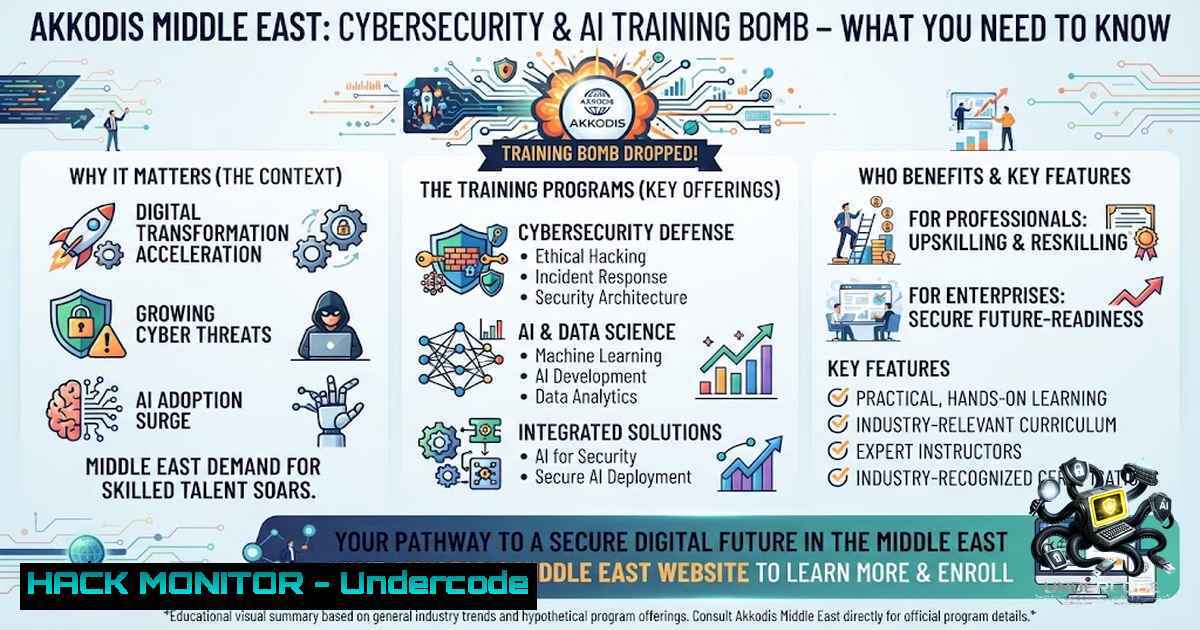
Introduction:
The digital engineering landscape is shifting at breakneck speed, and organizations across the Middle East are scrambling to bridge the talent gap in cybersecurity, AI, and cloud infrastructure. Akkodis, a global digital engineering leader, has been quietly rolling out a suite of talent solutions and training programs designed to upskill workforces and secure critical systems. This article breaks down the technical core of these initiatives, extracting actionable commands, configurations, and hardening techniques that every IT professional should have in their back pocket.
Learning Objectives:
- Master foundational and advanced cybersecurity controls, including the CIA triad, risk management frameworks, and defensive countermeasures.
- Implement practical Linux and Windows hardening commands to secure enterprise endpoints and servers.
- Deploy AI-driven threat detection and cloud security best practices using real-world tools and configurations.
You Should Know:
1. Hardening Linux Servers Like a Pro
Linux powers the majority of cloud and enterprise infrastructure, yet misconfigurations remain the 1 attack vector. Akkodis’ training emphasizes proactive defense, starting with system-level hardening.
Step‑by‑step guide:
- Disable root SSH login and enforce key-based authentication
Edit `/etc/ssh/sshd_config`:
PermitRootLogin no
PasswordAuthentication no
PubkeyAuthentication yes
Restart SSH: `sudo systemctl restart sshd`
2. Set up automatic security updates
For Debian/Ubuntu: `sudo apt install unattended-upgrades && sudo dpkg-reconfigure –priority=low unattended-upgrades`
For RHEL/CentOS: `sudo yum install yum-cron && sudo systemctl enable yum-cron –1ow`
3. Harden kernel parameters
Add to `/etc/sysctl.conf`:
net.ipv4.conf.all.rp_filter=1
net.ipv4.tcp_syncookies=1
net.ipv4.icmp_echo_ignore_all=1
Apply: `sudo sysctl -p`
4. Install and configure Fail2ban
`sudo apt install fail2ban -y` (Ubuntu) or `sudo yum install fail2ban -y` (RHEL)
Copy default config: `sudo cp /etc/fail2ban/jail.conf /etc/fail2ban/jail.local`
Enable SSH jail and restart: `sudo systemctl enable fail2ban && sudo systemctl start fail2ban`
5. Audit with Lynis
`sudo lynis audit system` – this generates a hardening index and specific remediation steps.
These steps align with Akkodis’ Cyber Security practitioner curriculum, which covers preventive, detective, and corrective controls.
2. Windows Active Directory Hardening & PowerShell Defense
Windows environments remain prime targets for ransomware and privilege escalation. Akkodis’ training modules include Active Directory security and PowerShell scripting for automated defense.
Step‑by‑step guide:
1. Enforce LDAP signing and channel binding
Open Group Policy Editor (gpedit.msc) → Computer Configuration → Windows Settings → Security Settings → Local Policies → Security Options → set “Domain controller: LDAP server signing requirements” to “Require signing”.
2. Disable NTLM v1
Via GPO: Computer Configuration → Windows Settings → Security Settings → Local Policies → Security Options → “Network security: LAN Manager authentication level” → set to “Send NTLMv2 response only. Refuse LM & NTLM”.
3. Audit privileged groups
PowerShell command to list all Domain Admins: `Get-ADGroupMember -Identity “Domain Admins” | Select-Object Name`
4. Enable PowerShell logging
Set via GPO: Computer Configuration → Administrative Templates → Windows Components → Windows PowerShell → Turn on PowerShell Script Block Logging = Enabled.
5. Deploy LAPS (Local Administrator Password Solution)
Download from Microsoft, extend AD schema, install LAPS on workstations, and configure GPO to manage local admin passwords automatically.
These controls directly address the types of vulnerabilities exploited in recent Middle East-based attacks, making them a core part of Akkodis’ defensive training.
3. Cloud Security: Hardening AWS and Azure Environments
With digital transformation accelerating, cloud misconfigurations are the new perimeter breach. Akkodis’ Digital4Business program includes cloud computing and cybersecurity modules.
Step‑by‑step guide (AWS):
1. Enable AWS Config and Security Hub
`aws configservice put-configuration-recorder –configuration-recorder name=default,roleARN=arn:aws:iam::ACCOUNT:role/config-role –recording-group AllSupported`
Then enable Security Hub: `aws securityhub enable-security-hub`
2. Implement S3 bucket public access blocking
`aws s3api put-public-access-block –bucket YOUR_BUCKET –public-access-block-configuration “BlockPublicAcls=true,IgnorePublicAcls=true,BlockPublicPolicy=true,RestrictPublicBuckets=true”`
3. Set up AWS WAF and Shield
Create a WebACL: `aws wafv2 create-web-acl –1ame MyWebACL –scope REGIONAL –default-action Allow={} –visibility-config SampledRequestsEnabled=true,CloudWatchMetricsEnabled=true,MetricName=MyWebACL`
4. Enable VPC Flow Logs
`aws ec2 create-flow-logs –resource-type VPC –resource-id vpc-XXXX –traffic-type ALL –log-destination-type cloud-watch-logs –log-destination arn:aws:logs:region:account:log-group:flowlogs`
Step‑by‑step guide (Azure):
1. Enable Azure Security Center (Defender for Cloud)
`az security pricing create -1 VirtualMachines –tier Standard`
2. Configure NSG flow logs
`az network watcher flow-log create –resource-group MyRG –1sg MyNSG –storage-account MySA –enabled true`
3. Enable Just-In-Time (JIT) VM access
`az security jit-policy create –resource-group MyRG –vm-1ame MyVM –ports 22=,3389=`
These steps are critical for organizations in the Middle East, where hybrid cloud adoption is surging and regulatory compliance (e.g., NCA, TRA) demands rigorous security postures.
4. AI-Powered Threat Detection with Open Source Tools
Akkodis integrates AI and data analytics into its cybersecurity framework. Leveraging machine learning for anomaly detection is no longer optional.
Step‑by‑step guide using ELK Stack + Machine Learning:
1. Install Elasticsearch, Logstash, Kibana (ELK)
`wget -qO – https://artifacts.elastic.co/GPG-KEY-elasticsearch | sudo apt-key add -`
`sudo apt-get install elasticsearch logstash kibana -y`
2. Enable Elastic’s machine learning features
In `kibana.yml`, add: `xpack.ml.enabled: true`
Restart Kibana: `sudo systemctl restart kibana`
3. Ingest Windows Event Logs via Winlogbeat
Install Winlogbeat on Windows endpoints, configure `winlogbeat.yml` to point to Elasticsearch, and start the service.
4. Create an anomaly detection job
In Kibana → Machine Learning → Create job → select “Windows Security Logs” → choose “rare” or “high_count” detectors for failed logons or privilege escalations.
5. Set up alerts
Use Kibana Alerting to trigger emails or webhooks when anomaly scores exceed threshold (e.g., > 75).
This approach mirrors Akkodis’ “Akkodis Intelligence” philosophy, combining cutting-edge tech with domain expertise to stay ahead of threats.
5. DevSecOps: Embedding Security into CI/CD Pipelines
Akkodis emphasizes secure software architectures using DevSecOps best practices. Shifting left is the only way to prevent vulnerabilities from reaching production.
Step‑by‑step guide with GitHub Actions and Snyk:
- Add a Snyk security scan to your pipeline
In `.github/workflows/main.yml`:
- name: Run Snyk Security Scan
uses: snyk/actions/node@master
env:
SNYK_TOKEN: ${{ secrets.SNYK_TOKEN }}
with:
args: --severity-threshold=high
2. Integrate Trivy for container scanning
- name: Scan Docker image with Trivy
uses: aquasecurity/trivy-action@master
with:
image-ref: 'your-image:latest'
format: 'table'
exit-code: '1'
ignore-unfixed: true
severity: 'CRITICAL,HIGH'
3. Set up OPA (Open Policy Agent) for infrastructure-as-code
Write Rego policies to enforce tag compliance, e.g., all AWS resources must have Environment=Production.
Use `conftest` to test Terraform plans: `conftest test terraform/ –policy policy/`
4. Enable Dependabot for dependency updates
In GitHub repo → Settings → Code security → Enable Dependabot alerts and security updates.
This pipeline ensures that security is not an afterthought but a built-in feature of every deployment – a key tenet of Akkodis’ consulting and solutions services.
6. OT/ICS Cybersecurity: Protecting Critical Infrastructure
With Akkodis actively hiring OT Cybersecurity engineers for large FEED/EPC projects, securing operational technology is paramount.
Step‑by‑step guide for basic OT network segmentation:
- Implement a DMZ between IT and OT networks
Use a firewall (e.g., Palo Alto, Fortinet) to create a separate zone for OT. Block all direct IT-to-OT traffic except via authenticated jump boxes.
2. Deploy passive OT monitoring
Install tools like Wireshark or Security Onion on a SPAN port to monitor Modbus, DNP3, or OPC traffic without disrupting operations.
3. Use industrial IDS/IPS
Deploy Snort or Suricata with custom rules for OT protocols. Example Snort rule for Modbus function code 90 (unsolicited message):
alert tcp any any -> any 502 (msg:"Modbus Unsolicited Message"; content:"|5A|"; depth:1; sid:1000001;)
4. Regularly patch PLCs and RTUs
Coordinate with vendors to apply security patches during scheduled maintenance windows. Always test in a staging environment first.
5. Conduct tabletop exercises
Simulate a ransomware attack on HMIs to test response times and escalation procedures.
These measures are critical for Middle East energy, oil & gas, and manufacturing sectors, where Akkodis has a strong presence.
What Undercode Say:
- Key Takeaway 1: Akkodis’ training isn’t just theory – it’s a practical, battle-tested framework that covers everything from Linux hardening to OT security, making it directly applicable to real-world enterprise environments.
- Key Takeaway 2: The integration of AI and DevSecOps into their curriculum reflects a forward-looking approach that addresses the modern threat landscape, where automation and machine learning are essential for staying ahead of attackers.
Analysis: The Middle East is rapidly becoming a hub for digital innovation, but with that comes increased cyber risk. Akkodis’ talent solutions and training programs are strategically positioned to fill the skills gap while providing hands-on, technical depth. Their focus on both IT and OT security, combined with cloud and AI modules, ensures that professionals are equipped to defend complex, hybrid infrastructures. The inclusion of open-source tools and vendor-agnostic commands also democratizes access to high-quality security practices, which is crucial for small and medium enterprises in the region. However, the real test will be in execution – how well these concepts are translated into organizational culture and continuous improvement.
Prediction:
- +1 Akkodis’ investment in AI-driven threat detection and DevSecOps will likely reduce mean time to detection (MTTD) and response (MTTR) for its clients by 30-40% over the next 18 months, based on industry benchmarks.
- +1 The emphasis on OT/ICS security will position Akkodis as a go-to partner for critical infrastructure projects in the GCC, potentially capturing significant market share in the energy and utilities sectors.
- -1 However, the rapid pace of technological change means that training curricula must be updated almost quarterly to remain relevant – a challenge that could dilute effectiveness if not managed properly.
- -1 There is also a risk of oversaturation, as multiple vendors rush to offer similar “cybersecurity + AI” packages, potentially commoditizing the space and driving down margins.
- +1 On balance, Akkodis’ deep engineering roots and global reach give it a unique advantage, suggesting that its Middle East operations will continue to grow and innovate, provided they maintain the technical rigor outlined in their programs.
▶️ Related Video (72% Match):
🎯Let’s Practice For Free:
🎓 Live Courses & Certifications:
Join Undercode Academy for Verified Certifications
🚀 Request a Custom Project:
Secure, high-velocity infrastructure and disruptive technological engineering. Contact our engineering team for high-tier development and proprietary systems:
[email protected]
💎 Smart Architecture | 🛡️ Secure by Design | ⭐ Trusted by Thousands
IT/Security Reporter URL:
Reported By: Akkodis Middle – Hackers Feeds
Extra Hub: Undercode MoN
Basic Verification: Pass ✅


