Listen to this Post
Introduction:
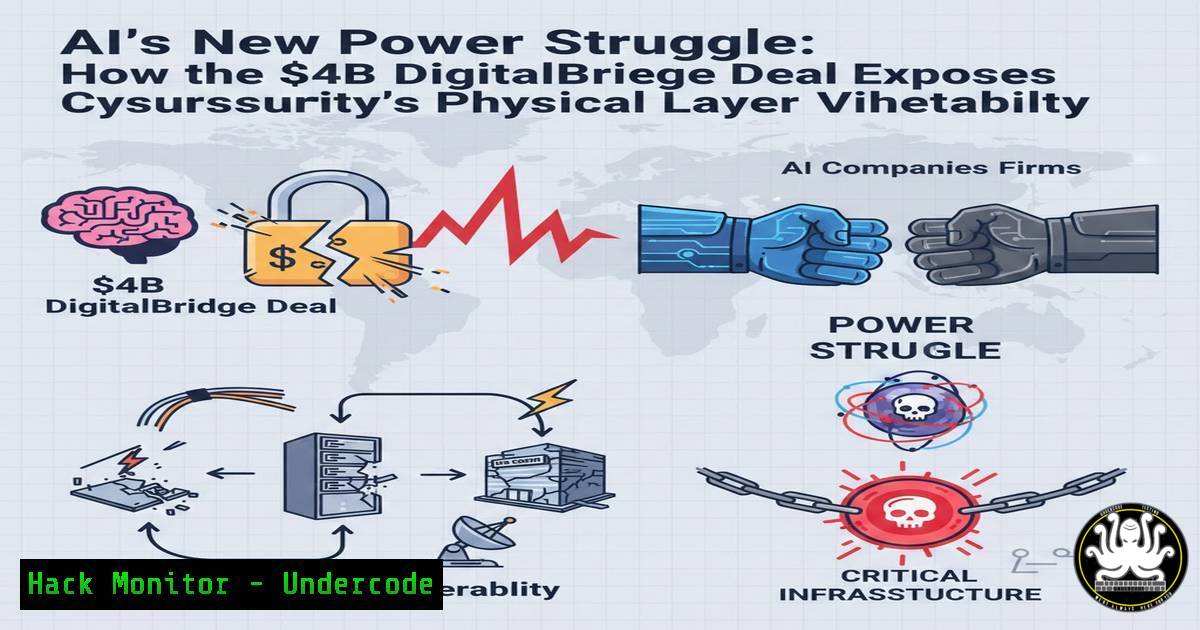
The scramble for AI infrastructure has shifted from silicon to electricity, with SoftBank’s $4 billion acquisition of DigitalBridge highlighting power entitlements as the new strategic bottleneck. This physical resource grab has profound cybersecurity implications, as centralized power assets for massive data centers become high-value targets for sabotage, ransomware, and state-sponsored attacks. Securing AI’s future now requires hardening not just digital firewalls but the physical and operational technology (OT) that powers the grid.
Learning Objectives:
- Understand why power infrastructure is the new critical attack surface in the AI era.
- Learn to assess and secure the convergence points between Information Technology (IT) and Operational Technology (OT) networks.
- Implement monitoring and hardening techniques for infrastructure supporting critical compute loads.
You Should Know:
- The New Attack Surface: Power as Critical Infrastructure
The core insight from SoftBank’s deal is that AI is now constrained by physical power. This concentrates immense value and risk. A 26.4-gigawatt power bank supporting AI data centers isn’t just an asset; it’s a catastrophic single point of failure. Adversaries—from cybercriminals to nation-states—now have a high-leverage target: disrupt the power, and you disrupt entire AI ecosystems. Security must extend beyond the data center’s servers to encompass the entire power supply chain, from the utility interconnection to the substation and on-site electrical systems.
Step‑by‑step guide:
Step 1: Asset & Dependency Mapping. Identify every critical component in your power delivery chain. This includes utility feed details, transformers, switchgear, backup generators, and Uninterruptible Power Supply (UPS) systems. For each, document the vendor, model, and known vulnerabilities.
Step 2: Network Segmentation Audit. OT networks controlling power must be logically separated from corporate IT networks. Use tools like `nmap` to scan for unauthorized connections between zones.
Command Example (Audit): `sudo nmap -sS -p 1-1024
Step 3: Vulnerability Assessment for OT/ICS. Use specialized scanners like Tenable.ot or Claroty to identify vulnerabilities in PLCs, RTUs, and other industrial control systems managing power. Regularly check vendor advisories and CISA’s ICS-CERT alerts.
2. Hardening the IT-OT Convergence Zone
The integration of smart grid technology and data center management creates a “convergence zone” where IT and OT networks meet. This zone is often poorly defended, using legacy protocols like Modbus or DNP3 that lack native security. An attacker breaching the corporate network can pivot through this zone to manipulate physical power equipment.
Step‑by‑step guide:
Step 1: Protocol Deep Packet Inspection (DPI). Deploy network sensors capable of DPI for OT protocols (e.g., using Suricata with specialized rules) to detect malicious commands, such as unauthorized “trip” commands sent to a circuit breaker.
Step 2: Implement a Demilitarized Zone (DMZ). All communications between IT and OT must pass through a secure DMZ. Here, data diodes or firewalls with deep protocol inspection (e.g., Tofino or Cisco FTD with OT modules) should be configured to allow only specific, necessary traffic.
Step 3: Secure Remote Access. Eliminate default passwords and mandate phishing-resistant Multi-Factor Authentication (MFA) for all vendor and engineer remote access. Use a Privileged Access Management (PAM) solution and a jump host that logs all sessions for OT system access.
3. Securing On-Site Backup Power Systems
Backup generators and Battery Energy Storage Systems (BESS) are the last line of defense. They are increasingly networked for monitoring, making them accessible entry points. Compromising their control systems could prevent failover during an attack or even cause physical damage.
Step‑by‑step guide:
Step 1: Air-Gap Critical Controllers. Where possible, air-gap the programmable logic controllers (PLCs) for generator start sequences and fuel management. If network connectivity is mandatory, place them behind a dedicated firewall in the OT zone.
Step 2: Firmware Integrity Checks. Maintain a cryptographic hash (like SHA-256) of all authorized firmware versions for power equipment. Regularly use checksums to detect unauthorized modifications.
Command Example (Integrity Check): `sha256sum /path/to/controller_firmware.bin` – Generate a hash to compare against a known-good baseline stored offline.
Step 3: Physical Security Integration. Ensure generator yards and switchgear rooms are monitored by CCTV and access-controlled systems. Their alarm feeds should be integrated into the Security Operations Center (SOC) dashboard, not just facility management.
4. Proactive Threat Hunting in Infrastructure Logs
The signatures of a reconnaissance attack against infrastructure differ from a standard IT breach. Threat hunters must look for anomalous scanning patterns, unusual geographic logins to management interfaces, and communications with known malicious IPs associated with threat groups targeting energy.
Step‑by‑step guide:
Step 1: Aggregate Logs. Use a SIEM (like Splunk or Elastic Stack) to centralize logs from firewalls, OT sensors, building management systems, and physical access controls.
Step 2: Build Detection Rules.
Example Rule (Splunk SPL): `index=network_firewall dest_ip=10.10.10.50 (port=502 OR port=44818) | stats count by src_ip` – This searches for any traffic to a critical OT IP on Modbus (502) or EtherNet/IP (44818) ports to identify scanning sources.
Example Rule (Sigma for OT): Use open-source Sigma rulesets tailored for ICS/OT to detect protocol-specific anomalies.
Step 3: Establish a Baseline. Monitor normal “heartbeat” traffic between SCADA servers and field devices for a month. Any deviation in timing, volume, or source becomes an alert for investigation.
5. The Emerging Frontier: Securing SMR-Powered Data Centers
As highlighted in the LinkedIn comments and the Idaho National Laboratory report, Small Modular Reactors (SMRs) are a proposed solution to the power crunch. SMRs offer enhanced safety but introduce a new class of cyber-physical risk. Securing a nuclear-powered data center requires regulatory-level security (like NRC standards) integrated with cloud-scale agile security operations.
Step‑by‑step guide:
Step 1: Apply Nuclear Security Frameworks. Map data center security controls to robust frameworks like the NRC’s RG 5.71 (Cybersecurity Programs for Nuclear Facilities) or the IAEA’s NSS No. 17-T, even if not strictly mandated.
Step 2: Supply Chain Vetting. Conduct extreme vetting of every digital component in the SMR supply chain, from reactor protection system vendors to sensor manufacturers. Mandate signed artifacts and software bills of materials (SBOMs).
Step 3: Red Team Exercises. Conduct regular, sophisticated red team exercises that simulate a combined cyber attack aiming to cause a reactor scram while simultaneously launching a ransomware attack on the colocated data center to test crisis response coordination.
What Undercode Say:
- Key Takeaway 1: The attack surface has fundamentally expanded. Cybersecurity’s perimeter now includes the substation, the power purchase agreement, and the generator yard. Defenders must master OT security to protect AI’s physical foundation.
- Key Takeaway 2: Resilience is as critical as protection. Assume breach scenarios must include prolonged power disruption. Security architectures must ensure that backup systems and failover procedures are themselves cyber-hardened and regularly tested under attack simulations.
The SoftBank-DigitalBridge deal is a financial signal that echoes loudly in security operations centers. It proves that AI’s most critical dependency is a physical resource prone to physical and digital disruption. Security teams that continue to focus solely on cloud configurations and endpoint detection will miss the larger threat. The future battleground is at the junction of the keyboard and the kilowatt, where a successful cyber-physical attack could halt an AI revolution by flipping a switch. The industry must pivot to develop a new breed of hybrid security experts who are as comfortable reading electrical one-line diagrams as they are parsing firewall logs.
Prediction:
Within the next 3-5 years, we will see the first major, publicly attributed successful cyber attack that cripples a hyperscale data campus by targeting its off-site power infrastructure or OT networks, rather than its servers. This will trigger a surge in regulatory action for data center power resilience, akin to financial sector continuity requirements, and make “cyber-physical security convergence” a non-negotiable line item in all AI infrastructure investments. Insurance premiums for data centers will become explicitly tied to demonstrated OT security postures and diversified, secured power delivery pathways.
▶️ Related Video (80% Match):
🎯Let’s Practice For Free:
IT/Security Reporter URL:
Reported By: Patrickcollins Novaro – Hackers Feeds
Extra Hub: Undercode MoN
Basic Verification: Pass ✅


