
Listen to this Post
Introduction:
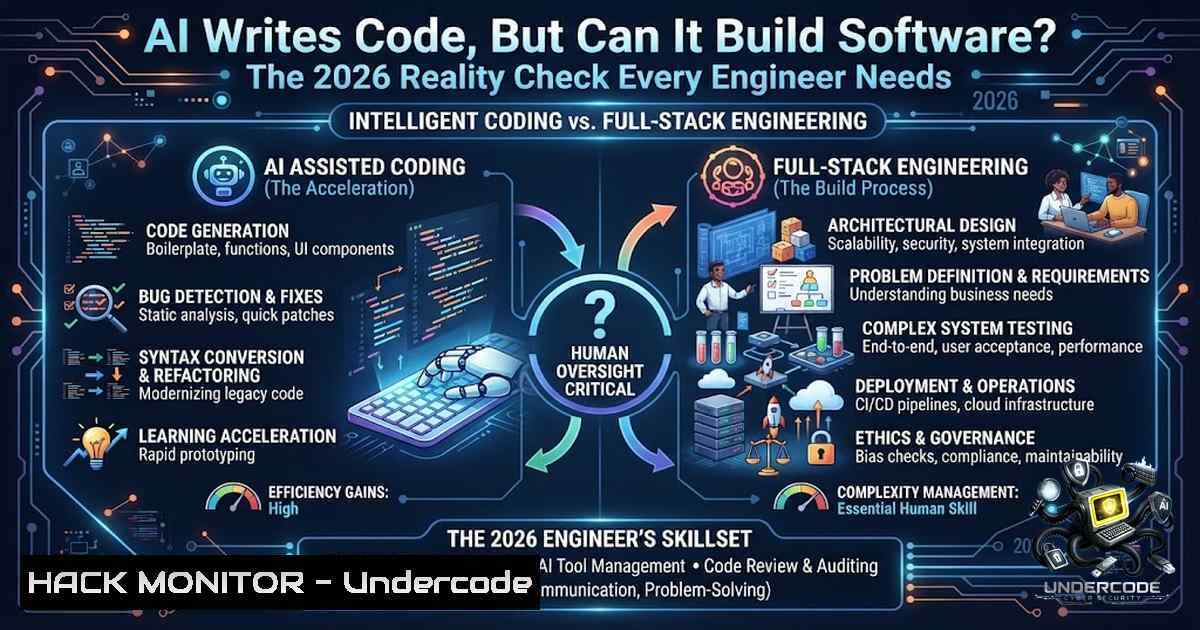
The software engineering landscape has been fundamentally transformed by AI coding assistants. GitHub Copilot, ChatGPT, and a wave of agentic coding tools have made it possible to generate thousands of lines of code in minutes—a capability that seemed like science fiction just a few years ago. Yet as open-source maintainers and enterprise engineering teams are discovering, there is a vast chasm between generating code and building maintainable, reliable software. Recent research analyzing 470 real-world pull requests found that AI-co-authored code contains approximately 1.7 times more issues than human-written code, with critical and major defects up to 1.7x higher. This article explores the quality crisis silently unfolding across codebases worldwide and provides actionable strategies for engineering teams to harness AI’s productivity benefits without sacrificing software integrity.
Learning Objectives:
- Understand the measurable quality gaps between AI-generated and human-written code, supported by empirical research from 2025–2026
- Learn to identify AI-generated “slop” through specific patterns, code smells, and review red flags
- Master practical commands and workflows for static analysis, security scanning, and quality enforcement across Linux and Windows environments
- Implement a governance framework that treats AI-generated code as untrusted by default
- Build a sustainable AI-assisted development pipeline that amplifies engineering discipline rather than bypassing it
You Should Know:
1. The Quality Gap Is Real and Measurable
The data is undeniable. CodeRabbit’s comprehensive study of 470 open-source GitHub pull requests—320 AI-co-authored and 150 human-only—revealed systemic quality deficiencies in AI-generated code. AI-assisted PRs averaged 10.83 findings per change compared to just 6.45 in human submissions. At the 90th percentile, AI PRs reached 26 issues per change—more than double the human baseline.
The most troubling gaps appear in areas that directly impact production reliability:
- Logic and correctness issues appeared approximately 75% more often in AI-generated code, with algorithmic and business logic errors occurring more than twice as frequently.
- Error and exception handling gaps nearly doubled in AI-generated changes.
- Readability issues occurred more than three times as often, significantly slowing review cycles and long-term maintenance.
- Critical issues rose 40% (from 240 to 341 per 100 PRs), while major issues surged 70% (from 257 to 447).
Academic research corroborates these findings. A large-scale study presented at ISSRE 2025 found that AI-generated code is “generally simpler and more repetitive, yet more prone to unused constructs and hardcoded debugging”. LLM agents frequently disregard code reuse opportunities, resulting in higher levels of redundancy compared to human developers.
What this means for your team: If you’re treating AI-generated code with the same trust as human-written code, you’re inheriting a 70% higher defect load. The productivity gains from AI are real—but they come with a quality tax that must be actively managed.
- How to Detect AI-Generated “Slop” in Your Pull Requests
Open-source maintainers have developed a keen eye for identifying AI-generated contributions. The term “AI slop”—defined as “low-quality content created by generative AI, often containing errors, and not requested by the user”—was Macquarie Dictionary’s 2025 word of the year for good reason.
Common signatures of AI-generated code include:
- Overly detailed PR descriptions with excessive Markdown formatting, headings, and summaries that restate rather than clarify
- Scope creep—solving the task at hand with unnecessarily involved approaches or adding unrelated changes
- Disproportionate test coverage—writing more thorough unit tests and documentation than the task warrants
- Redundant comments that state what the code does rather than why (e.g., ` Set timebase delay to 0` followed by
device.timebase.delay = 0) - Obsequious or sycophantic responses to review feedback that suggest the contributor lacks genuine understanding
To detect AI-generated code programmatically, use these commands:
Linux/macOS – Detect code complexity patterns:
 Install lizard for code complexity analysis
pip install lizard

Analyze complexity across your codebase
lizard --CCN 15 --length 50 --arguments 5 --html -o complexity_report.html ./src/

Find files with unusually high line counts (potential AI-generated bloat)
find ./src -1ame ".py" -exec wc -l {} \; | sort -rn | head -20
Windows – Using PowerShell for pattern detection:
 Find files with excessive comment-to-code ratio (common in AI code)
Get-ChildItem -Recurse -Include .py,.js,.java | ForEach-Object {
$lines = (Get-Content $<em>.FullName).Count
$comments = (Select-String -Path $</em>.FullName -Pattern '^\s//|^\s' ).Matches.Count
} | Where-Object {$<em>.Lines -gt 100 -and $</em>.Ratio -gt 20} | Sort-Object Ratio -Descending
Detect code duplication (a hallmark of LLM-generated code):
 Install and run jscpd for duplication detection
npm install -g jscpd
jscpd ./src --pattern "/.{js,ts,py,java}" --reporters html
The Wagtail CMS team noted that AI-generated PRs often have “a disconnect between the complexity of the task and the proposed solution”—humans are pragmatic and rarely stray from the minimum viable PR, while AI has more CPU cycles to dedicate to unnecessary details.
- Security Vulnerabilities: The Hidden Cost of AI-Generated Code
Security is where the AI quality gap becomes most dangerous. A comprehensive analysis of AI-generated code across public GitHub repositories identified 4,241 Common Weakness Enumeration (CWE) instances across 77 distinct vulnerability types using CodeQL static analysis. Empirical research found that AI-assisted tools led to a 31.4% increase in developer productivity but introduced 23.7% more security vulnerabilities.
The cURL project experienced this firsthand. Founder Daniel Stenberg reported that by mid-2025, approximately 5% of submissions to their bug bounty program were genuine vulnerabilities—the rest were AI-generated noise. He ultimately closed the program because the signal-to-1oise ratio had become unmanageable. The OCaml maintainers famously had to reject a 13,000-line AI-generated PR.
Security scanning commands you should run on every AI-generated PR:
Linux – Static analysis with Bandit (Python):
 Install Bandit
pip install bandit

Run security scan with high severity focus
bandit -r ./src -f json -o bandit_report.json -lll

Generate HTML report for team review
bandit -r ./src -f html -o bandit_report.html
Linux – CodeQL analysis (works for multiple languages):
 Download and setup CodeQL CLI
wget https://github.com/github/codeql-cli-binaries/releases/latest/download/codeql-linux64.zip
unzip codeql-linux64.zip
export PATH=$PATH:./codeql

Create CodeQL database and run analysis
codeql database create ./codeql-db --language=python --source-root=./src
codeql database analyze ./codeql-db --format=sarif-latest --output=codeql_results.sarif codeql/python-queries
Windows – Snyk security scanning:
 Install Snyk
npm install -g snyk

Authenticate and scan
snyk auth
snyk code test --json > snyk_results.json

Scan for open-source dependencies vulnerabilities
snyk test --json > snyk_deps.json
Cross-platform – ESLint with security plugins (JavaScript/TypeScript):
npm install -D eslint eslint-plugin-security
 Add to .eslintrc.js: plugins: ['security'], rules: {'security/detect-...': 'error'}
npx eslint ./src --format json --output-file eslint_security.json
The research is clear: static analysis is no longer optional for teams using AI coding tools. As one study concluded, “the common error patterns in LLM-generated code make static analysis an essential tool for ensuring its quality and security”.
4. Establish a “Trust but Verify” Governance Framework
The most successful organizations treat AI-generated code as untrusted by default. This means:
- Mandatory human review with AI disclosure – The pymeasure project maintainers proposed that contributors “fully review AI generated code yourself before submitting it as a PR” and warned that maintainers “might decline a review of overly large or obviously AI generated code not adhering to our coding standards”. The Wagtail CMS team now requests disclosure of AI use in pull requests.
-
Automated pre-commit quality gates – Before a human even sees AI-generated code, it should pass automated checks:
Linux – Pre-commit hook setup:
 Install pre-commit
pip install pre-commit

Create .pre-commit-config.yaml
cat > .pre-commit-config.yaml << 'EOF'
repos:
- repo: https://github.com/pre-commit/pre-commit-hooks
rev: v4.5.0
hooks:
- id: trailing-whitespace
- id: end-of-file-fixer
- id: check-yaml
- id: check-added-large-files
args: ['--maxkb=500']
- repo: https://github.com/PyCQA/flake8
rev: 7.0.0
hooks:
- id: flake8
args: ['--max-complexity=10', '--max-line-length=120']
- repo: https://github.com/PyCQA/bandit
rev: 1.7.5
hooks:
- id: bandit
args: ['-lll', '--skip=B101']
EOF

Install the hooks
pre-commit install
- Complexity thresholds – Set hard limits on cyclomatic complexity, function length, and file size. AI-generated code tends to exceed these thresholds:
 radon for Python complexity analysis
pip install radon

Check cyclomatic complexity (fail if > 15)
radon cc ./src -a -1b -s

Check maintainability index (fail if < 65)
radon mi ./src -s
- Architecture reviews – As one analysis noted, “Copilot doesn’t know your architecture. It doesn’t know your compliance framework. It doesn’t care about maintainability”. Every AI-generated module should undergo architecture review before integration.
-
Context Engineering: The Key to Better AI Output
The quality of AI-generated code is directly proportional to the quality of context provided. As the Xebia team observed, “context is everything GitHub Copilot needs to know, apart from the question you ask it”. The shift from prompt engineering to context engineering reflects this understanding.
Best practices for context engineering:
- Include architectural documentation – Feed your system design docs, ADRs (Architecture Decision Records), and coding standards into the AI’s context
- Reference existing patterns – Point the AI to similar implementations in your codebase
- Use IDE context features – In VS Code with Copilot, use `codebase` to reference the entire repository index, `file` for specific files, and `selection` for current code
- Provide error examples – Include screenshots or logs of past failures to guide better error handling
Example – Poor vs. Effective Context Engineering:
Poor prompt: “Write a function to process user data.”
Effective prompt: “Write a Python function that processes user data following our existing patterns in src/utils/validation.py. Use our logging framework from src/common/logger.py, handle PII according to our compliance standards in docs/security.md, and include comprehensive error handling with retry logic for transient failures. Reference the `UserSchema` defined in src/models/user.py.”
The difference in output quality is dramatic. Few-shot prompting and chain-of-thought prompting have been shown to yield the highest build success rates.
6. CI/CD Integration for AI Code Quality Enforcement
Every AI-generated PR should pass through a rigorous CI/CD pipeline that enforces quality standards automatically. Here’s a comprehensive pipeline configuration:
GitHub Actions workflow (`.github/workflows/ai-quality-gate.yml`):
name: AI Code Quality Gate

on:
pull_request:
types: [opened, synchronize, reopened]

jobs:
quality-check:
runs-on: ubuntu-latest
steps:
- uses: actions/checkout@v4

<ul>
<li>name: Setup Python
uses: actions/setup-python@v5
with:
python-version: '3.11'</p></li>
<li><p>name: Install dependencies
run: |
pip install bandit pylint radon lizard pre-commit</p></li>
<li><p>name: Run Bandit security scan
run: bandit -r ./src -lll -f json -o bandit.json || true</p></li>
<li><p>name: Check complexity (fail if > 15)
run: |
COMPLEXITY=$(radon cc ./src -a -1b | grep -E '^[A-Z]' | awk '{print $NF}' | sort -rn | head -1)
if [ $(echo "$COMPLEXITY > 15" | bc) -eq 1 ]; then
echo "❌ Cyclomatic complexity exceeds threshold ($COMPLEXITY > 15)"
exit 1
fi</p></li>
<li><p>name: Check file size (fail if > 500 lines)
run: |
LARGE_FILES=$(find ./src -1ame ".py" -exec wc -l {} \; | awk '$1 > 500 {print $2 " (" $1 " lines)"}')
if [ -1 "$LARGE_FILES" ]; then
echo "❌ Files exceed 500 lines:"
echo "$LARGE_FILES"
exit 1
fi</p></li>
<li><p>name: Run duplication detection
run: |
npx jscpd ./src --pattern "/.py" --threshold 5 || true</p></li>
<li><p>name: Run linting
run: pylint ./src --fail-under=8.0 --exit-zero</p></li>
<li><p>name: Upload security report
uses: actions/upload-artifact@v4
with:
name: security-report
path: bandit.json
Windows – Azure DevOps pipeline equivalent:
 azure-pipelines.yml
trigger: none
pr:
- main

pool:
vmImage: 'windows-latest'

steps:
- task: UsePythonVersion@0
inputs:
versionSpec: '3.11'

<ul>
<li>script: |
pip install bandit pylint radon
bandit -r ./src -lll -f json -o bandit.json
displayName: 'Security Scan'</p></li>
<li><p>powershell: |
$complexity = & radon cc ./src -a -1b | Select-String -Pattern '\d+$' | ForEach-Object { [bash]$_.Matches.Value } | Measure-Object -Maximum
if ($complexity.Maximum -gt 15) {
Write-Error "Cyclomatic complexity exceeds threshold: $($complexity.Maximum)"
exit 1
}
displayName: 'Complexity Check'
7. Building a Sustainable AI-Assisted Development Culture
The most critical insight from the 2025–2026 research is this: AI doesn’t replace engineering discipline—it amplifies it. The best developers won’t be the ones who generate the most code. They’ll be the ones who know what to accept, what to rewrite, and what not to build.
Key cultural practices to adopt:
- Treat AI as a junior developer – Its output requires senior-level review, mentorship, and correction
- Maintain coding standards explicitly – Document and enforce standards that AI must follow (provide an `AGENTS.md` file for AI contributors)
- Prioritize maintainability over velocity – As the Tilburg University study found, “AI productivity gains may come at the expense of quality and the long-term sustainability of software projects”
- Review AI code faster, reject faster – The Wagtail team found that “reviewing faster, arriving at decisions faster, shifting some of the review burden back to the contributor” is an effective strategy
- Invest in reviewer training – Developers need to understand AI’s failure modes to catch them effectively
What Undercode Say:
- AI coding tools are productivity multipliers, not replacements for engineering judgment. The research consistently shows that while AI accelerates output, it introduces predictable quality and security weaknesses that require active mitigation. Treat AI-generated code as a draft, not a deliverable.
-
The open-source ecosystem is the canary in the coal mine. Projects like cURL, WordPress, and Wagtail are experiencing the AI quality crisis firsthand—and their responses (disclosure requirements, automated pre-reviews, rejection of low-quality PRs) provide a blueprint for enterprise teams. If maintainers are drowning in AI slop, your production systems are at risk too.
-
Static analysis and automated quality gates are non-1egotiable. With AI-generated code containing 1.7x more issues and 23.7% more vulnerabilities, manual review alone is insufficient. Teams must implement comprehensive CI/CD pipelines that enforce complexity limits, security scanning, duplication detection, and style consistency before human review begins.
-
Context engineering matters more than prompt engineering. The quality of AI output is directly proportional to the quality of context provided. Teams that invest in architectural documentation, coding standards, and context-rich prompts see dramatically better results than those who rely on vague instructions.
-
The future belongs to engineers who can effectively partner with AI. The developers who thrive will be those who understand AI’s strengths (speed, pattern recognition, boilerplate generation) and its limitations (lack of architectural understanding, security blind spots, context unawareness). AI writes code; engineers build software.
Prediction:
+1 Organizations that implement robust AI code quality gates will see a 40-50% reduction in production incidents compared to teams that adopt AI tools without governance. The productivity gains from AI will compound with quality enforcement, creating a virtuous cycle of faster, more reliable development.
+1 AI coding assistants will evolve to include built-in quality and security checking, with models trained to self-correct common failure patterns. By 2027, we’ll see AI agents that automatically run static analysis and fix their own vulnerabilities before submitting code.
-1 Teams that fail to adapt their review processes for AI-generated code will experience increasing technical debt and incident rates, with some organizations reverting to pre-AI development practices as the cost of maintenance exceeds the productivity benefits. The “vibe coding” approach—accepting AI suggestions without review—will be recognized as a significant anti-pattern.
-1 Open-source projects will become more gatekept and less welcoming to new contributors as maintainers implement stricter controls to filter AI slop. This could reduce the diversity and vitality of the open-source ecosystem, with long-term negative consequences for software innovation.
+1 The rise of AI-generated code will create new specialization roles—AI code auditors, prompt engineers, and quality assurance specialists focused on validating AI output. These roles will command premium salaries as organizations recognize the critical importance of human oversight in AI-assisted development.
▶️ Related Video (78% Match):
🎯Let’s Practice For Free:
🎓 Live Courses & Certifications:
Join Undercode Academy for Verified Certifications
🚀 Request a Custom Project:
Secure, high-velocity infrastructure and disruptive technological engineering. Contact our engineering team for high-tier development and proprietary systems:
[email protected]
💎 Smart Architecture | 🛡️ Secure by Design | ⭐ Trusted by Thousands
IT/Security Reporter URL:
Reported By: Adil Ijaz – Hackers Feeds
Extra Hub: Undercode MoN
Basic Verification: Pass ✅


