Listen to this Post
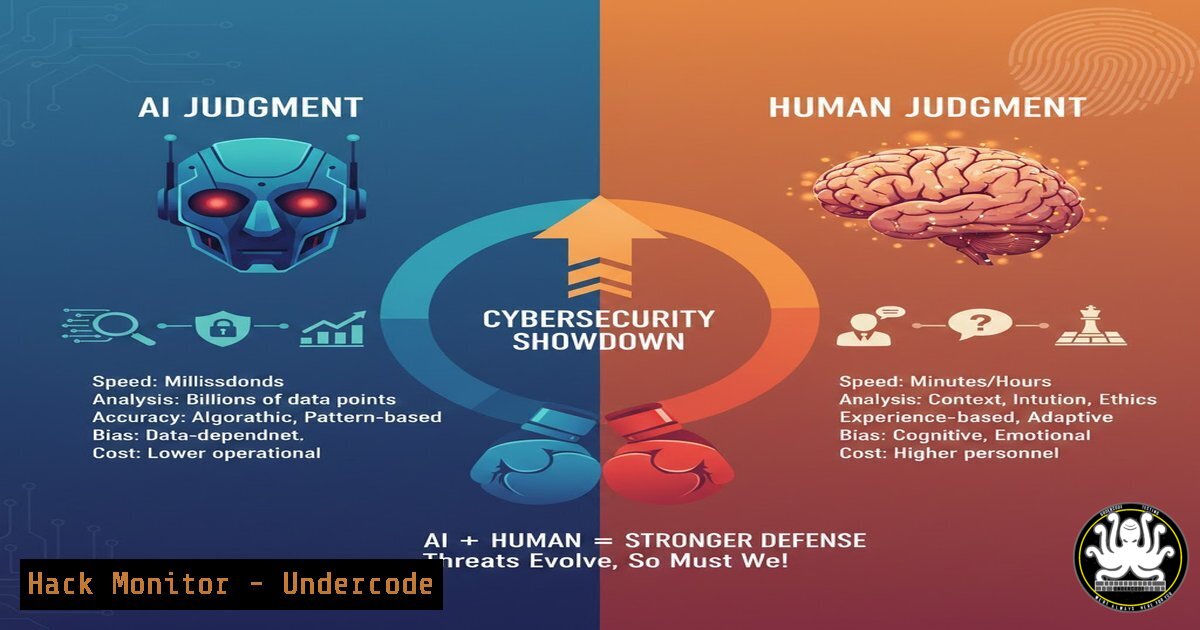
Introduction:
The pervasive question, “Why can’t this be done by AI?” is reshaping organizational roles, especially in cybersecurity and IT. While AI excels at automating tasks like threat detection and data analysis, it falls short in handling ambiguity, ethical decisions, and accountability. This article explores how to balance AI automation with human oversight to fortify defenses and maintain responsible governance in tech-driven environments.
Learning Objectives:
- Understand the critical limitations of AI in cybersecurity decision-making and risk management.
- Learn practical steps to integrate AI tools with human judgment in IT operations and security protocols.
- Identify key areas where human oversight is non-negotiable, such as incident response and ethical compliance.
You Should Know:
1. Configuring AI-Driven Security Monitoring with Human Oversight
AI-powered monitoring tools can scan logs and network traffic, but human review is essential to contextualize alerts and avoid false positives. Start by deploying an open-source SIEM like Wazuh or Splunk for real-time analysis.
Step-by-step guide:
- Install Wazuh on a Linux server (Ubuntu 20.04) using these commands:
sudo apt-get update
sudo apt-get install curl apt-transport-https lsb-release
curl -s https://packages.wazuh.com/key/GPG-KEY-WAZUH | sudo apt-key add -
echo "deb https://packages.wazuh.com/4.x/apt/ stable main" | sudo tee /etc/apt/sources.list.d/wazuh.list
sudo apt-get update
sudo apt-get install wazuh-manager
sudo systemctl start wazuh-manager
- Configure AI-based anomaly detection by editing `/var/ossec/etc/ossec.conf` to enable behavioral monitoring. Add rules to flag unusual login attempts or data transfers.
- Set up daily human review sessions: Export alerts to a dashboard and assign a security analyst to investigate prioritized events. Use commands like `sudo tail -f /var/ossec/logs/alerts/alerts.json` to stream alerts, and cross-reference with threat intelligence feeds.
2. Implementing Human-in-the-Loop (HITL) for Automated Threat Response
HITL ensures AI actions, such as blocking IPs or quarantining files, are validated by humans to prevent over-automation. Use tools like Cortex XSOAR or custom scripts with approval workflows.
Step-by-step guide:
- Deploy a Python script that integrates with your firewall (e.g., pfSense) and requires manual approval for critical actions. Install dependencies:
pip install requests flask
- Create a Flask app that listens for AI-generated alerts and presents them via a web interface for review. Sample code:
from flask import Flask, request, jsonify app = Flask(<strong>name</strong>) @app.route('/alert', methods=['POST']) def handle_alert(): data = request.json AI suggests blocking IP, log for human review with open('/var/log/ai_alerts.log', 'a') as f: f.write(f"Review needed: Block IP {data['ip']} for reason {data['reason']}\n") return jsonify({"status": "pending human approval"}), 202 if <strong>name</strong> == '<strong>main</strong>': app.run(host='0.0.0.0', port=5000) - Schedule regular reviews: Use cron jobs to notify analysts (
crontab -eto add `0 9 /usr/bin/curl http://localhost:5000/alert_report`), and establish a SLA of 1 hour for responses to maintain security posture.
- Conducting Risk Assessments with AI Support and Human Accountability
AI can process vast datasets to identify vulnerabilities, but humans must interpret results and own the consequences of mitigation strategies. Leverage tools like Nessus or OpenVAS alongside governance frameworks.
Step-by-step guide:
- Run an AI-enhanced vulnerability scan with OpenVAS on a target network:
sudo gvm-setup
sudo gvm-start
sudo gvm-cli --gmp-username admin --gmp-password password socket --xml "<get_tasks/>"
- Export results to a CSV and use a Python script with scikit-learn to prioritize risks based on historical data. Train a model to predict exploit likelihood:
import pandas as pd from sklearn.ensemble import RandomForestClassifier df = pd.read_csv('scan_results.csv') Feature engineering: CVSS scores, asset criticality model = RandomForestClassifier() model.fit(df[bash], df['exploited']) predictions = model.predict(new_data) - Human review: Hold a meeting with IT leads to discuss high-risk predictions, considering business context. Document decisions in a risk register, ensuring accountability for deferred actions.
- Training AI Models for Security Operations with Ethical Guardrails
AI models in cybersecurity must be trained on diverse datasets to avoid bias, and humans must validate outputs for ethical compliance. Use datasets like CIC-IDS2017 for malware detection.
Step-by-step guide:
- Download and preprocess the CIC-IDS2017 dataset on a Linux machine:
wget https://www.unb.ca/cic/datasets/ids-2017.html -O dataset.zip
unzip dataset.zip
python3 -m pip install pandas scikit-learn tensorflow
- Train a neural network for intrusion detection, but incorporate human feedback loops. Code snippet:
import tensorflow as tf
model = tf.keras.Sequential([...])
model.compile(optimizer='adam', loss='binary_crossentropy')
Train with periodic human validation
for epoch in range(10):
model.fit(X_train, y_train)
Pause for human review of false positives
review_data = X_val[:10]
human_labels = get_human_feedback(review_data)  Custom function
model.fit(review_data, human_labels, epochs=1)
- Deploy the model in a staging environment first, and have analysts label misclassifications weekly to retrain and improve accuracy.
- Auditing AI Decisions in IT Infrastructure Using Logging and Compliance Checks
AI systems in cloud or on-prem environments must be auditable to ensure compliance with regulations like GDPR or HIPAA. Implement logging across Linux and Windows systems.
Step-by-step guide:
- On Linux, use auditd to track AI tool executions:
sudo apt-get install auditd
sudo auditctl -a always,exit -F path=/usr/bin/ai_security_tool -F perm=x -k ai_actions
sudo ausearch -k ai_actions | tee /var/log/ai_audit.log
- On Windows, enable PowerShell logging for AI scripts:
Open Group Policy Editor (gpedit.msc) > Computer Configuration > Administrative Templates > Windows Components > Windows PowerShell > Enable Module Logging
Set-ExecutionPolicy RemoteSigned
Start-Transcript -Path "C:\logs\ai_operations.txt"
- Schedule monthly audits: Use scripts to parse logs and flag unauthorized AI actions, with a human team investigating anomalies. For example, a Python script can compare AI decisions against policy files and generate reports for compliance officers.
- Developing Guardrails for Autonomous AI in Cloud Hardening
Cloud environments like AWS or Azure use AI for auto-scaling and security groups, but humans must set boundaries to prevent misconfigurations. Use infrastructure-as-code (IaC) with manual review steps.
Step-by-step guide:
- Write a Terraform script for AWS that includes AI-driven security rules, but requires human approval for changes:
resource "aws_security_group" "ai_managed" { name = "ai_web_sg" ingress { from_port = 22 to_port = 22 protocol = "tcp" cidr_blocks = ["10.0.0.0/16"] AI suggests based on traffic, but human must review } } - Integrate with GitHub Actions for CI/CD: Set up a workflow that pauses for manual review before applying changes to production. YAML example:
jobs: deploy: runs-on: ubuntu-latest steps:</li> <li>name: Terraform Apply run: terraform apply -auto-approve env: TF_API_TOKEN: ${{ secrets.TF_TOKEN }}</li> <li>name: Human Approval uses: actions/github-script@v6 with: script: | // Send notification to Slack for approval - Conduct quarterly reviews of cloud configurations with tools like AWS Config, ensuring AI suggestions align with security policies set by humans.
- Incident Response: Blending AI Speed with Human Expertise for Mitigation
AI can accelerate threat detection and containment, but humans must lead decision-making during breaches to handle legal and communication aspects. Develop a playbook that combines automated tools with human escalation.
Step-by-step guide:
- Deploy an AI-powered endpoint detection and response (EDR) tool like CrowdStrike or open-source OSSEC. On Windows, install OSSEC agent:
msiexec /i ossec-agent-win32-3.6.0.exe /quiet
- Configure automated responses for low-risk events, such as isolating a compromised host via PowerShell:
Invoke-Command -ComputerName $comp -ScriptBlock {Stop-Service -Name "sshd"} - For high-severity incidents, require human authorization: Set up a Slack or Microsoft Teams bot that alerts the response team and waits for a “proceed” command before initiating full containment. Document all actions in a SIEM for post-incident analysis, led by a human coordinator.
What Undercode Say:
- AI is a Tool, Not a Replacement: In cybersecurity, AI excels at processing data and automating repetitive tasks, but it cannot assume accountability for decisions involving ethical judgments, legal compliance, or strategic risk. Human oversight must be embedded in all critical processes.
- Balance Efficiency with Responsibility: Organizations that use AI to augment human roles—rather than replace them—build more resilient security postures. This involves clear design of guardrails, regular audits, and training programs that emphasize human-AI collaboration.
Analysis: The trend towards AI automation in IT and cybersecurity risks creating gaps in accountability if not managed carefully. As seen in the LinkedIn discussion, leaders must reframe the question from “Can AI do this?” to “Where should human judgment sit?” This requires technical implementations like HITL systems and ethical training for AI models. By integrating human review steps into automated workflows, organizations can leverage AI’s speed while maintaining control over consequences, ultimately reducing liabilities and enhancing trust in technology.
Prediction:
In the next 5 years, AI will become ubiquitous in cybersecurity operations, from autonomous penetration testing to real-time threat hunting. However, regulatory frameworks will evolve to mandate human accountability for AI-driven decisions, especially in sectors like finance and healthcare. We’ll see a rise in “AI governance” roles, blending technical skills with ethical expertise. Organizations that proactively design human-AI collaborative systems will gain a competitive advantage, reducing breach impacts and building customer trust, while those that over-automate will face increased operational risks and legal challenges.
▶️ Related Video (84% Match):
🎯Let’s Practice For Free:
IT/Security Reporter URL:
Reported By: Rpvmay Why – Hackers Feeds
Extra Hub: Undercode MoN
Basic Verification: Pass ✅


