Listen to this Post
Introduction:
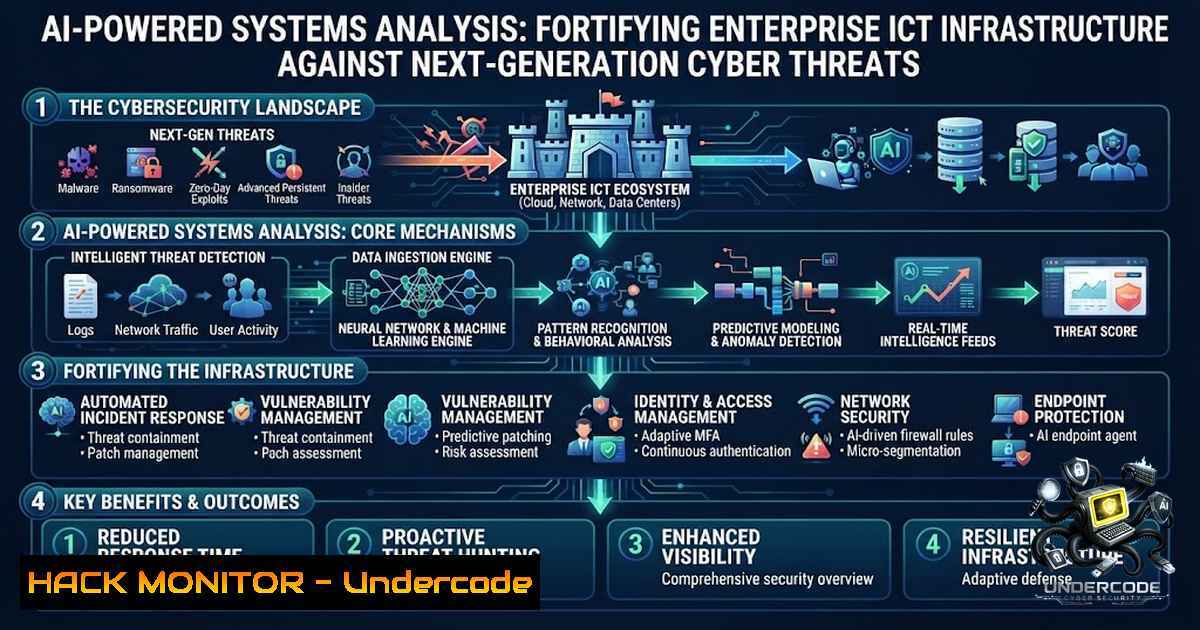
The modern Senior ICT Systems Analyst operates at the nexus of business architecture and cybersecurity, tasked with designing resilient systems that can withstand an increasingly hostile threat landscape. As organizations accelerate digital transformation, the integration of artificial intelligence into system analysis workflows has become not just an efficiency driver but a critical security imperative. This article explores the evolving role of the ICT systems analyst, examining how AI, cloud hardening, and API security are reshaping the discipline while providing actionable technical guidance for professionals seeking to master these converging domains.
Learning Objectives:
- Master the integration of AI and machine learning tools into system analysis workflows for enhanced threat detection and operational efficiency.
- Implement comprehensive cloud security hardening techniques across multi-cloud and hybrid environments.
- Apply zero-trust principles and OWASP API Security Top 10 controls to modern application architectures.
1. The AI-Augmented Systems Analyst: Redefining the Role
The traditional systems analyst role has undergone a profound transformation with the advent of generative AI and machine learning. Today’s Senior ICT Systems Analyst must not only understand business requirements and system architecture but also leverage AI to accelerate analysis, improve accuracy, and identify security vulnerabilities that might otherwise go undetected.
Generative AI tools can transform messy business inputs into clear, accurate systems requirements and documentation, while AI-powered process modeling enables faster, smarter system design. For the security-conscious analyst, understanding Large Language Model (LLM) architecture is essential to safeguard AI-based applications against adversarial attacks.
Step-by-Step Guide: Integrating AI into Systems Analysis Workflows
- Assess AI Readiness: Evaluate your organization’s data infrastructure and identify use cases where AI can augment analysis—requirements gathering, documentation generation, or threat modeling.
-
Select Appropriate AI Tools: Distinguish between AI, Machine Learning, Deep Learning, LLMs, and Generative AI to choose tools suitable for your specific system analysis workflows.
-
Implement Prompt Engineering: Master the art of crafting effective prompts to generate accurate system requirements, architecture diagrams, and security assessments.
-
Establish AI Governance: Develop policies for vetting AI-generated code and recommendations, ensuring manual verification of all AI-suggested outputs for security risks.
-
Continuous Training: Enroll in specialized programs such as the CompTIA SecAI+ certification or CMU’s Leadership in AI for Cybersecurity Professional Certificate to stay current with emerging threats and defensive techniques.
2. Cloud Security Hardening: Protecting Modern Infrastructure
As organizations migrate mission-critical systems to the cloud, the Senior ICT Systems Analyst must implement robust security controls across virtualized and containerized workloads. Cloud security hardening involves securing virtual machines, storage systems, networks, and cloud resources through comprehensive baseline configurations and continuous monitoring.
Step-by-Step Guide: Cloud Security Hardening
- Develop Security Baselines: Create and maintain security baselines for all information systems across your cloud environment, ensuring regular updates and inventory management.
-
Implement Identity and Access Management (IAM): Configure IAM with least-privilege principles, implementing conditional access policies and privileged access management.
-
Network Segmentation: Design and implement network segmentation strategies that isolate critical workloads and restrict lateral movement.
-
Harden Operating Systems: Apply operating system hardening techniques across all cloud instances, including disabling unnecessary services, applying security patches, and configuring host-based firewalls.
-
Continuous Monitoring and Response: Deploy security monitoring tools (EDR, MDR) and establish incident response procedures for cloud environments.
Linux Commands for Cloud Security Hardening:
 Audit system for unnecessary services
systemctl list-unit-files --state=enabled

Disable unnecessary services
sudo systemctl disable [service-1ame]

Configure firewall rules (UFW)
sudo ufw default deny incoming
sudo ufw default allow outgoing
sudo ufw allow ssh
sudo ufw enable

Check open ports
sudo netstat -tulpn

Implement SELinux/AppArmor
sudo setenforce 1
sudo aa-status

Audit user accounts and permissions
sudo awk -F: '($3==0){print $1}' /etc/passwd
sudo lastlog
Windows Commands for Cloud Security Hardening:
 List enabled Windows features
Get-WindowsOptionalFeature -Online

Disable unnecessary services
Set-Service -1ame "ServiceName" -StartupType Disabled

Configure Windows Firewall
New-1etFirewallRule -DisplayName "Block All Inbound" -Direction Inbound -Action Block

Audit local users
Get-LocalUser

Check security policies
secedit /export /cfg C:\security_template.inf
3. API Security: Securing the Digital Backbone
APIs have become the backbone of modern application architecture, making their security a critical concern for systems analysts. The OWASP API Security Top 10 (2023) highlights key vulnerabilities including broken object-level authorization, broken authentication, and excessive data exposure. The Senior ICT Systems Analyst must implement security controls across the entire API lifecycle, from design to runtime.
Step-by-Step Guide: Implementing API Security
- Adopt Zero-Trust Architecture: Implement a five-pillar approach encompassing Governance & Planning, Secure Design, Continuous Testing, Pipeline Controls, and Runtime Protection.
-
Implement Robust Authentication and Authorization: Use OAuth 2.0, implement Role-Based Access Control (RBAC) and Attribute-Based Access Control (ABAC), and apply the Principle of Least Privilege (PoLP).
-
API Documentation and Testing: Use OpenAPI specifications to document APIs and subject them to negative and fuzz testing applicable to the threat model.
-
Deploy API Security Controls: Implement Web Application Firewalls (WAF), Just-In-Time (JIT) access, and API firewalls.
-
Retire Old API Versions: Properly retire outdated API versions or backport security fixes to them.
4. Cybersecurity Training and Professional Development
The rapidly evolving threat landscape demands continuous professional development. Senior ICT Systems Analysts should pursue certifications and training that bridge the gap between traditional systems analysis and modern cybersecurity practices.
Recommended Training Courses and Certifications:
- CompTIA SecAI+: A three-day expert-led course equipping IT and cybersecurity professionals with skills to secure AI systems and apply AI securely within cybersecurity operations.
-
CMU SEI Leadership in AI for Cybersecurity: Introduces technical professionals to applying AI to cybersecurity challenges, covering strengths, limitations, and appropriate use cases.
-
NUS Cyber Security for ICT Professionals: Equips ICT professionals with sufficient cybersecurity knowledge to perform risk assessments and adopt security best practices.
-
AI-Driven IT & Security Operations: Designed for mid-to-senior level professionals to strengthen enterprise security posture using Generative AI, Agentic AI, and AIOps.
-
Certified Systems Security Analyst (CSSA): Emphasizes risk assessment, threat modeling, system hardening, and policy enforcement.
5. Vulnerability Exploitation and Mitigation Strategies
Understanding how attackers exploit vulnerabilities is essential for effective defense. The Senior ICT Systems Analyst must balance offensive and defensive security knowledge to build resilient systems.
Step-by-Step Guide: Vulnerability Assessment and Mitigation
- Conduct Regular Security Assessments: Perform vulnerability assessments and code reviews to identify and remediate vulnerabilities in applications.
-
Implement Secure Coding Practices: Integrate application security testing (SAST, DAST) throughout the software development life cycle.
-
Threat Modeling: Analyze each vulnerability to gather sufficient information about risk to plan remediation.
-
Penetration Testing: Perform penetration testing and ethical hacking to identify and exploit system vulnerabilities.
-
SOC Operations: Monitor, detect, and respond to threats as a SOC Analyst or Blue Team Specialist.
Linux Commands for Vulnerability Assessment:
 Network scanning with Nmap
nmap -sV -sC target_ip

Vulnerability scanning with OpenVAS
sudo gvm-start
sudo gvm-cli socket --gmp-username admin --gmp-password password socket --xml "<get_tasks/>"

Check for outdated packages
sudo apt list --upgradable

Audit system for common vulnerabilities
sudo lynis audit system

Check open ports and services
sudo ss -tulpn
6. System Hardening Across Platforms
System hardening is a foundational security practice that reduces the attack surface of enterprise systems. The Senior ICT Systems Analyst must implement hardening measures across Linux, Windows, and cloud environments.
Step-by-Step Guide: Multi-Platform System Hardening
1. Linux Hardening:
- Disable root login over SSH
- Implement password policies and account lockout
- Configure auditd for system auditing
- Implement file integrity monitoring with AIDE
2. Windows Hardening:
- Configure User Account Control (UAC)
- Implement Windows Defender and security baselines
- Enable BitLocker for data encryption
- Configure Windows Event Log forwarding
3. Network Hardening:
- Implement network segmentation and VLANs
- Configure encrypted protocols (SSH, HTTPS, VPN)
- Deploy intrusion detection/prevention systems
4. Application Hardening:
- Remove default credentials and configurations
- Implement secure session management
- Configure error handling to avoid information disclosure
Linux Commands for System Hardening:
 Disable root SSH login
sudo sed -i 's/PermitRootLogin yes/PermitRootLogin no/' /etc/ssh/sshd_config

Configure password policies
sudo apt install libpam-pwquality
sudo vi /etc/pam.d/common-password

Implement file integrity monitoring
sudo apt install aide
sudo aideinit
sudo aide --check

Configure auditd
sudo auditctl -e 1
sudo auditctl -w /etc/passwd -p wa -k identity
Windows PowerShell Commands for System Hardening:
 Enable Windows Defender
Set-MpPreference -DisableRealtimeMonitoring $false

Configure UAC
Set-ItemProperty -Path "HKLM:\Software\Microsoft\Windows\CurrentVersion\Policies\System" -1ame "EnableLUA" -Value 1

Enable BitLocker
Enable-BitLocker -MountPoint "C:" -EncryptionMethod XtsAes256

Configure audit policies
auditpol /set /category:"Logon/Logoff" /subcategory:"Logon" /success:enable /failure:enable
What Undercode Say:
- Key Takeaway 1: The integration of AI into systems analysis is no longer optional—it is a strategic necessity. Senior ICT Systems Analysts must develop proficiency in AI tools, prompt engineering, and LLM architecture to remain relevant and effective in their roles.
-
Key Takeaway 2: Cloud security hardening and API security are the twin pillars of modern enterprise defense. Implementing zero-trust principles, robust IAM controls, and comprehensive API security measures across the entire lifecycle is essential for protecting digital assets.
Analysis:
The convergence of AI, cloud computing, and API-driven architectures has fundamentally transformed the role of the Senior ICT Systems Analyst. No longer confined to requirements gathering and system design, these professionals must now be cybersecurity practitioners capable of anticipating and mitigating sophisticated threats. The emergence of AI-powered attacks demands that analysts understand not only how to use AI defensively but also how to protect AI systems from adversarial exploitation. Training programs like CompTIA SecAI+ and CMU’s AI for Cybersecurity certificate are critical for bridging this skills gap. Furthermore, the shift to cloud-1ative architectures requires analysts to master cloud security hardening techniques and implement API security controls that align with OWASP and NIST frameworks. Organizations that invest in developing these capabilities in their systems analysts will be better positioned to navigate the evolving threat landscape and maintain operational resilience.
Prediction:
- +1 The demand for Senior ICT Systems Analysts with cybersecurity and AI expertise will surge by over 40% in the next three years, driving significant salary premiums and career advancement opportunities.
-
+1 AI-powered security operations centers (SOCs) will become mainstream, with systems analysts playing a pivotal role in designing and managing these automated defense systems.
-
-1 Organizations that fail to integrate AI security training into their systems analyst development programs will face increased vulnerability to AI-powered attacks, potentially resulting in costly data breaches and regulatory penalties.
-
-1 The complexity of multi-cloud and hybrid environments will create new attack surfaces that traditional security approaches cannot adequately protect, necessitating a fundamental shift in how systems are designed and secured.
-
+1 The emergence of specialized certifications in AI security, cloud hardening, and API security will create a new tier of highly skilled systems analysts who command premium compensation and drive organizational innovation.
▶️ Related Video (86% Match):
https://www.youtube.com/watch?v=2jU-mLMV8Vw
🎯Let’s Practice For Free:
🎓 Live Courses & Certifications:
Join Undercode Academy for Verified Certifications
🚀 Request a Custom Project:
Secure, high-velocity infrastructure and disruptive technological engineering. Contact our engineering team for high-tier development and proprietary systems:
[email protected]
💎 Smart Architecture | 🛡️ Secure by Design | ⭐ Trusted by Thousands
IT/Security Reporter URL:
Reported By: Seniorictsystemsanalyst Share – Hackers Feeds
Extra Hub: Undercode MoN
Basic Verification: Pass ✅


