
Listen to this Post
Introduction
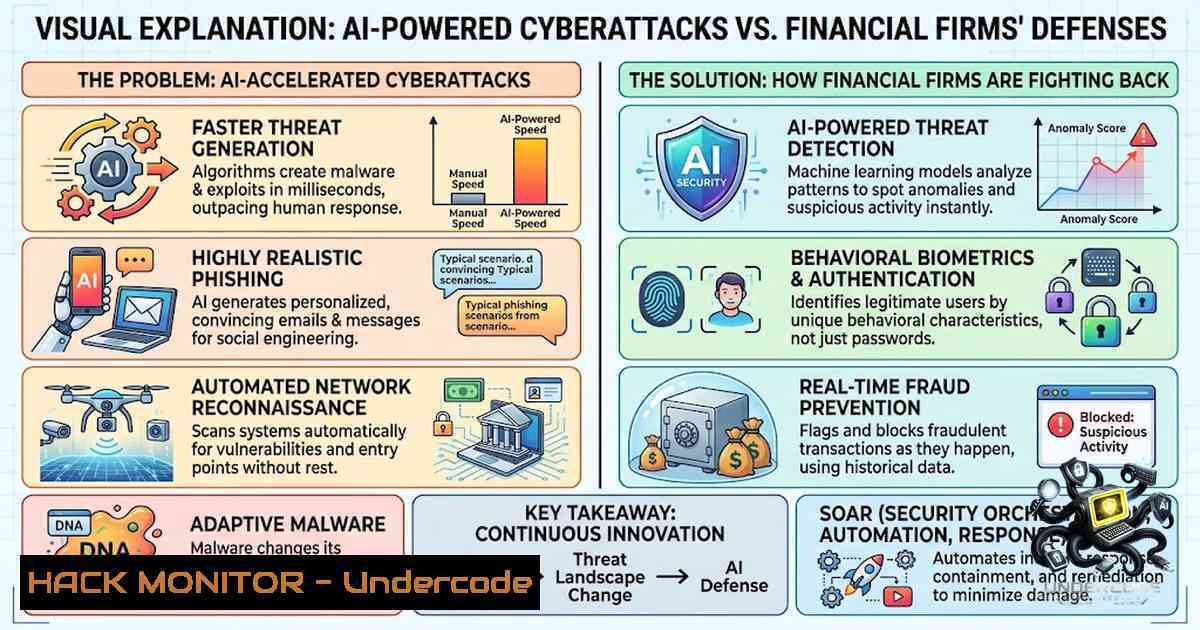
The Bitcoin industry experienced yet another security incident this week, with customer support data reportedly compromised. As AI-powered hacking improves weekly, the attack surface for financial institutions has expanded dramatically—AI agents now run reconnaissance, test exploits, and weaponize vulnerabilities at machine speed, collapsing the mean time from CVE disclosure to confirmed exploitation from 2.3 years in 2018 to roughly 10 hours in 2026. For firms like 21bitcoin, the response has been multi-layered: multiple dedicated AI security audits since the start of the year, regular DORA audits, penetration testing, bug bounty programs, and an in-house security team focused on defending against AI and social engineering attacks.
Learning Objectives & Secrets
- Objective 1: Understand how AI is transforming both offensive and defensive cybersecurity in the financial sector, and why traditional security measures are no longer sufficient.
-
Objective 2 (Secret Tip): Deploy AI-driven security audits continuously—not as one-off events. The most effective approach uses multiple frontier AI models (e.g., Kimi K3, GPT Sol, Claude Fable/Opus, GLM5.2) in parallel to identify vulnerabilities across codebases, cryptographic libraries, and infrastructure.
-
Objective 3 (Secret Tip): Integrate bug bounty programs with DevOps release cycles while maintaining audit trails for DORA compliance. Start with private programs before scaling to public ones, and ensure secure triage processes are in place.
You Should Know
- The New Reality: AI as an Attack Operator
AI has crossed from being a development aid to a live attack operator. Check Point Research reports that AI now builds deployment-ready malware and attack suites, indirect prompt injection is rising as a routine attack path, and enterprise data leakage through GenAI is a persistent and growing risk—high-risk prompts doubled from 2% to 4% in the last year. Google has warned that hackers now use AI to create exploits, automate attacks, evade defenses, and target AI supply chains at scale. The first AI-built zero-day exploit has already been documented in the wild, targeting two-factor authentication systems.
Step‑by‑step guide to assessing your AI risk exposure:
- Inventory AI assets: Document all AI models, APIs, and training data pipelines in your organization.
- Run AI-specific vulnerability scans: Use tools like SecureClaw to scan for common prompt injection and agentic AI risks:
Linux / macOS / WSL
python3 -m pip install --user pipx
pipx install git+https://github.com/sparkst/secureclaw.git
secureclaw scan .

Windows (PowerShell)
curl -sL https://raw.githubusercontent.com/sparkst/secureclaw/main/secureclaw.py -o secureclaw.py
python3 secureclaw.py scan .
-
Deploy AI-powered contextual security auditing: Use tools like Sentinel to analyze codebases, architectures, and attack surfaces:
Linux / macOS / WSL
curl -fsSL https://raw.githubusercontent.com/Wembie/Sentinel/main/install.sh | bash

Windows (PowerShell)
irm https://raw.githubusercontent.com/Wembie/Sentinel/main/install.ps1 | iex
sentinel audit --path ./your-repo
-
Scan for AI credential exposure: Use AIHound to detect session credentials across 29 AI tools:
python3 -m pip install aihound
python3 -m aihound scan --all
-
DORA Compliance: A New Standard for Financial Resilience
The Digital Operational Resilience Act (DORA), which took effect on January 17, 2025, applies to almost all EU financial entities including banks, insurers, brokers, and payment institutions. Key requirements include:
– Mandatory ICT risk management framework with business continuity planning and cyber incident response
– Obligatory cyber incident reporting within 72 hours to national financial regulators
– Regular penetration testing and digital operational resilience testing
– Threat-led penetration testing (TLPT) at least every three years for ICT services affecting critical functions
Step‑by‑step guide to building a DORA‑ready security program:
- Establish an ICT risk management framework encompassing governance, risk identification, protection, detection, response, recovery, and learning components.
- Develop a testing program that ranges from regular vulnerability assessments to scenario-based testing and TLPT for larger entities.
- Implement continuous security testing that provides auditable evidence of compliance. This can include:
– Traditional bug bounty services
– Continuous penetration testing offerings
– Vulnerability Disclosure Programs (VDP)
4. Integrate bug bounty into your release cycle with proper audit trails:
– Define scope and rules of engagement—exclude PII databases unless using anonymized test environments
– Log every submission, researcher interaction, and patch
– Maintain GDPR, CSSF, and DORA audit trails
- Building an In-House Security Team for AI and Social Engineering Defense
21bitcoin maintains a senior in-house security and platform team dedicated to defending against AI and social engineering attacks. This reflects a broader industry trend: security teams must adopt a unified social engineering defense (SED) architecture that correlates cross-channel telemetry into a single intelligence layer.
Step‑by‑step guide to building AI-aware social engineering defenses:
- Enhance security training to include AI threat awareness, deepfake recognition, and safe AI usage practices.
- Foster a culture of verification over blind trust—employees should always double-check AI recommendations with external sources.
- Implement agentic SOC automation to outpace machine-speed adversaries.
- Use AI to analyze communication patterns and identify anomalies indicating phishing or other fraudulent activities.
- Run AI-augmented simulations—move beyond basic phishing tests to incorporate AI-generated voice and video scenarios into red team exercises.
- Update incident response playbooks to include AI-specific threats and create pre-drafted communications for synthetic media incidents.
Linux/Windows commands for monitoring AI-related threats:
 Monitor for unusual API calls to AI services (Linux)
sudo ausearch -m USER_CMD -ts recent | grep -E "openai|anthropic|gemini"

Check for unauthorized AI tool installations (Windows PowerShell)
Get-WmiObject -Class Win32_Product | Where-Object { $_.Name -match "AI|GPT|Claude" }

Network monitoring for suspicious outbound AI API traffic
sudo tcpdump -i any -1 'host api.openai.com or host api.anthropic.com'
4. AI-Powered Security Audits: The New Frontier
Recent initiatives like the Bitcoin Red Team have demonstrated the power of AI-driven security audits. The team analyzed approximately 150 Bitcoin repositories using advanced AI models and discovered more than a dozen vulnerabilities across wallets, cryptographic libraries, and infrastructure. A larger audit across 390 repositories found 85 critical flaws within just 27.5 hours, funded through more than $40,000 in AI compute costs.
Step‑by‑step guide to conducting an AI-powered security audit:
- Select multiple AI models for parallel analysis—different models catch different vulnerability types. Deploy models like Kimi K3, GPT Sol, Claude Fable/Opus, and GLM5.2.
- Define audit scope—prioritize critical infrastructure, cryptographic libraries, authentication systems, and customer-facing applications.
- Run the audit continuously, not as a one-off. Tools like CyberScan turn frontier AI models into repeatable, resumable security reviews that deliver actionable findings inside developers’ existing workflows.
- Triaged findings—not every AI-discovered issue is a true positive. Human verification remains essential.
- Remediate critical vulnerabilities within hours, as recommended by CERT-In’s blueprint for countering AI-assisted cyber threats.
Example AI audit workflow using open-source tools:
 Clone the repository to audit
git clone https://github.com/your-org/your-repo.git
cd your-repo

Run Sentinel for contextual security auditing
sentinel audit --path . --output report.json

Run SecureClaw for prompt injection risks
secureclaw scan . --format json --output claw-report.json

Combine results and prioritize findings
python3 -c "
import json
with open('report.json') as f: sentinel = json.load(f)
with open('claw-report.json') as f: claw = json.load(f)
 Merge and rank by severity
"
5. Penetration Testing and Bug Bounty Programs
DORA mandates regular digital operational resilience testing, including penetration testing and vulnerability assessments. Organizations can reduce costs and staffing pressures by adopting platform-based services for continuous penetration testing and incident management.
Step‑by‑step guide to launching a DORA‑ready bug bounty program:
- Start with a private program—integrate it into your testing and release process and ICT control framework.
- Define scope and rules of engagement—exclude PII databases unless using anonymized test environments.
- Ensure secure triage processes before considering a public program.
- Maintain audit trails—log every submission, researcher interaction, and patch.
- Consider continuous testing offerings that provide auditable evidence of compliance, demonstrating a proactive stance on resilience.
Common penetration testing commands (Linux/Kali):
 Network reconnaissance
nmap -sV -sC -A target.com

Web application scanning
nikto -h https://target.com

API security testing
ffuf -u https://target.com/api/v1/FUZZ -w /usr/share/wordlists/dirb/common.txt

Cloud infrastructure hardening check
prowler aws --checks AWS_EC2_ --output json
6. Cloud and API Security Hardening
As attackers increasingly target software flaws and cloud services, financial firms must harden their cloud and API infrastructure.
Step‑by‑step guide to cloud and API hardening:
- Implement zero-trust architecture—verify every request, regardless of origin.
- Harden identity and messaging channels—apply AI-driven detection across content and behavioral signals.
- Reduce publicly exposed details—monitor domain and brand abuse.
4. Implement robust security, backup, and recovery mechanisms.
- Enforce clear policies for access control, change management, and encryption.
API security hardening commands:
 Check for exposed API keys in codebase (Linux)
grep -rE "api[_-]?key|secret|token|password" --include=".py" --include=".js" --include=".json" .

Validate JWT tokens (using jwt-cli)
jwt decode --secret your-secret-key "eyJhbGciOiJIUzI1NiIs..."

Test API rate limiting (using hey load tester)
hey -1 1000 -c 100 https://api.target.com/v1/endpoint

Check cloud IAM policies for over-permissions (AWS)
aws iam list-policies --only-attached --scope Local --output json | jq '.Policies[] | select(.DefaultVersionId)'
What Undercode Say
- Key Takeaway 1: AI-powered attacks are no longer theoretical—they are happening now at machine speed. The vulnerability window has compressed from years to hours, and organizations that fail to adopt AI-driven defenses will be left behind. The Bitcoin industry’s recent security incidents, including the Coldcard hack that resulted in over 1,000 BTC stolen (approximately $88 million), underscore the critical need for continuous, AI-enhanced security auditing.
-
Key Takeaway 2: Compliance frameworks like DORA are not just regulatory burdens—they provide a structured approach to building operational resilience. Firms like 21bitcoin are setting the standard by combining multiple layers of defense: AI security audits, DORA compliance, penetration testing, bug bounties, and dedicated in-house security teams. The lesson is clear: “Better to check once too often than once too little.”
Prediction
-
+1 The financial sector will increasingly adopt AI-powered security auditing as a standard practice, with multi-model approaches becoming the norm. Continuous auditing will replace periodic assessments, reducing the mean time to vulnerability discovery from weeks to hours.
-
+1 DORA compliance will drive innovation in security testing platforms, with bug bounty and continuous penetration testing services becoming integrated into DevOps pipelines. This will create new opportunities for security researchers and AI security startups.
-
-1 AI-powered social engineering attacks will become more sophisticated and harder to detect. Deepfake voice and video impersonation will increasingly bypass traditional authentication methods, forcing organizations to adopt multi-channel verification and behavioral analysis.
-
-1 The attack surface will continue to expand as AI systems themselves become targets. Indirect prompt injection and supply chain attacks on AI models will become routine attack paths, requiring organizations to treat AI as a first-class security asset.
-
-1 Smaller financial firms without dedicated in-house security teams will struggle to keep pace with AI-driven threats, potentially leading to a consolidation of security services or increased reliance on managed security service providers (MSSPs).
▶️ Related Video (88% Match):
https://www.youtube.com/watch?v=0SaumcyPO0I
🎯Let’s Practice For Free:
🎓 Live Courses & Certifications:
Join Undercode Academy for Verified Certifications
🚀 Request a Custom Project:
Secure, high-velocity infrastructure and disruptive technological engineering. Contact our engineering team for high-tier development and proprietary systems:
[email protected]
💎 Smart Architecture | 🛡️ Secure by Design | ⭐ Trusted by Thousands
IT/Security Reporter URL:
Reported By: https://lnkd.in/p/eDmVvsc5 – Hackers Feeds
Extra Hub: Undercode MoN
Basic Verification: Pass ✅


