Listen to this Post
Introduction:
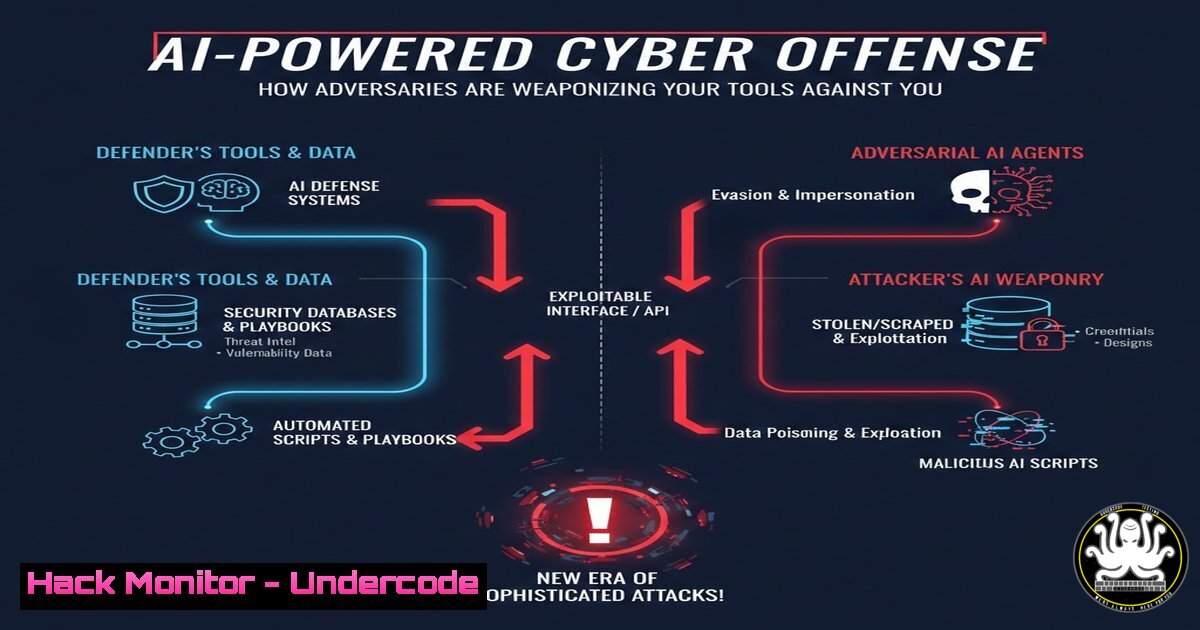
The integration of Artificial Intelligence into cybersecurity tools represents a dual-use technology of unprecedented scale. While organizations race to implement AI for threat detection and automation, malicious actors are simultaneously co-opting these same technologies to create adaptive, scalable, and highly targeted attack campaigns. This paradigm shift demands a fundamental re-evaluation of our defensive postures.
Learning Objectives:
- Understand the specific techniques used to weaponize AI security tools for offensive purposes
- Implement hardening configurations for popular AI-powered security platforms
- Develop detection methodologies for identifying AI-assisted attack patterns
You Should Know:
1. Adversarial Machine Learning: Poisoning Your Defenses
Modern security systems rely on machine learning models trained on vast datasets of network traffic, user behavior, and malware signatures. Attackers are now employing sophisticated data poisoning techniques to manipulate these training pipelines, creating blind spots that their attacks can effortlessly slip through.
Step-by-step guide explaining what this does and how to use it:
To detect potential training data manipulation, security teams should implement anomaly detection in their model training pipelines:
 Python script to detect training data anomalies
import pandas as pd
from sklearn.ensemble import IsolationForest
import numpy as np

Load your training dataset
training_data = pd.read_csv('security_training_data.csv')

Initialize isolation forest for anomaly detection
clf = IsolationForest(contamination=0.01, random_state=42)
anomaly_prediction = clf.fit_predict(training_data)

Identify anomalous entries
anomalies = training_data[anomaly_prediction == -1]
print(f"Detected {len(anomalies)} potential poisoning attempts")

Export for investigation
anomalies.to_csv('suspicious_training_entries.csv', index=False)
Regularly rotate training datasets and maintain multiple model versions to compare performance deviations that might indicate poisoning.
2. AI-Powered Social Engineering at Scale
Generative AI platforms can now create highly personalized phishing emails by scraping publicly available information from LinkedIn, corporate websites, and social media. These messages bypass traditional spam filters through their linguistic sophistication and contextual relevance.
Step-by-step guide explaining what this does and how to use it:
Implement multi-layered detection for AI-generated content:
 Using custom mail filter rules with ClamAV and custom signatures
 Add to /etc/clamav/clamd.conf
HeuristicScanPrecedence yes
PhishingSignatures yes
PhishingScanURLs yes

Create custom YARA rules for AI-generated content patterns
rule AIGeneratedText_Generic {
meta:
description = "Detects common AI writing patterns"
author = "SecurityTeam"
strings:
$ai_pattern1 = "I hope this message finds you well" nocase
$ai_pattern2 = "As previously discussed" nocase
$ai_pattern3 = "To whom it may concern" nocase
condition:
any of them and filesize < 50KB
}
Combine this with user education programs that specifically address AI-generated social engineering tactics.
3. Automated Vulnerability Discovery Through AI Code Analysis
Attackers are leveraging AI-powered code analysis tools not for security improvement, but for rapid vulnerability discovery at scale. These systems can scan entire codebases in minutes, identifying potential weaknesses that would take human analysts weeks to discover.
Step-by-step guide explaining what this does and how to use it:
Harden your development pipelines against automated reconnaissance:
 GitHub Actions workflow to detect automated scanning
name: Detect Automated Code Analysis
on: [pull_request, push]

jobs:
detect-scanning:
runs-on: ubuntu-latest
steps:
- name: Check for bulk analysis patterns
uses: actions/checkout@v3
- name: Analyze commit patterns
run: |
git log --since='1 day ago' --pretty=format:%H | wc -l | \
awk '{ if ($1 > 20) { print "EXCESSIVE_COMMITS"; exit 1 } }'
- name: Scan for known analysis tools
run: |
if grep -r "semgrep|bandit|sonarqube" .github/ ; then
echo "POTENTIAL_SCANNING_TOOL_DETECTED"
exit 1
fi
Implement rate limiting on your code repository APIs and monitor for unusual access patterns from CI/CD environments.
4. Cloud Infrastructure Exploitation via AI-Assisted Reconnaissance
AI systems can now map cloud environments more efficiently than human operators, identifying misconfigurations, exposed resources, and privilege escalation paths across AWS, Azure, and GCP environments simultaneously.
Step-by-step guide explaining what this does and how to use it:
Deploy automated cloud security hardening scripts:
!/bin/bash
 AWS S3 Bucket Security Hardening Script
for bucket in $(aws s3api list-buckets --query "Buckets[].Name" --output text); do
 Check for public access
public=$(aws s3api get-bucket-policy-status --bucket $bucket --query "PolicyStatus.IsPublic" --output text 2>/dev/null)
if [ "$public" == "True" ]; then
echo "ALERT: Bucket $bucket is publicly accessible"
 Automatically remove public access
aws s3api put-public-access-block \
--bucket $bucket \
--public-access-block-configuration \
BlockPublicAcls=true,IgnorePublicAcls=true,BlockPublicPolicy=true,RestrictPublicBuckets=true
fi
done

Enable AWS GuardDuty in all regions
for region in $(aws ec2 describe-regions --query "Regions[].RegionName" --output text); do
aws guardduty create-detector --enable --region $region
done
5. AI-Generated Malware Variants Evading Signature Detection
Through generative adversarial networks (GANs), attackers can create infinite malware variants that maintain their malicious functionality while completely altering their signatures, rendering traditional antivirus solutions increasingly ineffective.
Step-by-step guide explaining what this does and how to use it:
Implement behavior-based detection systems:
 Windows PowerShell script to monitor for suspicious behavior patterns
Register-WmiEvent -Query "SELECT  FROM __InstanceCreationEvent WITHIN 5 WHERE TargetInstance ISA 'Win32_Process'" -Action {
$process = $Event.SourceEventArgs.NewEvent.TargetInstance
$commandLine = $process.CommandLine
$parentProcess = $process.ParentProcessId

Detect potentially malicious behavior patterns
if (($process.Name -eq "mshta.exe") -and ($commandLine -match "javascript")) {
Write-EventLog -LogName "Security" -Source "BehaviorMonitor" -EventId 4675 -Message "Suspicious mshta behavior detected: $commandLine"
Stop-Process -Id $process.ProcessId -Force
}
}

Enable additional logging
auditpol /set /subcategory:"Process Creation" /success:enable /failure:enable
6. API Security Vulnerabilities Exposed Through AI Fuzzing
AI-driven fuzzing tools can intelligently probe API endpoints, learning from responses to craft increasingly sophisticated attacks that bypass standard validation mechanisms and exploit business logic flaws.
Step-by-step guide explaining what this does and how to use it:
Harden your API security posture with comprehensive monitoring:
 Flask middleware for detecting AI fuzzing patterns
from flask import request, jsonify
import re
import time

class APIFuzzingDetection:
def <strong>init</strong>(self, app):
self.app = app
self.request_times = {}
self.app.before_request(self.detect_fuzzing)

def detect_fuzzing(self):
client_ip = request.remote_addr
current_time = time.time()

Track request frequency
if client_ip not in self.request_times:
self.request_times[bash] = []

self.request_times[bash].append(current_time)

Keep only last minute of requests
self.request_times[bash] = [t for t in self.request_times[bash]
if current_time - t < 60]

Check for excessive requests
if len(self.request_times[bash]) > 100:  More than 100 requests/minute
return jsonify({"error": "Rate limit exceeded"}), 429

Check for parameter pollution attacks
if len(request.args) > 20:  Excessive parameters
return jsonify({"error": "Parameter limit exceeded"}), 400

Detect SQL injection patterns in JSON payloads
if request.json:
payload_str = str(request.json)
sql_patterns = [r'union\s+select', r'select.from', r'insert\s+into']
for pattern in sql_patterns:
if re.search(pattern, payload_str, re.IGNORECASE):
return jsonify({"error": "Invalid input detected"}), 400
What Undercode Say:
- The offensive use of AI tools represents an asymmetric threat that favors attackers through automation and scale
- Traditional signature-based defenses are becoming increasingly obsolete against AI-generated attack variants
- Security teams must adopt AI-driven defensive measures simply to maintain parity with evolving threats
- The most significant vulnerabilities will increasingly exist in the AI/ML pipelines themselves rather than traditional code
The weaponization of AI security tools creates a self-reinforcing cycle where defensive advancements immediately become potential offensive capabilities. Organizations that fail to secure their AI infrastructure may inadvertently provide attackers with the very tools used against them. This necessitates a fundamental shift from perimeter-based defense to continuous adaptive security models that can evolve as rapidly as the threats they face.
Prediction:
Within the next 18-24 months, we will witness the first major cyber incident caused primarily by AI systems attacking other AI systems without direct human intervention. These autonomous security breaches will escalate at speeds beyond human response capabilities, forcing widespread adoption of AI-driven autonomous defense systems. The regulatory landscape will struggle to keep pace, creating temporary windows of significant systemic risk as offensive capabilities temporarily outstrip defensive measures across entire industry sectors.
🎯Let’s Practice For Free:
IT/Security Reporter URL:
Reported By: Ivan Savov – Hackers Feeds
Extra Hub: Undercode MoN
Basic Verification: Pass ✅


