Listen to this Post
Introduction:
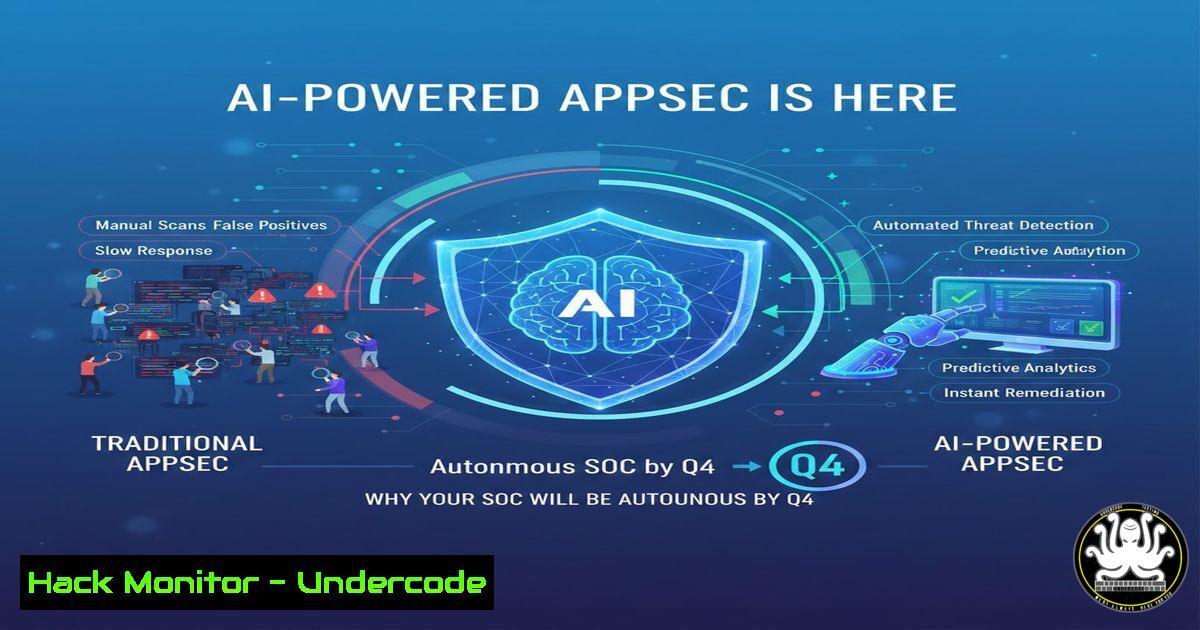
The cybersecurity community is currently entrenched in a debate that mirrors the initial skepticism surrounding AI’s ability to write code: the belief that AI cannot effectively manage Security Operations Centers (SOCs). As highlighted in a recent industry discussion, the leap from automated vulnerability discovery to autonomous threat triage and response is perceived as insurmountable. However, this article argues that the convergence of Large Language Models (LLMs) with security orchestration is not only inevitable but imminent, fundamentally shifting the role of the analyst from a manual executor to an AI supervisor.
Learning Objectives:
- Understand the technical evolution of AI from a code-generation tool to an autonomous security agent capable of complex reasoning.
- Learn to simulate AI-driven log analysis and vulnerability triage using open-source tools and command-line interfaces.
- Identify the practical steps to integrate AI into existing SOC workflows and cloud security postures.
You Should Know:
1. Simulating AI-Driven Vulnerability Discovery with Command-Line Tools
The core argument that “AI can find and exploit vulnerabilities” is predicated on its ability to parse context. While commercial tools exist, we can simulate this logic locally. This involves using AI to generate targeted scanning commands rather than running scans blindly.
Step‑by‑step guide: Simulating Context-Aware Scanning
This exercise demonstrates how an AI model might reason about a target and select the appropriate tool.
- Environment Setup: Assume you have a target IP (e.g.,
192.168.1.100) running a web server. - AI-Assisted Command Generation: Instead of a full port scan, an AI might deduce the need to check for specific misconfigurations. Use a local model (like Ollama with Llama 3) to generate a `nmap` script command:
"Given a server with Apache 2.4.49, suggest an Nmap command to check for path traversal."
AI Output:
nmap -p 80 --script http-apache-negotiation --script-args http-apache-negotiation.path=/cgi-bin/ 192.168.1.100
- Exploitation Logic: If a vulnerability is found (e.g., CVE-2021-41773), the AI would not just report it but suggest a proof-of-concept (PoC) command. This mimics the “exploit” phase.
AI Generated PoC for Apache Path Traversal
curl -s --path-as-is "http://192.168.1.100/cgi-bin/.%2e/%2e%2e/%2e%2e/%2e%2e/etc/passwd"
This process shows the shift: AI isn’t just finding the bug; it’s reasoning about the stack, generating the precise syntax, and executing the validation.
-
Automating SOC Triage: From Raw Logs to Incident Report
The skepticism around AI in the SOC stems from the complexity of “small vocabularies” in logs and the high stakes of triage. However, AI excels at pattern recognition across disparate data sources.
Step‑by‑step guide: Using Python and AI to Parse Windows Security Logs
We can simulate an AI agent’s core function by using a Python script to send extracted log data to an LLM for summarization and prioritization.
- Extract Logs (Windows): On a Windows machine, use `wevtutil` to export specific security logs to a structured format (XML).
wevtutil epl Security C:\logs\security_export.evtx
- Convert and Analyze (Linux/WSL): Use `python-evtx` to parse the EVTX file and extract critical Event IDs (e.g., 4625 for failed logins, 4688 for process creation).
!/usr/bin/env python3 import Evtx.Evtx as evtx import xml.etree.ElementTree as ET with evtx.Evtx('security_export.evtx') as log: for record in log.records(): xml_data = record.xml() Simplified extraction (requires proper XML parsing) if "<EventID>4625</EventID>" in xml_data: print(f"ALERT: Failed Login - {record.timestamp()}") - AI Triage: Instead of an analyst reviewing thousands of these lines, the extracted output is fed into an LLM via API (or local model) with a prompt: “Summarize these failed login attempts. Are they a brute force attack? If so, from which IPs?”
This automates the “triage” step that currently consumes the majority of SOC analyst time, allowing the human to focus on the AI’s findings.
- Cloud Hardening: AI-Powered Infrastructure as Code (IaC) Review
The discussion about AI replacing AppSec directly translates to cloud security. AI can review Terraform or CloudFormation scripts for misconfigurations before deployment, a task requiring deep knowledge of cloud provider best practices.
Step‑by‑step guide: Using Checkov with AI Context
Checkov is an IaC scanning tool. We can simulate an “AI Brain” that not only scans but explains the business risk and provides the exact fix.
1. Install Checkov (Linux/macOS):
pip install checkov
2. Scan a Terraform File: Assume a file `main.tf` with an S3 bucket that has public ACLs.
checkov -f main.tf
Output: Checkov will flag `CKV_AWS_20` (S3 Bucket has an ACL defined which allows public access).
3. AI Remediation: An AI agent would take this output and immediately generate the corrected Terraform code. It understands that changing `acl = “public-read”` to `acl = “private”` solves the issue, but might also add a bucket policy for further hardening. The analyst’s role becomes reviewing the AI’s pull request rather than writing the code from scratch.
- “Vibe Coding” and the New Threat Vector: AI-Generated Code Security
The comments mention “vibe coding,” where users describe an app’s functionality and AI generates it. This creates a massive new attack surface—vulnerabilities introduced not by human error, but by insecure AI training data.
Step‑by‑step guide: Auditing AI-Generated Code with Semgrep
Security teams must now audit AI output. Semgrep is ideal for this because it runs fast on diffs and can be integrated into CI/CD pipelines triggered by AI commits.
1. Install Semgrep:
python3 -m pip install semgrep
2. Run a Scan on AI-Generated Code: Target a directory (./ai_generated_app) with rules for common web vulnerabilities (e.g., p/owasp-top-ten).
semgrep --config=p/owasp-top-ten ./ai_generated_app
3. Interpret Results: If the AI generated a Python Flask route with eval(), Semgrep will flag it. The analyst then has a closed loop: AI generates code -> Security tool flags it -> Analyst reviews and either accepts (if it’s a false positive) or rejects/fixes the AI’s commit. This process is the future of AppSec engineering.
5. API Security: AI Against AI
As AI agents start interacting with APIs autonomously, securing those APIs against automated abuse becomes critical. This moves beyond traditional rate limiting to behavioral analysis.
Step‑by‑step guide: Simulating an AI Agent’s API Call and Hardening the Endpoint
1. Simulate an AI Client (Python):
import requests
 AI Agent making a legitimate request
headers = {'User-Agent': 'AI-Agent-Bot/1.0', 'X-API-Key': 'valid_key'}
response = requests.get('https://api.undercode-testing.com/data', headers=headers)
2. Harden the Endpoint (Nginx Config): To protect against malicious AI agents (scrapers, brute-forcers), you must move beyond simple `User-Agent` blocking.
 In server block
location /api/ {
 Rate limiting based on API key
limit_req zone=apikey burst=20 nodelay;
 Challenge clients with heavy JavaScript computation (Proof-of-Work)
 This stops simple bot loops but allows legitimate high-volume AI agents.
 Requires integrating a module like `nginx-http-js` or using a WAF.
}
The key takeaway is that future API security will involve challenging the client to prove it’s a legitimate, rate-compliant process, not just a human.
What Undercode Say:
- The SOC Analyst Role Evolves, Not Vanishes: The transition will not be immediate, as noted in the comments. However, analysts who do not learn to manage and interrogate AI agents will be replaced by those who do. The skill shifts from log familiarity to prompt engineering and output validation.
- Hallucinations as a Feature, Not a Bug: The fear of “hallucinations” in 2023 is now being mitigated by grounding LLMs with Retrieval-Augmented Generation (RAG) using a company’s own firewall logs and SIEM data. The accuracy for known patterns (like log analysis) is already surpassing human speed, if not yet human judgment.
Analysis:
The cybersecurity industry is on the cusp of a paradigm shift where AI transitions from a co-pilot to an autopilot. The current disbelief mirrors the exact pattern seen with AI code generation: initial dismissal, followed by rapid adoption once the efficiency gains are undeniable. For defenders, this is a double-edged sword; while they gain powerful allies for triage and hardening, they also face adversaries using the same technology to automate the reconnaissance and exploitation phases of an attack at machine speed.
Prediction:
Within the next 12 to 18 months, we will see the emergence of “Autonomous SOC” tiers offered by major MSSPs. These will rely on AI agents to perform Level 1 and Level 2 triage, escalating only verified, complex incidents to humans. This will force regulatory bodies to define standards for “AI-driven security incidents,” fundamentally altering cyber insurance and compliance frameworks.
▶️ Related Video (84% Match):
🎯Let’s Practice For Free:
IT/Security Reporter URL:
Reported By: Gadievron First – Hackers Feeds
Extra Hub: Undercode MoN
Basic Verification: Pass ✅


