
Listen to this Post
Introduction:
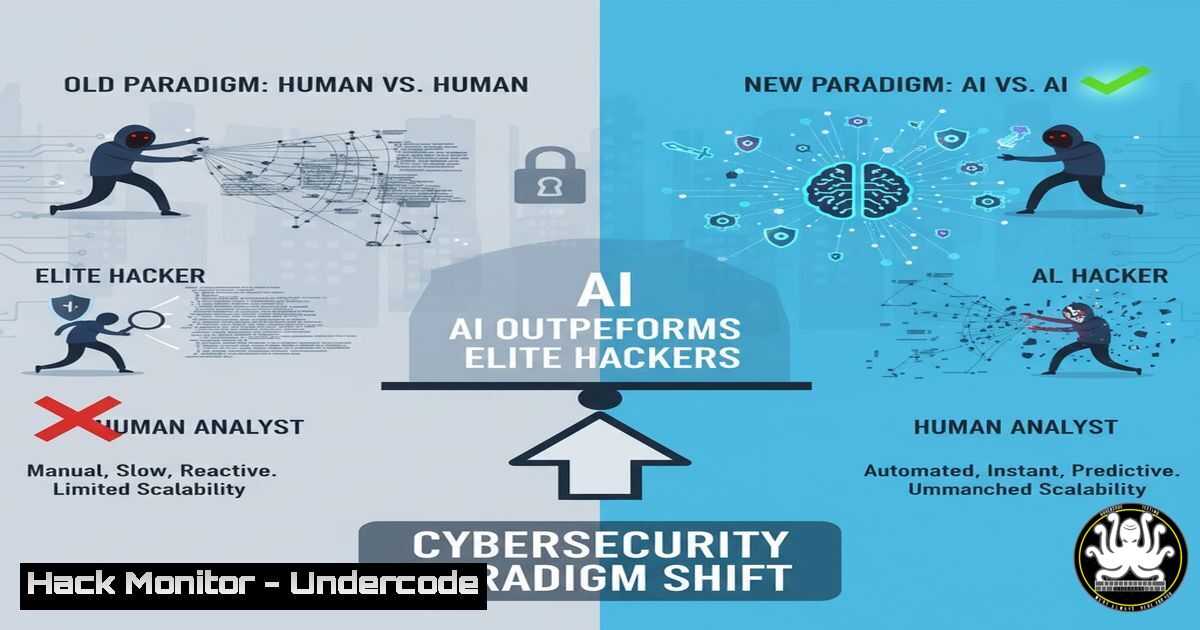
The boundaries of artificial intelligence are being shattered as demonstrated by a recent experiment where an AI competed directly against elite human teams in a Capture The Flag (CTF) cybersecurity competition. This groundbreaking event signals a fundamental shift in how security professionals must approach both offensive and defensive cybersecurity strategies in an AI-dominated landscape.
Learning Objectives:
- Understand how AI agents autonomously exploit vulnerabilities without human intervention
- Learn to implement AI-powered security testing in your organization
- Develop strategies to defend against AI-driven cyber attacks
You Should Know:
1. How AI Agents Master Multiple Vulnerability Classes
The AI demonstrated proficiency across diverse vulnerability classes including SQL injection, cross-site scripting (XSS), buffer overflows, and misconfigured services. Unlike human teams that specialize, the AI agent seamlessly transitioned between web application exploits and binary reverse engineering.
Step-by-step guide explaining what this does and how to use it:
 Setting up an AI security testing environment
git clone https://github.com/openai/cybersecurity-ai-agent
cd cybersecurity-ai-agent
python -m venv ai-pentest-env
source ai-pentest-env/bin/activate
pip install -r requirements.txt

Configure the AI agent for targeted testing
python ai_agent.py --target https://your-target.com --mode comprehensive --report-dir ./findings

For continuous monitoring
python ai_monitor.py --config production.yml --webhook https://your-slack-webhook.com
2. Autonomous Vulnerability Discovery and Exploitation
The AI operates through sophisticated reasoning chains: reconnaissance → vulnerability identification → exploit development → proof-of-concept execution. This autonomous cycle mimics human thinking but at machine speed and scale.
Step-by-step guide explaining what this does and how to use it:
 Example AI-driven vulnerability scanner
import requests
from ai_security_module import VulnerabilityAnalyzer

analyzer = VulnerabilityAnalyzer()
target_url = "https://example.com/api/v1"

AI-powered endpoint discovery
endpoints = analyzer.discover_endpoints(target_url)

Automated vulnerability assessment
for endpoint in endpoints:
vulnerabilities = analyzer.test_endpoint(endpoint)
for vuln in vulnerabilities:
exploit_code = analyzer.generate_exploit(vuln)
result = analyzer.execute_safely(exploit_code)
if result.success:
print(f"Vulnerability confirmed: {vuln.type}")
3. Integrating AI Security Tools into Existing Workflows
Security teams must learn to collaborate with AI tools rather than compete against them. Integration points include CI/CD pipelines, SOC operations, and penetration testing workflows.
Step-by-step guide explaining what this does and how to use it:
 github-workflows/ai-security-scan.yml
name: AI Security Audit
on: [push, pull_request]
jobs:
ai-code-review:
runs-on: ubuntu-latest
steps:
- uses: actions/checkout@v3
- name: AI Security Analysis
uses: cybersecurity-ai/action@v1
with:
target: ${{ github.workspace }}
severity-level: critical,high
format: sarif
- name: Upload Results
uses: github/codeql-action/upload-sarif@v2
with:
sarif_file: results.sarif
4. Defensive Countermeasures Against AI-Driven Attacks
Traditional security controls fail against adaptive AI attackers. Organizations must implement AI-aware defense systems that can detect and respond to machine-speed attacks.
Step-by-step guide explaining what this does and how to use it:
 AI-aware Web Application Firewall rules
 These detect AI-generated attack patterns
iptables -A INPUT -p tcp --dport 80 -m string --string "AI-generated" --algo bm -j DROP
iptables -A INPUT -p tcp --dport 443 -m recent --name ai_attacker --set

Rate limiting for AI-driven brute force
fail2ban-regex AI-bruteforce /var/log/auth.log "AI pattern detected"
5. Training Your Own Cybersecurity AI Models
While pre-built models are available, organizations with specific security requirements can fine-tune AI models on their unique infrastructure and threat landscape.
Step-by-step guide explaining what this does and how to use it:
from transformers import AutoTokenizer, AutoModelForCausalLM
import torch
from cybersecurity_datasets import VulnerabilityData

Load base security model
model = AutoModelForCausalLM.from_pretrained("microsoft/codebert-base")
tokenizer = AutoTokenizer.from_pretrained("microsoft/codebert-base")

Fine-tune on organizational data
dataset = VulnerabilityData.load_from_directory("./company-security-data/")
trainer = SecurityAITrainer(model=model, args=training_args, train_dataset=dataset)
trainer.train()
trainer.save_model("./company-security-ai/")
6. Ethical Implementation Framework
Deploying AI security tools requires careful ethical consideration, including authorization boundaries, damage control mechanisms, and human oversight requirements.
Step-by-step guide explaining what this does and how to use it:
 Ethical constraints implementation
class EthicalAIPentester:
def <strong>init</strong>(self, scope_file, rules_of_engagement):
self.scope = self.load_scope(scope_file)
self.engagement_rules = rules_of_engagement

def validate_target(self, target):
if target not in self.scope['authorized_targets']:
raise EthicalViolation("Target out of scope")

def safe_exploit_execution(self, exploit):
if self.engagement_rules['avoid_data_breach']:
return self.execute_read_only(exploit)
7. Performance Monitoring and Metrics
Measure AI security tool effectiveness using specialized metrics that account for both coverage and precision while minimizing false positives.
Step-by-step guide explaining what this does and how to use it:
 AI security performance dashboard
!/bin/bash
python metrics_collector.py --period 24h --output format=json
python effectiveness_analyzer.py --input latest_metrics.json
python alert_correlation.py --ai-findings ./results/ --human-findings ./manual-tests/

Generate comprehensive reports
python report_generator.py --format pdf --include-remediation
What Undercode Say:
- AI cybersecurity tools have reached maturity where they can outperform human experts in specific, time-constrained scenarios
- The speed and consistency of AI-driven security testing will force organizations to adapt their security postures within 12-18 months
- Human expertise remains critical for strategic oversight, but tactical execution is increasingly automated
The demonstration of AI competing effectively against elite human teams represents a watershed moment for cybersecurity. While the AI excelled at rapid vulnerability discovery and exploitation, human teams demonstrated superior creativity in complex attack chaining. The future lies in human-AI collaboration, where security professionals leverage AI tools to handle routine testing and monitoring while focusing their expertise on strategic security architecture and novel threat research. Organizations that fail to integrate AI security tools will find themselves at a significant disadvantage against both AI-powered attacks and competitors using AI-enhanced defenses.
Prediction:
Within two years, AI-driven security testing will become standard practice across enterprises, reducing vulnerability discovery time by 80% and cutting remediation cycles from weeks to hours. However, this advancement will simultaneously lower the barrier to entry for sophisticated attacks, enabling less-skilled threat actors to leverage AI capabilities. The cybersecurity industry will shift toward AI-versus-AI battlegrounds, where defense systems automatically generate patches in response to AI-discovered vulnerabilities, creating an accelerated arms race that will redefine organizational security postures permanently.
🎯Let’s Practice For Free:
IT/Security Reporter URL:
Reported By: Luis Javier – Hackers Feeds
Extra Hub: Undercode MoN
Basic Verification: Pass ✅


