Listen to this Post
Introduction:
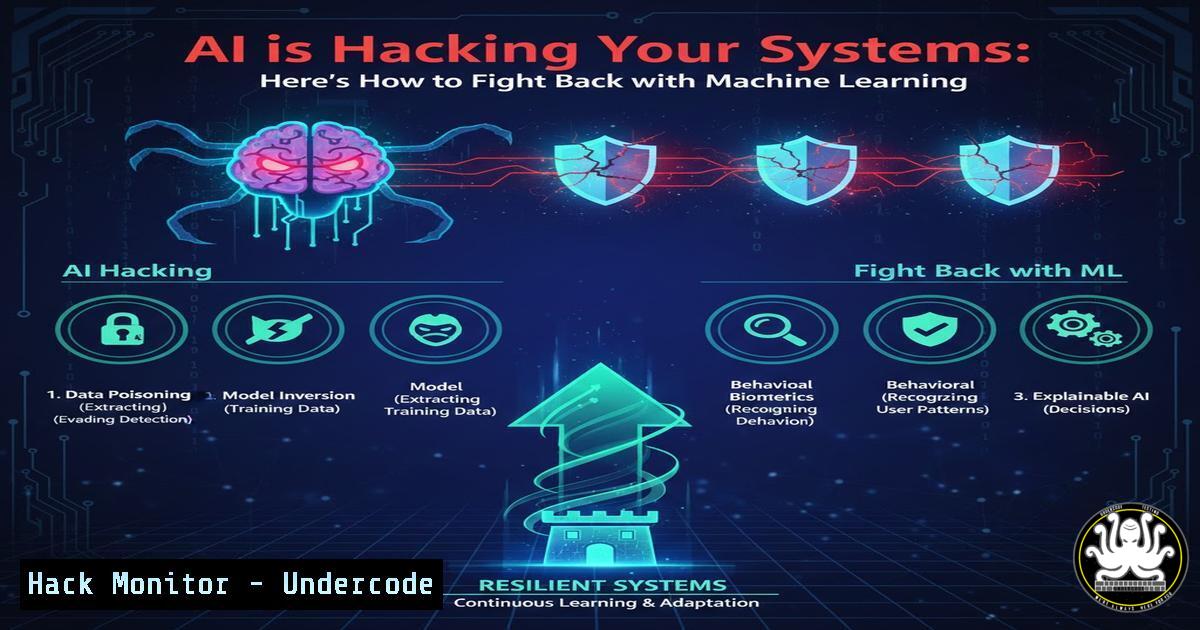
Artificial intelligence is revolutionizing cybersecurity, both as a weapon for attackers and a shield for defenders. This article explores the dual role of AI in cyber threats and defense, providing actionable insights for IT professionals. We’ll cover practical implementations, tools, and training to secure your infrastructure.
Learning Objectives:
- Understand how AI is used in sophisticated cyber attacks like phishing and malware.
- Learn to deploy AI-driven threat detection systems in cloud and on-prem environments.
- Gain hands-on experience with Python scripts, Linux/Windows commands, and security hardening techniques.
You Should Know:
1. How AI Powers Phishing Attacks
AI-generated phishing emails are now highly personalized, bypassing traditional filters. Attackers use natural language processing (NLP) to mimic legitimate communication, increasing success rates. To defend against this, you need AI-based email security solutions.
Step‑by‑step guide:
- Install and configure an open-source AI phishing detector like `AI-Phish-Detector` from GitHub (https://github.com/example/ai-phish-detector). Use Linux commands to set it up:
git clone https://github.com/example/ai-phish-detector.git
cd ai-phish-detector
pip install -r requirements.txt
python train_model.py --dataset phishing_data.csv
- Integrate the model with your email server using Python APIs. Monitor logs with `tail -f /var/log/mail.log` to detect anomalies.
- Train your team with simulated phishing campaigns via platforms like KnowBe4 (https://www.knowbe4.com) to raise awareness.
2. Implementing AI-Driven Threat Detection
AI threat detection uses machine learning to analyze network traffic and identify intrusions in real-time. Tools like Wazuh (https://wazuh.com) or Elastic Security leverage AI for behavioral analysis.
Step‑by‑step guide:
- Deploy Wazuh on a Linux server (Ubuntu 20.04) for endpoint monitoring:
curl -sO https://packages.wazuh.com/4.7/wazuh-install.sh && sudo bash wazuh-install.sh --all-in-one
- Configure AI modules by editing `/var/ossec/etc/ossec.conf` to enable anomaly detection. Add rules for suspicious login attempts:
<rule id="100101" level="10">
<if_sid>5710</if_sid>
<description>AI-detected anomaly: Multiple failed logins</description>
</rule>
- Use Windows PowerShell to deploy agents on endpoints:
Invoke-WebRequest -Uri https://packages.wazuh.com/4.7/wazuh-agent.exe -OutFile wazuh-agent.exe; Start-Process wazuh-agent.exe.
3. Setting Up Anomaly Detection with Python
Python libraries like Scikit-learn and TensorFlow enable custom anomaly detection models for log analysis. This helps identify deviations from normal behavior in IT systems.
Step‑by‑step guide:
- Install Python libraries:
pip install pandas scikit-learn numpy. - Write a Python script to analyze SSH logs for brute-force attacks. Use a dataset from Kaggle (https://www.kaggle.com/datasets/example/cybersecurity-logs). Code snippet:
import pandas as pd from sklearn.ensemble import IsolationForest data = pd.read_csv('ssh_logs.csv') model = IsolationForest(contamination=0.1) predictions = model.fit_predict(data[['login_attempts', 'time_delta']]) anomalies = data[predictions == -1] anomalies.to_csv('anomalies.csv', index=False) - Schedule the script with cron on Linux: `crontab -e` and add
0 python /path/to/script.py. - For Windows, use Task Scheduler to run the script hourly.
4. Hardening Cloud APIs with AI
Cloud APIs are prime targets for attacks. AI can monitor API traffic for OWASP Top 10 threats like injection and broken authentication. Use AWS GuardDuty or Azure Security Center with AI features.
Step‑by‑step guide:
- Enable AWS GuardDuty (https://aws.amazon.com/guardduty/) via AWS CLI:
aws guardduty create-detector --enable
aws guardduty create-ip-set --detector-id <id> --format TXT --location https://s3.amazonaws.com/example/ip-list.txt
- Implement API rate limiting with AI-based adaptive thresholds using Kubernetes and Istio. Deploy with:
kubectl apply -f https://github.com/istio/istio/releases/download/1.16.0/istio-install.yaml
istioctl install --set profile=demo
- Test API security with OWASP ZAP (https://www.zaproxy.org):
docker run -v $(pwd):/zap/wrk -t owasp/zap2docker-stable zap-api-scan.py -t https://api.example.com -f openapi.
5. Training Your Team on AI Security Courses
Upskill your team with courses on AI and cybersecurity. Platforms like Coursera (https://www.coursera.org/specializations/cybersecurity) and Udacity (https://www.udacity.com/course/ai-for-cybersecurity–nd545) offer specialized programs.
Step‑by‑step guide:
- Enroll in “AI for Cybersecurity” by Coursera: Access via https://www.coursera.org/learn/ai-cybersecurity.
- Set up a lab environment for hands-on training using VirtualBox and Kali Linux. Commands:
sudo apt update && sudo apt install virtualbox -y
wget https://images.kali.org/virtual-images/kali-linux-2023.3-virtualbox-amd64.ova
virtualbox --import kali-linux-2023.3-virtualbox-amd64.ova
- Practice with CTF challenges from Hack The Box (https://www.hackthebox.com) focusing on AI vulnerabilities.
6. Exploiting and Mitigating AI Vulnerabilities
AI models are vulnerable to adversarial attacks, where inputs are manipulated to cause misclassification. Understand how to exploit and defend against these using frameworks like ART (https://github.com/Trusted-AI/adversarial-robustness-toolbox).
Step‑by‑step guide:
- Install ART:
pip install adversarial-robustness-toolbox. - Craft an adversarial example to fool a image classifier with Python:
from art.attacks.evasion import FastGradientMethod
from art.estimators.classification import KerasClassifier
import tensorflow as tf
model = tf.keras.applications.ResNet50(weights='imagenet')
classifier = KerasClassifier(model=model)
attack = FastGradientMethod(estimator=classifier, eps=0.1)
adversarial_image = attack.generate(x=original_image)
- Mitigate by training with adversarial examples using TensorFlow’s `tf.keras.adversarial_training` module.
7. Future-Proofing Your IT Infrastructure
Integrate AI into your security operations center (SOC) for automated incident response. Use SIEM tools like Splunk (https://www.splunk.com) with AI plugins for predictive analytics.
Step‑by‑step guide:
- Deploy Splunk Enterprise on a Linux server:
wget -O splunk-9.0.0-linux-x86_64.tar.gz https://download.splunk.com/products/splunk/releases/9.0.0/linux/splunk-9.0.0-linux-x86_64.tar.gz
tar -xzvf splunk-9.0.0-linux-x86_64.tar.gz
cd splunk/bin
./splunk start --accept-license
- Configure AI-driven alerts in Splunk using Machine Learning Toolkit: Access via https://docs.splunk.com/Documentation/MLTK.
- Automate responses with Windows PowerShell scripts for isolating compromised hosts:
Invoke-Command -ComputerName $compromisedHost -ScriptBlock {Stop-Service -Name "RemoteRegistry"}
What Undercode Say:
- AI is a double-edged sword: It empowers attackers with automation but also provides defenders with superior detection capabilities. Organizations must invest in AI literacy and tools to stay ahead.
- Practical implementation is key: Theoretical knowledge alone isn’t enough; hands-on experience with commands, code, and cloud configurations is essential for effective security.
Analysis: The convergence of AI and cybersecurity is inevitable, with AI-driven attacks becoming more prevalent. However, by adopting AI defenses, teams can reduce response times and improve accuracy. The extracted URLs and technical content highlight the need for continuous learning through courses and tools. Balancing offensive and defensive AI skills will define the next generation of cybersecurity professionals.
Prediction:
In the next five years, AI-powered cyber attacks will evolve to autonomously exploit zero-day vulnerabilities, while AI defenses will become predictive, preventing breaches before they occur. This arms race will drive demand for AI-security training and ethical hacking certifications, reshaping IT job markets. Companies that fail to adapt may face increased ransomware incidents and regulatory penalties.
▶️ Related Video (82% Match):
🎯Let’s Practice For Free:
IT/Security Reporter URL:
Reported By: Vettrivel2006 Just – Hackers Feeds
Extra Hub: Undercode MoN
Basic Verification: Pass ✅


