
Listen to this Post
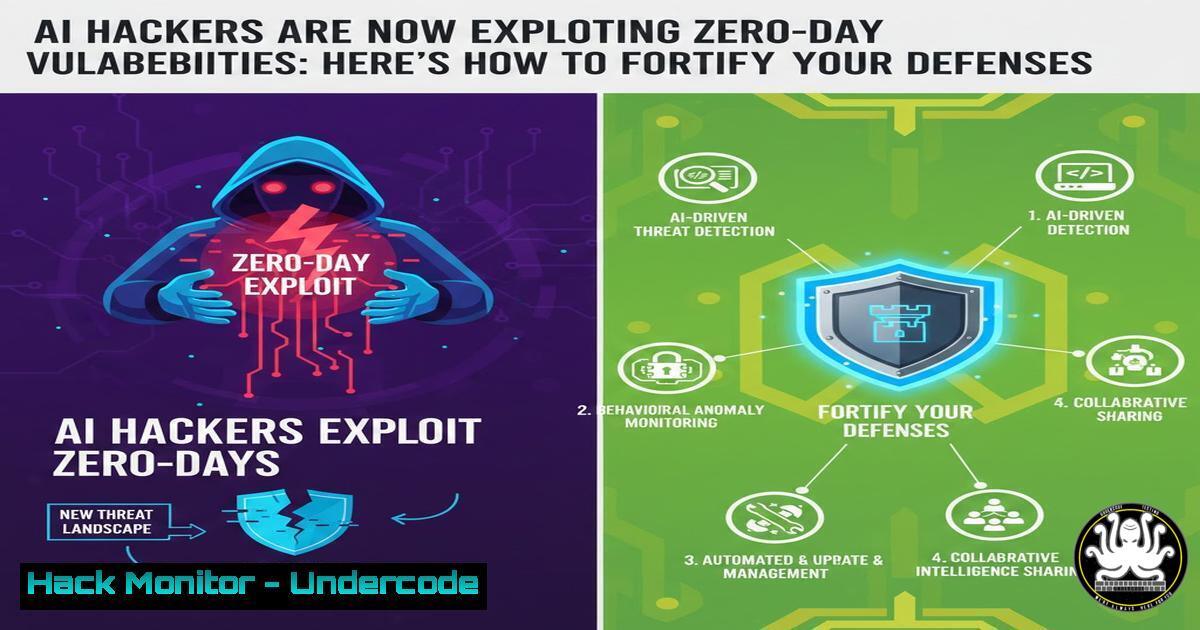
Introduction: Artificial intelligence is revolutionizing cybersecurity, but not just for defenders. Threat actors now leverage AI to automate reconnaissance, exploit zero-day vulnerabilities, and launch targeted attacks at scale. This article breaks down the technical realities of AI-driven threats and provides actionable strategies to secure your infrastructure.
Learning Objectives:
- Understand how AI models are weaponized for cyber attacks, including vulnerability discovery and social engineering.
- Implement AI-enhanced defensive tools for intrusion detection, API security, and cloud hardening.
- Master command-line and scripting techniques to mitigate exploits across Linux and Windows environments.
You Should Know:
1. AI-Powered Vulnerability Scanning: The New Attack Frontier
Extended version: Attackers use machine learning models trained on public exploit databases and code repositories to identify patterns indicative of zero-day vulnerabilities. These AI scanners can analyze millions of lines of code or network packets in minutes, pinpointing weaknesses faster than human teams.
Step‑by‑step guide explaining what this does and how to use it:
To simulate an AI-driven vulnerability scan for defensive purposes, use the open-source tool `Burp Suite` with the `ML-based Scanner` extension. First, install Burp Suite on Linux:
sudo apt update
sudo apt install burpsuite
Launch Burp, navigate to the `Extender` tab, and add the `ML Scanner` from the BApp Store. Configure the AI model by feeding it your application’s traffic data:
 Capture traffic to a file for analysis
sudo tcpdump -i eth0 -w traffic.pcap
In Burp, load the packet capture and run the AI-assisted active scan. Review findings like injection flaws or misconfigurations, which the AI ranks by exploit probability.
2. Hardening APIs Against AI-Generated Attacks
Extended version: APIs are prime targets for AI bots that fuzz endpoints with malicious payloads. Defend by deploying AI-driven API gateways that analyze request patterns, detect anomalies, and block brute-force attempts.
Step‑by‑step guide explaining what this does and how to use it:
Set up `Kong API Gateway` with the `AI Plugin` for real-time threat detection. Install Kong on Ubuntu:
echo "deb https://kong.bintray.com/kong-deb `lsb_release -sc` main" | sudo tee -a /etc/apt/sources.list
sudo apt update
sudo apt install kong
Configure the AI plugin using a YAML file to integrate with a TensorFlow model that classifies requests:
plugins:
- name: ai-security
config:
model_url: http://localhost:8501/v1/models/apisec:predict
Train a simple model with historical API logs to recognize attack signatures, then deploy it to flag deviations from baseline behavior.
3. Cloud Configuration Auditing with AI Scripts
Extended version: AI tools like `Scout Suite` and `Prowler` assess cloud environments (AWS, Azure, GCP) for misconfigurations that could be exploited by automated attacks. They use rule-based AI to prioritize risks.
Step‑by‑step guide explaining what this does and how to use it:
For AWS, run Prowler to check compliance with CIS benchmarks and detect vulnerabilities:
[/bash]
pip install prowler
prowler aws –quick-inventory
To automate remediation, use AWS Lambda with AI-driven analysis. Create a Python script that parses Prowler’s JSON output and triggers alerts via SNS:
[bash]
import boto3, json
client = boto3.client('sns')
def lambda_handler(event, context):
findings = event['detail']['findings']
for finding in findings:
if finding['Severity'] == 'HIGH':
client.publish(TopicArn='arn:aws:sns:us-east-1:123456789:alert', Message=f"Critical misconfiguration: {finding['']}")
4. Linux Server Hardening Against AI Botnets
Extended version: AI botnets scan for weak SSH credentials and unpatched services. Counter with fail2ban, systemd auditing, and kernel parameter tuning.
Step‑by‑step guide explaining what this does and how to use it:
Install and configure `fail2ban` with AI-enhanced filters that adapt to attack patterns:
sudo apt install fail2ban
sudo nano /etc/fail2ban/jail.local
Add these lines to ban IPs showing robotic behavior:
[bash]
enabled = true
maxretry = 3
bantime = 3600
filter = sshd-ai
Create a custom filter `/etc/fail2ban/filter.d/sshd-ai.conf` using regex patterns from AI-generated attack logs. Monitor with journalctl -u fail2ban --no-pager.
- Windows Defender ATP and PowerShell for AI Threat Hunting
Extended version: Windows Advanced Threat Protection (ATP) uses AI to detect fileless malware and persistence mechanisms. Complement it with PowerShell scripts for deep system analysis.
Step‑by‑step guide explaining what this does and how to use it:
Enable Windows ATP via Group Policy, then run a PowerShell script to hunt for process injection—a common AI malware tactic:Get-Process | ForEach-Object { if ($<em>.Modules.ModuleName -match "kernel32.dll" -and $</em>.CPU -gt 90) { Write-Host "Suspicious process: $($<em>.Name) with ID $($</em>.Id)" Stop-Process -Id $_.Id -Force } }Schedule this script as a task to run hourly, logging outputs to a SIEM for AI correlation.
6. Training AI Models for Phishing Detection
Extended version: AI-generated phishing emails bypass traditional filters. Build your own detector using NLP models like BERT to analyze email content and headers.
Step‑by‑step guide explaining what this does and how to use it:
Use Python to train a classifier on a dataset of phishing and legitimate emails. Install transformers and sklearn:
[/bash]
pip install transformers scikit-learn pandas
Train a model with this code snippet:
[bash]
from transformers import BertTokenizer, BertForSequenceClassification
import torch
tokenizer = BertTokenizer.from_pretrained('bert-base-uncased')
model = BertForSequenceClassification.from_pretrained('bert-base-uncased', num_labels=2)
 Preprocess email text and train (simplified)
inputs = tokenizer(emails, padding=True, return_tensors='pt')
outputs = model(inputs, labels=labels)
Deploy the model as a filter in your mail server (e.g., Postfix) to score incoming emails.
7. Incident Response Automation with AI Playbooks
Extended version: AI orchestration tools like `TheHive` and `Cortex` automate response to incidents, from containment to analysis, using machine learning to prioritize alerts.
Step‑by‑step guide explaining what this does and how to use it:
Deploy TheHive and Cortex via Docker for a lab setup:
[/bash]
docker run -d -p 9000:9000 thehiveproject/thehive:4.1
docker run -d -p 8888:8888 thehiveproject/cortex:3.1
Create an AI playbook that triggers on alerts: when a vulnerability scan detects a critical flaw, Cortex runs an analyzer to check for exploitability and automatically isolates the affected system using SSH commands:
ssh user@host ‘sudo iptables -A INPUT -s 0.0.0.0/0 -j DROP’
[bash]
What Undercode Say:
– Key Takeaway 1: AI democratizes both attack and defense; organizations must integrate AI tools into their security stack to keep pace with automated threats.
– Key Takeaway 2: Security is now a data science problem—collecting and analyzing logs with AI is critical for proactive defense, but human oversight ensures context-aware decisions.
Analysis: The convergence of AI and cybersecurity creates a paradigm where static defenses are obsolete. AI-driven attacks adapt in real-time, requiring equally dynamic solutions. However, over-reliance on AI can lead to false positives and resource drain. A layered approach—combining AI detection with traditional hardening, continuous training, and threat intelligence—is essential. Organizations should invest in AI literacy for security teams and adopt ethical frameworks to mitigate risks like adversarial AI poisoning models.
Prediction: Within three years, AI-powered cyber attacks will evolve to conduct fully autonomous penetration testing, exploiting vulnerabilities without human intervention. This will spur regulatory demands for AI security certifications and liability standards. Defensively, AI will shift from detection to predictive threat hunting, using quantum computing to model attack vectors. However, supply chain attacks via AI-generated code will rise, forcing industries to adopt zero-trust architectures and decentralized AI validation networks.
▶️ Related Video (82% Match):
🎯Let’s Practice For Free:
IT/Security Reporter URL:
Reported By: Mohamed Emad – Hackers Feeds
Extra Hub: Undercode MoN
Basic Verification: Pass ✅


