
Listen to this Post
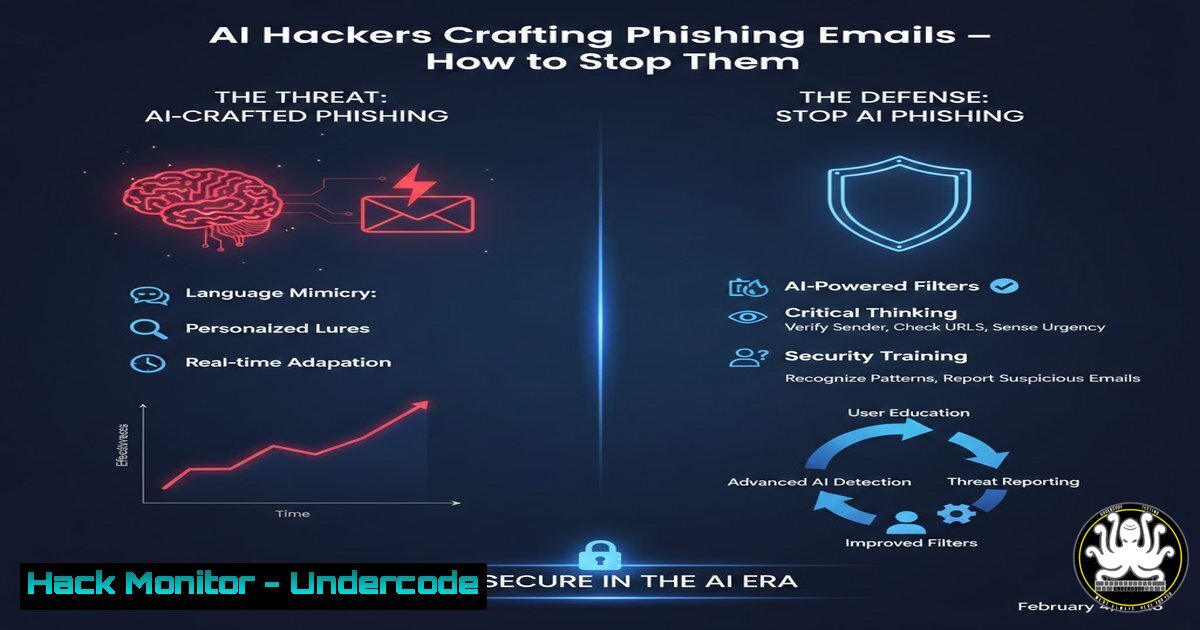
Introduction: Artificial intelligence is revolutionizing cyber threats, making phishing attacks highly sophisticated and personalized. AI-driven phishing campaigns can mimic human writing styles and bypass traditional email filters, posing critical risks to data security and organizational integrity.
Learning Objectives:
- Understand the mechanics of AI-powered phishing tools and their evasion techniques.
- Implement technical defenses using email authentication protocols and machine learning detection.
- Develop a comprehensive response strategy involving employee training and automated threat hunting.
You Should Know:
- How AI Phishing Tools Exploit Natural Language Processing
AI phishing tools like WormGPT or FraudGPT use large language models (LLMs) to generate convincing, grammatically flawless emails. These tools scrape public data from social media to personalize messages, increasing click-through rates.
Step-by-step guide:
- Attackers access AI phishing APIs or underground platforms, often via Tor networks. For example, using a curl command to query a malicious AI endpoint:
curl -X POST https://malicious-ai-api.onion/generate_phish -d '{"target":"CEO","style":"urgent"}' - They then embed tracking pixels in emails to monitor opens and clicks.
- To defend, security teams can analyze email headers for anomalies using tools like `grep` in Linux:
grep -E "X-Mailer|Received-SPF" phishing_email.eml
2. Detecting AI-Generated Emails with Machine Learning Models
Security tools like OpenAI’s GPT detector or custom SVM models can flag AI-generated text by analyzing perplexity and burstiness scores.
Step-by-step guide:
- Collect a dataset of legitimate and AI-phishing emails. Use Python to train a detection model:
from sklearn.ensemble import RandomForestClassifier import pandas as pd data = pd.read_csv('emails.csv') X = data['text_features'] y = data['label'] model = RandomForestClassifier() model.fit(X, y) - Deploy the model via an API integrated with email gateways like Mimecast or Proofpoint.
- Regularly update the model with new phishing samples to maintain accuracy.
- Hardening Email Security with DMARC, DKIM, and SPF
Configure DNS records to authenticate emails and prevent spoofing. DMARC (Domain-based Message Authentication, Reporting, and Conformance) works with DKIM (DomainKeys Identified Mail) and SPF (Sender Policy Framework) to validate senders.
Step-by-step guide:
- For SPF, add a TXT record in your DNS zone (e.g., in AWS Route 53):
v=spf1 include:spf.protection.outlook.com -all
- For DKIM, generate a public-private key pair using OpenSSL on Linux:
openssl genrsa -out dkim_private.pem 2048
openssl rsa -in dkim_private.pem -pubout -out dkim_public.pem
- Publish the DKIM public key as a DNS TXT record and configure your mail server to sign outgoing emails.
- Set DMARC policy to quarantine or reject failed emails:
v=DMARC1; p=reject; rua=mailto:[email protected].
4. Using Sandboxing for Attachment Analysis
Isolate and analyze email attachments in sandboxed environments to detect malware. Tools like Cuckoo Sandbox (open-source) or Joe Sandbox (commercial) simulate execution and monitor behavior.
Step-by-step guide:
- Install Cuckoo Sandbox on a Linux VM (Ubuntu):
sudo apt-get install cuckoo
cuckoo init
cuckoo -d
- Submit a suspicious attachment via API:
curl -F [email protected] http://localhost:8090/tasks/create/file
- Review the generated report for indicators of compromise (IOCs), such as network connections or file system changes.
5. Employee Training and Simulation Exercises
Conduct phishing simulations using platforms like GoPhish or KnowBe4 to educate users. Tailor scenarios based on AI-phishing tactics, such as urgent CEO requests or fake HR updates.
Step-by-step guide:
- Deploy GoPhish on a Windows server: Download from
https://getgophish.com` and rungophish.exe`. - Create a campaign with AI-generated email templates and track user interactions.
- Provide immediate feedback to users who click links, directing them to training modules on identifying phishing cues (e.g., mismatched URLs, sense of urgency).
6. Incident Response Plan for Phishing Attacks
Establish a playbook for containing and eradicating phishing threats. This includes isolating affected systems, resetting credentials, and conducting forensic analysis.
Step-by-step guide:
- Upon detection, quarantine the email using Microsoft Security Compliance Toolkit commands on Windows:
Search-Mailbox -Identity "[email protected]" -SearchQuery "subject:'Phishing'" -DeleteContent
- Reset compromised passwords via Active Directory PowerShell:
Set-ADAccountPassword -Identity "username" -Reset -NewPassword (ConvertTo-SecureString -AsPlainText "NewPass123!" -Force)
- Collect logs for investigation using SIEM tools like Splunk:
index=email sourcetype=phishing | table time, user, src_ip.
7. Leveraging AI for Defense: Automated Threat Hunting
Implement AI-driven security orchestration, automation, and response (SOAR) platforms to correlate threats and respond in real-time. Use tools like IBM QRadar with AI integrations or open-source ELK stack with machine learning plugins.
Step-by-step guide:
- In Elastic SIEM, enable the ML anomaly detection job to spot unusual email volumes:
POST _ml/anomaly_detectors/jobs/phishing_detection {"analysis_config": {"bucket_span": "15m", "detectors": [{"function": "high_count"}]}} - Configure automated playbooks to block malicious senders via firewall rules (e.g., iptables on Linux):
iptables -A INPUT -s 192.168.1.100 -j DROP
- Continuously train models on new threat intelligence feeds from sources like `https://otx.alienvault.com`.
What Undercode Say:
- Key Takeaway 1: AI-powered phishing democratizes advanced social engineering, forcing organizations to adopt AI-enhanced defenses.
- Key Takeaway 2: Technical controls alone are insufficient; a culture of security awareness through simulation training is critical.
Analysis: The convergence of AI and phishing represents a paradigm shift in cyber threats, enabling scalability and precision. Defenders must integrate behavioral analytics, email hardening, and human factors into a layered strategy. While AI tools can accelerate attack detection, they require constant tuning to avoid false positives. Proactive measures, such as sharing IOCs with industry groups, will be vital for collective defense.
Prediction:
In the next two years, AI-driven phishing will evolve to incorporate multimodal attacks, using deepfakes for voice and video impersonation in business email compromise (BEC) scams. This will drive adoption of zero-trust frameworks and biometric authentication, with regulatory pressures mandating AI-specific security standards. Organizations that fail to invest in adaptive AI defenses may face increased breach costs and reputational damage.
🎯Let’s Practice For Free:
IT/Security Reporter URL:
Reported By: Davidajuzie 301 – Hackers Feeds
Extra Hub: Undercode MoN
Basic Verification: Pass ✅


