Listen to this Post
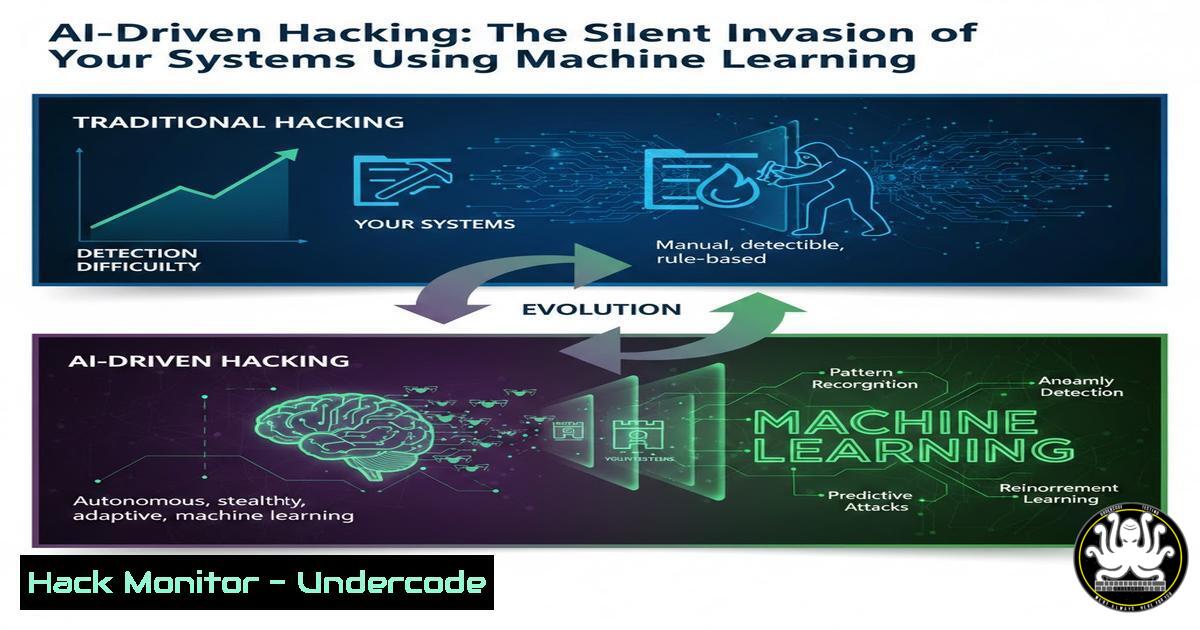
Introduction: Artificial intelligence is revolutionizing cybersecurity, but not just for defenders. Hackers are now deploying AI to automate sophisticated attacks, craft convincing phishing campaigns, and exploit vulnerabilities with unprecedented speed. This article breaks down the technical mechanics of AI-powered threats and provides actionable steps to fortify your defenses.
Learning Objectives:
- Understand how machine learning models are weaponized for cyber attacks
- Learn practical commands and tools to detect and mitigate AI-driven intrusions
- Explore training resources to build expertise in AI cybersecurity
You Should Know:
1. AI-Powered Phishing: Beyond Generic Emails
AI-powered phishing uses natural language processing (NLP) to analyze social media and leaked data, generating personalized emails that bypass traditional filters. To defend against this, implement AI-based email security solutions.
Step-by-step guide:
- Deploy an open-source tool like TensorFlow to train a detection model. Install it via
pip install tensorflow. - Collect a dataset of phishing and legitimate emails (e.g., from Enron corpus or Kaggle).
- Preprocess emails using Python: `from sklearn.feature_extraction.text import TfidfVectorizer` to convert text to features.
- Train a classifier with code: `model.fit(training_data, labels)` and monitor for anomalies in sender behavior and content patterns.
- Integrate the model with your email server (e.g., Postfix) using APIs to scan inbound emails in real-time.
2. Automated Vulnerability Scanning with AI
AI-enhanced scanners like Burp Suite with ML plugins or OWASP ZAP can identify vulnerabilities in web applications faster by learning from past scans.
Step-by-step guide:
- On Linux, install OWASP ZAP:
sudo apt install zaproxy. - Launch a automated scan with AI rules: `zap-cli quick-scan –scanners xss,sqli –recursive http://target.com`.
– To prioritize findings, use AI-powered risk assessment scripts. For example, run a Python script that applies severity scores based on CVSS data: `python3 assess_risks.py scan_results.json`. - Schedule regular scans with cron: `0 2 zap-cli active-scan http://target.com` to detect new vulnerabilities introduced by code changes.
3. Adversarial Machine Learning: Exploiting AI Models
Attackers use adversarial examples—specially crafted inputs—to fool AI-based security systems like malware detectors or facial recognition.
Step-by-step guide:
– Simulate an attack using the CleverHans library. Install it: `pip install cleverhans`.
- Load a pre-trained model (e.g., a TensorFlow image classifier) and generate adversarial images with Fast Gradient Sign Method (FGSM):
`python -c “import cleverhans; from cleverhans.attacks import FastGradientMethod; attack = FastGradientMethod(model)”`
– To defend, retrain your model with adversarial training: augment your dataset with adversarial samples and runmodel.train_on_batch(adv_samples, labels). - Harden models by implementing robustness checks like gradient masking or using certified defenses from IBM’s Adversarial Robustness Toolbox.
4. Cloud Hardening Against AI Attacks
AI-driven bots often target cloud misconfigurations and APIs. Use cloud-native AI tools to monitor and secure environments.
Step-by-step guide:
- In AWS, enable GuardDuty for threat detection:
aws guardduty create-detector --enable. - Set up AI-based anomaly detection with Amazon Macie for S3 buckets:
aws macie create-member --account-id 123456789012. - Implement least privilege IAM roles using AWS CLI:
aws iam create-policy --policy-name LeastPrivilege --policy-document file://policy.json. - Use Microsoft Azure Sentinel for AI-driven security analytics: create a Log Analytics workspace via Azure CLI:
az monitor log-analytics workspace create --resource-group MyResourceGroup --workspace-name MyWorkspace. - Monitor logs with KQL queries to detect unusual activity, such as
SecurityEvent | where EventID == 4625 | count by Account.
5. API Security in the Age of AI
APIs are prime targets for AI-powered bots that perform credential stuffing or data scraping. Secure them with AI-based rate limiting and behavior analysis.
Step-by-step guide:
- Deploy Kong API gateway with bot detection plugins. Install Kong:
docker run -d --name kong kong:latest. - Configure AI plugin for anomaly detection:
curl -X POST http://localhost:8001/plugins --data "name=ai-detection". - Use Python to set up rate limiting based on user behavior:
`from flask_limiter import Limiter; limiter = Limiter(app, key_func=get_remote_address)`.
- Test API security with OWASP Amass for reconnaissance: `amass enum -d targetapi.com` to identify exposed endpoints, then patch vulnerabilities.
6. Training Courses to Upskill in AI Cybersecurity
Build expertise through structured courses and hands-on labs focused on AI in cybersecurity.
Step-by-step guide:
- Enroll in Coursera’s “AI for Cybersecurity” (https://www.coursera.org/learn/ai-for-cybersecurity) or edX’s “Machine Learning for Cybersecurity” (https://www.edx.org/course/machine-learning-for-cybersecurity).
- Practice with TryHackMe’s AI security rooms: access via `https://tryhackme.com/hacktivities?query=ai`.
– Use GitHub repositories like “Awesome AI Security” (https://github.com/random-forests/awesome-ai-security) for tools and scripts.
– Set up a lab environment with VirtualBox: `sudo apt install virtualbox` and clone vulnerable AI systems from VulnHub to practice attacks and defenses.
7. Incident Response for AI Attacks
When an AI-powered breach occurs, rapid containment and analysis of the attacking AI model are crucial.
Step-by-step guide:
- Isolate affected systems using network commands: On Linux,
iptables -A INPUT -s malicious_ip -j DROP; on Windows,netsh advfirewall firewall add rule name="Block Attacker" dir=in action=block remoteip=malicious_ip. - Capture memory dumps for analysis: On Windows, use `dumpit.exe` or
winpmem; on Linux, use `liME` to extract memory:insmod lime.ko "path=/tmp/memory.dump format=lime". - Analyze dumps with Volatility: `volatility -f memory.dump imageinfo` to identify OS, then `volatility -f memory.dump malfind` for malware.
- Examine AI model artifacts (e.g., TensorFlow files) with tools like Netron (https://github.com/lutzroeder/netron) to understand attack vectors.
- Update incident response playbooks to include AI-specific steps, such as retraining compromised models and auditing AI training data.
What Undercode Say:
Key Takeaway 1: AI democratizes advanced attack capabilities, enabling even low-skilled hackers to launch sophisticated, scalable assaults.
Key Takeaway 2: Defense must evolve beyond traditional methods; integrating AI into security operations is no longer optional but imperative.
Analysis: The fusion of AI and cyber attacks creates a dynamic threat landscape where defenses must be equally adaptive. AI-driven attacks can learn and evolve in real-time, rendering static rules ineffective. Organizations need to invest in AI-powered detection systems that use behavioral analytics and anomaly detection. Additionally, continuous training for security teams is critical to interpret AI-generated alerts and respond appropriately. The ethical implications of offensive AI also demand regulatory attention to prevent misuse while fostering innovation in defensive technologies.
Prediction:
Over the next decade, AI-powered cyber attacks will become more autonomous, capable of self-propagation and stealthier evasion techniques. This will lead to an increase in large-scale, targeted breaches across critical infrastructure. However, AI-enhanced defense platforms will also mature, offering predictive threat hunting and automated patch management. The cybersecurity job market will shift towards roles blending AI expertise with security knowledge, and global standards for AI security frameworks will emerge to mitigate risks.
▶️ Related Video (86% Match):
🎯Let’s Practice For Free:
IT/Security Reporter URL:
Reported By: Robdance Heres – Hackers Feeds
Extra Hub: Undercode MoN
Basic Verification: Pass ✅


