Listen to this Post
Introduction:
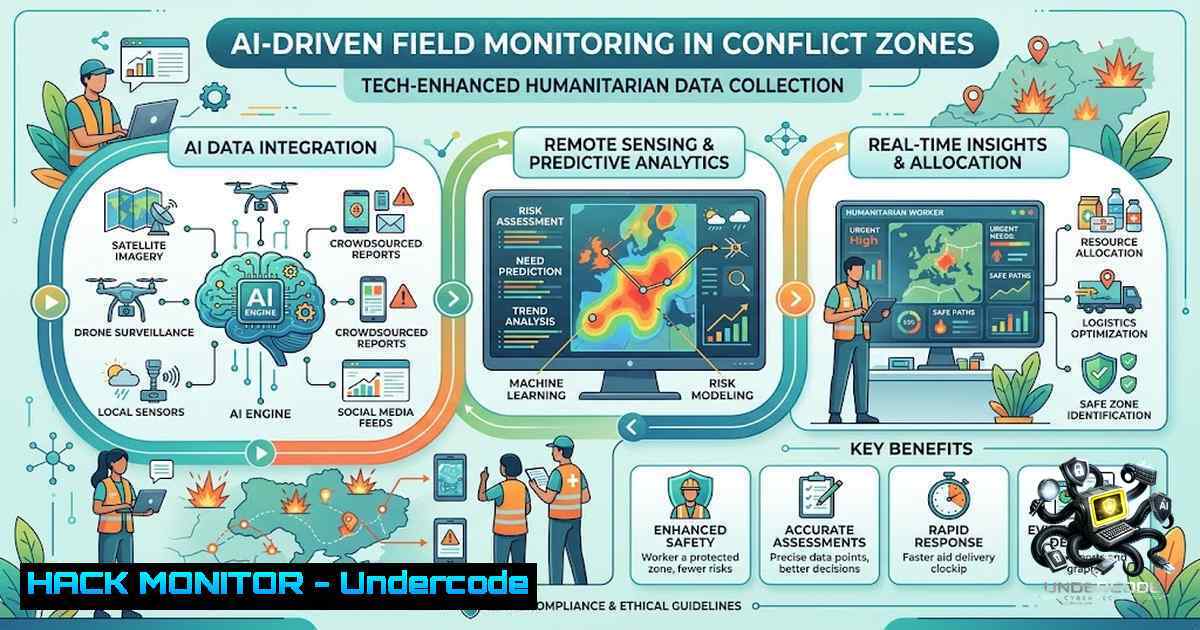
In the high-stakes environment of humanitarian aid, data isn’t just information—it’s a lifeline that determines resource allocation and survival. The recent vacancy for a General TPM (Third-Party Monitoring) position with UNHCR Syria, advertised through Stars Orbit Consultants, highlights a critical intersection where field expertise meets data integrity. While the role focuses on assessing shelter, livelihoods, and protection services for IDPs in Deir Ezzour, the underlying technical infrastructure—secure data transmission, cloud storage, and AI-driven analytics—is just as vital as the ground-level interviews.
Learning Objectives:
- Understand the cybersecurity frameworks required for protecting sensitive beneficiary data in conflict zones.
- Learn how to leverage AI and data analytics tools for processing field monitoring reports (PDMs).
- Master secure data collection methodologies using encrypted mobile devices and cloud platforms.
You Should Know:
- Securing Data Transmission from the Field to HQ
When a TPM officer conducts interviews in Deir Ezzour, the data collected (names, locations, vulnerabilities) is high-value and high-risk. Transmitting this over unstable networks requires robust security to prevent interception by malicious actors.
Step-by-step guide to securing field data transmission:
- Use VPNs: Always connect through a trusted VPN (e.g., WireGuard or OpenVPN) to encrypt traffic between the field device and the UNHCR server.
- Encrypt Files at Rest: Ensure all data files (Excel, PDF) are encrypted using AES-256. For Windows, use BitLocker; for Linux, use LUKS.
- Secure File Transfer Protocol (SFTP): Avoid standard FTP. Use SFTP or SCP for uploading reports.
- Command (Linux): `scp -i private_key.pem /path/to/report.pdf [email protected]:/secure/folder/`
– Command (Windows PowerShell): `Copy-SCPItem -Path C:\Reports\PDM.docx -Destination [email protected]:/secure/folder/ -KeyPath C:\Keys\private_key.ppk`
2. Cloud Hardening for Data Aggregation
Post-fieldwork, reports are consolidated in cloud platforms or internal servers. Hardening these environments is non-1egotiable to prevent data breaches that could endanger displaced populations.
Step-by-step guide for hardening cloud databases:
- Restrict Access: Implement Zero Trust principles. Only specific IP addresses from the Syria office should have write access.
- Enable Logging: Turn on audit logs (e.g., AWS CloudTrail or Azure Monitor) to track who accessed the “Returnee Needs Analysis” folder.
- Data Masking: Use dynamic data masking to ensure that support staff only see redacted versions of sensitive fields (e.g., “Name: J D”).
- API Security: If using a custom dashboard, ensure API endpoints require OAuth 2.0 tokens with short expiration times.
- Quick Script (Python) for Backup Automation:
import boto3
s3 = boto3.client('s3')
s3.put_object(Bucket='unhcr-data', Key='backup/2026/PDM_Report.pdf', Body=open('report.pdf', 'rb'))
3. Vulnerability Exploitation & Mitigation in Humanitarian Tech
Often, the software used to design surveys (like KoboToolbox or ODK) can have vulnerabilities. A cross-site scripting (XSS) flaw in a survey tool could allow attackers to inject malware into reports.
How to test and mitigate:
- Penetration Testing: Conduct regular scans using tools like OWASP ZAP or Burp Suite on the survey front-end.
- Input Validation: Ensure all form fields (especially free-text interview notes) sanitize inputs to prevent SQL injection.
- Patch Management: Linux servers running these apps require constant updates. Run `sudo apt update && sudo apt upgrade -y` weekly.
- Firewall Configuration: Use UFW or iptables to close unused ports. Only leave 443 (HTTPS) and 22 (SSH) open.
- Leveraging AI for Trend Analysis in Monitoring Data
While the TPM role involves manual interviews, AI can assist in analyzing the vast amount of unstructured data to detect patterns in unmet needs.
Tutorial on using AI for data processing:
- Natural Language Processing (NLP): Use NLTK or spaCy in Python to process interview transcripts. Identify recurring themes like “food shortage” or “inadequate shelter.”
- Sentiment Analysis: Gauge the urgency of needs based on the language used by IDPs.
- Command-line setup (Linux):
pip install transformers torch python -c "from transformers import pipeline; classifier = pipeline('sentiment-analysis'); print(classifier('No food here for 3 days'))" - Data Visualization: Use Power BI or Tableau to map this data geographically, highlighting “hotspots” of concern in Deir Ezzour.
5. Cybersecurity for Nonprofits: Protecting Beneficiaries
Humanitarian organizations are prime targets for ransomware because they cannot afford downtime. A breach could halt aid distribution.
Best Practices for this Role:
- Phishing Awareness: TPMs receive many emails from partners. Verify links (like the one in the job ad: https://lnkd.in/d3Z7G6B4) before clicking.
- Endpoint Detection and Response (EDR): Install EDR solutions on all field laptops to detect malware behavior.
- Regular Backups: Implement a 3-2-1 backup strategy (3 copies, 2 local on different media, 1 off-site).
- Windows Command for Backup: `robocopy C:\FieldData D:\BackupDrive /MIR /R:3`
What Undercode Say:
- Data is Currency: In conflict zones, beneficiary data is as valuable as physical aid. Poor security can feed into surveillance or blackmail operations.
- Adaptability Over Certification: The ad emphasizes “Flexibility & Field Adaptability.” In a cyber context, this means the ability to work with or without internet, using offline encryption tools.
Analysis: The TPM position requires “Experience in protection work,” but in the digital age, protection extends to cyberspace. While the job description focuses on “Assessment & Data Collection,” it lacks explicit mention of cybersecurity training. This is a critical gap. As AI and cloud storage become normalized in NGOs, the field officer becomes the first line of defense. The reliance on “Strong English skills to develop analytical reports” is juxtaposed with the need for secure data handling. If the reports contain sensitive information, their transmission via unsecured networks (common in Syria) poses a significant risk. Therefore, training these national staff in basic cyber hygiene—like recognizing phishing attempts and using GPG encryption—is essential. The recruitment should prioritize candidates who understand OPSEC (Operational Security) regarding their own movements and data storage.
Prediction:
- +1 The integration of AI analytics into monitoring will reduce reporting time by 40%, allowing faster response to IDP needs in Deir Ezzour.
- -1 The lack of stringent cybersecurity requirements in the job description increases the risk of a data leakage incident within the 5-month project lifespan, potentially endangering the beneficiaries listed in the PDMs.
- +1 This role will serve as a blueprint for future hybrid positions, combining humanitarian fieldwork with technical report generation, leading to better “Technology for Good” initiatives.
- -1 Unless SOC and UNHCR mandate the use of encrypted mobile survey tools (like ODK with HTTPS), the integrity of data transmitted from the field may be compromised by local network interference or surveillance.
Disclaimer: This article is a technical analysis based on the provided job description. All security recommendations are for educational purposes and should align with UNHCR’s specific internal IT policies and local legal frameworks.
▶️ Related Video (82% Match):
🎯Let’s Practice For Free:
🎓 Live Courses & Certifications:
Join Undercode Academy for Verified Certifications
🚀 Request a Custom Project:
Secure, high-velocity infrastructure and disruptive technological engineering. Contact our engineering team for high-tier development and proprietary systems:
[email protected]
💎 Smart Architecture | 🛡️ Secure by Design | ⭐ Trusted by Thousands
IT/Security Reporter URL:
Reported By: Organization Unhcr – Hackers Feeds
Extra Hub: Undercode MoN
Basic Verification: Pass ✅


