Listen to this Post
Introduction
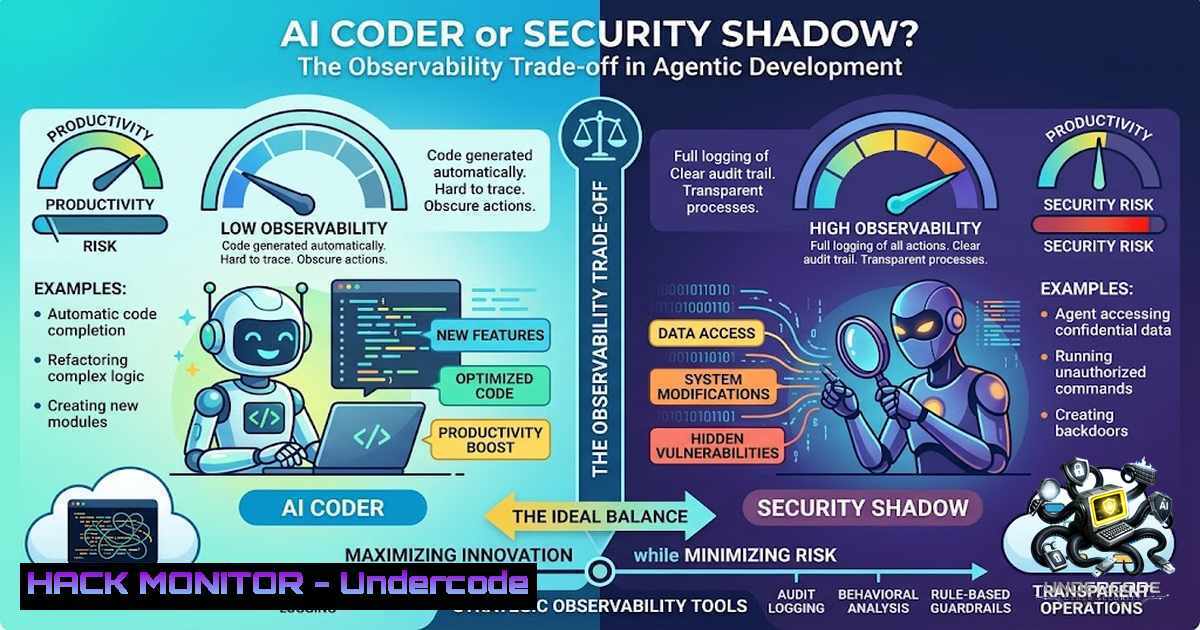
The proliferation of Generative AI and autonomous coding agents has shifted the bottleneck of software development from writing code to reviewing it. As organizations deploy LLMs to generate production-level scripts, APIs, and cloud configurations, the “speed-to-code” drastically outpaces the human capacity for security validation, creating an emergent vulnerability surface. This necessitates a new paradigm in DevSecOps where trust is not assumed, but programmatically validated through adversarial peer review and failure-mode prioritization.
Learning Objectives
- Master the triage of failure modes to prioritize security reviews over syntax validation in AI-generated code.
- Implement a segregated “Writer-Reviewer” architecture to eliminate logical echo chambers in AI outputs.
- Utilize “Negative Nancy” adversarial agents to critique bloat, security flaws, and maintainability in generated codebases.
You Should Know:
1. Prioritizing the Authentication Layer: Ranking Failure Modes
When an AI generates an internal tool, the risk profile is rarely uniform. While a crash might cause a minor workflow disruption, a privilege escalation flaw can lead to data exfiltration. The “Rank your failure modes” strategy dictates that reviewing effort must be concentrated on the code that handles IAM (Identity and Access Management), tokens, and SQL queries, rather than front-end styling.
Step-by-step guide for hardening AI-generated code:
- Isolate Security Boundaries: Immediately grep the generated code for authentication patterns. Look for
API_KEY,Authorization,Bearer, orJWT. - Verify Input Sanitization: AI often misses parameterized queries. Replace all string concatenation in SQL with parameterized inputs.
- Command (Linux) to list all network listeners:
sudo netstat -tulpn | grep LISTEN. Ensure the AI did not bind services to `0.0.0.0` (public) unless required. - Windows Command for open ports:
netstat -ano | findstr :</code>. This helps verify if the AI’s configuration opened a port inadvertently.</li> </ul> <h2 style="color: yellow;">2. The Writer-Reviewer Chasm: Breaking the Echo Chamber</h2> AI agents are susceptible to "hallucination loops," where one agent’s flawed logic is validated by another because they share the same training data. By separating the Writing Agent and the Reviewing Agent and ensuring the reviewer lacks access to the writer's reasoning chain, you force the reviewer to analyze the code purely on syntax and logic. This mimics a "Red Team" approach in cybersecurity. <h2 style="color: yellow;">Implementation Workflow:</h2> <ul> <li>Step 1: Agent A (Writer) generates the code for a specific task.</li> <li>Step 2: Strip the metadata and reasoning chain logs from Agent A.</li> <li>Step 3: Feed only the raw source code and the engineering specification to Agent B (Reviewer).</li> <li>Step 4: Ask the Reviewer to identify potential bugs, specifically OWASP Top 10 (Injection, Broken Access Control).</li> </ul> <ol> <li>The "Negative Nancy" Agent: Adversarial Critique via CLI AI tends to over-engineer solutions, adding excessive logging and redundant tests that bloat the context window. The "Negative Nancy" acts as a cost-control and maintainability enforcer. You can implement this via a Python script that triggers an AI call to critique the <code>git diff</code>.</li> </ol> <h2 style="color: yellow;">Local Implementation:</h2> [bash] Get the last commit diff and pipe to AI for review git diff HEAD~1 > diff_file.txt Use an AI API to critique the lines added curl -X POST https://api.openai.com/v1/chat/completions \ -H "Authorization: Bearer YOUR_KEY" \ -d '{"model":"gpt-4","messages":[{"role":"system","content":"Critique this diff for bloat and useless code."},{"role":"user","content":"'$(cat diff_file.txt)'"}]}'- Windows (PowerShell) Equivalent:
Get-Content diff_file.txt | Invoke-RestMethod -Uri [bash].4. Observability Over Autonomy: Logging Agentic Actions
To trust AI in production, you must enforce strict logging of what the agent changed and why. Treat AI commits like untrusted third-party pull requests.
Hardening Steps:
- Enforce Code Signing: Use `gpg` to sign commits only if a human has reviewed them.
- Linux Verification: `git log --show-signature` to verify if the commit is signed by a human key rather than the AI's machine user.
- Windows PowerShell: Use `Get-AuthenticodeSignature` on compiled binaries if the AI produces executables.
5. API Security in Agent-Generated Code
AI agents are often tasked with integrating third-party APIs. They tend to hardcode secrets or store them in plaintext `.env` files that are accidentally committed.
Mitigation Strategy:
- Secrets Scanning: Integrate `trufflehog` or `git-secrets` into the CI pipeline immediately after AI commits.
- Command:
trufflehog git file://. --only-verified. This scans the repository for actual secrets. - Configuration: Force the AI to use Vault or AWS Secrets Manager by including the retrieval code in the system prompt.
- Use environment variables explicitly: Ensure the code uses `os.getenv("SECRET_KEY")` instead of hardcoded strings.
What Undercode Say:
- Key Takeaway 1: Trust in AI code must be zero-trust. The review process is not a formality but a "compilation" step that verifies security constraints.
- Key Takeaway 2: As AI agents become autonomous, the human role shifts from "coding" to "threat modeling." The most valuable skill is defining the "rules of engagement" for the agents.
Analysis:
The approach outlined in the source material reflects a pragmatic security posture for the "Agentic Era." The concept of "Negative Nancy" aligns with Red Teaming principles, yet it is unique because it addresses the economic waste of tokens, which is a modern operational concern. The separation of writer and reviewer is critical for preventing "multi-agent consensus," where two models agree on a flawed solution. However, this introduces latency. The trade-off is that while productivity slows, the Mean Time to Remediate (MTTR) vulnerabilities shrinks because issues are caught during generation, not in production. This is a step toward "Secure by Design" in the AI lifecycle, moving away from reactive patching to proactive adversarial generation. It acknowledges that the threat is not just external hackers, but the inherent statistical biases of the models themselves.
Prediction:
- +1 We will see a rise in "Meta-Agents" that specifically specialize in security auditing, generating more revenue than coding agents themselves as companies prioritize safety over speed.
- -1 The speed of AI deployment will still outpace the adoption of these review rules, leading to a spike in CVEs attributed to "AI-Generated Code" in Q4 2026.
- +1 Security leaders will embrace "Adversarial AI Pipelines" as a standard part of the SDLC, similar to how we adopted SAST/DAST tools today.
- -1 The overhead of managing separate agents (Writer, Reviewer, Critic) may become too complex for small teams, leading to a reliance on single-agent vendors who claim security but lack these guardrails.
- +1 The evolution of "Context Truncation" tools will allow reviewers to query the AI's logic chain without exposing the entire history, balancing trust with observability.
▶️ Related Video (86% Match):
https://www.youtube.com/watch?v=2AW4Ooki2O8
🎯Let’s Practice For Free:
🎓 Live Courses & Certifications:
Join Undercode Academy for Verified Certifications
🚀 Request a Custom Project:
Secure, high-velocity infrastructure and disruptive technological engineering. Contact our engineering team for high-tier development and proprietary systems:
[email protected]
💎 Smart Architecture | 🛡️ Secure by Design | ⭐ Trusted by ThousandsIT/Security Reporter URL:
Reported By: Oliver Kele - Hackers Feeds
Extra Hub: Undercode MoN
Basic Verification: Pass ✅🔐JOIN OUR CYBER WORLD [ CVE News • HackMonitor • UndercodeNews ]
📢 Follow UndercodeTesting & Stay Tuned:


