Listen to this Post
Introduction
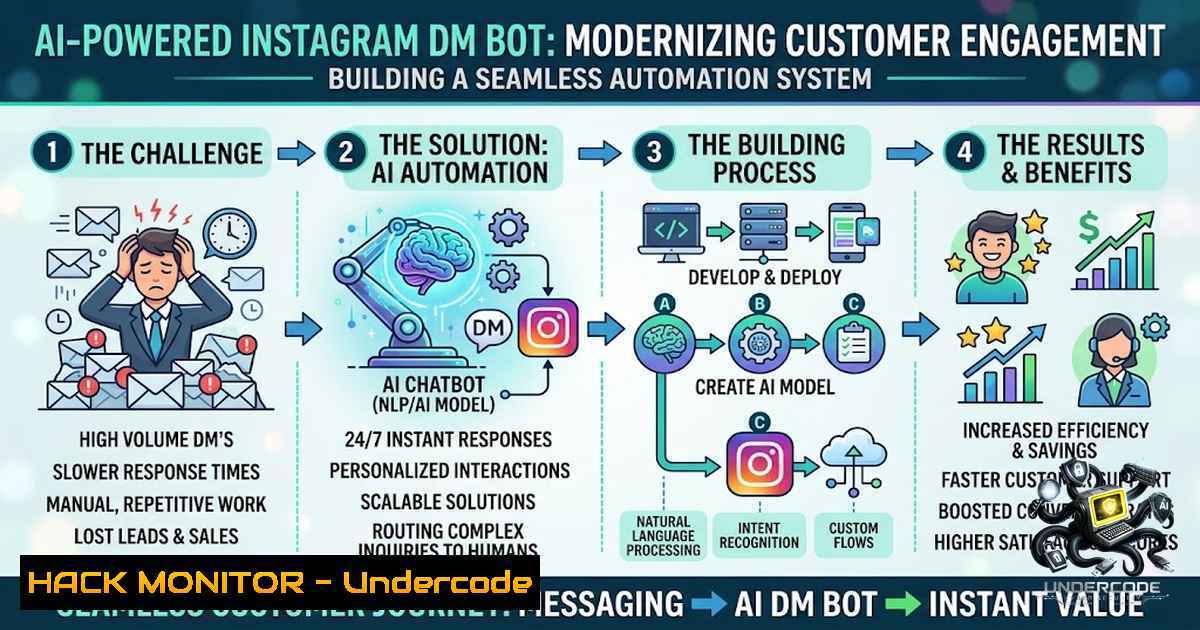
In the fast-paced digital marketplace, businesses are increasingly turning to artificial intelligence to maintain competitive advantage, with social media automation emerging as a critical frontier. The intersection of AI-powered chatbots and Instagram’s vast user base represents a transformative opportunity for companies to scale their customer engagement without proportional increases in human resources. This article explores the technical architecture, security implications, and implementation strategies behind building an Instagram DM automation bot, examining how businesses can leverage AI to handle initial customer interactions while maintaining security and compliance.
Learning Objectives
- Understand the core components and workflow design of an AI-powered Instagram DM automation system
- Learn implementation strategies for secure API integration and data handling
- Master practical deployment techniques including webhook configuration, security hardening, and monitoring
You Should Know
1. Understanding the AI Automation Architecture
The Instagram DM Automation Bot represents a sophisticated integration of multiple technologies working in concert. At its core, the system utilizes n8n, an open-source workflow automation tool, combined with AI language models to process incoming messages and generate appropriate responses. The architecture typically follows an event-driven model where incoming Instagram DMs trigger automated workflows.
Extended Technical Overview:
The system operates by intercepting Instagram Direct Messages through the Instagram Graph API or third-party integration platforms. When a user sends a message, the webhook receives the payload containing the message content, sender information, and timestamp. This data is then processed through a series of nodes in the n8n workflow:
- Trigger Node: Listens for incoming webhook events from Instagram
- Message Processing Node: Parses the incoming message content and extracts relevant entities
- AI Processing Node: Sends the message to an AI model (like OpenAI’s GPT or Claude) for intent classification and response generation
- Business Logic Node: Applies conditional logic based on the detected intent
- Action Nodes: Execute specific tasks like lead qualification, order processing, or FAQ responses
- Response Node: Sends the generated reply back to the user via Instagram’s API
Sample n8n Workflow Configuration (JSON):
bash
{
“nodes”: [
{
“parameters”: {},
“id”: “webhook-trigger”,
“name”: “Instagram Webhook”,
“type”: “n8n-1odes-base.webhookTrigger”,
“typeVersion”: 1,
“position”: [250, 300]
},
{
“parameters”: {
“values”: {
“string”: [
{
“name”: “model”,
“value”: “gpt-3.5-turbo”
}
]
}
},
“id”: “ai-1ode”,
“name”: “AI Processing”,
“type”: “n8n-1odes-base.openAi”,
“typeVersion”: 1,
“position”: [450, 300]
}
]
}
[/bash]
Linux Commands for Deployment:
bash
Install n8n on Ubuntu/Debian
curl -fsSL https://deb.nodesource.com/setup_18.x | sudo -E bash –
sudo apt-get install -y nodejs
npm install n8n -g
Start n8n with webhook support
n8n start –webhook-url=https://your-domain.com/webhook
Set up as a systemd service
sudo nano /etc/systemd/system/n8n.service
[/bash]
Service File Content:
bash
Description=n8n workflow automation
After=network.target
bash
Type=simple
User=youruser
ExecStart=/usr/bin/n8n start
Restart=on-failure
Environment=”N8N_PORT=5678″
Environment=”N8N_WEBHOOK_URL=https://your-domain.com/webhook”
bash
WantedBy=multi-user.target
[/bash]
2. API Security and Authentication Hardening
Securing the Instagram integration is paramount to prevent unauthorized access and data breaches. The system must implement multiple layers of security including OAuth 2.0 authentication, API key rotation, and request validation.
Step-by-Step Security Implementation:
1. OAuth 2.0 Configuration:
- Register your application in the Facebook Developer Console
- Obtain App ID and App Secret
- Configure valid OAuth redirect URIs
- Implement the authorization code flow for obtaining access tokens
2. Token Management:
bash
Python script for token refresh and management
import requests
import json
from datetime import datetime, timedelta
class InstagramTokenManager:
def init(self, app_id, app_secret, redirect_uri):
self.app_id = app_id
self.app_secret = app_secret
self.redirect_uri = redirect_uri
self.access_token = None
self.token_expiry = None
def get_long_lived_token(self, short_lived_token):
url = “https://graph.instagram.com/access_token”
params = {
“grant_type”: “ig_exchange_token”,
“client_secret”: self.app_secret,
“access_token”: short_lived_token
}
response = requests.get(url, params=params)
data = response.json()
self.access_token = data.get(‘access_token’)
self.token_expiry = datetime.now() + timedelta(seconds=data.get(‘expires_in’, 86400))
return self.access_token
def refresh_token_if_needed(self):
if self.token_expiry and datetime.now() > self.token_expiry – timedelta(minutes=30):
Implement token refresh logic
pass
[/bash]
3. Webhook Signature Verification:
bash
// Node.js webhook verification
const crypto = require(‘crypto’);
function verifyWebhookSignature(request, appSecret) {
const signature = request.headers[‘x-hub-signature-256’];
if (!signature) return false;
const expectedSignature = crypto
.createHmac(‘sha256’, appSecret)
.update(JSON.stringify(request.body))
.digest(‘hex’);
return crypto.timingSafeEqual(
Buffer.from(signature.replace(‘sha256=’, ”)),
Buffer.from(expectedSignature)
);
}
[/bash]
Windows Security Configuration:
bash
Set environment variables for secure storage
Enable Windows Firewall rules for the application
New-1etFirewallRule -DisplayName “n8n Webhook” -Direction Inbound -Protocol TCP -LocalPort 5678 -Action Allow
[/bash]
3. Data Privacy and Compliance Implementation
Handling customer data through an automated system requires strict adherence to privacy regulations including GDPR, CCPA, and Instagram’s platform policies. The system must implement data minimization, encryption, and user consent management.
Step-by-Step Data Protection Implementation:
1. Data Encryption at Rest and in Transit:
- Implement TLS 1.3 for all API communications
- Use AES-256 encryption for stored customer data
- Implement proper key management using services like AWS KMS or HashiCorp Vault
2. User Consent Management:
bash
Consent tracking system
class ConsentManager:
def init(self, db_connection):
self.db = db_connection
def record_consent(self, user_id, consent_type, consent_text):
query = “””
INSERT INTO user_consents (user_id, consent_type, consent_text, consent_given_at)
VALUES (%s, %s, %s, NOW())
ON CONFLICT (user_id, consent_type)
DO UPDATE SET consent_text = %s, consent_given_at = NOW()
“””
self.db.execute(query, (user_id, consent_type, consent_text, consent_text))
def verify_consent(self, user_id, consent_type):
query = “SELECT FROM user_consents WHERE user_id = %s AND consent_type = %s”
result = self.db.execute(query, (user_id, consent_type))
return len(result) > 0
[/bash]
3. Data Retention Policies:
bash
— PostgreSQL trigger for automatic data purging
CREATE OR REPLACE FUNCTION purge_old_conversations()
RETURNS TRIGGER AS $$
BEGIN
DELETE FROM conversations
WHERE last_activity < NOW() – INTERVAL ’30 days’
AND archived = true;
RETURN NEW;
END;
$$ LANGUAGE plpgsql;
CREATE TRIGGER auto_purge_trigger
AFTER INSERT ON conversations
EXECUTE FUNCTION purge_old_conversations();
[/bash]
4. AI Model Integration and Response Optimization
The intelligence of the automation bot relies on proper AI model configuration and response generation strategies. The system must balance response quality with latency and cost considerations.
Implementation Steps:
1. Prompt Engineering for Business Context:
bash
def generate_ai_prompt(user_message, business_context):
prompt_template = f”””
You are an AI assistant for {business_context[‘business_name’]}, a company that {business_context[‘business_description’]}.
Customer Message: {user_message}
Guidelines:
– Be professional and helpful
– If the customer asks about products, recommend based on their needs
– For lead qualification, ask about budget, timeline, and requirements
– If unsure about specific information, offer to connect with a human representative
– Never share sensitive business information
Respond as the business assistant:
“””
return prompt_template
[/bash]
2. Response Caching Strategy:
bash
import hashlib
import redis
import json
class ResponseCache:
def init(self):
self.redis_client = redis.Redis(host=’localhost’, port=6379, decode_responses=True)
def get_cached_response(self, user_message):
message_hash = hashlib.md5(user_message.encode()).hexdigest()
cached = self.redis_client.get(f”response:{message_hash}”)
if cached:
return json.loads(cached)
return None
def cache_response(self, user_message, response, ttl=3600):
message_hash = hashlib.md5(user_message.encode()).hexdigest()
self.redis_client.setex(
f”response:{message_hash}”,
ttl,
json.dumps(response)
)
[/bash]
3. Cost Optimization:
bash
Monitor API usage and costs
curl -X GET “https://api.openai.com/v1/usage” \
-H “Authorization: Bearer $OPENAI_API_KEY” \
-H “Content-Type: application/json”
[/bash]
5. Monitoring and Error Handling
A robust monitoring system ensures the automation bot operates reliably and provides visibility into performance metrics and potential issues.
Step-by-Step Monitoring Setup:
1. Logging Configuration:
bash
import logging
import json
from datetime import datetime
class StructuredLogger:
def init(self, service_name):
self.logger = logging.getLogger(service_name)
self.logger.setLevel(logging.INFO)
handler = logging.StreamHandler()
handler.setFormatter(logging.Formatter(‘%(message)s’))
self.logger.addHandler(handler)
def log_event(self, event_type, data, level=’info’):
log_entry = {
‘timestamp’: datetime.utcnow().isoformat(),
‘event_type’: event_type,
‘data’: data,
‘service’: self.logger.name
}
if level == ‘error’:
self.logger.error(json.dumps(log_entry))
elif level == ‘warning’:
self.logger.warning(json.dumps(log_entry))
else:
self.logger.info(json.dumps(log_entry))
[/bash]
2. Health Check Endpoint:
bash
// Express.js health check
app.get(‘/health’, async (req, res) => {
const healthStatus = {
status: ‘healthy’,
timestamp: new Date().toISOString(),
components: {
database: await checkDatabaseConnection(),
instagram_api: await checkInstagramAPIStatus(),
ai_model: await checkAIModelAvailability()
}
};
const allHealthy = Object.values(healthStatus.components).every(v => v === true);
res.status(allHealthy ? 200 : 503).json(healthStatus);
});
[/bash]
3. Alert Configuration:
bash
Prometheus alert rule for error rates
groups:
– name: instagram_bot_alerts
rules:
– alert: HighErrorRate
expr: rate(instagram_bot_errors_totalbash) > 0.05
for: 5m
annotations:
summary: “High error rate detected in Instagram bot”
[/bash]
6. Deployment and Scaling Considerations
Proper deployment strategies ensure the automation system can handle varying loads and maintain high availability.
Deployment Steps:
1. Docker Containerization:
bash
FROM node:18-slim
WORKDIR /app
COPY package.json ./
RUN npm install
COPY . .
EXPOSE 5678
CMD [“npm”, “start”]
[/bash]
2. Kubernetes Deployment:
bash
apiVersion: apps/v1
kind: Deployment
metadata:
name: instagram-bot
spec:
replicas: 3
selector:
matchLabels:
app: instagram-bot
template:
metadata:
labels:
app: instagram-bot
spec:
containers:
– name: bot
image: your-registry/instagram-bot:latest
ports:
– containerPort: 5678
env:
– name: N8N_WEBHOOK_URL
value: “https://your-domain.com/webhook”
resources:
requests:
memory: “512Mi”
cpu: “250m”
limits:
memory: “1Gi”
cpu: “500m”
[/bash]
3. Horizontal Pod Autoscaling:
bash
apiVersion: autoscaling/v2
kind: HorizontalPodAutoscaler
metadata:
name: instagram-bot-hpa
spec:
scaleTargetRef:
apiVersion: apps/v1
kind: Deployment
name: instagram-bot
minReplicas: 2
maxReplicas: 10
metrics:
– type: Resource
resource:
name: cpu
target:
type: Utilization
averageUtilization: 70
[/bash]
7. Troubleshooting Common Issues
Frequently Encountered Problems and Solutions:
1. Webhook Verification Failures:
bash
Verify ngrok tunnel for local development
ngrok http 5678
Check webhook URL in Instagram Developer Console
Ensure SSL certificate is valid for production
openssl s_client -connect your-domain.com:443 -servername your-domain.com
[/bash]
2. Rate Limiting Issues:
bash
Implement exponential backoff for retries
import time
import random
def api_call_with_retry(func, max_retries=5):
for attempt in range(max_retries):
try:
return func()
except RateLimitError:
wait_time = (2 attempt) + random.uniform(0, 1)
time.sleep(wait_time)
raise Exception(“Max retries exceeded”)
[/bash]
3. Database Connection Pooling:
bash
SQLAlchemy connection pooling
from sqlalchemy import create_engine
from sqlalchemy.pool import QueuePool
engine = create_engine(
‘postgresql://user:pass@localhost/db’,
poolclass=QueuePool,
pool_size=20,
max_overflow=10,
pool_pre_ping=True
)
[/bash]
What Undercode Say:
Key Takeaway 1: The integration of AI automation with social media platforms represents a paradigm shift in customer engagement, but success depends on careful implementation of security, privacy, and error handling mechanisms. Businesses must approach automation as a strategic tool that enhances rather than replaces human interaction.
Key Takeaway 2: The technical complexity of building robust automation systems requires expertise across multiple domains including API integration, AI/ML, security, and cloud infrastructure. Organizations should invest in proper training and potentially partner with automation specialists to ensure successful deployment.
Analysis: The Instagram DM automation bot project demonstrates how AI can transform business operations by handling routine customer interactions at scale. However, the real value lies in the system’s ability to qualify leads and collect valuable customer insights while maintaining a consistent brand voice. The architecture described combines modern AI capabilities with workflow automation, creating a solution that is both powerful and maintainable. Security considerations are paramount, as the system handles sensitive customer data and requires access to social media accounts. The implementation of proper authentication, encryption, and monitoring ensures compliance with platform policies and data protection regulations. As AI technology continues to evolve, we can expect these automation systems to become increasingly sophisticated, incorporating sentiment analysis, predictive modeling, and personalized responses based on customer history. The trend toward hyper-automation will likely accelerate, with businesses seeking to automate not just initial interactions but entire customer journeys.
Prediction:
+1 The democratization of AI automation tools will enable small and medium-sized businesses to compete with larger enterprises in customer engagement, reducing the entry barrier for sophisticated marketing and sales operations.
+1 Integration of advanced analytics and machine learning will transform these automation systems from simple response generators to intelligent customer intelligence platforms, providing businesses with actionable insights about customer behavior and preferences.
-1 The increasing automation of social media interactions may lead to customer frustration if systems are not properly configured or if AI responses fail to address complex queries adequately, potentially damaging brand reputation.
+1 The emergence of zero-code and low-code platforms will accelerate adoption of AI automation, allowing businesses to implement sophisticated workflows without extensive technical expertise, though this may also increase the risk of security oversights.
-1 Regulatory scrutiny of AI-powered customer interaction systems is likely to increase, potentially requiring additional compliance measures and transparency requirements that could complicate implementation and increase operational costs.
▶️ Related Video (84% Match):
🎯Let’s Practice For Free:
🎓 Live Courses & Certifications:
Join Undercode Academy for Verified Certifications
🚀 Request a Custom Project:
Secure, high-velocity infrastructure and disruptive technological engineering. Contact our engineering team for high-tier development and proprietary systems:
[email protected]
💎 Smart Architecture | 🛡️ Secure by Design | ⭐ Trusted by Thousands
IT/Security Reporter URL:
Reported By: Awais Raza – Hackers Feeds
Extra Hub: Undercode MoN
Basic Verification: Pass ✅


