Listen to this Post
Introduction:
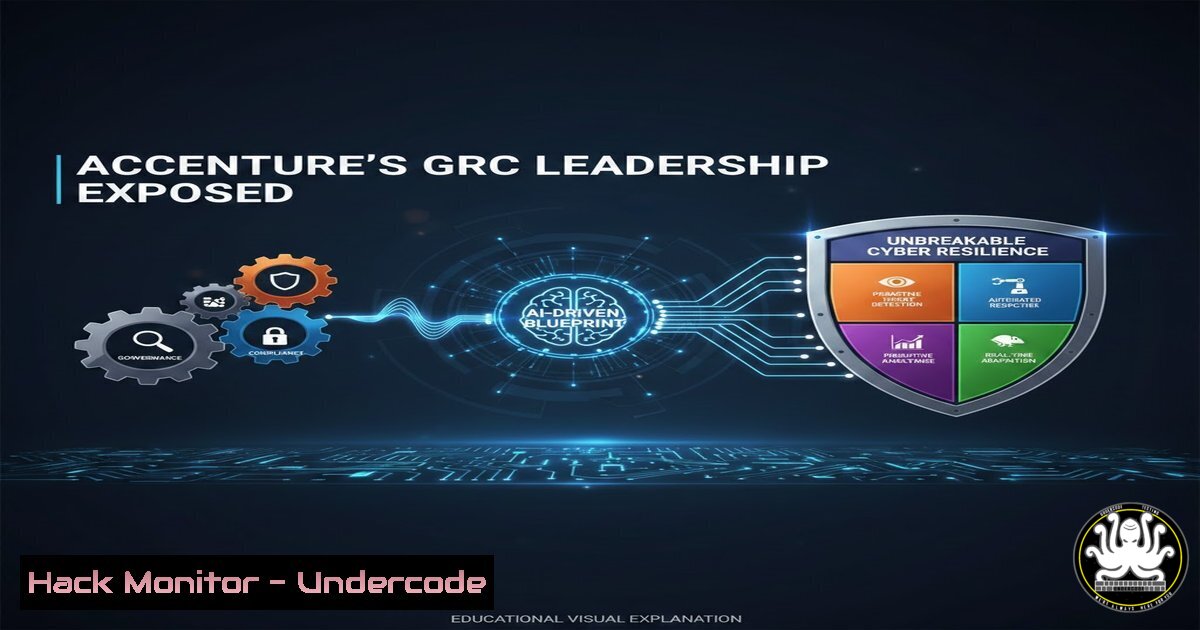
In an era of escalating digital threats, achieving cyber resilience transcends mere tool deployment; it requires a strategic fusion of Governance, Risk, and Compliance (GRC) with cutting-edge technology. Accenture’s recognition as a Leader in the IDC MarketScape for Worldwide Cybersecurity GRC Consulting Services underscores a critical industry shift: integrating AI and automated compliance into the core of risk management frameworks to proactively defend against a dynamic threat landscape.
Learning Objectives:
- Understand the core components of a modern, AI-enhanced GRC framework.
- Learn practical steps for hardening cloud environments and automating compliance checks.
- Gain insights into leveraging threat intelligence and vulnerability management within a strategic GRC program.
You Should Know:
1. Deconstructing the Modern GRC Framework
A contemporary GRC framework is not a static policy binder but a dynamic, integrated system. It connects governance directives to technical controls, continuously measures risk, and automates compliance evidence collection. The goal is to create a closed-loop system where risk data informs governance, and governance dictates technical implementation.
Step‑by‑step guide explaining what this does and how to use it.
Step 1: Framework Mapping. Align your organization to a standard like NIST Cybersecurity Framework (CSF) or ISO 27001. This creates a common language for risk.
Step 2: Control Implementation & Instrumentation. Deploy security controls (e.g., EDR, Cloud Security Posture Management) and ensure they export logs and findings to a central platform like a SIEM. For example, enable audit logging on Linux: `sudo auditctl -e 1` and on Windows via GPO: Computer Configuration > Policies > Windows Settings > Security Settings > Advanced Audit Policy Configuration.
Step 3: Integrate with a GRC Platform. Use a platform like RSA Archer, ServiceNow GRC, or Drata to import control statuses, map them to framework requirements, and manage exceptions.
- Infusing AI into Threat Intelligence and Risk Scoring
AI transforms GRC from reactive to predictive. Machine learning models can analyze threat feeds, internal log data, and vulnerability scans to dynamically adjust the risk score of assets, enabling prioritized remediation.
Step‑by‑step guide explaining what this does and how to use it.
Step 1: Aggregate Data Sources. Feed your SIEM or data lake with internal logs, external threat intelligence (e.g., MITRE ATT&CK feeds), and vulnerability scanner outputs.
Step 2: Develop or Deploy Risk Scoring Models. Use ML libraries to create a model that weights factors like exploit availability, asset criticality, and threat actor activity. A simple Python script using Pandas and Scikit-learn could calculate a basic risk score.
import pandas as pd
from sklearn.preprocessing import StandardScaler
 Sample dataframe with vuln data
data = {'cvss_score': [7.5, 9.8, 5.0], 'asset_value': [8, 10, 3], 'exploit_public': [1, 1, 0]}
df = pd.DataFrame(data)
scaler = StandardScaler()
df_scaled = scaler.fit_transform(df)
 Calculate a simple composite risk score (example logic)
df['risk_score'] = df_scaled[:,0]0.5 + df_scaled[:,1]0.3 + df_scaled[:,2]0.2
print(df['risk_score'])
Step 3: Integrate Scores into GRC Workflows. Configure your GRC platform to consume these dynamic risk scores, automatically elevating high-risk items for immediate review.
3. Cloud Environment Hardening – A Practical Walkthrough
Cloud misconfiguration is a top risk. Hardening must be automated and continuous, a core tenet of operational GRC.
Step‑by‑step guide explaining what this does and how to use it.
Step 1: Establish Secure Baselines. Use benchmarks from CIS (Center for Internet Security) for AWS, Azure, and GCP.
Step 2: Enforce with Infrastructure as Code (IaC). Define hardened configurations in Terraform or CloudFormation templates. Scan these templates with tools like Checkov or Terrascan before deployment.
Step 3: Continuous Compliance Monitoring. Use CSPM tools (like AWS Security Hub, Azure Policy, or third-party tools) to continuously detect drift from your secure baseline. Remediate automatically where possible. Example AWS CLI command to enable Security Hub standards: aws securityhub enable-security-hub-controls --standards-control-arns arn:aws:securityhub:us-east-1::standards/cis-aws-foundations-benchmark/v/1.2.0.
4. Vulnerability Management – From Identification to Mitigation
A GRC program mandates a formal, accountable process for vulnerability management, linking technical findings to business risk.
Step‑by‑step guide explaining what this does and how to use it.
Step 1: Comprehensive Discovery. Use authenticated network scanners (e.g., Nessus, Qualys) and agent-based tools for full coverage. Schedule weekly scans.
Step 2: Risk-Based Prioritization. Triage using the CVSS score, contextualized by your AI-driven risk model (see Section 2). Focus on Critical/High vulnerabilities on exposed, high-value assets first.
Step 3: Patch Management & Validation. Deploy patches using automated orchestration tools. For Linux, use `sudo yum update –security` or sudo apt-get update && sudo apt-get upgrade --only-upgrade security. On Windows, configure WSUS or use `PSWindowsUpdate` module. Rescan to validate closure.
5. Automating Compliance Checks and Reporting
Manual evidence collection is the Achilles’ heel of GRC. Automation is key for frameworks like SOC2, ISO27001, and NIST 800-53.
Step‑by‑step guide explaining what this does and how to use it.
Step 1: Map Controls to Technical Queries. Translate control requirements (e.g., “2.6 Ensure multi-factor authentication is enabled for all privileged users”) into executable commands or API calls. For Azure, this could be a PowerShell command: Get-MsolUser -All | Where-Object {$_.StrongAuthenticationMethods -ne $null}.
Step 2: Schedule and Execute Automated Scripts. Use cron jobs (Linux) or Scheduled Tasks (Windows) to run compliance scripts regularly, outputting results to a JSON or CSV file.
Step 3: Feed Evidence to GRC Platform. Use the GRC platform’s API to ingest the compliance check results automatically, generating real-time dashboards and audit-ready reports. Example curl command to submit evidence: curl -X POST https://your-grc-platform.com/api/evidence -H "Authorization: Bearer <API_KEY>" -H "Content-Type: application/json" -d @evidence.json.
What Undercode Say:
- The Future of GRC is AI-Ops: Leading GRC is no longer about consultancy decks but about engineering integrated systems where AI correlates disparate data streams (threat intel, vuln scans, logs) to produce a living, breathing risk landscape. This is the “Cyber Resilience” Accenture’s report highlights.
- Compliance as Code is Non-Negotiable: The scale of modern infrastructure makes manual compliance impossible. The winners will be those who bake compliance checks into their CI/CD pipelines and infrastructure provisioning, treating policy as code.
Analysis: Accenture’s positioning highlights the maturation of cybersecurity from a technical silo to a board-level strategic function. The integration of AI and automation into GRC isn’t just an efficiency play; it’s a survival mechanism. It allows organizations to move at the speed of business without sacrificing security posture. The technical commands and steps outlined above are the building blocks of this evolved GRC model. The “Learn more” link to the IDC report points to a deep body of research validating that the market now demands this integrated, technology-forward approach to governance and risk.
Prediction:
Within the next 2-3 years, AI-driven GRC platforms will become the central nervous system of enterprise security, autonomously not only assessing risk but also orchestrating remediation by triggering playbooks in SOAR platforms. This will give rise to “Predictive Compliance,” where systems forecast potential compliance failures based on control drift and emerging threats, allowing pre-emptive action. The consulting differentiator will shift from framework design to the implementation of these autonomous, self-healing cyber resilience systems.
▶️ Related Video (86% Match):
🎯Let’s Practice For Free:
IT/Security Reporter URL:
Reported By: Gerryrourke Cybersecurity – Hackers Feeds
Extra Hub: Undercode MoN
Basic Verification: Pass ✅


