Listen to this Post
Introduction:
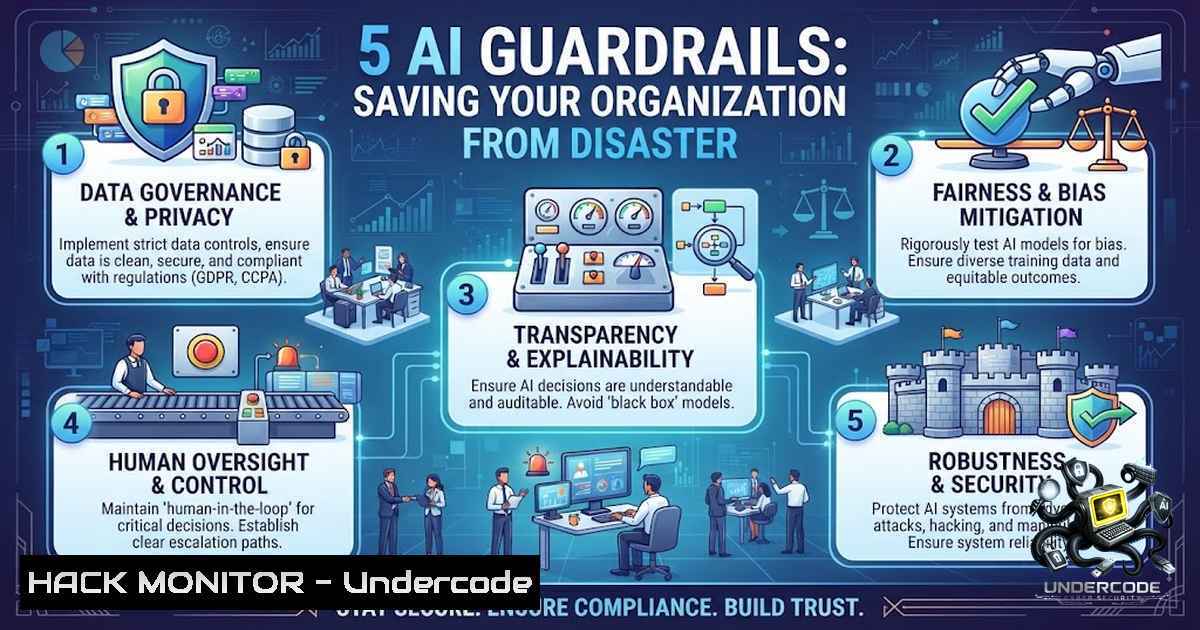
As artificial intelligence permeates every facet of modern business, the line between innovation and catastrophe is drawn by the security and governance frameworks we implement. Without robust guardrails, AI systems can become liabilities—generating hallucinations that lead to poor business decisions, exposing sensitive customer data to breaches, or perpetuating harmful biases that damage brand reputation and invite regulatory scrutiny. This article breaks down the five essential layers of AI security—System, Process, Operating Model, Governance, and Culture—providing a comprehensive blueprint for building AI that is not only powerful but also safe, transparent, and trustworthy.
Learning Objectives:
- Understand the five critical layers of AI security and governance and how they interconnect to form a comprehensive defense strategy.
- Learn to implement technical controls such as prompt guardrails, PII detection, and shadow AI discovery within your organization.
- Master the process of building a sustainable AI governance culture that balances innovation with risk management and compliance.
1. System Layer: Technical Fortifications for AI Security
The System layer represents the technical bedrock of AI security, encompassing the mechanisms that directly interact with the AI model itself to prevent harm. This is where real-time defenses operate to filter inputs and outputs, ensuring that the AI remains within safe operational boundaries.
Step‑by‑step guide for implementing System Layer Guardrails:
- Prompt Guardrail Implementation: Deploy a prompt filtering system that scans user inputs for malicious patterns such as prompt injections, SQL injection attempts, or jailbreak sequences before they reach the core AI model. This can be achieved using open-source libraries like `Llama Guard` or by implementing a custom API that checks for predefined prohibited phrases and patterns.
- Content Filtering Setup: Implement a secondary moderation layer on all AI outputs to filter unsafe content using tools like OpenAI’s Moderation API or Azure Content Safety. Configure this filter to automatically block or mask responses containing hate speech, harassment, sexual content, or self-harm references.
- PII Detection and Redaction: Integrate a Named Entity Recognition (NER) system to scan inputs and outputs for personally identifiable information (PII) such as social security numbers, email addresses, or phone numbers. Use regular expressions and machine learning classifiers to de-identify this data before it is stored or processed by the AI.
- Shadow AI Discovery: Deploy network monitoring tools to scan for unauthorized AI tools being used within your organization. Use a combination of DNS monitoring, API traffic analysis, and endpoint detection to identify unknown applications like unsanctioned ChatGPT instances or cloud-based AI services. A simple Linux command to help discover unexpected services on your network is:
 Scan for common AI service ports and cloud service domains
nmap -sV --script=http -p 80,443,8080,8443 192.168.1.0/24
- Linux/Windows Command for Monitoring API Access: Regularly audit outbound API calls to detect patterns that suggest AI usage. On Linux, you can monitor network traffic targeting known AI API endpoints:
 Monitor traffic to common AI API endpoints
sudo tcpdump -i eth0 -1 'host api.openai.com or host api.anthropic.com or host azure.com'
2. Process Layer: Defining Acceptable AI Usage
The Process layer establishes the rules of engagement for AI within your organization. It answers critical questions: What can AI be used for? Who can use it? And what requires human oversight? This layer ensures that AI usage is consistent, controlled, and aligned with business objectives.
Step‑by‑step guide for implementing Process Layer Guardrails:
- Develop Usage Policies: Create a formal AI acceptable use policy that outlines permitted applications, prohibited use cases, and disclosure requirements. This document should specify that AI-generated content must be reviewed and approved by a human before it is used in client-facing materials or financial decisions.
- Establish Approval Paths: Create a risk-based approval matrix that determines which AI-generated outputs require human review. For example, low-stakes tasks like email drafting may require no review, while high-stakes tasks such as clinical diagnosis or financial planning require mandatory human sign-off by a subject matter expert.
- Setup Continuous Monitoring: Implement logging and auditing mechanisms to track all AI interactions. Capture metadata including user identity, timestamp, input prompts, outputs, and any actions taken based on AI suggestions. For Linux environments, you can centralize logs using the `journalctl` and `rsyslog` for forwarding to a Security Information and Event Management (SIEM) system:
 Example of setting up centralized logging for AI application
sudo tail -f /var/log/ai_application/access.log | awk '{print $1, $7, $13}' | grep -E "POST|GET"
- Define Responsible Use Standards: Establish ethical boundaries for AI usage, such as prohibiting AI from making autonomous decisions about hiring, lending, or disciplinary actions. Emphasize that AI is an assistive tool, not a decision-maker, and all outcomes must remain attributable to human operators.
3. Operating Model Layer: Organizing People and Teams
The Operating Model layer shifts focus from technology to the human element of AI governance. It involves structuring teams, assigning responsibilities, and providing the necessary training to create a workforce capable of using AI responsibly.
Step‑by‑step guide for implementing Operating Model Layer Guardrails:
- Implement Staff Training Programs: Develop comprehensive training modules that cover prompt engineering best practices, data privacy considerations, bias recognition, and the limitations of AI systems. Use hands-on labs to teach employees how to effectively use AI while avoiding common pitfalls, such as entering sensitive information into public LLMs.
- Form an AI Ethics Committee: Assemble a cross-functional team comprising legal, compliance, security, and business leaders to review high-risk AI use cases. This committee should meet monthly to evaluate new AI applications, assess their risk profiles, and grant approval for deployment.
- Create a Risk Framework: Develop a risk assessment methodology that scores AI applications based on potential impact and likelihood of failure. For example, a high-risk application would require more frequent reviews and stricter controls. Here is a simple Python script to assess risk based on criteria:
 Risk Assessment Scoring Script
risk_criteria = {
"data_sensitivity": 5,
"decision_autonomy": 8,
"output_accuracy": 3,
"regulatory_exposure": 7
}
total_risk = sum(risk_criteria.values())
if total_risk >= 20:
print("High Risk - Full Committee Approval Required")
else:
print("Low/Medium Risk - Standard Policies Apply")
- Establish Accountability Models: Assign a specific owner or role for every AI initiative. This person is responsible for the application’s performance, security, and compliance throughout its lifecycle, ensuring that there is always a clear point of contact for audits or incident response.
4. Governance Layer: Managing AI Responsibly
The Governance layer is the strategic oversight mechanism that ensures AI systems remain compliant, trustworthy, and aligned with organizational values over the long term. It goes beyond technical controls to embed risk management into the fabric of the enterprise.
Step‑by‑step guide for implementing Governance Layer Guardrails:
- Risk Management: Implement a continuous risk identification and mitigation strategy. Regularly update threat models to account for new vulnerabilities like adversarial attacks or model inversion. Use tools like Microsoft’s Counterfit or IBM’s Adversarial Robustness Toolbox to test model robustness.
- Accountability Assignment: Document the full decision-making chain for AI-driven outcomes. Use governance, risk, and compliance (GRC) software to track who authorized the use of an AI model and who is accountable for its results.
- Compliance Reviews: Conduct regular audits to ensure AI applications comply with industry regulations (e.g., GDPR, HIPAA, CCPA). Automate these reviews using scripts that scan for regulated data transfers or unauthorized processing activities. For Windows environments, use PowerShell to audit event logs for AI-related processes:
 PowerShell command to audit AI application access on Windows
Get-WinEvent -LogName Security | Where-Object {$<em>.Message -match "AIApp.exe" -or $</em>.Message -match "OpenAI"} | Format-Table TimeCreated, Message
- Ethical Oversight: Establish an AI ethics charter that guides the development and deployment of AI solutions. This charter should address issues like fairness, transparency, privacy, and non-maleficence, and it should serve as a reference point for all AI-related decisions.
5. Culture Layer: Building Responsible AI Habits
The Culture layer is arguably the most critical, as it transforms AI security from a set of policies into an ingrained organizational mindset. It fosters an environment where employees are empowered to question AI and prioritize safety over convenience.
Step‑by‑step guide for implementing Culture Layer Guardrails:
- Promote AI Literacy: Conduct ongoing education sessions that demystify AI, explaining how models work, what they can and cannot do, and where their outputs may be flawed. Encourage employees to use AI as a “first draft” tool rather than a definitive source of truth.
- Foster Psychological Safety: Create a work environment where employees feel comfortable questioning AI outputs and reporting errors without fear of reprisal. Regularly share examples of AI failures (e.g., hallucinations, biases) to reinforce the idea that AI is fallible and human oversight is essential.
- Lead by Example: Executives and managers should publicly demonstrate responsible AI use. For instance, they should disclose when they are using AI-generated content, openly discuss its limitations, and adhere to the same usage policies they expect from their teams.
- Reinforce Ethical Judgment: Emphasize that final accountability for decisions remains with humans, even when AI assists. Train employees to apply critical thinking to AI recommendations, assessing them against ethical and business standards.
What Undercode Say:
- Key Takeaway 1: The integration of AI into business processes is inevitable, but its success hinges on a multi-layered defense strategy that transcends simple technical controls and permeates every level of organizational culture.
-
Key Takeaway 2: Security is not a one-time implementation but a continuous cycle of monitoring, training, and adaptation. Organizations that treat AI guardrails as dynamic, living processes will be best positioned to mitigate risks and harness AI’s full potential.
Analysis: The guardrails presented here are not merely theoretical constructs but actionable layers that provide a comprehensive defense-in-depth strategy. By systematically applying controls at the system, process, people, governance, and cultural levels, an organization creates a holistic ecosystem where AI can innovate without exposing the enterprise to undue risk. The technical focus on monitoring, PII detection, and prompt filtering addresses immediate cyber threats, while the emphasis on governance and culture ensures long-term sustainability. This dual approach—hardening technology while empowering people—is the hallmark of a mature AI security posture.
Prediction:
- P: Organizations that adopt comprehensive AI guardrails early will establish a significant competitive advantage, enjoying higher customer trust, lower regulatory fines, and more predictable business outcomes as AI regulations tighten globally. These pioneers will set the de facto standards for their industries.
- P: The demand for AI security professionals, AI ethicists, and compliance auditors will skyrocket, transforming them into some of the most sought-after roles in the tech industry over the next five years. This will lead to the emergence of specialized “AI Trust & Safety” teams in major corporations.
- P: In the next 18-24 months, the framework outlined in this article is likely to be codified into formal regulatory requirements, particularly in the EU and US, making these guardrails a mandatory baseline for any enterprise deploying generative AI. This will accelerate the adoption of automated governance tools and AI security platforms.
- P: Open-source security tools for AI (such as prompt injection testers and model scanners) will mature and become mainstream, commoditizing many System-layer guardrails and enabling smaller organizations to implement enterprise-grade security. This will democratize safe AI adoption globally.
- P: As shadow AI discovery tools become more sophisticated, organizations will transition from passive detection to active remediation, automatically blocking or sandboxing unauthorized AI applications to prevent data leakage. This will make the IT security team a critical partner in all AI procurement decisions.
▶️ Related Video (88% Match):
🎯Let’s Practice For Free:
🎓 Live Courses & Certifications:
Join Undercode Academy for Verified Certifications
🚀 Request a Custom Project:
Secure, high-velocity infrastructure and disruptive technological engineering. Contact our engineering team for high-tier development and proprietary systems:
[email protected]
💎 Smart Architecture | 🛡️ Secure by Design | ⭐ Trusted by Thousands
IT/Security Reporter URL:
Reported By: Thescholarbaniya Most – Hackers Feeds
Extra Hub: Undercode MoN
Basic Verification: Pass ✅


