Listen to this Post
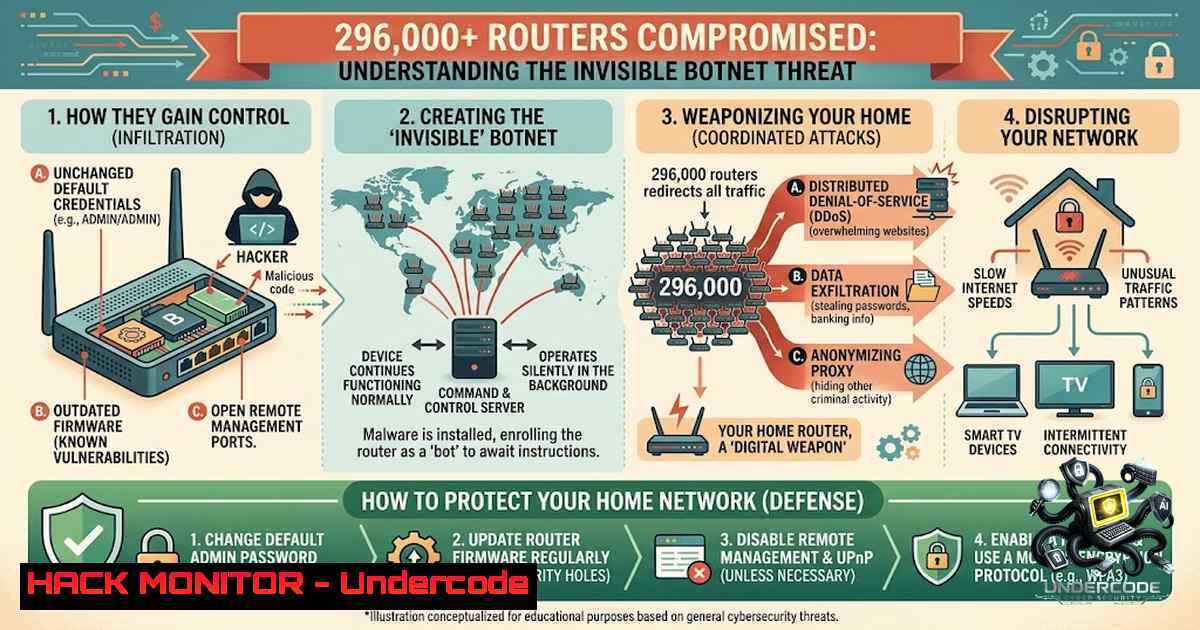
Introduction:
The Dysphoria botnet has compromised nearly 296,000 routers, IP cameras, and gateways worldwide, transforming ordinary home networking equipment into clandestine attack infrastructure. Unlike traditional botnets that rely on centralized command-and-control domains, Dysphoria leverages blockchain name services (ENS and SNS), distributed proxy relays, and automated UPnP port forwarding to create an invisible, resilient network that is exceptionally difficult to dismantle. This represents a paradigm shift in IoT malware—moving beyond DDoS attacks toward a commercialized, anonymized proxy infrastructure that weaponizes consumer devices at an unprecedented scale.
Learning Objectives:
- Understand the technical architecture of the Dysphoria botnet, including its use of Ethereum Name Service (ENS) and Solana Name Service (SNS) for command-and-control evasion.
- Learn to identify indicators of compromise (IoCs) associated with Dysphoria-infected devices through network traffic analysis and system auditing.
- Implement practical defense strategies—including firmware updates, credential hardening, and network configuration changes—to mitigate the risk of IoT device compromise.
You Should Know:
1. Understanding Dysphoria’s Multi-Layer Infection Chain
Dysphoria propagates using methods typical of IoT botnets, combining brute-force password attacks on Telnet and SSH services with the exploitation of known remote code execution vulnerabilities. The malware targets consumer and enterprise routers, network gateways, IP cameras, and other Linux-based devices that often operate for years with outdated firmware and internet-accessible control interfaces. Its arsenal includes both legacy vulnerabilities exploited by botnets for years and more recently discovered flaws.
The infection chain follows this pattern:
- Reconnaissance: The malware scans for devices with open Telnet (port 23) or SSH (port 22) ports.
- Initial Access: Brute-force attempts against default or weak credentials, or exploitation of RCE vulnerabilities.
- Persistence: Installation of the Dysphoria payload, which establishes outbound connections to the botnet’s infrastructure.
- Propagation: The infected device becomes a scanner, targeting other vulnerable devices on the same network or across the internet.
To check for signs of compromise on a Linux-based router or IoT device, administrators can review active network connections and running processes:
 Check for unusual outbound connections
netstat -tunap | grep ESTABLISHED

List all listening ports and associated services
ss -tulpn

Review cron jobs for malicious persistence
crontab -l

Check for suspicious processes consuming CPU or memory
top -b -1 1 | head -20

Examine system logs for brute-force attempts
grep "Failed password" /var/log/auth.log
grep "Accepted password" /var/log/auth.log
For Windows-based IoT gateways or management servers, use PowerShell to audit connections and processes:
 View active network connections
Get-1etTCPConnection | Where-Object {$_.State -eq "Established"}

List running processes with network activity
Get-Process | Where-Object {$_.Modules -match "ws2_32"}

Check scheduled tasks for unauthorized entries
Get-ScheduledTask | Where-Object {$_.State -1e "Disabled"}
2. Blockchain-Based C2: The Game Changer
What sets Dysphoria apart is not the number of infected devices but the architecture of its control infrastructure. Instead of traditional domains, the botnet operators have integrated Ethereum Name Service (ENS) and Solana Name Service (SNS) records into the malware. By querying these blockchain-based name services, the malware obtains the infrastructure addresses required for communication—making takedown efforts significantly more challenging, as defenders cannot simply request a domain registrar to suspend a traditional domain.
This technique introduces a critical security concept: decentralized C2 resilience. To understand how this works in practice, security analysts can explore ENS resolution manually:
 Query ENS resolver for a domain (requires ethtool or similar)
 Example: Resolve an ENS name to an Ethereum address
cast resolve-1ame example.eth

Check DNS-over-HTTPS for potential blockchain-based C2 domains
curl -H "Accept: application/dns-json" "https://cloudflare-dns.com/dns-query?name=example.eth&type=TXT"

Monitor DNS traffic for unusual .eth or .sol queries
tcpdump -i eth0 -1 port 53 -vv
On Windows, network administrators can use PowerShell to monitor for suspicious DNS queries:
 Enable DNS audit logging (requires admin privileges)
 Monitor Event Log for DNS query events (Event ID 3008)
Get-WinEvent -LogName "Microsoft-Windows-DNS-Client/Operational" | Where-Object {$_.Id -eq 3008} | Select-Object TimeCreated, Message
The use of ENS and SNS means that even if one set of C2 addresses is identified and blocked, the botnet operators can update the blockchain records to point to new infrastructure—rendering static blocklists ineffective.
3. Proxy Chaining and NAT Traversal via UPnP
Dysphoria operators have added an additional layer of obfuscation: infected devices can serve as intermediaries between bots and the true command-and-control servers. When analyzing network traffic, researchers see the IP address of another infected device—not the actual server operated by the botnet controllers. This multi-tiered proxy architecture complicates infrastructure identification and takedown efforts significantly.
In late June, researchers discovered a separate Dysphoria variant completely devoid of DDoS attack capabilities. The sole function of the infected device was to act as a proxy and relay. Shortly thereafter, automatic port forwarding via UPnP was added, allowing the malware to bypass NAT restrictions and accept external connections. As a result, an ordinary home IP address can be used as a forwarding point for other people’s traffic, enabling attackers to mask the true origin of connections, bypass IP restrictions, or hide C2 servers behind the networks of unsuspecting device owners.
To defend against this, network administrators should audit and harden UPnP configurations:
 Check if UPnP is enabled on a Linux router
 For MiniUPnP (common in many routers)
ps aux | grep upnp
netstat -tulpn | grep 1900

Disable UPnP service (example for systems using systemd)
sudo systemctl stop miniupnpd
sudo systemctl disable miniupnpd

Check for open UPnP ports using nmap
nmap -sU -p 1900 --script=upnp-info <target-IP>
On Windows systems, UPnP can be managed via the Windows Firewall or Group Policy:
 Check UPnP service status
Get-Service -1ame "UPnP Device Host"

Disable UPnP service
Set-Service -1ame "UPnP Device Host" -StartupType Disabled
Stop-Service -1ame "UPnP Device Host"

Disable SSDP Discovery service (required for UPnP)
Set-Service -1ame "SSDP Discovery" -StartupType Disabled
Stop-Service -1ame "SSDP Discovery"
Organizations should also implement egress filtering to prevent infected devices from establishing outbound proxy connections, and consider blocking known proxy ports at the network perimeter.
4. Commercialization and Attack Scale
The Dysphoria project has a commercial component. On a page linked to the botnet, operators advertised DDoS attack power of up to 4 Tbps and offered paid plans with pricing dependent on attack duration and bandwidth. XLab has observed attacks occurring almost daily, targeting internet services and gaming projects across multiple countries. This commercialization model represents a significant escalation: what was once the domain of state-sponsored actors or sophisticated cybercriminal groups is now available as a service, lowering the barrier to entry for malicious actors seeking powerful attack capabilities.
The Shadowserver Foundation has assigned all detected infections the maximum severity level: CRITICAL. The scale of infection has proven significantly higher than previous estimates, with over 200,000 devices reported by XLab and CNCERT in late July, and on some days the number of simultaneously infected devices outside China reached 239,000.
5. Practical Defense and Mitigation Strategies
Shadowserver recommends that owners and administrators of potentially affected devices take the following actions immediately:
- Update firmware to the latest available version from the manufacturer.
- Change administrative passwords as well as Telnet and SSH credentials, avoiding default or weak passwords.
- Disable unnecessary remote access and UPnP if not explicitly required.
- Review port forwarding rules and remove any that are unnecessary or suspicious.
- Replace older devices for which the manufacturer no longer provides security updates.
For enterprise environments, additional steps include:
 Scan internal network for devices with open Telnet/SSH and default credentials
 Using nmap with credential brute-force scripts
nmap -p 22,23 --script=ssh-brute,telnet-brute <subnet>/24

Identify IoT devices with known vulnerabilities
 Using OpenVAS or Nessus for vulnerability scanning
 Example: Run a basic vulnerability scan with nmap's vuln script
nmap -sV --script=vuln <target-IP>

Monitor for unusual DNS queries to blockchain name services
 Using tcpdump to capture DNS traffic for .eth and .sol domains
tcpdump -i eth0 -1 port 53 and dst port 53 -vv | grep -E ".eth|.sol"
Windows-based network administrators can use these PowerShell commands for network discovery and auditing:
 Scan local subnet for devices with open ports
1..254 | ForEach-Object { Test-1etConnection -ComputerName "192.168.1.$_" -Port 22 -InformationLevel Quiet }

Check for devices responding to UPnP discovery
$udpClient = New-Object System.Net.Sockets.UdpClient
$udpClient.Client.ReceiveTimeout = 2000
$udpClient.Connect("239.255.255.250", 1900)
$bytes = [System.Text.Encoding]::ASCII.GetBytes("M-SEARCH  HTTP/1.1<code>r</code>nHOST: 239.255.255.250:1900<code>r</code>nMAN: <code>"ssdp:discover</code>"<code>r</code>nMX: 3<code>r</code>nST: upnp:rootdevice<code>r</code>n<code>r</code>n")
$udpClient.Send($bytes, $bytes.Length)
$udpClient.Receive([bash]$null)
What Undercode Say:
- Key Takeaway 1: Dysphoria’s use of blockchain-based name services (ENS/SNS) represents a fundamental shift in botnet resilience. Traditional takedown methods—domain seizure, registrar intervention—are ineffective against this decentralized approach. Defenders must develop new capabilities for monitoring and disrupting blockchain-based C2 infrastructure.
-
Key Takeaway 2: The evolution from DDoS-focused malware to a distributed proxy infrastructure signals a dangerous trend. Dysphoria is not just an attack tool; it is a commercial anonymization service that weaponizes consumer devices for criminal traffic laundering. This blurs the lines between botnet, proxy service, and criminal infrastructure-as-a-service.
Analysis:
The Dysphoria botnet underscores a critical vulnerability in the consumer IoT ecosystem: devices are deployed, configured once, and then forgotten—often operating for years without security updates. The scale of this botnet (approaching 300,000 devices) is alarming, but equally concerning is the sophistication of its evasion techniques. By leveraging blockchain for C2 resolution and UPnP for NAT traversal, Dysphoria has created a self-healing, distributed infrastructure that is remarkably difficult to disrupt. The commercial model further incentivizes continuous operation and improvement, as operators have a financial stake in maintaining the botnet’s reliability and scale. For security practitioners, this highlights the urgent need for automated asset discovery, continuous vulnerability management, and network-level controls that can detect and block anomalous outbound traffic patterns—even when traditional IoCs are absent.
Prediction:
- +1 Expect increased adoption of blockchain-based C2 techniques across other malware families, as the success of Dysphoria demonstrates the effectiveness of decentralized infrastructure for evading takedown efforts.
- -1 Consumer IoT security will remain a critical weak point, as manufacturers continue to prioritize cost and time-to-market over security, leaving hundreds of millions of devices perpetually vulnerable.
- +1 Regulatory pressure on IoT manufacturers will intensify, potentially leading to mandatory security update policies, default password prohibitions, and vulnerability disclosure requirements.
- -1 The commercialization of botnet infrastructure will accelerate, with more threat actors offering “anonymization-as-a-service” and “DDoS-as-a-service” to a broader customer base.
- +1 Network-level defenses—including egress filtering, anomaly detection, and AI-driven traffic analysis—will become essential countermeasures as signature-based detection becomes increasingly ineffective against polymorphic, blockchain-enabled malware.
▶️ Related Video (78% Match):
🎯Let’s Practice For Free:
🎓 Live Courses & Certifications:
Join Undercode Academy for Verified Certifications
🚀 Request a Custom Project:
Secure, high-velocity infrastructure and disruptive technological engineering. Contact our engineering team for high-tier development and proprietary systems:
[email protected]
💎 Smart Architecture | 🛡️ Secure by Design | ⭐ Trusted by Thousands
IT/Security Reporter URL:
Reported By: https://lnkd.in/p/er7x9sVK – Hackers Feeds
Extra Hub: Undercode MoN
Basic Verification: Pass ✅


