Listen to this Post
Introduction
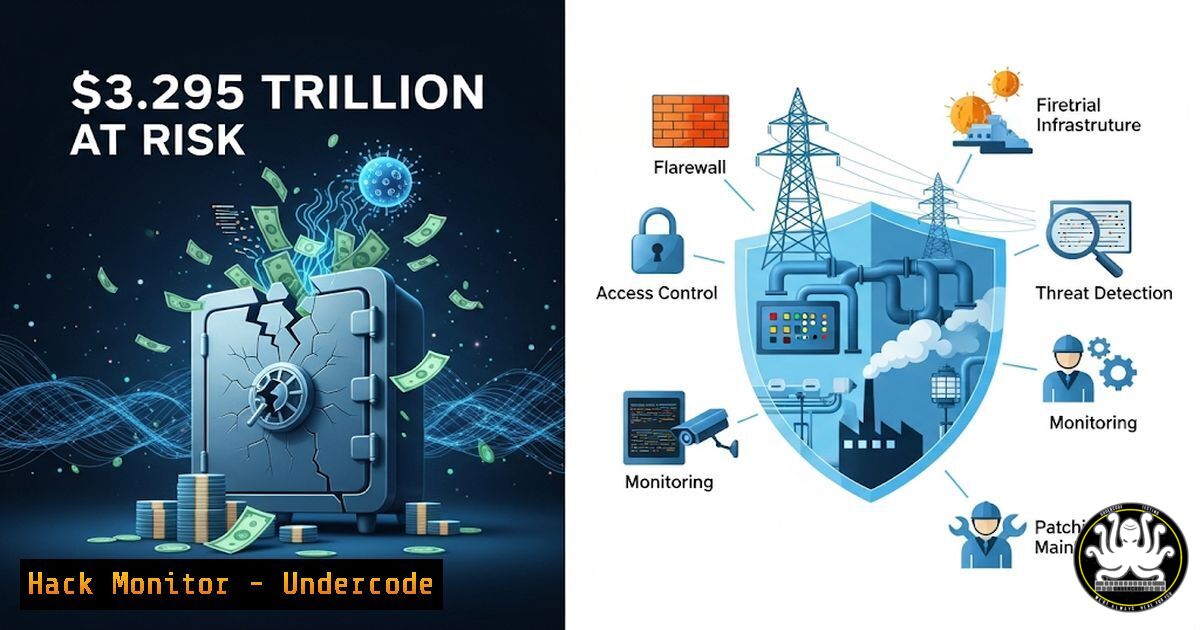
Operational Technology (OT) cybersecurity is no longer a niche concern—it’s a global financial risk. According to the 2025 Dragos and Marsh McLennan report, OT-related cyber incidents could cost up to $329.5B, with manufacturing, energy, and utilities being the most vulnerable sectors. This article dives into actionable security controls, verified commands, and best practices to mitigate these risks.
Learning Objectives
- Understand the financial impact of OT cyber incidents.
- Implement the SANS ICS 5 Critical Controls to reduce risk.
- Apply hands-on security measures for network visibility, incident response, and secure remote access.
- Network Visibility & Monitoring (SANS ICS Control 3)
Command (Linux – Zeek/Bro IDS Logging):
zeek -i eth0 -C local "Site::local_nets += { 192.168.1.0/24 }"
What It Does:
Zeek (formerly Bro) monitors network traffic on `eth0` for the specified subnet, logging anomalies and potential intrusions.
Step-by-Step Guide:
1. Install Zeek:
sudo apt-get install zeek
2. Configure `local.zeek` to define monitored subnets.
- Run Zeek in real-time mode for continuous monitoring.
2. Defensible Architecture (SANS ICS Control 2)
Command (Windows – Firewall Hardening):
Set-NetFirewallProfile -Profile Domain,Public,Private -Enabled True -DefaultInboundAction Block -DefaultOutboundAction Allow
What It Does:
Enforces strict firewall rules, blocking unsolicited inbound traffic while allowing outbound connections.
Step-by-Step Guide:
1. Open PowerShell as Administrator.
- Apply the command to harden all firewall profiles.
3. Use `Get-NetFirewallRule` to verify configurations.
- Secure Remote Access (SANS ICS Control 4)
Command (SSH Hardening – Linux):
sudo sed -i 's/PasswordAuthentication yes/PasswordAuthentication no/g' /etc/ssh/sshd_config
What It Does:
Disables password-based SSH authentication, enforcing key-based access only.
Step-by-Step Guide:
1. Edit `/etc/ssh/sshd_config`.
2. Restart SSH:
sudo systemctl restart sshd
- Incident Response Planning (SANS ICS Control 1)
Command (Log Analysis – ELK Stack):
curl -XGET 'http://localhost:9200/_search?q=status:500'
What It Does:
Queries Elasticsearch for HTTP 500 errors, helping identify potential breaches.
Step-by-Step Guide:
1. Deploy ELK Stack (Elasticsearch, Logstash, Kibana).
2. Use Kibana to visualize anomalies.
- Risk-Based Vulnerability Management (SANS ICS Control 5)
Command (Nmap Scan for OT Devices):
nmap -sT --script vuln -p 1-1024 192.168.1.1
What It Does:
Scans for vulnerabilities in common OT ports (Modbus, DNP3).
Step-by-Step Guide:
1. Install Nmap:
sudo apt-get install nmap
2. Run scans regularly to detect exposed services.
What Undercode Say:
- Key Takeaway 1: The SANS ICS 5 Controls reduce risk by 12-18% per control. Prioritize network visibility and IR planning.
- Key Takeaway 2: Indirect costs (e.g., operational downtime) often exceed breach remediation—focus on resilience.
Analysis:
The Dragos report proves that OT security is now a boardroom issue. Companies that implement these controls not only reduce risk but also gain insurance advantages. The future of OT security hinges on real-time telemetry, zero-trust architectures, and automated threat detection.
Prediction:
By 2030, AI-driven OT security tools will dominate, reducing incident costs by 40%. However, attackers will increasingly target weak remote access and legacy ICS systems. Proactive hardening is non-negotiable.
Read the Full Report: Dragos 2025 OT Risk Report
Tags: OTSecurity IndustrialCybersecurity CyberRiskManagement IncidentResponse CriticalInfrastructure
🎯Let’s Practice For Free:
IT/Security Reporter URL:
Reported By: Otsecurityprofessionals 2025 – Hackers Feeds
Extra Hub: Undercode MoN
Basic Verification: Pass ✅


