
Listen to this Post
Introduction:
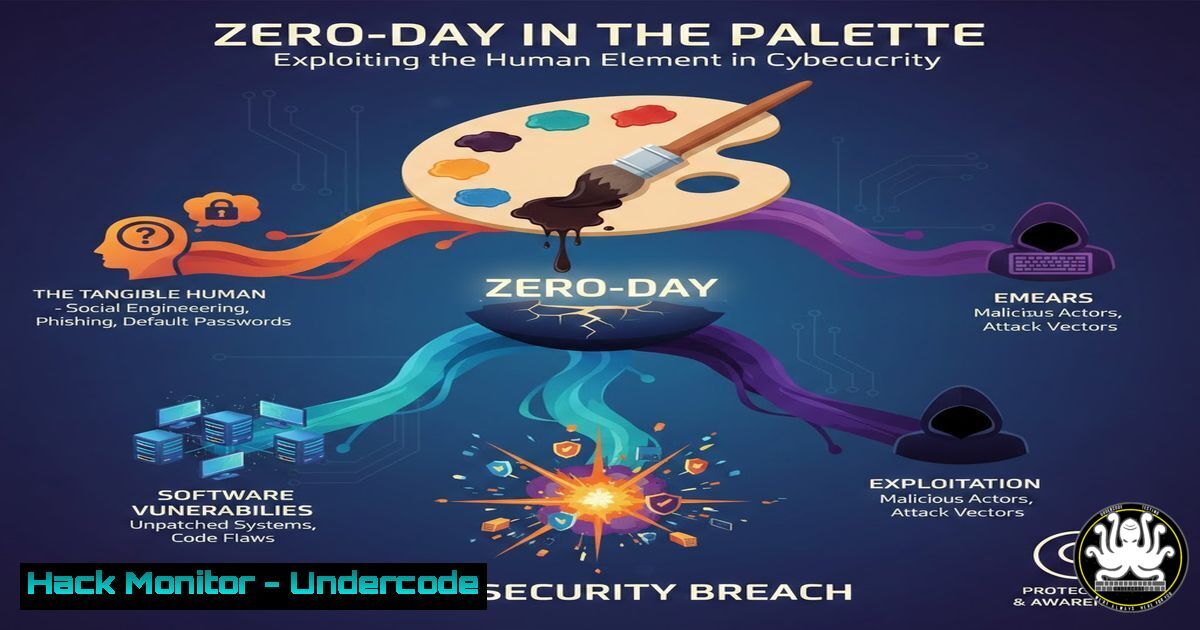
Modern cybersecurity defenses often focus on hardening code, networks, and endpoints, yet the most sophisticated attack vector remains the human mind. This analysis explores how social engineering tactics, combined with advanced persistent threats (APTs), exploit personal psychological vulnerabilities to bypass even the most robust digital fortresses. By understanding the “tangible” emotional triggers that attackers weaponize, professionals can build more resilient defense-in-depth strategies.
Learning Objectives:
- Analyze the intersection of social engineering and emotional manipulation in cyber attacks.
- Identify technical indicators of compromise (IoCs) associated with targeted phishing campaigns.
- Implement defensive configurations for email gateways and endpoint detection to mitigate human-centric exploits.
You Should Know:
1. The Anatomy of a Personal Phishing Vector
The provided message demonstrates a highly targeted approach: a personal anecdote about a friend and a hat, designed to build rapport and emotional resonance. In a cyber context, this mirrors “spear phishing” where attackers gather OSINT (Open Source Intelligence) from social media to craft believable lures.
Step‑by‑step guide explaining what this does and how to use it (Defensive Perspective):
To simulate an attacker’s reconnaissance, security teams can use OSINT tools defensively to identify exposed company data.
Command (Linux – OSINT Collection):
 Use theHarvester to gather emails and subdomains related to a domain
theHarvester -d example.com -l 500 -b google,linkedin
 Analyze results for potential target accounts
cat results.xml | grep -E -o "\b[A-Za-z0-9._%+-]+@[A-Za-z0-9.-]+.[A-Za-z]{2,6}\b" | sort -u
To mitigate this, implement DMARC, DKIM, and SPF rigorously and train users to verify unexpected personal messages through a secondary channel.
2. Hardening Email Gateways Against Emotional Lures
Standard signature-based detection fails against zero-day social engineering. We must configure email filters to flag messages containing highly personal, unspecific emotional language combined with requests for action.
Step‑by‑step guide (Microsoft 365 Defender / Anti-Phish Policy):
- Navigate to Microsoft 365 Defender Portal -> Email & collaboration -> Policies & rules -> Threat policies -> Anti-phishing.
2. Select “Create” and go to “Impersonation” settings.
- Add users (CEOs, CFOs) and protect internal domains.
- Enable “Mailbox intelligence” to learn normal communication patterns.
- Under “Advanced phishing thresholds”, select Aggressive to catch more nuanced impersonation attempts.
3. Utilizing Endpoint Detection for Behavioral Anomalies
When a user clicks a malicious link hidden in a personal story, the endpoint must react. Modern EDR solutions focus on behavior, not just signatures.
Command (Windows – PowerShell – Simulating Malicious Process Tree Analysis):
 Get running processes and their parent processes to identify anomalies
Get-WmiObject Win32_Process | Select-Object Name, @{Name='ParentProcessId';Expression={$_.ParentProcessId}}, ProcessId, CommandLine | Format-Table -AutoSize

Check for suspicious office applications spawning shells (common macro behavior)
Get-Process | Where-Object { $<em>.ProcessName -like "winword" -or $</em>.ProcessName -like "excel" } | ForEach-Object { Get-Process -Id $_.Id -IncludeUserName }
If Winword.exe spawns cmd.exe or powershell.exe, this indicates a potential macro-based compromise, often delivered via social engineering.
4. Cloud Hardening: The “Tangible” Data Loss
Once access is gained via the human vector, cloud storage becomes the target. Attackers look for “concrete and specific” data (like credentials in notes). Implement Data Loss Prevention (DLP) policies.
Step‑by‑step guide (AWS S3 – Preventing Public Access):
 Use AWS CLI to block public access at the account level
aws s3control put-public-access-block --account-id 123456789012 --public-access-block-configuration BlockPublicAcls=true,IgnorePublicAcls=true,BlockPublicPolicy=true,RestrictPublicBuckets=true

Scan buckets for sensitive info using Macie or manual tools
 Find files containing "password" in a bucket recursively
aws s3 ls s3://your-bucket-name --recursive | awk '{print $4}' | while read line; do aws s3 cp s3://your-bucket-name/"$line" - | grep -i "password" && echo "Found in $line"; done
5. Exploitation Mitigation: Memory Forensics
If the emotional lure succeeds and malware is downloaded, it often resides in memory. Here’s how to capture it forensically.
Command (Linux – Memory Acquisition and Analysis):
 Acquire memory using LiME (Linux Memory Extractor)
insmod lime.ko "path=/evidence/memory_dump.lime format=lime"

Analyze with Volatility 3 to find malicious processes
python3 vol.py -f /evidence/memory_dump.lime windows.pslist.PsList
 Look for processes with no parent (PID 4) or hidden processes
python3 vol.py -f /evidence/memory_dump.lime windows.malfind.Malfind --pid 1234
6. API Security: The Automation of Trust
Attackers automate the collection of OSINT via APIs. Defenders must rate-limit and monitor API access patterns.
Configuration (Nginx – Rate Limiting to Prevent API Scraping):
 In /etc/nginx/nginx.conf, define a limit zone
http {
limit_req_zone $binary_remote_addr zone=osint_limit:10m rate=5r/m;

server {
location /api/v1/user/ {
 Apply rate limit to OSINT-heavy endpoints
limit_req zone=osint_limit burst=10 nodelay;
proxy_pass http://backend_api;
}
}
}
What Undercode Say:
- Key Takeaway 1: The “color of my eyes” anecdote is a masterclass in pretexting; cybersecurity awareness must evolve beyond “don’t click links” to understanding how attackers weaponize personal validation and friendship to bypass logical defenses.
- Key Takeaway 2: Defensive strategies must integrate human psychology with technical controls. Emotional manipulation cannot be stopped by a firewall, but it can be detected by behavioral analytics and strict identity verification protocols.
- Analysis: The line between digital and physical trust is eroding. As Mil Williams describes finding self-love through a tangible gift from a friend, a cybercriminal describes finding access through a tangible lie. The win for the defender lies not in building higher walls, but in teaching the heart to question the source of its joy. By implementing strict OSINT monitoring and zero-trust architectures, we force the attacker to work harder, potentially exposing themselves before the emotional hook is set. This post serves as a reminder that the most secure system is one where the user is an active, skeptical participant in their own defense, not a passive recipient of a story.
Prediction:
We will see a rise in AI-generated spear-phishing campaigns that can dynamically adapt their emotional narrative based on real-time social media scraping of the target’s mood and recent life events. Defenses will pivot to “Zero-Trust Emotions,” where digital identity verification becomes mandatory even for seemingly personal communications, forcing a new paradigm of “trust, but verify the humanity.”
▶️ Related Video (86% Match):
🎯Let’s Practice For Free:
IT/Security Reporter URL:
Reported By: Mil Williams – Hackers Feeds
Extra Hub: Undercode MoN
Basic Verification: Pass ✅


