Listen to this Post
Introduction:
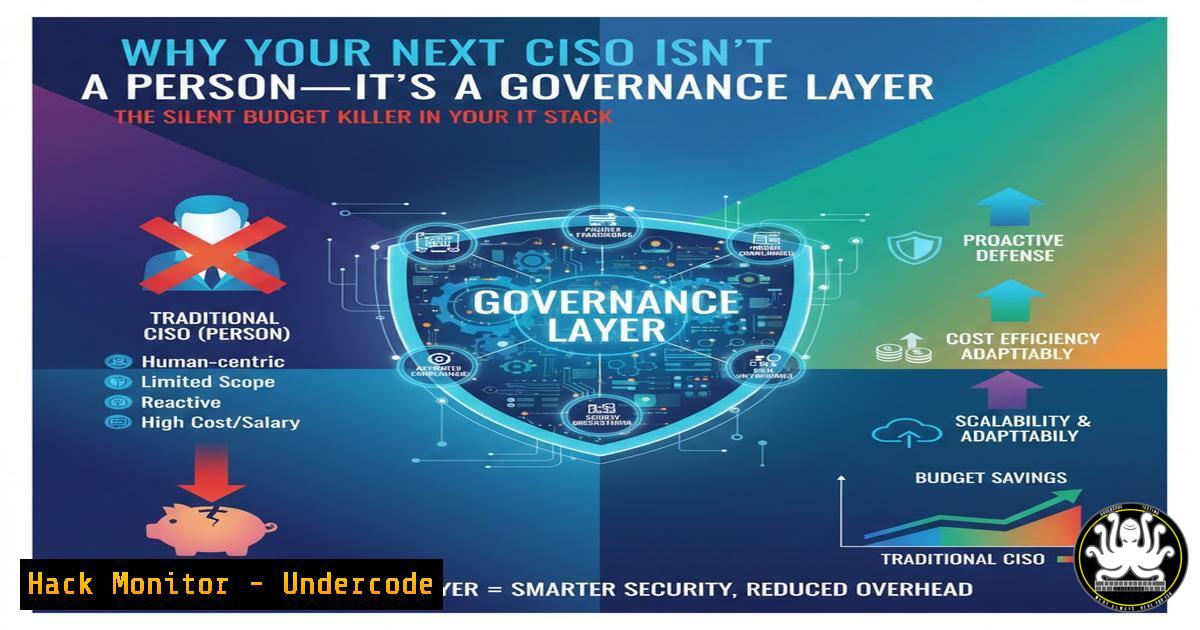
The prevailing myth in cybersecurity is a lack of funding, but the real crisis is a lack of formal governance. Organizations pour millions into sophisticated security stacks and managed service providers (MSPs) while their fundamental technology risk remains unowned, lurking between IT, compliance, and leadership. This article deconstructs how implementing an executive governance framework, not another tool, is the most cost-effective shield against regulatory, financial, and operational exposure.
Learning Objectives:
- Identify the accountability gap for cyber risk that exists between executive leadership, IT, and compliance functions.
- Learn how to transition IT spend from reactive tool procurement to risk-and-impact-based investment.
- Implement actionable steps to establish a “Prove IT” readiness cadence that satisfies auditors and insurers.
You Should Know:
- Mapping the Accountability Void: Your First Risk Assessment
The foundational step is identifying where ownership evaporates. The core question from the post—”Who is formally accountable for cyber risk across IT, compliance, and executive leadership?”—is your starting audit. When the answer is ambiguous or delegated solely to IT/MSP, you have a critical governance gap.
Step-by-Step Guide:
- Conduct a RACI Workshop: Gather key stakeholders from the Board, C-suite, Legal, Compliance, IT, and Security. For each critical asset class (e.g., customer data, intellectual property, operational technology), map out who is Responsible, Accountable, Consulted, and Informed.
- Technical Discovery for Asset Ownership: Use technical means to discover assets and force accountability questions.
Linux/Multi-cloud: Run `sudo nmap -sV -O 10.0.0.0/24` to discover devices on your network. Each identified server/service must have a designated business owner.
Microsoft 365/Azure: Use PowerShell:Get-AzureADDevice | Select-Object DisplayName, DeviceTrustType, ApproximateLastLogonTimeStamp. This lists devices in your environment; unowned or stale devices represent ungoverned risk. - Document the Gaps: The output is a matrix highlighting assets and risks with no clear Accountable (Authority) party. This visual becomes the catalyst for executive engagement.
2. Retiring Duplicate Tools: The Governance-Led Audit
Under-governance leads to redundant spending. Different departments, acting in silos, procure overlapping tools for monitoring, backup, or endpoint security without a central risk-based rationale.
Step-by-Step Guide:
- Inventory All Security & IT Tools: Compile a list from procurement, SaaS management platforms (e.g., Blissfully, Torii), and direct API queries.
API Example (JAMf Pro): `curl -X GET - Map Tools to Control Frameworks: Align each tool to specific functions in the NIST Cybersecurity Framework (Identify, Protect, Detect, Respond, Recover) or CIS Controls.
- Analyze for Overlap: Identify where three tools claim to “Protect” data via encryption or two tools “Detect” endpoint malware. Present this analysis with cost attribution to drive consolidation decisions based on risk coverage, not vendor marketing.
-
Building the “Prove IT” Cadence: Automating Governance Evidence
Governance fails when it’s a quarterly scramble for auditors. The goal is a continuous, automated evidence stream proving control effectiveness.
Step-by-Step Guide:
- Define Critical Controls: Start with 5-10 high-impact controls (e.g., MFA enforcement, privileged access review, encrypted backups).
2. Automate Evidence Collection:
MFA Enforcement (Azure AD): Use Microsoft Graph API: `GET
Vulnerability Patch Level (Linux): Create a script: `ssh user@host “sudo apt list –upgradable 2>/dev/null | wc -l”` to count pending security updates across servers.
3. Dashboard the Evidence: Feed this data into a simple dashboard (e.g., Power BI, Grafana). This live “Prove IT” panel provides defensible, board-ready status updates at any moment.
- Shifting Spend from Reactive to Risk-Based: The Quantified Justification
Stop buying tools because of a latest breach headline. Tie every proposed investment to a specific, quantified risk reduction.
Step-by-Step Guide:
- Adopt a Simple Risk Formula: Use: Risk = Likelihood (1-5) x Impact (Financial, Reputational, Operational on a 1-5 scale). Score risks before and after the proposed control/tool.
- Create a Risk Register: Maintain a living document (e.g., in Jira, ServiceNow, or even a structured spreadsheet) of scored risks.
- Frame Budget Requests: Instead of “We need a new EDR,” propose: “Investment X reduces the likelihood of a ransomware incident (currently scored ‘4’) to a ‘2’, reducing our annualized risk exposure by $Y.”
-
Streamlining for Auditors & Insurers: Speaking Their Language
Auditors and insurers seek assurance through consistent processes. A governance layer provides the structured narrative and evidence they require.
Step-by-Step Guide:
- Align to Standard Frameworks: Formally adopt a framework like NIST CSF or ISO 27001. Document your governance processes as its “Umbrella” layer.
- Prepare an Artifact Repository: Use a secure, organized platform (e.g., SharePoint, Confluence, a GRC tool) to store policy documents, RACI charts, risk registers, and automated evidence reports from previous steps.
- Conduct Internal Pre-Audits: Quarterly, use the insurer’s or auditor’s questionnaire (e.g., SIG, CAIQ) to self-assess. Gaps found here become your governance improvement roadmap.
What Undercode Say:
- Governance is the Force Multiplier: A mature governance layer makes every existing security tool, MSP, and compliance effort more effective and accountable. It’s not an expense; it’s a ROI optimizer on your current stack.
- Ownership is the First Control: Before investing in another technical control, invest in clarifying executive ownership for risk. This human layer is the most critical and most often missing component in defense-in-depth.
Analysis: The post cuts to the heart of strategic cybersecurity failure: the misalignment of authority and accountability. Technicians are often tasked with managing enterprise-level risk without the organizational authority to mandate behavioral or investment changes. The proposed “executive governance layer” acts as a translation and alignment engine, converting technical risk into business language for leaders, and business objectives into clear risk tolerance guidance for technologists. This solves the chronic disengagement described. The “cost-effective” argument is potent because it attacks the “more vendors, more tools” fallacy that burns budgets while leaving systemic risk unaddressed. This isn’t anti-technology; it’s pro-rationalization.
Prediction:
The future of cybersecurity leadership will bifurcate. The tactical, technology-managing CISO role will increasingly be absorbed by elevated MSPs and platform operators. Meanwhile, the strategic, board-facing accountability for cyber risk will solidify as a core governance function within the executive suite, potentially embodied by a Chief Risk Officer (CRO) or a dedicated Board Risk Committee armed with real-time “Prove IT” dashboards. This governance function will leverage AI not for threat detection first, but for continuous compliance validation, policy-gap analysis, and dynamic risk quantification, making cyber risk as intelligible and manageable as financial risk.
▶️ Related Video (72% Match):
🎯Let’s Practice For Free:
IT/Security Reporter URL:
Reported By: Rossbrouse Most – Hackers Feeds
Extra Hub: Undercode MoN
Basic Verification: Pass ✅


