
Listen to this Post
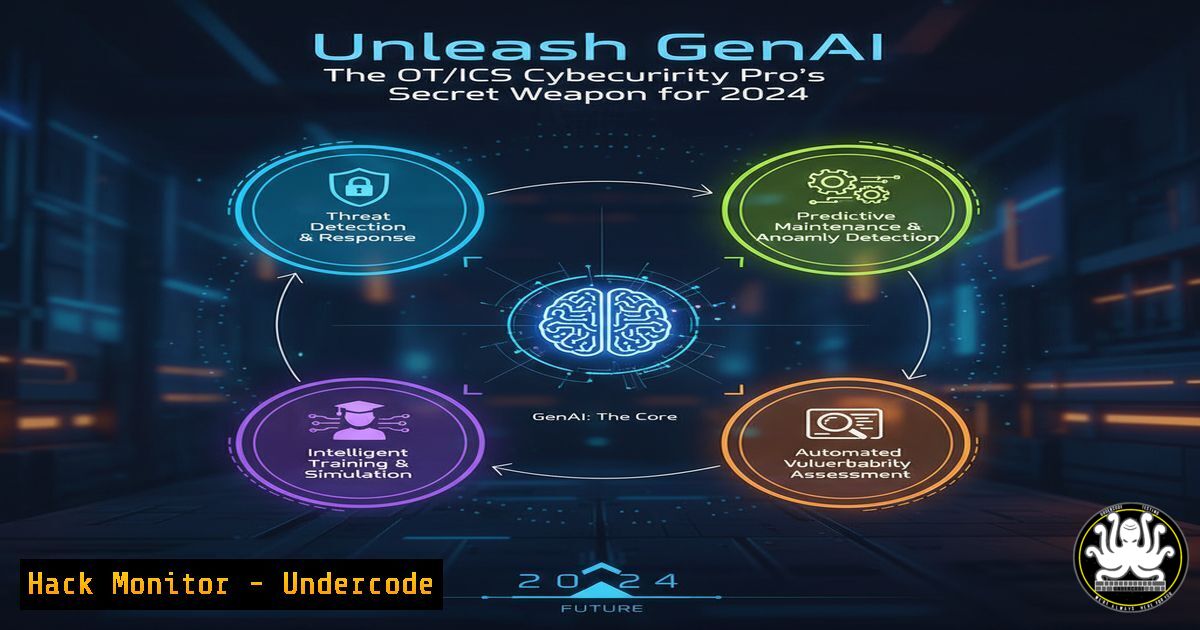
Introduction:
The operational technology (OT) and industrial control systems (ICS) landscape is undergoing a seismic shift, with Generative AI (GenAI) emerging as a critical force multiplier for cybersecurity professionals. While a significant portion of the workforce has begun adopting these tools, mastering their effective application is the key to moving from novice to expert. This guide provides a tactical roadmap for leveraging GenAI to build, defend, and manage complex industrial networks.
Learning Objectives:
- Master the application of GenAI for understanding OT/ICS fundamentals, including asset identification and architectural models.
- Develop practical skills for creating simulated lab environments, generating detection scripts, and analyzing network traffic.
- Formulate comprehensive risk management and governance frameworks tailored to industrial environments using AI-assisted methodologies.
You Should Know:
1. Deconstructing the Purdue Model with GenAI
The Purdue Enterprise Reference Architecture (PERA) is the foundational model for segmenting OT/ICS networks. Understanding the threats at each level is paramount for building effective defenses.
GenAI
`Explain the expanded Purdue Model level and how it can be used as the basis of conversations around OT/ICS cybersecurity. Provide details on attacks which happen at each Level 0, Level 1, Level 3, and Level 4.`
Step-by-step guide:
This prompt instructs the AI to break down the hierarchical model. Level 0 contains field devices like sensors and actuators, where attacks could involve manipulating physical processes. Level 1 encompasses basic controllers, susceptible to logic manipulation. Level 3 is operations management, a prime target for data exfiltration or disruption. Level 5 is the enterprise network, often the initial attack vector. Using this output, you can map security controls and monitoring requirements to each specific level, ensuring a defense-in-depth strategy.
2. Mastering OT Network Traffic Analysis
Understanding proprietary industrial protocols is a core skill. Modbus TCP, a common protocol, is often unauthenticated, making traffic analysis vital for detecting malicious activity.
Verified Command & Tutorial:
 Capture Modbus TCP traffic on port 502
sudo tcpdump -i eth0 -A 'tcp port 502' -w modbus_capture.pcap

Analyze the capture in Wireshark
wireshark modbus_capture.pcap
Step-by-step guide:
The `tcpdump` command listens on interface `eth0` for any TCP traffic on the well-known Modbus port 502. The `-A` flag prints each packet in ASCII, useful for quick analysis, while `-w` writes the raw packets to a file for deeper inspection. Opening this `.pcap` file in Wireshark allows you to use the built-in Modbus protocol dissector. You can filter for `modbus` to see all Modbus conversations, inspect function codes (e.g., Read Holding Registers is 0x03, Write Single Register is 0x06), and identify any unauthorized write commands attempting to manipulate a PLC.
3. Scripting for OT Firewall Log Monitoring
Vendor firewalls guarding the OT perimeter generate massive logs. Automating the search for specific Indicators of Compromise (IoCs) is essential for timely detection.
GenAI-Generated Script Snippet (Python):
import re

def check_ot_firewall_log(log_line):
"""Search a firewall log line for OT security issues."""
 Red Flag: OT asset communicating with the internet
internet_ip_pattern = r"^(?!192.168|10.|172.(1[6-9]|2[0-9]|3[0-1]))"
if re.search(internet_ip_pattern, log_line):
print(f"ALERT: OT-to-Internet Communication: {log_line}")

Red Flag: Known malicious IP (example: 94.130.0.0/16)
if "94.130." in log_line:
print(f"ALERT: Communication with known malicious IP: {log_line}")

Red Flag: Traffic on unauthorized port (e.g., SSH 22 from IT to OT)
if "DPT=22" in log_line and "SRC=10.100.100" in log_line:
print(f"ALERT: Unauthorized SSH attempt from IT network: {log_line}")

Example usage with a log file
with open('firewall.log', 'r') as f:
for line in f:
check_ot_firewall_log(line)
Step-by-step guide:
This Python script provides a basic framework for parsing firewall logs. The `check_ot_firewall_log` function uses regular expressions and string matching to identify three key issues. The first rule flags any internal IP (non-RFC 1918) communicating with the OT network, suggesting potential internet-bound traffic. The second checks for communication with a hypothetical threat actor IP range. The third looks for SSH traffic originating from a specific IT subnet, which should be blocked by policy. You can adapt the IP addresses, ports, and patterns to match your specific network architecture and threat intelligence feeds.
4. Building a Safe Modbus Read/Write Lab
Hands-on experience with industrial protocols is non-negotiable. Creating a contained lab environment prevents accidental impacts on live operational systems.
Verified Lab Setup Commands (Using Docker):
 Pull and run a simulated Modbus PLC
docker run -d -p 502:502 --name modbus-plc jacobalberty/modbus:simulator

Use a Modbus client (mbpoll) to read registers
mbpoll -a 1 -t 4 -r 1 -c 1 127.0.0.1

Use a Modbus client to write to a register (USE WITH CAUTION IN LAB)
mbpoll -a 1 -t 4 -r 1 127.0.0.1 1
Step-by-step guide:
This setup uses Docker to instantly create a safe, simulated Modbus PLC. The first command runs the simulator in the background, exposing port 502. The `mbpoll` command is a popular Modbus CLI client. The first `mbpoll` example (-r 1) reads a single holding register from unit ID 1. The second example writes the value `1` to that same register. This demonstrates the fundamental, unauthenticated read/write capability of Modbus, highlighting the critical risk and the need for network segmentation and monitoring.
5. Crafting an Executive Risk Briefing
Communicating OT risk to non-technical leadership requires clarity and context. A well-structured, one-page briefing is an invaluable tool.
GenAI
`Generate a one-page executive summary template for OT security risk briefings. Be sure to include highlights from recent incidents in the energy sector, a risk heat map, and recommended immediate actions.`
Step-by-step guide:
This prompt directs the AI to synthesize a concise document tailored for executives. The output will typically include a high-impact summary, recent real-world examples from the specified industry to provide context, a visual risk matrix categorizing threats by likelihood and impact, and a shortlist of strategic, actionable recommendations. This template can be quickly populated with organization-specific data to drive informed decision-making and secure budget for security initiatives.
6. Hardening Cloud APIs for OT Data
As OT data is increasingly sent to cloud platforms for analytics, the APIs facilitating this transfer become high-value targets. Securing them is critical.
Verified AWS CLI Command for Logging:
 Enable detailed CloudTrail logging for an API Gateway
aws cloudtrail put-event-selectors --trail-name MyTrail --event-selectors '[{ "ReadWriteType": "All", "IncludeManagementEvents": true, "DataResources": [{ "Type": "AWS::ApiGateway::Stage", "Values": ["arn:aws:apigateway:us-east-1::/restapis/abc123/stages/prod"] }] }]'
Step-by-step guide:
This AWS CLI command configures CloudTrail, AWS’s logging service, to capture detailed API activity. The `–event-selectors` flag ensures that all events ("ReadWriteType": "All"), including data plane calls to your specific API Gateway stage, are logged. The resulting logs can be sent to a security information and event management (SIEM) system to monitor for anomalous patterns, such as an unusual volume of requests or access from unexpected geographic locations, which could indicate an API key compromise or a denial-of-service attack.
7. Conducting a Zoned Risk Assessment
OT networks are segmented into zones and conduits as per the IEC 62443 standard. A risk assessment must reflect this architecture.
GenAI
`Draft a risk management practice for an OT/ICS environment, including a template for conducting an effective risk assessment for each zone and conduit within the OT/ICS network. Focus on threats like unauthorized access, malware propagation, and denial-of-service.`
Step-by-step guide:
This prompt generates a systematic methodology for risk evaluation. The AI will produce a template that guides you through identifying critical assets within a zone (e.g., a specific production line), evaluating the threats specific to that zone’s function, assessing the impact of a security incident on safety and production, and analyzing the vulnerabilities of the assets and conduits connecting them. This structured approach ensures no critical component is overlooked and that security investments are prioritized based on actual risk.
What Undercode Say:
- Democratization of Expertise: GenAI is not replacing OT experts; it is acting as a powerful apprentice, drastically reducing the time required for research, lab setup, and documentation. This allows human experts to focus on higher-level strategy and complex problem-solving.
- The Prompt is the New Skill: The quality of the output is directly proportional to the specificity and context provided in the prompt. Vague questions will yield generic, often useless answers. The most effective OT professionals will be those who master the art of engineering precise, context-rich prompts.
The analysis suggests we are at the tipping point of a skills transformation. GenAI’s ability to generate realistic lab environments, complex detection code, and policy frameworks on-demand lowers the barrier to entry for IT security professionals moving into OT. However, this also lowers the barrier for adversaries. The critical differentiator will be the defender’s deep contextual knowledge of industrial processes, which is used to validate, refine, and correctly implement the AI’s output. Blind trust is a recipe for disaster, but strategic skepticism coupled with AI augmentation creates an unprecedented opportunity to secure critical infrastructure more effectively.
Prediction:
The integration of GenAI into OT cybersecurity workflows will create a two-tiered professional landscape by 2026. Those who adeptly use these tools will achieve in days what previously took months, automating threat hunting, policy creation, and incident response playbooks. Conversely, threat actors will weaponize GenAI to craft highly targeted phishing lures for engineers, generate fuzzing attacks against proprietary industrial protocols, and automatically write evasive malware. The future battleground will be defined by the speed and quality of AI-driven countermeasures, making proficiency in prompt engineering and AI-assisted analysis a non-negotiable core competency for every OT cybersecurity defender.
🎯Let’s Practice For Free:
IT/Security Reporter URL:
Reported By: Mikeholcomb Level – Hackers Feeds
Extra Hub: Undercode MoN
Basic Verification: Pass ✅


