Listen to this Post
Introduction:
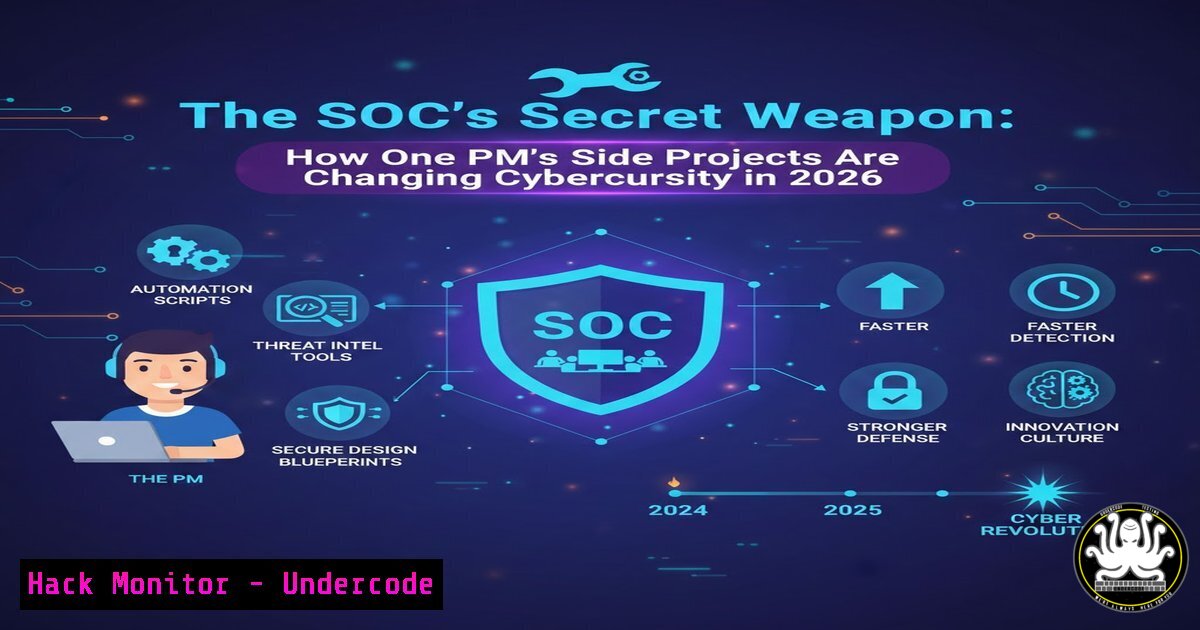
In the high-stakes world of Security Operations, efficiency and rapid skill development are paramount. James Spiteri, a Product Manager at Elastic, has quietly built a suite of open-source, web-based tools that are becoming essential for threat hunters, malware analysts, and security engineers. These projects, born from practical need, exemplify the modern approach to cybersecurity: leveraging accessible platforms to democratize complex analysis and supercharge SOC productivity.
Learning Objectives:
- Understand the purpose and practical application of five key security tools created by James Spiteri.
- Learn how to integrate these free resources into daily security workflows for threat intelligence, malware analysis, and log investigation.
- Gain foundational knowledge in using EQL for advanced threat hunting and recognizing sophisticated phishing campaigns.
You Should Know:
1. soctips.ai – The AI-Powered SOC Mentor
This platform serves as an interactive knowledge base, using AI to guide analysts through complex security incidents and procedures. It’s designed to reduce mean time to respond (MTTR) by offering contextual, step-by-step advice.
Step‑by‑step guide:
Step 1: Navigate to `https://soctips.ai`. The interface presents a clean chat-style input.
Step 2: Pose a specific, operational question. For example: “How do I investigate a possible lateral movement event using Windows Event Logs?”
Step 3: The AI will break down the process, likely recommending specific Event IDs (e.g., 4624, 4648, 5140) and suggesting correlation logic.
Step 4: Use the provided guidance to craft queries in your SIEM. For an Elastic environment, you might translate the advice into a KQL or EQL query.
2. ohmymalware.com – Streamlined Malware Initial Assessment
A free web service for the preliminary static and dynamic analysis of suspicious files. It allows analysts to safely upload samples and receive immediate behavioral indicators without complex local sandbox setup.
Step‑by‑step guide:
Step 1: Go to `https://ohmymalware.com`. Crucially, ensure you are using a dedicated, isolated analysis machine or VM for any file handling.
Step 2: Click “Choose File” to upload your suspect sample (e.g., a `.exe` or `.docm` file). The service will automatically process it.
Step 3: Review the generated report. Key sections include:
Hashes: Note the SHA256 for IOC creation.
Static Analysis: Strings, imported libraries, and potential suspicious function calls.
Behavioral Indicators: File system, registry, and network activity observed in the sandbox.
Step 4: Extract IOCs (like C2 IPs, dropped file paths, mutex names) and immediately block them in your security controls.
3. whichphish.com – Phishing Campaign Analysis & Attribution
This tool helps dissect phishing campaigns by analyzing technical components like SMTP headers, embedded links, and file hashes to identify patterns and potential attribution.
Step‑by‑step guide:
Step 1: Access the tool at `https://whichphish.com`.
Step 2: Input the phishing email’s raw headers (full `Received:` paths) or the URL of a phishing page.
Step 3: The tool parses the data, highlighting:
Originating IPs and Mail Servers: Trace the email’s path.
URL Analysis: Expands shortened links and identifies hosting infrastructure.
Campaign Fingerprinting: Compares artifacts against known campaigns.
Step 4: Use the insights to update email gateway rules, block malicious infrastructure, and educate users with specific examples.
- eqlplayground.io – Mastering Event Query Language for Threat Hunting
EQL (Event Query Language) is a powerful schema-agnostic language for tracing adversary tactics across data sources. This playground provides a safe environment to learn and test EQL queries critical for proactive hunting.
Step‑by‑step guide:
Step 1: Visit `https://eqlplayground.io`. The interface splits into a query editor and sample data output.
Step 2: Start with a basic query to understand syntax. Example, to find process creation:
process where true
Step 3: Build a more advanced hunt. For example, to detect `certutil` being used to download a file (a common living-off-the-land technique):
process where process_name == "certutil.exe" and command_line == "urlcache" and command_line == "split"
Step 4: Test the query against the provided sample data, then adapt it for your own Elastic SIEM or endpoint data by adjusting field names as needed.
5. log4shell.threatsearch.io – Specialized Log4Shell Vulnerability Hunting
A dedicated resource for hunting the critical Log4Shell (CVE-2021-44228) vulnerability within your logs. It provides tailored queries and explanations to identify exploitation attempts.
Step‑by‑step guide:
Step 1: Open `https://log4shell.threatsearch.io`.
Step 2: The site offers specific search patterns (IOCs) for different data sources (web logs, process logs, network traffic).
Step 3: For web server logs, a key pattern to search for is the JNDI lookup syntax:
 Linux command line example using grep on access logs:
grep -r "\${jndi:(ldap|ldaps|rmi|dns|iiop)://" /var/log/apache2/
What it does: This `grep` command recursively searches Apache logs for the tell-tale JNDI injection strings that indicate an exploit attempt.
Step 4: Implement the corresponding EQL or SIEM queries provided on the site to create persistent detection rules for this and similar JNDI injection attacks.
What Undercode Say:
- Democratization of Elite Tools: The most significant trend here is the packaging of advanced, niche security skills (malware analysis, EQL writing, campaign attribution) into free, accessible web interfaces. This lowers the barrier to entry and accelerates analyst proficiency.
- The Product Mindset in Security: These tools succeed because they are built by a security practitioner with a product manager’s focus on user experience. They solve discrete, painful problems with simplicity, directly impacting SOC workflow efficiency without requiring budget approval.
Analysis: Spiteri’s projects represent a shift towards modular, open-source security utilities that complement large commercial platforms like Elastic. They fill the gaps where enterprise tools can be overwhelming or where specialized knowledge is required. For defenders, integrating these resources provides a tangible edge. The focus on Log4Shell, in particular, shows a model for responding to critical vulnerabilities: creating a dedicated, public resource for hunting a specific threat dramatically increases collective defense. As AI integration deepens with projects like soctips.ai, we can expect the next wave of such tools to offer even more interactive, conversational guidance for incident response, effectively providing a 24/7 expert assistant to every SOC analyst.
Prediction:
The proliferation of focused, open-source security utilities built by practitioners will accelerate, leading to a more agile and collaborative defense ecosystem. By 2027, we predict the emergence of “Micro-Security Platforms” – federated collections of these niche tools that can be chained together via API to automate entire investigation playbooks. This will force enterprise security vendors to either acquire, integrate, or directly compete with these community-driven innovations, ultimately leading to more powerful and adaptable security suites that blend the robustness of commercial products with the agility and specificity of open-source tools. The role of the security analyst will evolve from tool operator to workflow orchestrator, leveraging these tailored utilities for deep, contextual analysis.
▶️ Related Video (80% Match):
🎯Let’s Practice For Free:
IT/Security Reporter URL:
Reported By: Jamesspiteri Happy – Hackers Feeds
Extra Hub: Undercode MoN
Basic Verification: Pass ✅


