Listen to this Post
Introduction:
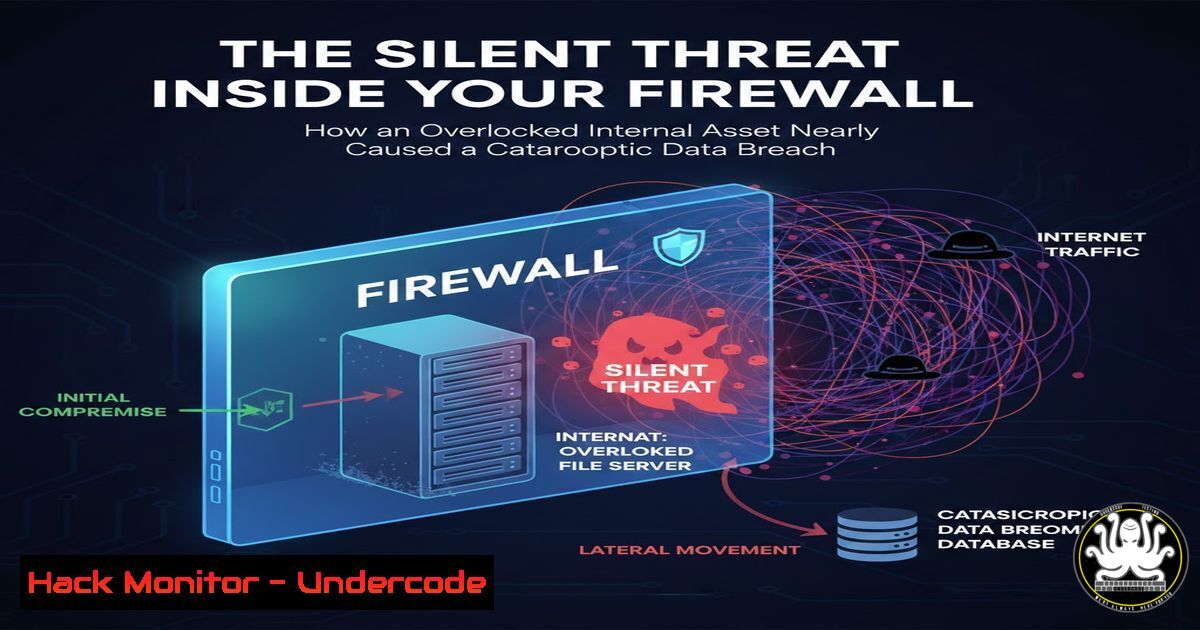
In January 2026, a routine security review uncovered a critical lapse that plagues organizations worldwide: sensitive data exposure on an internal asset. This incident, responsibly reported and mitigated, underscores a dangerous misconception that internal networks are inherently safe. The exposure of secrets like API keys, credentials, or configuration files on internal systems can be the golden ticket for an attacker who has breached the perimeter, leading to lateral movement and massive data compromise.
Learning Objectives:
- Understand why internal assets are prime targets for post-exploitation and how to inventory them.
- Learn methodologies and tools to proactively scan for exposed secrets in code repositories, CI/CD pipelines, and internal file shares.
- Implement hardening practices and monitoring for internal development and testing systems to prevent secret sprawl.
You Should Know:
- The Illusion of Safety: Why Internal Assets Are the New Attack Surface
The traditional security model fortifies the perimeter but often neglects the soft interior. Internal development servers, staging environments, backup directories, and internal wikis are frequently configured with less stringent security controls under the false assumption they are inaccessible from the internet. However, once an attacker gains an initial foothold through phishing or a vulnerable external service, these poorly secured internal assets become treasure troves.
Step‑by‑step guide:
- Asset Discovery: You cannot secure what you don’t know. Use internal network scanning tools to map all systems.
Linux/Windows Command (Using Nmap):
 Basic internal network sweep (adjust subnet)
nmap -sn 10.0.0.0/24
 Identify open ports and services on discovered hosts
nmap -sV -O 10.0.0.1-254
2. Categorize Assets: Tag assets as “Production,” “Staging,” “Development,” or “Testing.” Apply security policies accordingly, with development not meaning no security.
- Hunting for Exposed Secrets: Tools of the Trade
Exposed secrets are often found in configuration files, environment variables mistakenly committed to code, or debug logs. Proactive hunting is essential.
Step‑by‑step guide:
- Implement Pre-commit Hooks: Use tools like `git-secrets` or `TruffleHog` to scan code before it’s committed.
Linux Command (TruffleHog):
 Scan a git repository for secrets
trufflehog git https://github.com/your-org/your-repo --only-verified
2. Scan File Shares and Internal Repos: Schedule regular scans of network-attached storage (NAS) and internal version control instances (like internal GitLab).
Tool Configuration (Using Gitleaks in a CI/CD pipeline):
 Example GitLab CI job
secret_scan:
stage: test
image: zricethezav/gitleaks:latest
script:
- gitleaks detect --source . --verbose --redact
rules:
- if: $CI_COMMIT_BRANCH
3. Securing Secrets Management: From Hardcoded to Hardware
The core mitigation is to never store secrets in plaintext. Use dedicated secrets management solutions.
Step‑by‑step guide:
- Choose a Secrets Manager: Implement solutions like HashiCorp Vault, AWS Secrets Manager, or Azure Key Vault.
- Integrate Applications: Refactor applications to pull secrets dynamically at runtime.
Code Snippet (Python with AWS Secrets Manager):
import boto3
from botocore.exceptions import ClientError
import json

def get_secret():
secret_name = "prod/MyApp/DatabaseCreds"
client = boto3.client('secretsmanager')
try:
response = client.get_secret_value(SecretId=secret_name)
secret = json.loads(response['SecretString'])
db_password = secret['password']
 Use password
except ClientError as e:
 Handle error
raise e
4. Hardening Internal Development & Staging Environments
These environments must mirror production security postures as closely as possible.
Step‑by‑step guide:
- Network Segmentation: Isolate development and staging networks from production using VLANs or software-defined perimeters.
- Apply Principle of Least Privilege: Service accounts and users in these environments should have only the permissions absolutely necessary. Use Group Policy Objects (GPOs) on Windows or configuration management (Ansible, Puppet) on Linux to enforce.
Windows Command (Check Local Users):
Get-LocalUser | Select Name, Enabled, Description
Linux Command (Audit sudoers):
sudo cat /etc/sudoers
sudo grep -r "NOPASSWD" /etc/sudoers.d/
5. Implementing Continuous Monitoring for Secret Sprawl
Security is not a one-time scan. Implement continuous monitoring to detect leaks.
Step‑by‑step guide:
- Monitor Public and Private Repos: Use tools like GitHub Advanced Security (for private repos) or managed services that scan public paste sites and code repositories for your company’s secrets.
- Set Up Alerting: Configure alerts for any verified secret found. Integrate these alerts into your Security Information and Event Management (SIEM) system like Splunk or Elastic SIEM for correlation with other security events.
What Undercode Say:
- Internal Does Not Mean Invisible: The most damaging breaches often start from within the trusted zone. A robust security program must eliminate the trust bias towards internal networks.
- Automate Secret Hygiene: Manual reviews fail. Integrating secret scanning into the Software Development Life Cycle (SDLC)—at commit, build, and deployment stages—is non-negotiable for modern DevSecOps.
The incident described is not an anomaly but a symptom of a widespread systemic flaw. It highlights the critical gap between perimeter defense and internal security hygiene. As attack chains become more sophisticated, the focus shifts from just keeping attackers out to limiting the damage they can do once inside. This requires a paradigm shift where every asset, regardless of its location on the network, is treated as potentially exposed. The future of cybersecurity lies in zero-trust architectures, where implicit trust is eliminated, and verification is required from every entity trying to access resources.
Prediction:
By 2027, over 60% of significant data breaches will be primarily fueled by credentials and secrets exposed on internal assets, as perimeter defenses like EDR and next-gen firewalls become more effective at blocking initial access. This will force a massive industry-wide investment in internal posture management, automated secrets rotation, and dynamic authorization platforms. The role of the security analyst will evolve to become more focused on hunting for internal misconfigurations and secret sprawl as a primary defensive tactic, making internal red teaming and continuous asset discovery standard practice even for mid-sized enterprises.
▶️ Related Video (74% Match):
🎯Let’s Practice For Free:
IT/Security Reporter URL:
Reported By: Panchal Om – Hackers Feeds
Extra Hub: Undercode MoN
Basic Verification: Pass ✅


