Listen to this Post
Introduction:
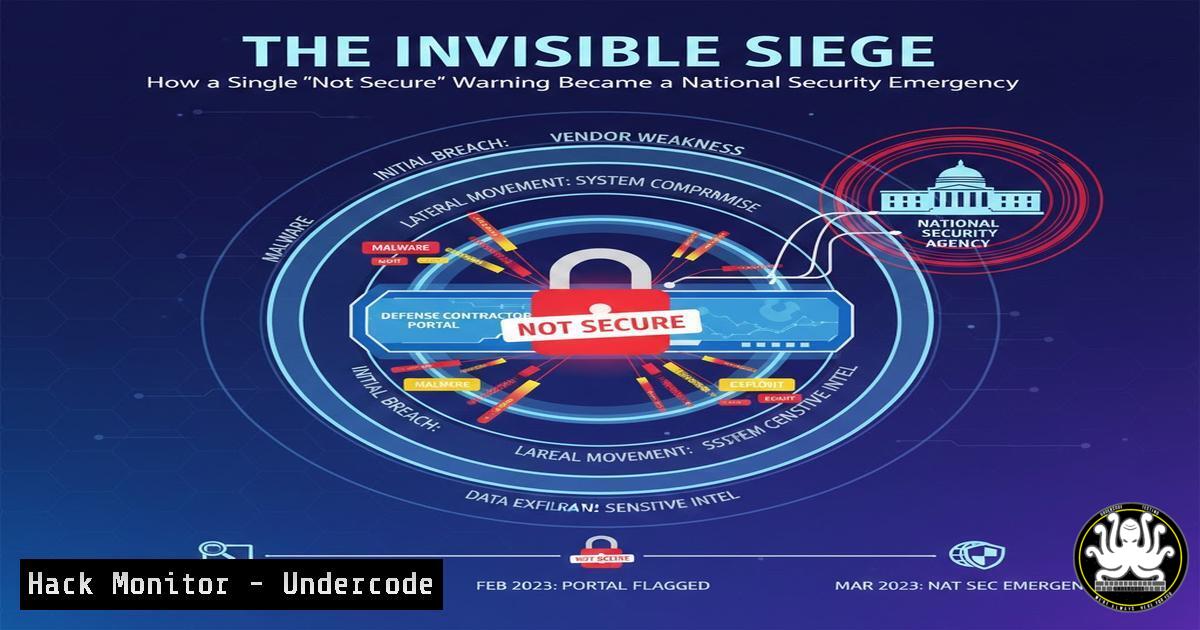
A recent disclosure revealing a defense contractor’s login portal operating with broken TLS and insecure DNS protocols is not merely an IT oversight; it is a critical national security failure. This vulnerability creates a direct conduit for sophisticated adversaries to intercept credentials, redirect traffic, and infiltrate sensitive communications and supply chains. This incident underscores the weaponization of digital trust and highlights how foundational security failures in critical infrastructure can expose an entire nation to espionage and systemic compromise.
Learning Objectives:
- Understand the technical mechanisms by which weak TLS/SSL and DNS can be exploited to hijack user sessions and credentials.
- Learn the immediate and long-term remediation steps for securing web portals, including TLS hardening, DNSSEC, and credential lifecycle management.
- Develop a framework for auditing third-party and supply-chain digital assets to prevent trust-based attacks.
You Should Know:
- The TLS/SSL Breakdown: More Than Just a Padlock
The “Not Secure” warning signifies a catastrophic failure in the Transport Layer Security (TLS) protocol, which is designed to encrypt data in transit. Broken TLS can involve expired certificates, misconfigured cipher suites, a lack of HTTP Strict Transport Security (HSTS), or mixed content (HTTP resources on an HTTPS page). Attackers exploit this using tools like sslstrip to downgrade connections or perform man-in-the-middle (MiTM) attacks.
Step‑by‑step guide:
Diagnosis: Use online tools like `SSL Labs’ SSL Test` or command-line tools to audit the site.
Linux Command: openssl s_client -connect example.com:443 -servername example.com | openssl x509 -noout -text. This fetches and displays the certificate details.
Check for HSTS headers: curl -s -D- https://example.com | grep -i Strict-Transport-Security.
Remediation:
- Procure & Install a Valid Certificate: Use trusted Certificate Authorities (CAs). Automate renewal with Let’s Encrypt (
certbot). - Enforce HSTS: Configure your web server (e.g., Apache, Nginx) to include a strong `Strict-Transport-Security` header (e.g.,
max-age=31536000; includeSubDomains; preload). - Disable Weak Ciphers: In your server config, specify strong, modern cipher suites. For Nginx:
ssl_ciphers ECDHE-RSA-AES256-GCM-SHA512:DHE-RSA-AES256-GCM-SHA512;. -
DNS: The Silent Betrayal – Hijacking Without a Breach
Insecure Domain Name System (DNS) is the internet’s phone book. Without protections like DNSSEC, attackers can poison DNS caches or compromise registrar accounts to redirect users from `legitimate.portal.com` to a malicious IP address they control, all without triggering certificate errors if they also present a valid cert for the domain.
Step‑by‑step guide:
The Threat: DNS cache poisoning or unauthorized registrar changes can redirect traffic to phishing portals.
Mitigation:
- Implement DNSSEC: This adds cryptographic signatures to DNS records, allowing resolvers to verify their authenticity. Configure it at your domain registrar and on your authoritative DNS servers.
- Apply Registrar Locks: Enable domain lock and registry lock features at your registrar to prevent unauthorized transfers or updates.
- Use DNS Monitoring: Employ tools to monitor for unauthorized DNS changes (e.g., `dnstwist` to find typo-squatting domains, or commercial DNSSEC monitoring services).
3. Credential Harvesting & The Cascade of Compromise
Intercepted credentials are rarely used in isolation. They provide an initial foothold for lateral movement. Access to a contractor’s email can reveal procurement details, technical specifications, and trusted communication channels, enabling fraud and further targeted attacks up the supply chain.
Step‑by‑step guide for Post-Breach Response:
- Credential Reset: Immediately force a password reset for all potentially exposed users. Ensure password policy enforces complexity and length.
- Audit for Compromise: Search logs for anomalous login patterns (time, location, IP). Use command `last` on Linux systems to review logins. In Active Directory, review Windows Event Logs (Event ID 4624/4625 for logons).
- Assume Breach: Initiate incident response. Hunt for indicators of compromise (IoCs) beyond the initial portal, such as unexpected outbound connections or new user accounts.
-
Mandating Multi-Factor Authentication (MFA) – The Ultimate Gatekeeper
MFA is the most effective control to neutralize stolen credentials. Even if a password is intercepted via a MiTM attack, the attacker lacks the second factor (e.g., TOTP code, hardware key).
Step‑by‑step guide for Implementation:
Choose an MFA Solution: Use standards-based (TOTP) apps (Google Authenticator, Authy) or phishing-resistant FIDO2/WebAuthn security keys.
Server Configuration (Example for SSH on Linux):
1. Install `libpam-google-authenticator`.
2. Edit `/etc/pam.d/sshd`: Add `auth required pam_google_authenticator.so`.
- Edit
/etc/ssh/sshd_config: Set `ChallengeResponseAuthentication yes` andAuthenticationMethods publickey,password publickey,keyboard-interactive.
For Web Portals: Integrate MFA using services like AWS Cognito, Azure AD MFA, or open-source solutions like Keycloak. -
Third-Party Risk: When Your Security is Their Problem
The attack surface extends to every branded third-party service (e.g., SaaS platforms, outsourcing partners). A compromise in any linked system can erode trust and be used as a stepping stone.
Step‑by‑step guide for Audit:
- Inventory Assets: Catalog all internet-facing assets and third-party services linked to your brand. Use subdomain enumeration tools (
amass,subfinder). - Continuous Monitoring: Implement security ratings or continuous external attack surface management (EASM) platforms to monitor these assets for configuration drift or new vulnerabilities.
-
Contractual Security Clauses: Ensure contracts with vendors mandate security standards (TLS 1.2+, MFA, regular pentests).
-
From Alert to Action: Building a Proactive Security Posture
Closing ranks instead of gaps is a fatal strategy. Organizations must foster a culture of transparent vulnerability disclosure and rapid remediation.
Step‑by‑step guide:
Establish a CSIRT: Form a dedicated Computer Security Incident Response Team with clear authority.
Implement a Vulnerability Disclosure Program (VDP): Provide a clear, secure channel (e.g., via HackerOne or Bugcrowd) for external researchers to report findings.
Conduct Red-Team Exercises: Regularly test defenses by simulating sophisticated, multi-vector attacks that specifically target trust relationships and supply chains.
What Undercode Say:
- Trust is the New Attack Vector. The most dangerous vulnerabilities are no longer just in code, but in the assumed trust between users, brands, and interconnected systems. This incident shows how that trust can be weaponized.
- Foundational Hygiene is Strategic Defense. The “basics” like TLS, DNS security, and MFA are not IT checklist items; they are non-negotiable, strategic imperatives for national security and corporate survival. Their failure represents a systemic, not technical, breakdown.
-
Analysis: This case is a paradigm of modern cyber-risk. The target was not a fortified server but a weakly protected, trusted portal—a chink in the human-technical armor. The recommended actions (fix TLS, enforce MFA, implement DNSSEC) are Cybersecurity 101, yet their absence in a defense context reveals a perilous gap between perceived and actual security posture. It highlights a critical oversight in many security programs: the failure to continuously validate the security of all externally facing assets, especially those operated by critical third parties. The response of “closing ranks” instead of addressing the flaw is a textbook example of how institutional culture can amplify technological risk.
Prediction:
This incident will accelerate regulatory and contractual mandates for software bills of materials (SBOMs), compulsory third-party security audits, and liability shifting for supply-chain breaches. Nation-state and criminal groups will increasingly “attack the ecosystem,” meticulously mapping and exploiting the weakest link in a target’s digital partner network. Organizations that fail to adopt a holistic, zero-trust approach to their entire attack surface—including every third-party login portal—will face not just data breaches, but existential threats to their operational integrity and public trust. The future of cyber conflict will be decided not at the hardened core, but at the soft, neglected periphery.
▶️ Related Video (70% Match):
🎯Let’s Practice For Free:
IT/Security Reporter URL:
Reported By: Andy Jenkinson – Hackers Feeds
Extra Hub: Undercode MoN
Basic Verification: Pass ✅


