Listen to this Post
Introduction:
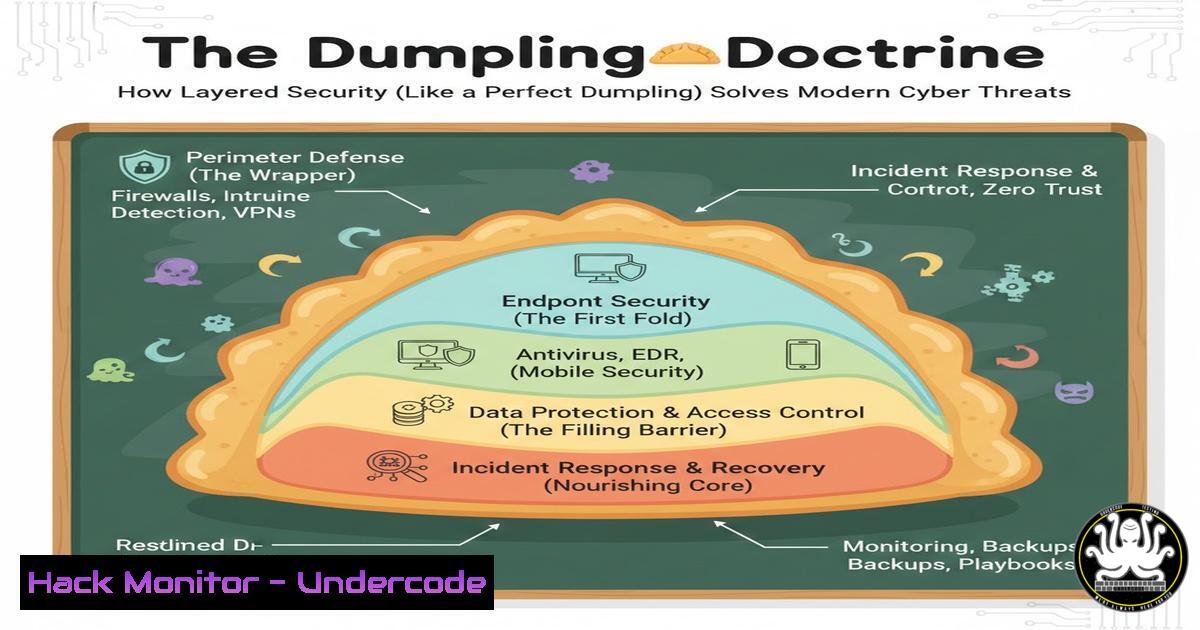
In cybersecurity, complex problems often demand elegant, layered solutions, much like the simple yet precise architecture of a dumpling. The wrapper, filling, and cooking method each play a critical role in the final outcome, paralleling the defense-in-depth strategy essential for protecting modern IT environments. This article deconstructs this culinary analogy into a actionable framework for building resilient systems.
Learning Objectives:
- Understand and implement the core principles of a defense-in-depth security model.
- Apply specific hardening techniques for network perimeters, data at rest, and application endpoints.
- Configure basic monitoring and incident response protocols to detect and contain breaches.
You Should Know:
1. The Security Wrapper: Hardening Your Network Perimeter
Just as a dumpling wrapper seals the contents, your network firewall controls all ingress and egress. A misconfigured rule is like a torn wrapper, leaking data.
Step‑by‑step guide:
Start by auditing and tightening firewall rules on a Linux host using `nftables` or on Windows via PowerShell. The goal is to adopt a default-deny posture.
Linux (using nftables):
 Flush old ruleset
sudo nft flush ruleset

Create a table and chain for input filtering
sudo nft add table inet filter
sudo nft add chain inet filter input { type filter hook input priority 0\; policy drop\; }

Allow established/related connections
sudo nft add rule inet filter input ct state established,related accept

Allow SSH from a specific management subnet (e.g., 10.0.1.0/24)
sudo nft add rule inet filter input ip saddr 10.0.1.0/24 tcp dport 22 ct state new accept

Allow essential ICMP (ping)
sudo nft add rule inet filter input ip protocol icmp icmp type echo-request accept
Windows (Administrator PowerShell):
 Set default inbound policy to block
Set-NetFirewallProfile -All -DefaultInboundAction Block -DefaultOutboundAction Allow

Create a rule to allow RDP only from a specific IP
New-NetFirewallRule -DisplayName "Allow RDP from Management" -Direction Inbound -Protocol TCP -LocalPort 3389 -RemoteAddress 10.0.1.15 -Action Allow
- The Savory Filling: Encrypting Data at Rest and in Transit
The valuable filling represents your sensitive data. It must be protected both when stored (at rest) and when moving between services (in transit).
Step‑by‑step guide:
For data at rest, use LUKS on Linux or BitLocker on Windows. For data in transit, enforce TLS 1.3.
Linux – Encrypt a disk partition with LUKS:
 WARNING: This will destroy data on /dev/sdb1
sudo cryptsetup luksFormat /dev/sdb1
sudo cryptsetup open /dev/sdb1 my_encrypted_volume
sudo mkfs.ext4 /dev/mapper/my_encrypted_volume
Web Server – Enforce TLS 1.2+ in Nginx:
server {
listen 443 ssl http2;
ssl_protocols TLSv1.2 TLSv1.3;
ssl_ciphers ECDHE-RSA-AES256-GCM-SHA512:DHE-RSA-AES256-GCM-SHA512;
ssl_prefer_server_ciphers off;
 ... rest of config
}
- The Perfect Seal: Implementing Endpoint Detection and Response (EDR)
The sealed edge of the dumpling is your last line of defense on the endpoint. EDR tools monitor for anomalous process behavior, acting as a final containment layer.
Step‑by‑step guide:
Deploy and test Osquery, a cross-platform endpoint agent, to perform SQL-like queries on your systems.
Install Osquery on Ubuntu:
echo "deb [arch=amd64] https://pkg.osquery.io/deb deb main" | sudo tee /etc/apt/sources.list.d/osquery.list
sudo apt-key adv --keyserver keyserver.ubuntu.com --recv-keys 1484120AC4E9F8A1A577AEEE97A80C63C9D8B80B
sudo apt update
sudo apt install osquery
sudo systemctl start osqueryd
Run a query to check for suspicious listening ports:
sudo osqueryi
osquery> SELECT pid, name, port, protocol, path FROM listening_ports JOIN processes USING (pid) WHERE port < 1024 AND path NOT LIKE '/usr/%';
- The Cooking Method: Secure Cloud Configuration and API Security
The cooking method—steaming, frying—defines the environment. In the cloud, this is your IAM, storage, and API configuration. A single overly permissive S3 bucket or API key is a critical flaw.
Step‑by‑step guide:
Use AWS CLI to audit for public S3 buckets and tighten IAM policies.
Audit for public S3 buckets:
aws s3api list-buckets --query "Buckets[].Name" --output text | xargs -I {} aws s3api get-bucket-policy-status --bucket {} --query "PolicyStatus.IsPublic" --output text
Create a minimal IAM policy for a Lambda function (JSON):
{
"Version": "2012-10-17",
"Statement": [
{
"Effect": "Allow",
"Action": [
"dynamodb:PutItem",
"logs:CreateLogStream",
"logs:PutLogEvents"
],
"Resource": [
"arn:aws:dynamodb:us-east-1:123456789012:table/MyTable",
"arn:aws:logs:us-east-1:123456789012:log-group:/aws/lambda/MyFunction:"
]
}
]
}
- The Dipping Sauce: Security Monitoring and SIEM Correlation
The sauce enhances the experience; similarly, a Security Information and Event Management (SIEM) system correlates logs to provide context. Without it, you have isolated events, not intelligence.
Step‑by‑step guide:
Forward syslog from a critical server to a SIEM or monitoring server using rsyslog.
On the Linux client (e.g., web server):
 Edit /etc/rsyslog.conf
. @10.0.5.50:514;RSYSLOG_SyslogProtocol23Format
Restart the service:
sudo systemctl restart rsyslog
On the SIEM server (10.0.5.50), ensure rsyslog is listening on UDP 514:
 In /etc/rsyslog.conf
module(load="imudp")
input(type="imudp" port="514")
- The Nutritional Value: Ongoing Security Training and Phishing Simulations
The ultimate value is in the nutrients—the knowledge of your team. Regular, engaging training is the sustenance of a security-aware culture.
Step‑by‑step guide:
Deploy a simple internal phishing test using a tool like `gophish` (set up legally and with policy approval). Craft an email that appears to be an internal IT alert prompting for credential verification. Monitor the click rate and use the results for a targeted training session.
What Undercode Say:
- Layering is Non-Negotiable: A single security control, like a lone dumpling wrapper, will fail. Effective defense requires complementary layers—network, endpoint, data, human—each validating and backing up the others.
- Simplicity in Design, Rigor in Execution: The principle of a dumpling is simple, but mastering the fold takes practice. Similarly, security frameworks like Zero Trust are conceptually straightforward but demand meticulous configuration and constant auditing to be effective. The tools and commands provided are the basic “knife skills” of cybersecurity; mastery comes from consistent, vigilant application.
Prediction:
The convergence of AI-driven attack automation and an expanding cloud attack surface will make manual, siloed security practices completely obsolete. The future belongs to integrated, intelligent security platforms that can autonomously correlate threats across layers—the network wrapper, the data filling, and the human element—in real-time. Organizations that fail to adopt this holistic, “dumpling doctrine” approach will find their valuable fillings routinely exposed and exploited. Proactive, baked-in security layering will transition from a best practice to the sole viable method of operation.
🎯Let’s Practice For Free:
IT/Security Reporter URL:
Reported By: Brooke Sweedar – Hackers Feeds
Extra Hub: Undercode MoN
Basic Verification: Pass ✅


