Listen to this Post
Introduction:
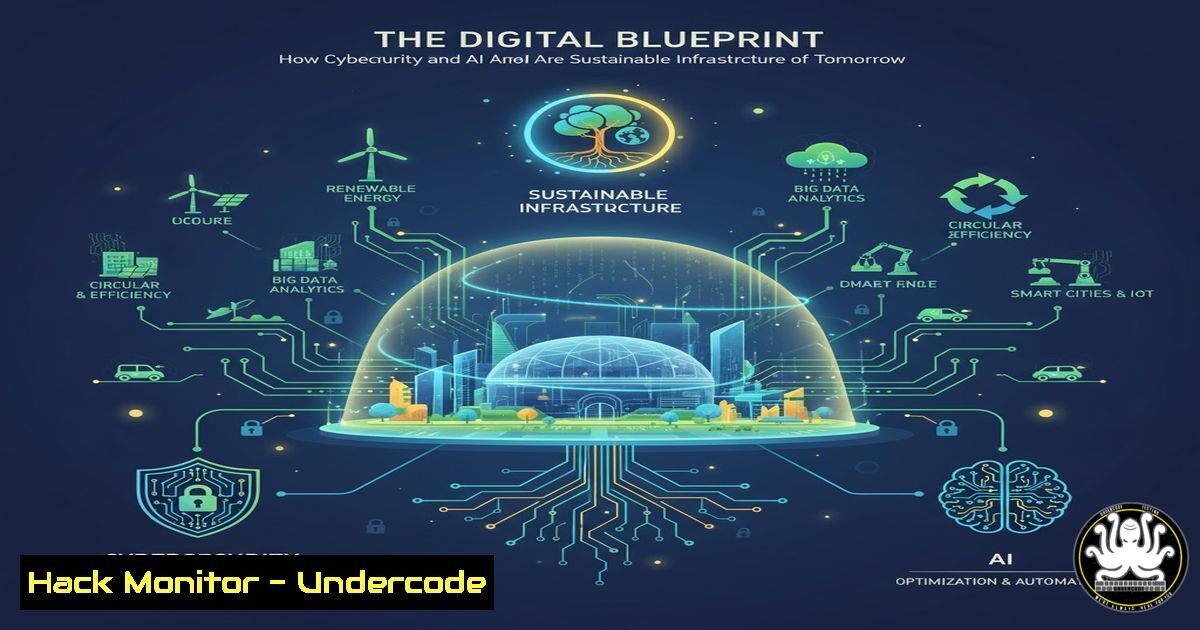
The convergence of sustainability goals with digital technology is creating a new frontier for innovation and risk. As the built environment becomes smarter and more connected, the underlying cyber-physical systems present a critical attack surface that must be secured to protect not just data, but our physical world and environmental objectives.
Learning Objectives:
- Understand the critical intersection of Operational Technology (OT), IoT, and sustainability in modern construction.
- Learn to identify and mitigate vulnerabilities in smart building management systems (BMS) and Industrial Control Systems (ICS).
- Explore how AI can be leveraged both to optimize building efficiency and to defend against targeted cyber attacks.
You Should Know:
- The Expanded Attack Surface of Smart, Sustainable Buildings
Modern sustainable buildings rely on a complex network of smart systems. Building Management Systems (BMS) control HVAC, lighting, and energy recovery, while IoT sensors monitor everything from occupancy to air quality. These systems, often connected to corporate IT networks or the public internet for remote management, dramatically expand the attack surface. A vulnerability in a single network-connected thermostat can serve as a pivot point for an attacker to reach critical infrastructure.
Step-by-Step Guide: Network Segmentation for BMS/OT
What it does: Isolates critical building control systems from the general corporate network to contain breaches and prevent lateral movement.
How to use it:
- Identify all OT/BMS assets: Use a passive network scanner like `netscan` or a dedicated OT discovery tool.
`sudo nmap -sU –script smb-os-discovery 192.168.1.0/24` (Discovers SMB shares on a subnet, often used by HMIs) - Create a separate VLAN: Configure your network switches to place all BMS and OT devices on a dedicated VLAN.
On a Cisco switch: `interface vlan 100 | name BMS-NETWORK`
3. Implement a Firewall: Place a stateful firewall between the OT VLAN and the corporate IT network. Configure strict, whitelist-based rules.
Example iptables rule on a Linux-based firewall: `iptables -A FORWARD -s 192.168.100.0/24 -d 10.0.0.0/8 -j DROP` (This blocks traffic from the OT network to the corporate network). - Enforce Network Access Control (NAC): Use a NAC solution to ensure only authorized devices can connect to the OT network.
2. Securing the IoT Sensor Data Pipeline
The vast networks of sensors that make sustainable buildings “smart” collect terabytes of sensitive operational and environmental data. This data flow from sensor to cloud platform must be secured against interception and manipulation.
Step-by-Step Guide: Implementing MQTT with TLS for Sensor Communication
What it does: The MQTT protocol is widely used by IoT devices. Wrapping it in TLS encryption ensures data confidentiality and integrity.
How to use it:
- Generate Certificates: Use OpenSSL to create a Certificate Authority (CA) and server/client certificates for your MQTT broker (e.g., Mosquitto) and clients.
`openssl genrsa -out ca.key 2048`
`openssl req -new -x509 -days 365 -key ca.key -out ca.crt`
2. Configure the MQTT Broker: Point your broker configuration to the server certificate and private key.
In `/etc/mosquitto/mosquitto.conf`:
listener 8883
cafile /etc/mosquitto/ca.crt
certfile /etc/mosquitto/server.crt
keyfile /etc/mosquitto/server.key
require_certificate true
3. Configure IoT Clients: Ensure each sensor or client is programmed to connect using its unique client certificate and the CA certificate for validation.
3. Vulnerability Management for Building Software and Firmware
The software used for Life-Cycle Assessment (LCA) and material selection, as well as the firmware in embedded devices, are prime targets. Outdated versions often contain unpatched, critical vulnerabilities.
Step-by-Step Guide: Automating Vulnerability Scanning with OWASP ZAP
What it does: OWASP ZAP (Zed Attack Proxy) is a free, open-source web application security scanner. It can be automated to regularly scan any web-based building management portals or LCA software interfaces.
How to use it:
- Install ZAP: Download and run OWASP ZAP from the official website.
- Automated Scan via Docker: For CI/CD pipelines or regular scans, use the ZAP Docker container.
`docker run -v $(pwd):/zap/wrk/:rw -t owasp/zap2docker-stable zap-baseline.py -t https://your-building-portal.example.com -g gen.conf -J zap_report.json`
3. Analyze the Report: The command generates a JSON report detailing vulnerabilities like Cross-Site Scripting (XSS), SQL Injection, and Security Misconfigurations. Integrate this into your development and maintenance lifecycle.
4. AI-Powered Threat Detection for Anomalous Building Behavior
Artificial Intelligence can move security beyond signature-based detection. By learning normal operational patterns, AI can flag anomalies that indicate a cyber-attack, such as a malicious actor manipulating HVAC settings to cause a massive energy spike or system failure.
Step-by-Step Guide: Building a Simple Anomaly Detector with Python
What it does: This script uses a basic statistical method (Z-score) to detect unusual energy consumption readings from a simulated data stream.
How to use it:
1. Set up environment: `pip install pandas numpy`
2. Create the script (`anomaly_detector.py`):
import pandas as pd
import numpy as np

Simulate a stream of energy usage data (in kWh)
data = {'energy_usage': [25, 26, 24, 100, 23, 25, 24, 110, 26, 25]}  100 and 110 are anomalies
df = pd.DataFrame(data)

Calculate rolling mean and standard deviation
mean = df['energy_usage'].rolling(window=5).mean()
std = df['energy_usage'].rolling(window=5).std()

Calculate Z-score and flag anomalies (threshold of 2 standard deviations)
df['zscore'] = (df['energy_usage'] - mean) / std
df['anomaly'] = df['zscore'].abs() > 2

print(df[df['anomaly']])
3. Run and Interpret: Execute the script. It will print the rows identified as anomalies, which could indicate sensor malfunction or a malicious attack on the control system.
5. API Security for Green Building Data Platforms
Sustainability platforms often rely on APIs to share data between LCA tools, supply chain databases, and building performance dashboards. Insecure APIs are a common source of data breaches.
Step-by-Step Guide: Testing API Endpoints for Common Vulnerabilities
What it does: Use the `curl` command and other tools to manually test API endpoints for misconfigurations like lack of rate limiting, insecure data exposure, and broken authentication.
How to use it:
- Test for Authentication Bypass: Try to access an endpoint without a token.
`curl -X GET https://api.greenbuildingdata.com/v1/materials`
A `401 Unauthorized` is good. A `200 OK` is a critical flaw. - Test for Rate Limiting: Rapidly send requests to an endpoint.
`for i in {1..100}; do curl -s -o /dev/null -w “%{http_code}\n” https://api.greenbuildingdata.com/v1/sensors; done`
If all responses are200, rate limiting may not be implemented, allowing Denial-of-Service attacks. - Check for Information Disclosure: Look for verbose error messages that reveal system details.
What Undercode Say:
- The sustainability sector’s rapid digitization is outpacing its cybersecurity maturity, creating a soft underbelly for critical infrastructure.
- The integration of AI is dual-use: it is the most powerful tool for optimizing efficiency and resilience, but it also presents a new vector for sophisticated, automated attacks (e.g., poisoning the data used to train energy models).
- Future-proofing sustainable infrastructure requires a “Secure by Design” approach from the outset, where cybersecurity is as fundamental as the choice of recycled steel or low-carbon concrete. The industry must move beyond viewing cybersecurity as an IT add-on and recognize it as a core tenet of genuine, resilient sustainability. Failure to secure these digital systems risks negating the very environmental and social benefits they are designed to create.
Prediction:
The success of global sustainability goals will become inextricably linked to the cybersecurity of the underlying digital systems. We predict a rise in state-sponsored and cybercriminal attacks targeting smart grids and green buildings to cause widespread disruption, extort municipalities, or make political statements. This will force a regulatory shift, with “cyber-resilience” becoming a mandatory component of green building certifications like LEED and BREEAM within the next 5-7 years. The companies that lead will be those embedding security into their sustainable designs today.
🎯Let’s Practice For Free:
IT/Security Reporter URL:
Reported By: Ramya Narasimhan – Hackers Feeds
Extra Hub: Undercode MoN
Basic Verification: Pass ✅


