Listen to this Post
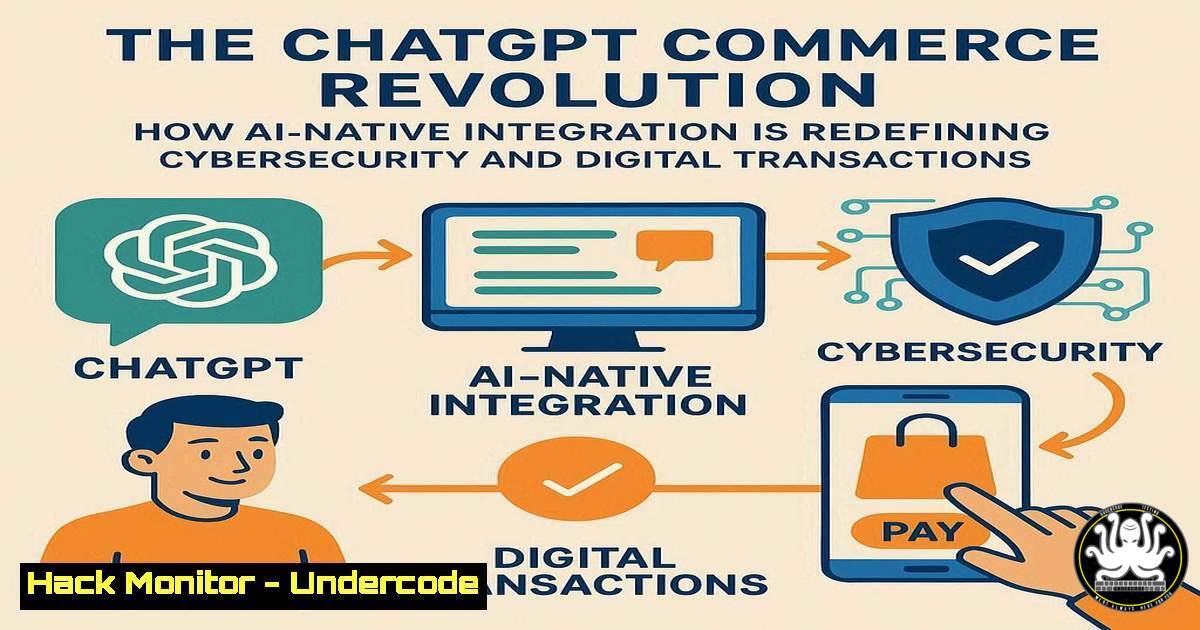
Introduction:
The recent integration of Etsy’s checkout directly into ChatGPT represents a fundamental shift in digital commerce architecture, creating both unprecedented convenience and novel security challenges. This move toward AI-native commerce eliminates traditional browser-based transaction layers, fundamentally altering the attack surface for cybercriminals and requiring new security paradigms for developers and security professionals.
Learning Objectives:
- Understand the security implications of AI-native commerce integrations
- Master authentication and API security for AI-driven transactions
- Implement monitoring and hardening techniques for AI commerce ecosystems
You Should Know:
1. API Security Hardening for AI Commerce Endpoints
 Check for exposed API endpoints using shodan
shodan search "hostname:etsy.com product:Elasticsearch"
shodan search "hostname:chatgpt.com http.component:fastapi"

OWASP ZAP automated API security scan
zap-api-scan.py -t https://api.commerce-provider.com/v1 -f openapi -r report.html

JWT token validation and testing
python3 -c "import jwt; decoded = jwt.decode('your_jwt_token', verify=False); print(decoded)"
Step-by-step guide: AI commerce integrations rely heavily on API communications between platforms. Begin by identifying exposed endpoints using Shodan searches to discover potentially leaked infrastructure. Use OWASP ZAP to perform comprehensive API security testing, focusing on authentication bypass, injection attacks, and rate limiting vulnerabilities. Finally, validate JWT token implementation to ensure proper signing and expiration mechanisms are in place to prevent token hijacking in AI-driven transaction flows.
2. AI Transaction Monitoring and Anomaly Detection
 AI transaction anomaly detection script
import pandas as pd
from sklearn.ensemble import IsolationForest
import requests

Monitor transaction patterns
transaction_data = pd.read_json('ai_transactions.json')
clf = IsolationForest(contamination=0.1)
preds = clf.fit_predict(transaction_data[['amount', 'frequency', 'time_of_day']])

Flag anomalies for review
anomalies = transaction_data[preds == -1]
for index, anomaly in anomalies.iterrows():
requests.post('https://security-team.com/alert',
json={'transaction_id': anomaly['id'], 'reason': 'AI_pattern_anomaly'})
Step-by-step guide: Implement machine learning-based monitoring for AI-driven transactions. This script uses Isolation Forest algorithm to detect unusual patterns in transaction amount, frequency, and timing that may indicate fraudulent activity through AI commerce channels. Deploy this as a real-time monitoring system that flags suspicious transactions for security team review, adapting to evolving attack patterns that traditional rule-based systems might miss.
3. Secure AI-Human Handoff Authentication
 Multi-factor authentication enforcement
!/bin/bash
 Check MFA status across user accounts
aws iam list-virtual-mfa-devices | jq '.VirtualMFADevices[] | .User.Arn'
az ad user list --query "[].{displayName:displayName, mfaEnabled:mfaEnabled}"

Session token validation script
curl -X POST https://ai-commerce-auth.com/validate \
-H "Authorization: Bearer $SESSION_TOKEN" \
-H "X-AI-Transaction-ID: $TRANSACTION_ID" \
-d '{"biometric_verify": true, "location_verify": true}'
Step-by-step guide: When AI systems initiate transactions on behalf of users, secure handoff mechanisms become critical. This script verifies multi-factor authentication status across cloud identity systems and validates session tokens with additional context (biometric verification, location data) to ensure the AI is acting on legitimate user intent rather than compromised credentials or malicious prompts.
4. AI Command Injection Prevention
 SQL and command injection filtering for AI commerce requests
import re
import sqlparse

def sanitize_ai_commerce_query(user_input):
 Remove potentially dangerous patterns
injection_patterns = [
r'(?i)drop\s+table',
r'(?i)insert\s+into',
r'(?i)union\s+select',
r'(?i);\s--',
r'(?i)exec(\s|()',
r'(?i)xp_cmdshell'
]

sanitized = user_input
for pattern in injection_patterns:
sanitized = re.sub(pattern, '[bash]', sanitized)

Validate SQL if present
try:
parsed = sqlparse.parse(sanitized)
return sanitized
except:
return '[bash]'

Test the filter
test_input = "buy item then drop table users; --"
print(sanitize_ai_commerce_query(test_input))
Step-by-step guide: AI commerce platforms are vulnerable to indirect prompt injections where attackers embed malicious commands within seemingly normal requests. This Python filter identifies and blocks common SQL injection and system command patterns that could be passed through AI interfaces. Implement this as a preprocessing layer for all AI-generated transaction requests to prevent database manipulation or system compromise.
5. Privacy-Preserving AI Transaction Encryption
 End-to-end encryption implementation for AI commerce
openssl genrsa -out ai_commerce_private.pem 4096
openssl rsa -in ai_commerce_private.pem -pubout -out ai_commerce_public.pem

Encrypt transaction data
echo "Transaction data: $TRANSACTION_DETAILS" | \
openssl rsautl -encrypt -pubin -inkey ai_commerce_public.pem -out encrypted_transaction.bin

Decrypt on recipient side
openssl rsautl -decrypt -inkey ai_commerce_private.pem -in encrypted_transaction.bin -out decrypted_transaction.txt
Step-by-step guide: Protect sensitive transaction data as it moves between AI platforms and commerce systems. Generate RSA key pairs for encryption, then implement asymmetric encryption for all transaction payloads. This ensures that even if intercepted, transaction data remains confidential. This approach is particularly critical for AI commerce where data may pass through multiple intermediate systems before reaching final payment processors.
6. AI Behavior Monitoring and Compliance Auditing
 AI transaction behavior logging and compliance check
import logging
import json
from datetime import datetime

class AITransactionLogger:
def <strong>init</strong>(self):
self.logger = logging.getLogger('ai_commerce_audit')

def log_transaction(self, user_id, action, amount, ai_model, confidence_score):
audit_entry = {
'timestamp': datetime.utcnow().isoformat(),
'user_id': user_id,
'action': action,
'amount': amount,
'ai_model': ai_model,
'confidence_score': confidence_score,
'compliance_check': self.run_compliance_check(user_id, action, amount)
}

self.logger.info(json.dumps(audit_entry))
return audit_entry

def run_compliance_check(self, user_id, action, amount):
 GDPR, PCI DSS, and financial compliance validation
compliance_rules = [
amount <= 10000,  Transaction limit
user_id != '',  Valid user identification
action in ['purchase', 'refund', 'query']  Valid action types
]
return all(compliance_rules)

Usage
logger = AITransactionLogger()
logger.log_transaction('user123', 'purchase', 49.99, 'gpt-4', 0.87)
Step-by-step guide: Maintain comprehensive audit trails of AI-driven transactions for security and regulatory compliance. This logging system captures essential details including which AI model initiated the transaction, confidence scores, and automated compliance checks. This data is crucial for investigating suspicious activities, demonstrating regulatory compliance, and improving AI behavior over time through analysis of transaction patterns.
7. Container Security for AI Commerce Microservices
 Docker-compose with security hardening
version: '3.8'
services:
ai-commerce-api:
image: ai-commerce:latest
container_name: ai-commerce-service
security_opt:
- no-new-privileges:true
cap_drop:
- ALL
cap_add:
- NET_BIND_SERVICE
read_only: true
tmpfs:
- /tmp:size=64M,mode=1777
logging:
driver: "json-file"
options:
max-size: "10m"
max-file: "3"

Runtime security scanning
docker scan ai-commerce:latest
trivy image ai-commerce:latest
Step-by-step guide: AI commerce platforms typically employ microservices architecture, making container security paramount. This Docker configuration implements security best practices including dropping unnecessary capabilities, making filesystems read-only, and using temporary storage for write operations. Complement this with regular vulnerability scanning using tools like Trivy to identify and patch security flaws in container images before deployment to production environments.
What Undercode Say:
- AI-native commerce represents both the biggest convenience advancement and security challenge since mobile payments
- Traditional perimeter-based security models become obsolete when transactions occur through conversational AI interfaces
- The attack surface expands exponentially as AI systems gain transactional capabilities
- Security teams must shift from preventing access to verifying intent in real-time
The Etsy-ChatGPT integration signals a fundamental architectural shift that security professionals must address immediately. Unlike traditional e-commerce with clear boundaries and standardized security controls, AI-native commerce occurs across conversational interfaces where authentication, authorization, and transaction verification happen through entirely new mechanisms. Security teams can no longer rely on traditional web application firewalls and session management alone. Instead, they must implement intent verification systems, behavioral analytics for AI-driven actions, and robust API security that can withstand novel attack vectors specifically designed to exploit AI commerce platforms. The organizations that succeed in this new paradigm will be those that build security into the AI transaction layer itself rather than bolting it on as an afterthought.
Prediction:
Within 24 months, we will see the first major security breach originating from AI commerce integration vulnerabilities, likely through sophisticated prompt injection attacks or AI model manipulation. This will trigger regulatory scrutiny similar to GDPR but specifically for AI-driven transactions, forcing platforms to implement mandatory intent verification protocols and AI-specific security certifications. The companies investing in AI transaction security now will dominate the next decade of digital commerce, while those treating AI integration as merely another feature will face catastrophic security and compliance failures.
🎯Let’s Practice For Free:
IT/Security Reporter URL:
Reported By: Michael Westerweel – Hackers Feeds
Extra Hub: Undercode MoN
Basic Verification: Pass ✅


