Listen to this Post
Introduction:
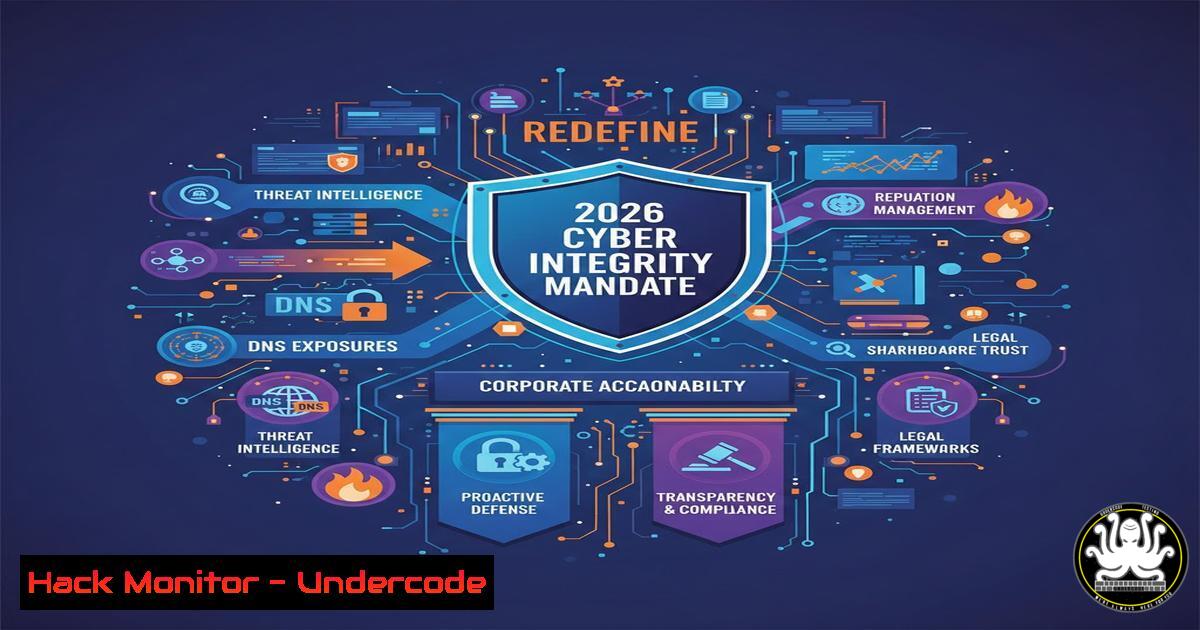
The call for 2026 to be a pivotal year against corruption signals a seismic shift where cybersecurity evidence becomes the primary tool for accountability. This movement transcends legal rhetoric, positioning threat intelligence and internet asset vulnerability data as the undeniable “truth” that exposes systemic failures. The convergence of technical forensics and ethical whistleblowing is creating an irreversible demand for transparency, forcing organizations to harden their digital perimeters or face unprecedented exposure.
Learning Objectives:
- Understand the critical role of DNS and internet-facing asset management in preventing data breaches and evidential exposure.
- Learn how Threat Intelligence Platforms (TIPs) and vulnerability scanners translate technical data into auditable proof of negligence or compliance.
- Develop a actionable hardening checklist for core internet services (DNS, API, Cloud) to mitigate risks that could lead to catastrophic public exposure.
You Should Know:
1. The DNS: Your Unforgettable Public Ledger
DNS records are not merely technical configurations; they are a public, auditable ledger of your digital infrastructure. Poor hygiene here—such as stale “A” records pointing to decommissioned servers or overly permissive TXT records—provides a map for attackers and, increasingly, a body of evidence for investigators. The “truth” of an organization’s negligence is often first uncovered in its DNS zone.
Step‑by‑step guide:
Step 1: Auditing Your DNS Zone: Use command-line tools to perform a comprehensive audit. For Linux, utilize `dig` to enumerate records.
 Perform a zone transfer attempt (likely blocked, but tests configuration)
dig axfr @ns1.yourdomain.com yourdomain.com
 Enumerate common records
dig any yourdomain.com +noall +answer
 Check for SPF/DKIM/DMARC (email security) TXT records
dig txt yourdomain.com
dig txt _dmarc.yourdomain.com
On Windows, `nslookup` can be used interactively or via command line: nslookup -type=any yourdomain.com.
Step 2: Analyze for Exposures: Look for records pointing to internal IP addresses (e.g., 10.x.x.x, 192.168.x.x), outdated cloud instance IPs, or subdomains for outdated projects. Each is a potential entry point.
Step 3: Harden DNS Configuration: Ensure zone transfers are disabled. Implement DNS Security Extensions (DNSSEC) to prevent poisoning. Use a reputable DNS provider with DDoS protection and logging enabled. Regularly review and prune records.
2. Threat Intelligence: From Data to Irrefutable Evidence
Threat Intelligence (TI) is evolving from a defensive tool to a forensic one. Platforms that aggregate vulnerability data, phishing campaigns, and credential leaks can timestamp and correlate events, creating an immutable timeline. This timeline can prove when a company was aware of a threat versus when it acted, a key distinction in accountability cases.
Step‑by‑step guide:
Step 1: Establish Baselines with Open Source Intelligence (OSINT): Regularly scan for your organization’s exposed assets. Use `Shodan` or `Censys` CLI tools or APIs.
 Example using Shodan CLI (requires API key)
shodan host your-ip-address
shodan search --fields ip_str,port,org,hostname org:"Your Company Name"
Step 2: Integrate TI into SIEM/SOAR: Feed indicators of compromise (IOCs) from TI feeds (e.g., AlienVault OTX, MISP instances) into your Security Information and Event Management (SIEM) system. Create alerts for when internal logs match known-bad IOCs.
Step 3: Document and Act: The critical step. When a high-confidence threat is identified, document the time of discovery, the assessed risk, and the remediation ticket number. This process creates the auditable “paper trail” that demonstrates due diligence.
- API Security: The Silent Witness in Data Breaches
APIs are the connective tissue of modern finance and tech. Insecure APIs are a leading cause of data breaches, and their access logs are the definitive witness to what data was accessed, by whom, and when. An unauthenticated API endpoint is not just a vulnerability; it’s a potential exhibit.
Step‑by‑step guide:
Step 1: Inventory and Catalog All APIs: Use tools like `OWASP Amass` in passive mode or review API gateways (AWS API Gateway, Azure API Management) to discover all endpoints.
amass enum -passive -d yourdomain.com
Step 2: Implement Strict Authentication & Rate Limiting: Enforce OAuth 2.0 or API keys for all endpoints. Implement rate limiting per API key/IP to prevent brute-force and data scraping.
Step 3: Log All API Transactions: Ensure logs capture API key used, endpoint, timestamp, request/response size (excluding sensitive PII), and HTTP status code. Retain logs in a secure, immutable storage. This log is your primary evidence in a breach investigation.
- Cloud Hardening: Eliminating the “Forgotten Server” Attack Vector
Cloud misconfigurations—public S3 buckets, unpatched VM images, open security groups—are the “corruption” of IT: often hidden but easily revealed. Automated compliance tools can continuously validate configuration against a “truth” baseline.
Step‑by‑step guide:
Step 1: Enforce Infrastructure as Code (IaC): Use Terraform or AWS CloudFormation to define all resources. This code serves as the single source of “truth” for your infrastructure.
Step 2: Scan with CSPM Tools: Utilize Cloud Security Posture Management (CSPM) like AWS Security Hub, Azure Security Center, or open-source `ScoutSuite` to detect deviations from best practices.
 Run ScoutSuite against an AWS account
python scout.py aws --profile your-profile
Step 3: Automate Remediation: Use cloud-native tools (AWS Config Rules with Auto-Remediation, Azure Policy) to automatically shut down non-compliant resources, such as storage buckets made public.
5. Vulnerability Management: The Timeline of Negligence
The timeline from vulnerability disclosure to patch application is a core metric in post-breach litigation. Proof of active scanning, prioritized patching, and risk acceptance is vital for a defense of due care.
Step‑by‑step guide:
Step 1: Automate Scanning with `Nessus` or OpenVAS: Schedule weekly authenticated scans of critical assets. Use the `OpenVAS` CLI to automate.
 Initialize a scan (example with OpenVAS GVM)
gvm-cli --gmp-username admin --gmp-password pass socket --xml "<create_task><name>Weekly Scan</name>...<target id='target-id'/></create_task>"
Step 2: Prioritize with CVSS & Exploitability: Integrate scan results with threat intelligence feeds that tag vulnerabilities with “Exploited in the Wild” flags. Prioritize these above all else.
Step 3: Generate Compliance Reports: For each critical vulnerability, maintain a report showing its discovery date, risk rating, assigned owner, and closure date. This is your evidence of a responsible process.
What Undercode Say:
- Technical Data is the Ultimate Whistleblower: In the 2026 landscape, logs, DNS records, and vulnerability scan reports will speak louder than PR statements. They provide an immutable, timestamped record that can validate or condemn an organization’s security posture.
- Proactive Hygiene as a Legal Shield: The organizations that survive the coming wave of technically-augmented accountability will be those that treat their cybersecurity configurations not as an IT cost, but as a continuous audit and compliance activity. The “truth” of your security is already public; managing it is your only defense.
Prediction:
The fusion of advanced threat intelligence, automated internet-wide scanning, and regulatory pressure will create a “Transparency Tipping Point” by 2026. Cybersecurity failures will be investigated not just by internal teams and law enforcement, but by activists, journalists, and competitors using these same open-source techniques. Companies with poor cyber hygiene will find their technical missteps—the forgotten server, the leaked API key, the unpatched vulnerability—compiled into publicly accessible, damning dossiers. This will drive a massive investment in automated compliance and asset management tools, not merely to avoid breaches, but to avoid the far greater reputational and legal damage of being proven technically negligent in the court of public opinion. The truth, as they say, is in the logs.
▶️ Related Video (78% Match):
🎯Let’s Practice For Free:
IT/Security Reporter URL:
Reported By: Andy Jenkinson – Hackers Feeds
Extra Hub: Undercode MoN
Basic Verification: Pass ✅


