
Listen to this Post
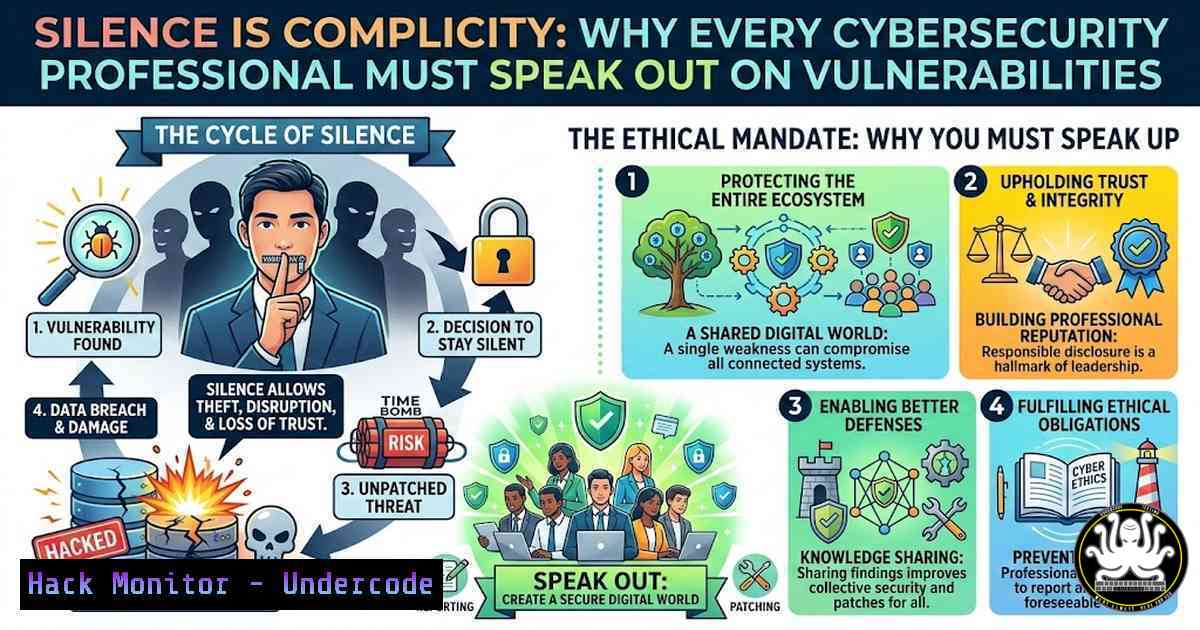
Introduction:
In the cybersecurity world, silence is not just golden—it can be dangerous. When professionals discover vulnerabilities and choose to remain quiet, they inadvertently enable attackers to exploit those flaws, leading to breaches, data loss, and financial ruin. The phrase “To Be Silent Is To Be Complicit” serves as a stark reminder that ethical responsibility demands action: identifying, disclosing, and mitigating vulnerabilities is a core duty of every security expert. This article explores the ethical imperative behind vulnerability disclosure, provides hands-on guides for discovering and reporting flaws, and highlights the training and certifications that prepare you to be part of the solution, not the problem.
Learning Objectives:
- Understand the ethical obligation to disclose vulnerabilities and the risks of silence.
- Learn practical steps to set up a lab, scan for, and ethically exploit vulnerabilities.
- Gain knowledge of responsible disclosure processes and mitigation techniques across Linux and Windows environments.
You Should Know:
1. The Ethical Imperative: Why Silence is Dangerous
The cybersecurity community thrives on shared knowledge. When a researcher finds a zero‑day vulnerability and keeps it secret—whether for personal gain, fear of repercussions, or simple neglect—they leave every user of that software exposed. Real‑world examples like the Equifax breach (caused by a known, unpatched vulnerability) show the cost of inaction. Certifications such as CISSP and CEH emphasize ethics and responsible disclosure, reminding us that our role is to protect, not to hoard knowledge. Silence might protect a researcher’s ego, but it destroys trust and security.
2. Setting Up a Vulnerability Disclosure Lab (Linux)
Before you can responsibly disclose a vulnerability, you need a safe environment to test and understand it.
– Step 1: Install VirtualBox on your Linux host:
sudo apt update && sudo apt install virtualbox -y
– Step 2: Download a deliberately vulnerable VM, like Metasploitable 2 or DVWA.
– Step 3: Import the VM and configure its network to “Host‑Only” or “NAT” to keep it isolated.
– Step 4: Start the VM and note its IP address (use `ifconfig` inside the VM).
This lab gives you a controlled playground to practice discovery and exploitation without breaking production systems.
3. Identifying Vulnerabilities with Scanning Tools (Linux/Windows)
Automated scanners help you quickly find low‑hanging fruit.
- Nmap (Linux/Windows): Perform a basic service scan against your lab target:
nmap -sV 192.168.56.101
This reveals open ports and running services, which you can cross‑reference with known vulnerabilities.
- Nessus (Windows/Linux): Install Nessus Essentials (free) and run a basic network scan.
- On Linux: `sudo dpkg -i Nessus-
.deb && sudo systemctl start nessusd` - Access the web interface at `https://localhost:8834` and follow the setup wizard.
– Create a scan targeting your lab IP and review the findings. Nessus will provide severity ratings and remediation suggestions.4. Exploiting a Vulnerability (Ethically) with Metasploit (Linux)
Once you’ve identified a vulnerability, you can attempt to exploit it in your lab to understand its impact.
– Step 1: Launch Metasploit:msfconsole
– Step 2: Search for an exploit related to a service you found (e.g., vsftpd 2.3.4 backdoor):
search vsftpd
– Step 3: Use the exploit:
use exploit/unix/ftp/vsftpd_234_backdoor
– Step 4: Set the target IP:
set RHOSTS 192.168.56.101
– Step 5: Run the exploit:
run
If successful, you’ll get a shell on the target—demonstrating the real danger of unpatched software.
5. Responsible Disclosure: How to Report a Vulnerability
After confirming a vulnerability, you must report it to the vendor or maintainer in a way that allows them to fix it before public release.
– Step 1: Identify the correct contact (security email, bug bounty platform, or vendor website).
– Step 2: Write a clear, concise report including:
– Affected software and version
– Steps to reproduce (with proof‑of‑concept code if safe)
– Potential impact
– Suggested fix (if known)
– Step 3: Use platforms like HackerOne or Bugcrowd if the vendor participates—they provide structured disclosure processes and legal safe harbors.
– Step 4: Wait for acknowledgment and coordinate a public release date (usually 30–90 days after vendor confirms a patch).6. Mitigation and Hardening (Linux/Windows)
Once a vulnerability is disclosed and patched, it’s critical to apply updates and harden systems.
– Linux (Debian/Ubuntu):sudo apt update && sudo apt upgrade -y
– Linux (Red Hat/CentOS):
sudo yum update -y
– Windows: Use Windows Update or `wuauclt /detectnow` (for older systems) to force update checks.
- Firewall rules can also mitigate until patches are applied:
sudo ufw deny from any to any port 21 block FTP if vulnerable
- Regularly review configuration guides (CIS Benchmarks) to lock down services.
7. Training and Certifications to Stay Ahead
Continuous learning is essential. Tony Moukbel, a multi‑talented innovator with 57 certifications, exemplifies the commitment required. Key certifications include:
– CEH (Certified Ethical Hacker) – Covers footprinting, scanning, and exploitation.
– OSCP (Offensive Security Certified Professional) – Hands‑on penetration testing.
– CISSP – Broad security management and ethics.
– SANS GIAC – Specialised tracks like exploit development or forensics.
Online platforms like Cybrary, TryHackMe, and Hack The Box offer practical labs that simulate real‑world vulnerabilities, helping you build the skills needed to responsibly discover and disclose flaws.
What Undercode Say:
- Key Takeaway 1: Remaining silent about a vulnerability is an ethical failure that can lead to widespread damage; disclosure is a professional duty.
- Key Takeaway 2: Hands‑on practice with tools like Nmap, Nessus, and Metasploit in a safe lab environment is essential for understanding vulnerabilities before reporting them.
- Analysis: The cybersecurity field is built on trust and collaboration. When researchers stay quiet, they betray that trust and leave the door open for attackers. By embracing responsible disclosure, we not only protect users but also strengthen the entire digital ecosystem. Training and certifications provide the foundation, but it’s the courage to speak up that truly defines a security expert.
Prediction:
As cyber threats become more sophisticated, the pressure on researchers and professionals to disclose vulnerabilities will intensify. We will likely see more formalised disclosure frameworks, increased legal protections for good‑faith researchers, and a growing expectation that silence is unacceptable. The future belongs to those who not only find flaws but also have the integrity to shine a light on them—before attackers do.
🎯Let’s Practice For Free:
IT/Security Reporter URL:
Reported By: Andy Jenkinson – Hackers Feeds
Extra Hub: Undercode MoN
Basic Verification: Pass ✅


