Listen to this Post
Introduction:
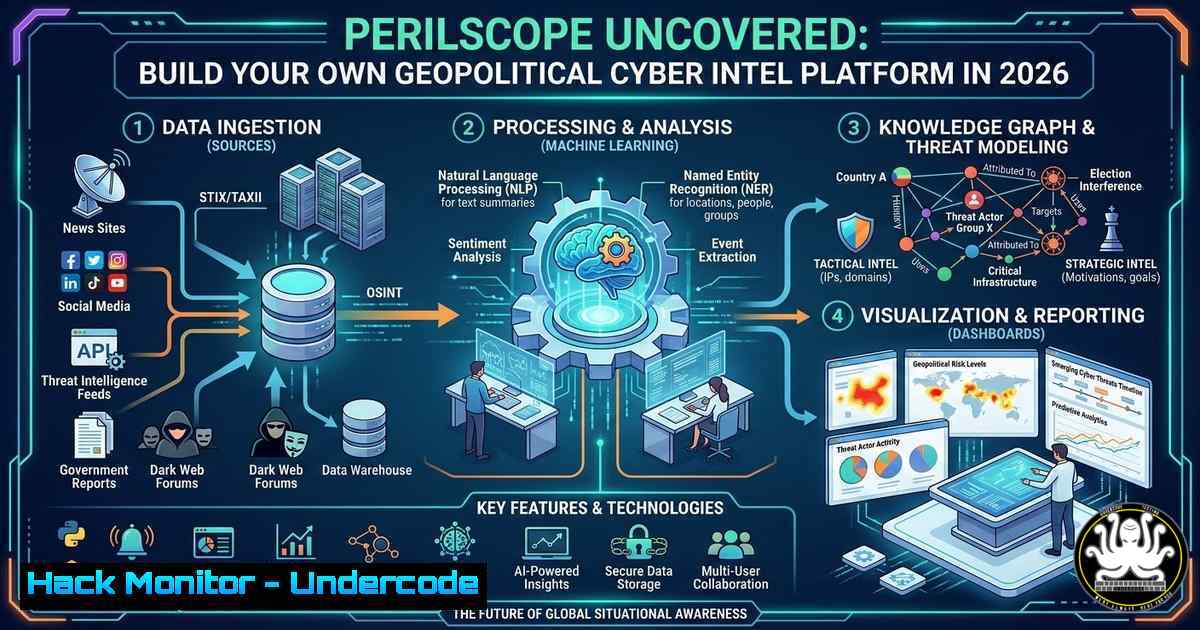
In an era where geopolitical instability directly translates to cyber volatility, the concept of “PerilScope”—pioneered by thought leaders like Ivan Savov at the European Risk Policy Institute—represents the convergence of risk intelligence and technical defense. For cybersecurity professionals holding the diverse skill sets exemplified by experts like Tony Moukbel (spanning forensics, AI, and programming), building a personal threat intelligence feed is no longer a luxury but a necessity. This article provides a technical blueprint to construct a local, automated system that ingests geopolitical alerts and correlates them with your organization’s attack surface, moving from passive awareness to active defense.
Learning Objectives:
- Understand how to automate the ingestion of RSS feeds and geopolitical alerts into a Security Information and Event Management (SIEM) pipeline.
- Learn to map global risk indicators (e.g., “Decapitation,” “Retaliation”) to specific MITRE ATT&CK techniques.
- Implement Python scripts to scrape and normalize threat data from open-source intelligence (OSINT) sources.
- Configure YARA rules and Snort signatures based on emerging geopolitical cyber tactics.
You Should Know:
1. Scraping Geopolitical Intelligence with Python (Linux)
To build the foundation of a “PerilScope” feed, you need to move beyond manual LinkedIn browsing. We will create a Python script to scrape headlines from specific security analysis sites and convert them into machine-readable alerts.
Step‑by‑step guide:
This script uses `requests` and `BeautifulSoup` to fetch data and then logs it to a local JSON file for your SIEM to ingest.
 On your Kali Linux or Ubuntu analysis machine
sudo apt update && sudo apt install python3-pip -y
pip3 install requests beautifulsoup4 lxml
Create the script: `nano perilscope_feeds.py`
import requests
from bs4 import BeautifulSoup
import json
from datetime import datetime

Example: Scraping a hypothetical security newsletter (replace with actual RSS URL)
def fetch_cyber_risk_feeds():
feed_data = []
sources = [
{"name": "CISA Alerts", "url": "https://www.cisa.gov/cybersecurity-advisories/feed"},
{"name": "SANS ISC", "url": "https://isc.sans.edu/rssfeed.xml"}
]

for source in sources:
try:
r = requests.get(source['url'], timeout=10)
soup = BeautifulSoup(r.content, 'xml')
 Assuming RSS structure
items = soup.find_all('item')[:5]
for item in items:
feed_data.append({
"title": item.title.text,
"link": item.link.text,
"summary": item.description.text[:200],
"source": source['name'],
"timestamp": datetime.utcnow().isoformat()
})
except Exception as e:
print(f"Failed for {source['name']}: {e}")

Output for SIEM
with open('/var/log/perilscope_feed.json', 'w') as f:
json.dump(feed_data, f, indent=4)
print(f"[+] Feed updated with {len(feed_data)} entries.")

if <strong>name</strong> == "<strong>main</strong>":
fetch_cyber_risk_feeds()
Add it to cron for automation: `crontab -e`
/30 /usr/bin/python3 /home/user/perilscope_feeds.py
This simulates the “Deep Dive” aspect by refreshing your threat intelligence every 30 minutes.
2. Correlating Geopolitical Events with Sigma Rules (Windows/Linux)
When a geopolitical event occurs (e.g., “Retaliation” after a diplomatic conflict), you must immediately hunt for specific behaviors. We will create a Sigma rule to detect mass data destruction, a common retaliation tactic.
Step‑by‑step guide:
Convert a Sigma rule to query your Windows Event Logs.
Sigma Rule Example (`geo_retaliation_shadowcopy.yml`):
title: Geopolitical Retaliation - Shadow Copy Deletion
id: 12345678-90ab-cdef-1234-567890abcdef
status: experimental
description: Detects vssadmin deletion of shadow copies, often used in destructive wiper attacks following geopolitical tension.
references:
- https://attack.mitre.org/techniques/T1490/
author: Undercode Analyst
date: 2026/03/07
logsource:
category: process_creation
product: windows
detection:
selection:
Image|endswith: '\vssadmin.exe'
CommandLine|contains: 'delete shadows'
condition: selection
falsepositives:
- Legitimate administrative tasks
level: high
tags:
- attack.impact
- attack.t1490
Conversion to Splunk/Elastic:
Using `sigmac` (Linux) to convert to a SIEM query:
 Install sigma
git clone https://github.com/SigmaHQ/sigma.git
cd sigma
pip install -r requirements.txt

Convert to Splunk query
tools/sigmac -t splunk -c tools/config/generic/sysmon.yml geo_retaliation_shadowcopy.yml
 Output: index=windows EventCode=1 Image=\vssadmin.exe CommandLine=delete shadows
By running this query immediately after a “Retaliation” headline, you proactively hunt for wipers.
3. Simulating “Decapitation” Attacks with Active Directory (Windows)
“Decapitation” in cyber terms often refers to taking down domain controllers or identity providers. We’ll simulate an attacker’s reconnaissance to identify these high-value targets.
Step‑by‑step guide:
Using built-in Windows tools and PowerShell to map the AD hierarchy.
Command to find Domain Controllers (Reconnaissance Simulation):
 On a domain-joined machine (Admin privileges required for simulation)
nltest /dclist:undercode.local

Using PowerShell to find high-value admin groups
Get-ADGroup -Identity "Domain Admins" -Properties Members
Get-ADUser -Filter  -Properties MemberOf | Where-Object {$_.MemberOf -like "Domain Admins"}
Mitigation: Deploying a Honeypot for Admin Accounts
Create a deceptive “Admin” account to detect decapitation attempts:
 Create a honeypot user with a high-entropy password and monitor logon events
New-ADUser -Name "svc_legacy_admin" -Description "Honeypot - Monitor Logins" -Enabled $true
Add-ADGroupMember -Identity "Domain Admins" -Members "svc_legacy_admin"
 Enable advanced auditing via GPO to monitor this specific account
auditpol /set /subcategory:"Logon" /success:enable /failure:enable
If this account is touched, you know an attacker is mapping the kill chain.
4. Hardening Cloud Workloads Against Geopolitical Spillover (AWS/Azure)
If a nation-state threatens “Collapse,” your cloud assets are prime targets. We’ll use the AWS CLI to implement a “deny-all” perimeter for critical storage.
Step‑by‑step guide:
Implement a strict S3 bucket policy that only allows access from a specific geographic location (Geofencing).
AWS CLI Command to Apply Geofence:
 Create a policy JSON (geo_restrict.json)
cat > geo_restrict.json << 'EOF'
{
"Version": "2012-10-17",
"Statement": [
{
"Effect": "Deny",
"Principal": "",
"Action": "s3:",
"Resource": [
"arn:aws:s3:::critical-data-bucket",
"arn:aws:s3:::critical-data-bucket/"
],
"Condition": {
"NotIpAddress": {
"aws:SourceIp": [
"192.0.2.0/24",
"198.51.100.0/24"
]
},
"Bool": {
"aws:ViaAWSService": "false"
}
}
}
]
}
EOF

Apply the policy
aws s3api put-bucket-policy --bucket critical-data-bucket --policy file://geo_restrict.json
This ensures that even if credentials are leaked during a political crisis, the data cannot be accessed from adversary-controlled regions.
- AI-Assisted Analysis of Threat Reports (Python & NLP)
To automate the “Deep Dive” analysis mentioned by Ivan Savov, we can use a local Large Language Model (LLM) like Ollama to summarize raw threat feeds.
Step‑by‑step guide:
Install Ollama and create a summarization pipeline.
Linux Setup:
 Install Ollama
curl -fsSL https://ollama.com/install.sh | sh
ollama pull mistral  A lightweight, effective model
Python Script (`ai_threat_summary.py`):
import json
import subprocess

Load the scraped feed from Step 1
with open('/var/log/perilscope_feed.json', 'r') as f:
feeds = json.load(f)

for item in feeds:
prompt = f"Summarize the following cybersecurity threat in one sentence, focusing on impact and urgency: {item['title']} - {item['summary']}"
result = subprocess.run(['ollama', 'run', 'mistral', prompt], capture_output=True, text=True)
print(f"AI Summary: {result.stdout.strip()}\n")
This turns raw data into actionable intelligence, mimicking a human analyst’s “PerilScope” briefing.
What Undercode Say:
- Automation is Non-Negotiable: Manually tracking geopolitical events is impossible. The integration of Python scraping, Sigma rules, and SIEM correlation is the only way to keep pace with the “Fear of Collapse” scenarios described by risk experts.
- Proactive Hardening Over Reactive Panic: The key takeaway from experts like Tony Moukbel is the breadth of knowledge required. You must pre-configure cloud geofences and Active Directory honeypots before the headline hits, not after.
This approach transforms a LinkedIn thought-leadership post into a tangible, multi-platform defense architecture. By blending OSINT, AI, and traditional system hardening, you operationalize risk intelligence, ensuring your organization isn’t just aware of global instability but is technically resilient against its inevitable cyber shockwaves.
Prediction:
In the next 12-18 months, we will see the rise of “Geopolitical SOCs”—dedicated teams that combine political science analysts with security engineers. The tools built today (Python scrapers, AI summarizers) will evolve into commercial platforms that automatically adjust firewall rules and IAM policies based on real-time diplomatic incident severity scores, making the “PerilScope” concept an industry standard.
▶️ Related Video (86% Match):
🎯Let’s Practice For Free:
IT/Security Reporter URL:
Reported By: Ivan Savov – Hackers Feeds
Extra Hub: Undercode MoN
Basic Verification: Pass ✅


