
Listen to this Post
Introduction:
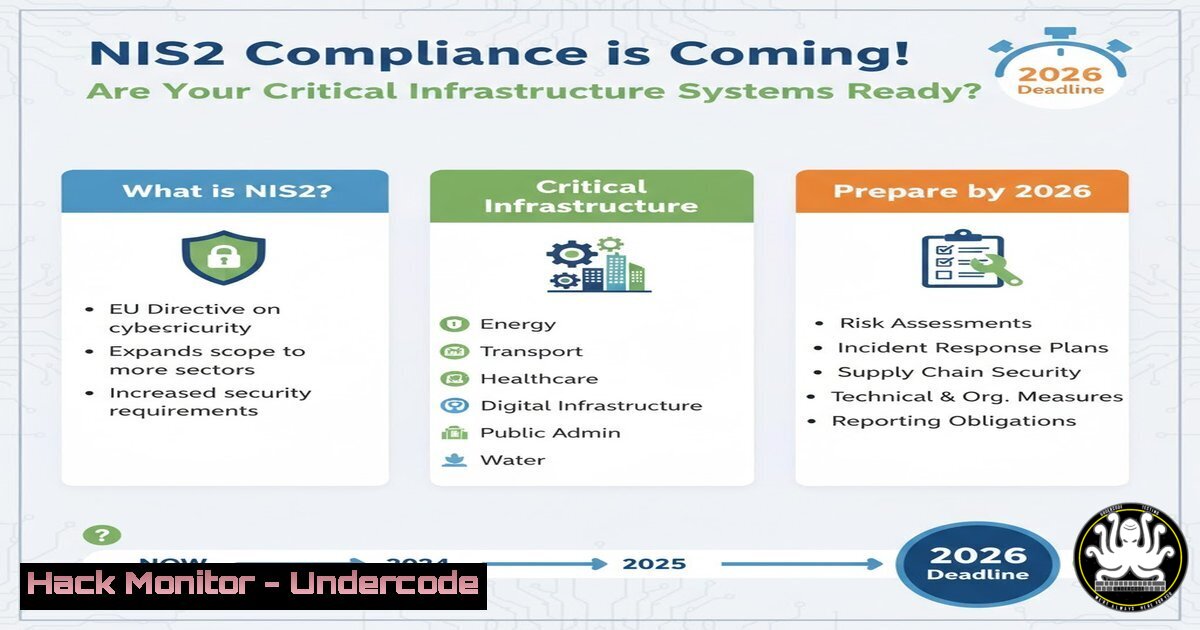
The digital battlefield has expanded beyond corporate firewalls into the very fabric of society. With the European Union’s NIS2 Directive (successor to the 2016 NIS Directive), the regulatory noose tightens around critical infrastructure—from energy grids to healthcare—mandating a baseline of cyber resilience. As Peter Rus highlights, many entities have spent a decade ignoring these obligations, but with the Cyber Resilience Act (CRA) looming and only 180 days to react post-incident, technical preparedness is no longer optional. This article provides a technical deep dive into operationalizing NIS2 requirements using concrete system hardening, monitoring, and reporting commands.
Learning Objectives:
- Understand the technical scope of NIS2 for Digital Service Providers and Critical Infrastructure operators.
- Learn how to audit and harden Linux/Windows systems to meet EU security standards.
- Implement incident detection and reporting mechanisms using open-source tools.
You Should Know:
- Auditing Your Network Against the 2016 Baseline (NIS Origins)
Before addressing NIS2, you must understand the legacy requirements outlined in the original 2016 Directive. Peter Rus notes that the directive applies to “private network- and information systems” managed internally or outsourced. The first step is asset discovery and configuration auditing.
Step‑by‑step guide: Linux/Windows discovery
To identify systems that fall under the scope (e.g., cloud providers, DNS servers, payment platforms), you must map your external and internal footprint.
Linux (Network Mapping):
 Discover live hosts in your critical infrastructure subnet
sudo nmap -sS -sV -O 192.168.1.0/24 --exclude 192.168.1.1

Check for exposed industrial protocols (OT specific)
sudo nmap -p 102 (Siemens S7), 502 (Modbus) --script modbus-discover <target_ip>
Windows (PowerShell for Asset Inventory):
 List all domain-joined servers (essential for "public administrations" and "healthcare")
Get-ADComputer -Filter {OperatingSystem -Like "Server"} -Properties OperatingSystem | Export-Csv server_inventory.csv

Check if security baselines are applied (NIS requirement)
Get-MpComputerStatus | Select AntivirusEnabled, RealTimeProtectionEnabled, AMEngineVersion
This process identifies “essential service providers” in your environment, ensuring no shadow IT exists in sectors like energy or transport.
- Implementing “Minimum Level of Security” for Digital Services
52 of the directive emphasizes that providers must secure their networks. This involves moving beyond default configurations. For cloud providers and social networks (mentioned in the 2016 strategy), this means hardening the hypervisor and container environments.
Step‑by‑step guide: Hardening Linux Kernel Parameters (Sysctl)
The following commands mitigate common network-based attacks, a requirement for any “digital service provider.”
 Backup current sysctl configuration
sudo cp /etc/sysctl.conf /etc/sysctl.conf.backup

Harden against IP spoofing and SYN floods
echo 'net.ipv4.conf.all.rp_filter = 1' | sudo tee -a /etc/sysctl.conf
echo 'net.ipv4.tcp_syncookies = 1' | sudo tee -a /etc/sysctl.conf
echo 'net.ipv4.icmp_echo_ignore_all = 1' | sudo tee -a /etc/sysctl.conf  Optional: Blocks ping

Apply changes
sudo sysctl -p
For Windows-based financial infrastructures (trading venues), Group Policy Objects (GPO) must enforce security:
 Enforce NTLMv2 (Block legacy protocols as per security baseline)
Set-ItemProperty -Path "HKLM:\SYSTEM\CurrentControlSet\Control\Lsa" -Name "LmCompatibilityLevel" -Value 5
- Mandatory Incident Reporting: Setting Up Logging and Alerts
The directive mandates reporting “significant cyber incidents.” You cannot report what you cannot see. This requires centralized logging.
Step‑by‑step guide: Centralized Logging with Rsyslog (Linux)
Configure your critical servers to forward logs to a secure, immutable Security Information and Event Management (SIEM) system.
 On the client server (e.g., a water distribution PLC interface)
sudo nano /etc/rsyslog.d/50-remote.conf

Add the following line to forward all auth and kernel logs to the SIEM
. @192.168.10.100:514  Use @@ for TCP (more reliable)

Restart service
sudo systemctl restart rsyslog
Windows Event Forwarding (WEF):
 Configure Windows to forward security events (e.g., Logon events 4624, 4625)
wecutil qc /q
 Use GPO to set the Subscription Manager address pointing to your collector server.
This ensures that if a “disruption or attack” affects telecommunications or energy systems, you have the forensic data required to report to the competent authority within the 24-hour notification window proposed by newer frameworks.
4. Vulnerability Management for Essential Services
Peter Rus mentions that entities have “10 years of risk” and are not ready. To close this gap, automated vulnerability scanning against the OT and IT estate is critical.
Step‑by‑step guide: Using OpenVAS for External Facing Assets
For search engines or e-commerce platforms like Amazon (as listed in the text), external vulnerability posture is key.
 Install OpenVAS (Greenbone) on a secure management VM
sudo apt update && sudo apt install gvm -y
sudo gvm-setup
sudo gvm-start

From the CLI, scan your DMZ network
gvm-cli --gmp-username admin --gmp-password <password> socket --socketpath /var/run/gvmd.sock --xml "<create_task>"
Focus on CVEs affecting “Digital Service Providers.” For OT specific vulnerabilities (like those affecting Siemens or Modbus gear), use specialized tools like `nmap` scripts mentioned earlier.
5. API Security for Online Platforms (PayPal, E-commerce)
The original NIS list includes “online payment platforms.” APIs are the backbone of these services. Ensure they are not leaking data or allowing unauthorized actions.
Step‑by‑step guide: Testing API Endpoints
Use `curl` to test for common NIS-related security flaws like improper error handling or data exposure.
 Test for verbose error messages (which aid attackers) - Not allowed under security minimums
curl -X POST https://api.yourservice.com/login -d "username=admin&password=wrong" -v

Check Rate Limiting (to prevent DoS) - Required for availability
for i in {1..100}; do curl -X GET https://api.yourservice.com/user/profile -H "Authorization: Bearer FAKE_TOKEN"; done
If the API returns stack traces (HTTP 500) or allows unlimited requests, it violates the “minimum level of security” principle.
6. Cloud Hardening for DNS and IXP Operators
For those operating “digital infrastructure” like DNS service providers, cloud misconfigurations are a primary risk. The directive requires security regardless of who manages it (outsourced).
Step‑by‑step guide: AWS CLI Security Audit
If your DNS or internet exchange point uses AWS Route53 or EC2, ensure buckets and roles are locked down.
 Install AWS CLI and configure
aws configure

Check for publicly accessible S3 buckets (common leak source)
aws s3api list-buckets --query "Buckets[].Name" --output text | xargs -I {} aws s3api get-bucket-acl --bucket {} --query "Grants[?Grantee.URI=='http://acs.amazonaws.com/groups/global/AllUsers']"

List IAM users with inactive MFA (violates security baseline)
aws iam list-users --query "Users[?PasswordLastUsed!=null].UserName" --output text | xargs -I {} aws iam list-mfa-devices --user-name {}
7. OT/ICS Specific Protections (Energy & Transport Sectors)
As per the post, sectors like “electricity, oil, gas, rail” are in scope. These use Programmable Logic Controllers (PLCs) which cannot run traditional antivirus. Network segmentation is the only defense.
Step‑by‑step guide: Implementing ACLs on Industrial Firewalls
Using a Linux-based firewall (iptables/nftables) to separate the Corporate IT network from the OT floor (as per the NIS requirement for “network and information systems”).
 Block all traffic from IT to OT except specific patch management jump box
sudo iptables -A FORWARD -i eth0 (IT Network) -o eth1 (OT Network) -s 192.168.IT.0/24 -d 192.168.OT.0/24 -j DROP

Allow only specific management station (192.168.IT.50) to access the HMI (192.168.OT.100)
sudo iptables -A FORWARD -i eth0 -o eth1 -s 192.168.IT.50 -d 192.168.OT.100 -p tcp --dport 80 -j ACCEPT
Save these rules using `iptables-save > /etc/iptables/rules.v4`.
What Undercode Say:
- Key Takeaway 1: Compliance is not just a policy; it is a technical configuration baseline. The shift from the 2016 NIS to the 2024/2026 NIS2 and CRA means that failing to audit your `sysctl.conf` or Windows GPO is equivalent to failing the law.
- Key Takeaway 2: Incident reporting requires pre-deployed infrastructure. As the post suggests, you have “180 days” under certain resilience acts, but without centralized logging (rsyslog/WEF), you cannot prove compliance or investigate the root cause of a disruption affecting essential services.
Analysis:
The technical community must recognize that regulatory frameworks like NIS2 are translating legal risk into technical debt. Peter Rus’s critique that “money is being thrown into a well that has been open for 10 years” highlights a massive gap between boardroom compliance checklists and actual system hardening. The commands listed above represent the minimum viable security posture expected by EU regulators. If your water utility or bank cannot produce logs from 2016 or block a basic spoofing attack via kernel parameters, you are not just non-compliant—you are critically exposed. The integration of AI into security monitoring (as hinted by the user’s background) will be necessary to handle the volume of incidents that these newly enforced directives will uncover.
Prediction:
We will see a surge in “Cyber Resilience as a Service” providers targeting mid-sized essential service operators who lack internal expertise. Furthermore, by 2027, expect a regulatory push to mandate real-time API reporting of incidents to national CSIRTs (Computer Security Incident Response Teams), moving from human-reported forms to automated, machine-to-machine telemetry. The “10 years of risk” will finally crystallize into either mass consolidation of insecure providers or a wave of fines that bankrupts non-adaptive critical infrastructure entities.
▶️ Related Video (80% Match):
🎯Let’s Practice For Free:
IT/Security Reporter URL:
Reported By: Peterrus Inthemeantime – Hackers Feeds
Extra Hub: Undercode MoN
Basic Verification: Pass ✅


