Listen to this Post
Introduction:
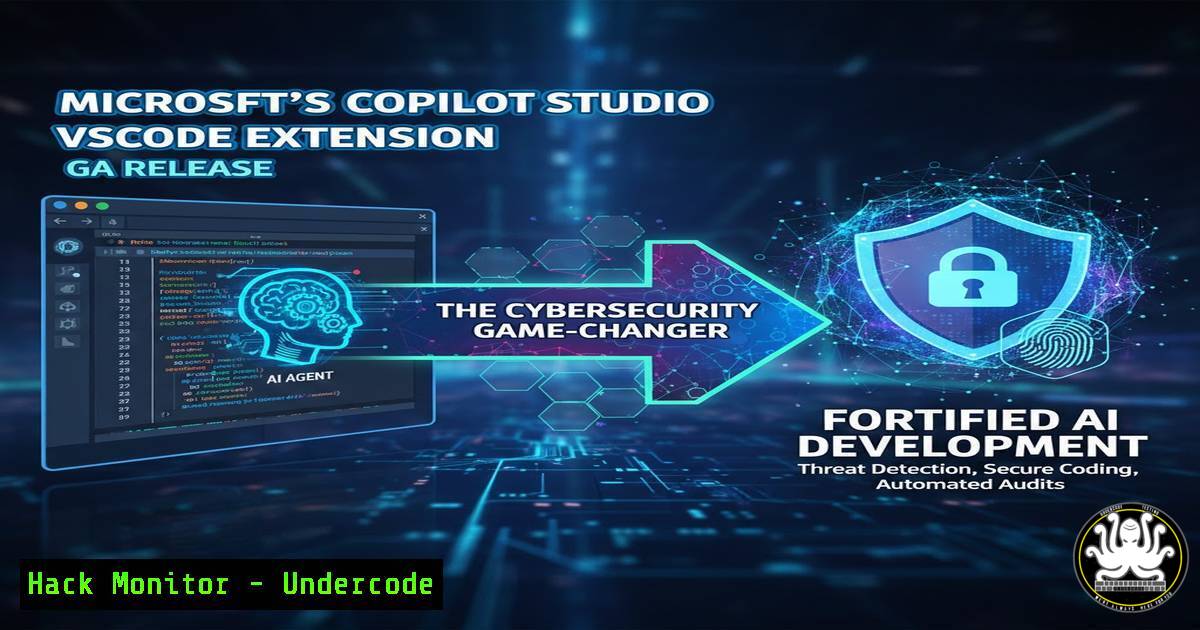
The general availability of the Copilot Studio Extension for Visual Studio Code marks a pivotal shift in how developers build, secure, and deploy AI agents within enterprise environments. By integrating AI agent development directly into professional workflows via YAML, IntelliSense, and source control, Microsoft is addressing critical cybersecurity gaps in low-code AI platforms. This move enables organizations to implement robust security practices, from code-level validation to cloud hardening, ensuring AI solutions are resilient against threats like data breaches and adversarial manipulations.
Learning Objectives:
- Understand how to install and configure the Copilot Studio Extension in VSCode with a focus on secure setup and authentication.
- Learn to manage AI agents as declarative YAML files, incorporating security best practices for triggers, actions, and API integrations.
- Explore the cybersecurity benefits of IntelliSense, GitHub Copilot, and Git integration for auditing, compliance, and vulnerability mitigation in AI development.
You Should Know:
- Installing and Configuring the Copilot Studio Extension Securely
Step-by-step guide explaining what this does and how to use it:
This extension bridges Copilot Studio with VSCode, allowing developers to edit agents as YAML with built-in security features. Start by ensuring VSCode is updated to the latest version to patch known vulnerabilities. Open VSCode, navigate to the Extensions view (Ctrl+Shift+X), and search for “Copilot Studio.” Install the official Microsoft extension. After installation, configure Azure authentication securely using Azure CLI to avoid hard-coded credentials. Run the following command in the terminal:az login --use-device-code
This initiates device code flow for multi-factor authentication, reducing phishing risks. Then, set your Azure subscription context:
az account set --subscription "Your-Subscription-ID"
Verify the setup by listing available Copilot Studio resources:
az copilot studio list --resource-group "Your-Resource-Group"
Always use least-privilege access principles when granting permissions to the extension.
-
Working with AI Agents as YAML for Enhanced Security and Auditability
Step-by-step guide explaining what this does and how to use it:
Treating agents as YAML files enables version control, peer reviews, and security scanning. In VSCode, create a new file namedagent-security.yaml. Define your agent with security-focused properties, such as limiting triggers to authenticated users and encrypting sensitive data. Below is an example snippet with comments:name: SecureCustomerSupportAgent description: An AI agent with security hardening triggers:</p></li> </ol> <p>- type: webhook endpoint: https://your-secure-api.com/webhook authentication: OAuth2 Use OAuth for secure API calls rateLimit: 100 requests/hour Prevent DDoS attacks actions: - type: call-api url: ${env:API_URL} Use environment variables for secrets method: POST headers: Authorization: Bearer ${env:API_KEY} body: query: "{{userInput}}" security: dataEncryption: enabled Ensure data at rest is encrypted auditLogging: enabled Log all interactions for forensicsUse the extension to validate YAML syntax and deploy securely to Copilot Studio. Regularly update YAML files to incorporate security patches.
- Leveraging IntelliSense for Secure Code Validation and Vulnerability Detection
Step-by-step guide explaining what this does and how to use it:
IntelliSense in VSCode provides real-time suggestions and error highlighting, helping identify security misconfigurations in agent YAML. For instance, if you define an API endpoint without HTTPS, IntelliSense can warn you via built-in linting rules. To enhance security, install additional extensions like “YAML Lint” or “Azure Policy” for compliance checks. Configure IntelliSense to flag common issues:
– In VSCode settings (Ctrl+,), add:
"yaml.validate": true,
"yaml.customTags": ["!encrypt secret"],
"security.workspace.trust.enabled": true
When editing YAML, IntelliSense will prompt for secure tags and validate input sanitization, reducing risks like injection attacks. Use it to review all agent definitions before deployment.
- Integrating GitHub Copilot for Security-Focused Code Assistance and Threat Modeling
Step-by-step guide explaining what this does and how to use it:
GitHub Copilot can generate secure code snippets for agent logic, but it must be guided to avoid vulnerabilities. Enable GitHub Copilot in VSCode via the Extensions view. When writing agent actions, use prompts that emphasize security, such as “Generate Python code to validate user input against SQL injection.” Copilot will then produce hardened code. For example:import re def sanitize_input(user_input): Remove potential malicious characters sanitized = re.sub(r'[;\-]', '', user_input) return sanitized
Additionally, use Copilot for threat modeling by asking, “List potential threats for this AI agent flow,” and incorporate mitigations into your YAML. Always review generated code for compliance with organizational security policies.
-
Source Control Integration with Git for Auditing, Compliance, and Incident Response
Step-by-step guide explaining what this does and how to use it:
Git integration allows tracking changes, rolling back vulnerabilities, and maintaining an audit trail. Initialize a Git repository in your agent project folder:git init git add agent-security.yaml git commit -m "Initial secure agent version"
Use branches for secure development:
git checkout -b feature/security-patch
 Make changes, then commit and push
git push origin feature/security-patch
Integrate with Azure DevOps or GitHub Actions for continuous integration/continuous deployment (CI/CD) pipelines that include security scanning. For example, add a `.github/workflows/security.yml` file to run static analysis tools like `bandit` or `checkov` on each commit. This ensures vulnerabilities are caught early.
- Configuring API Security for Copilot Studio Agents with Authentication and Secret Management
Step-by-step guide explaining what this does and how to use it:
AI agents often call external APIs, which must be secured to prevent data leaks. Use Azure Key Vault to manage secrets instead of hard-coding them. In your YAML, reference secrets via environment variables. Set up Key Vault with Azure CLI:az keyvault create --name "MySecureVault" --resource-group "Your-RG" --location "EastUS" az keyvault secret set --vault-name "MySecureVault" --name "APIKey" --value "your-secret"
Then, in your agent YAML, use:
env:
API_KEY: "@Microsoft.KeyVault(SecretUri=https://MySecureVault.vault.azure.net/secrets/APIKey/)"
For API endpoints, enforce HTTPS, use OAuth 2.0, and implement rate limiting. Test security with tools like
curl:curl -H "Authorization: Bearer ${API_KEY}" https://your-api.com/endpointMonitor logs for unauthorized access attempts.
- Hardening Cloud Deployments on Azure with Network Security and Encryption
Step-by-step guide explaining what this does and how to use it:
Deploying Copilot Studio agents to Azure requires hardening against cloud threats. Use Azure CLI to create a secure environment. First, enable network security groups (NSGs) to restrict traffic:az network nsg create --resource-group "Your-RG" --name "AgentNSG" az network nsg rule create --resource-group "Your-RG" --nsg-name "AgentNSG" --name "AllowHTTPS" --priority 100 --direction Inbound --access Allow --protocol Tcp --destination-port-ranges 443
Deploy agents with managed identities to avoid credential storage:
az copilot studio agent update --name "MyAgent" --resource-group "Your-RG" --assign-identity
Enable encryption for data at rest and in transit using Azure Storage Service Encryption and TLS 1.3. Regularly audit deployments with Azure Security Center:
az security assessment list --resource-group "Your-RG"
This ensures compliance with standards like ISO 27001 and mitigates risks from misconfigurations.
What Undercode Say:
- Key Takeaway 1: The Copilot Studio Extension for VSCode transforms AI agent development from a black-box, low-code process into a transparent, code-centric workflow, enabling essential cybersecurity practices like version control, peer review, and automated security testing.
- Key Takeaway 2: By integrating with professional tools like IntelliSense and GitHub Copilot, developers can proactively identify and mitigate vulnerabilities in AI agents, reducing risks associated with data breaches, injection attacks, and adversarial AI manipulations.
- Analysis: This release addresses a critical gap in the AI security landscape: the lack of auditability and secure development lifecycles for conversational AI. As organizations rush to deploy AI agents, many overlook security, leading to exposed APIs, data leaks, and compliance violations. Microsoft’s move empowers IT and security teams to treat AI agents as infrastructure-as-code, applying DevOps security principles. However, success depends on training developers in secure YAML practices and cloud hardening. The extension also paves the way for deeper integrations with security tools, such as SAST and DAST scanners for AI logic. Ultimately, this will raise the bar for secure AI adoption, but it requires organizational buy-in and continuous monitoring to stay ahead of evolving threats.
Prediction:
The general availability of the Copilot Studio Extension will catalyze a shift towards secure-by-design AI development across industries. In the near future, we can expect increased adoption of AI-specific security frameworks, automated vulnerability scanning for agent YAML, and tighter regulatory scrutiny on AI deployments. This will lead to a new norm where AI agents are subjected to rigorous security assessments, similar to traditional software, mitigating risks like prompt injection, data poisoning, and model theft. As cyber threats evolve, extensions like this will become integral to cyber-defense strategies, enabling faster incident response and resilience in AI-driven operations.
▶️ Related Video (82% Match):
🎯Let’s Practice For Free:
IT/Security Reporter URL:
Reported By: Renatoromao Vscode – Hackers Feeds
Extra Hub: Undercode MoN
Basic Verification: Pass ✅🔐JOIN OUR CYBER WORLD [ CVE News • HackMonitor • UndercodeNews ]
📢 Follow UndercodeTesting & Stay Tuned:
- Leveraging IntelliSense for Secure Code Validation and Vulnerability Detection


