
Listen to this Post
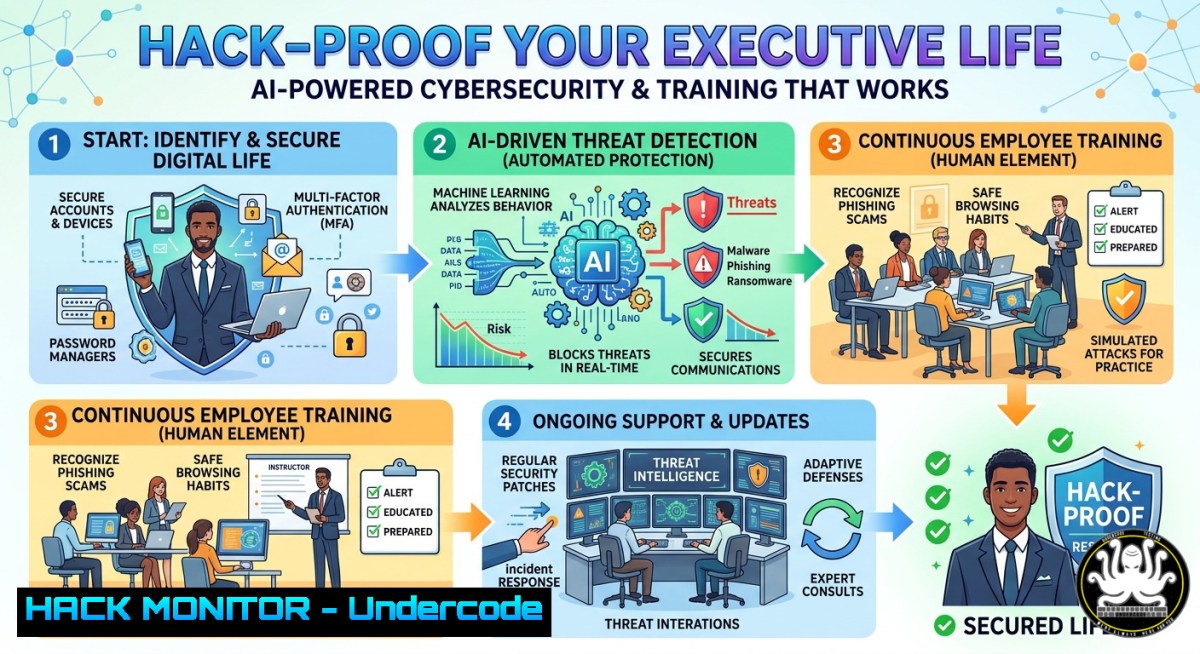
Introduction:
Executive protection isn’t just about physical security anymore—digital footprints, AI‑driven social engineering, and unpatched cloud assets are the new assassination vectors. This article extracts actionable technical insights from recent industry training on securing high‑profile individuals and enterprises, blending Linux/Windows hardening commands, API security checks, and AI‑augmented defensive tactics.
Learning Objectives:
- Implement OS‑level telemetry and firewall rules to block executive‑targeted reconnaissance.
- Harden cloud APIs against AI‑generated credential stuffing and prompt injection.
- Build a live training lab for simulating spear‑phishing and zero‑day exploitation.
You Should Know:
1. Linux & Windows Hardening for Executive Workstations
Start by auditing the digital perimeter of any executive’s daily devices. Attackers often exploit misconfigured RDP, cron jobs, or scheduled tasks.
Step‑by‑step – Linux:
- Disable unnecessary services: `sudo systemctl list-units –type=service –state=running | grep -E “ssh|ftp|rpc”` then
sudo systemctl disable --now <service>. - Set aggressive firewall rules:
sudo ufw default deny incoming
sudo ufw allow from 192.168.1.0/24 to any port 22 proto tcp  only internal SSH
sudo ufw enable
- Monitor `auth.log` for brute force:
sudo journalctl -u ssh -f | grep "Failed password".
Step‑by‑step – Windows (PowerShell as Admin):
- Block SMB inbound except from trusted IPs:
New-NetFirewallRule -DisplayName "Block SMB" -Direction Inbound -Protocol TCP -LocalPort 445 -Action Block
- Disable LLMNR to prevent responder attacks:
Set-ItemProperty -Path "HKLM:\Software\Policies\Microsoft\Windows NT\DNSClient" -Name "EnableMulticast" -Value 0
- Use Sysmon (System Monitor) for advanced logging: download from Microsoft, install with
Sysmon64 -accepteula -i config.xml.
Tutorial: Combine these with a daily cron job or scheduled task that emails an alert if `auditd` detects changes to `/etc/sudoers` or C:\Windows\System32\drivers\etc\hosts.
2. AI‑Powered Threat Intelligence for Executive Protection
Attackers now use generative AI to craft convincing deepfake vishing calls or spear‑phishing emails referencing real travel itineraries. Defenders must counter with AI‑based anomaly detection.
Step‑by‑step – Deploying an Open‑Source AI NIDS (Zeek + TensorFlow):
– Install Zeek on Ubuntu:
sudo apt install zeek
export PATH=$PATH:/opt/zeek/bin
– Capture live traffic: `sudo zeek -i eth0` (logs appear in /opt/zeek/logs/).
– Use a pre‑trained ML model to detect beaconing:
git clone https://github.com/activecm/rita.git
cd rita && make && sudo ./install.sh
rita import /opt/zeek/logs/current/ conn_log
rita show-beacons > executive_beacons.txt
Windows alternative (PowerShell + ML.NET):
- Install ML.NET CLI:
dotnet tool install -g mlnet. - Train a binary classifier on your executive’s historical email headers to detect AI‑generated anomalies.
- Automate with Task Scheduler:
schtasks /create /tn "AI_EmailScan" /tr "powershell -File C:\scripts\scan_phish.ps1" /sc hourly.
Mitigation: Block suspicious IPs via Windows Firewall or iptables immediately when the AI model flags >80% anomaly confidence.
3. API Security for Cloud‑Connected Exec Apps
Executives often use dashboards that aggregate CRM, HR, and travel APIs. Unvalidated OAuth flows and improper rate limiting are common.
Step‑by‑step – Audit and Harden an API Gateway (Kong or AWS API Gateway):
– Rate limiting (Linux, using `curl` to test):
for i in {1..100}; do curl -X GET "https://your-api.com/exec/calendar" -H "Authorization: Bearer $TOKEN"; done
If no `429 Too Many Requests` after 20 attempts, implement:
 Kong plugin
plugins:
- name: rate-limiting
config: { minute: 10, hour: 200 }
– Input validation – block prompt injection in AI‑powered search endpoints:
– Create a WAF rule (ModSecurity on Nginx):
SecRule ARGS "ignore previous instructions" "id:1001,deny,status:403,msg:'Prompt injection detected'"
– OAuth introspection: require token binding with a PoP (Proof‑of‑Possession) key. Example using `curl` with `–cert` and `–key` to enforce mTLS.
Tutorial: For AWS, enable API Gateway’s “Resource Policy” to allow only the executive’s office IP range and enforce AWS WAF with the “Core rule set” and “Known bad inputs” rules.
4. Training Course: “Simulated AI Social Engineering Lab”
Build a controlled environment where security teams practice detecting AI‑generated voice clones and spear‑phishing.
Step‑by‑step – Lab Setup (using Docker + Open‑source AI models):
– Pull a voice cloning container:
docker run -d -p 5000:5000 --gpus all researchexperiment/voice-cloning:latest
– Generate a fake call: `python clone.py –text “I need your 2FA code” –voice_sample ceo_voice.wav`
– Send via Twilio (free trial) to a test number:
curl -X POST https://api.twilio.com/2010-04-01/Accounts/ACxxx/Calls.json \
--data-urlencode "Url=http://your-server/twiml" \
-u 'ACxxx:authtoken'
– Train defenders using a scoring dashboard that logs who clicked “allow” or shared credentials.
Linux/Windows commands for defense training:
– `tcpdump -i eth0 -w phishing.pcap` (capture for forensics).
– Windows: Get-SmbOpenFile | Where-Object {$_.ClientComputerName -notin "trusted_IPs"}.
5. Cloud Hardening for Executive SaaS Portals
Office 365, Google Workspace, and Zoom are top targets. Implement Conditional Access and Just‑In‑Time (JIT) privilege escalation.
Step‑by‑step – Azure AD (Entra ID) Hardening:
- Require phishing‑resistant MFA (FIDO2 keys) for all executive accounts:
Connect-MgGraph -Scopes Policy.ReadWrite.AuthenticationMethod
New-MgPolicyAuthenticationMethodPolicyAuthenticationMethodConfiguration -Id "Fido2" -State "enabled"
- Set up a JIT workflow for admin roles:
$role = Get-AzureADMSPrivilegedRoleDefinition -ProviderId "AzureResources" -ResourceId "/subscriptions/xxx"
Open-AzureADMSPrivilegedRoleAssignmentRequest -RoleDefinitionId $role.Id -SubjectId "[email protected]" -Type "AdminAdd" -AssignmentState "Active" -Schedule $schedule
- Monitor risky sign‑ins:
Get-AzureADAuditSignInLogs -Filter "riskLevelDuringSignIn eq 'high'".
Linux alternative for Google Cloud: Use `gcloud` CLI and `gcloud alpha access-context-manager` to create VPC Service Controls that isolate executive‑owned GCP projects.
- Vulnerability Exploitation & Mitigation – CVE‑2024‑6387 (OpenSSH Signal Race)
This recent Linux vulnerability allows remote code execution on default OpenSSH configurations. Executive servers running older versions are prime targets.
Step‑by‑step – Exploitation simulation (authorized lab only):
- Check version: `ssh -V` (if <= 9.7p1, vulnerable).
- Use public PoC:
git clone https://github.com/exploit-writer/CVE-2024-6387
cd CVE-2024-6387 && gcc exploit.c -o exploit
./exploit target-executive-ip 22
Mitigation:
- Patch immediately: `sudo apt update && sudo apt upgrade openssh-server` (Ubuntu) or `yum update openssh` (RHEL).
- As a workaround, set `LoginGraceTime 0` in `/etc/ssh/sshd_config` (reduces race window but may cause DoS).
- Enable `systemd` sandboxing:
sudo systemctl edit ssh.service
Add:
[bash]
PrivateDevices=yes
ProtectHome=yes
Windows note: No native OpenSSH race condition, but use `Set-Service -Name sshd -StartupType ‘Automatic’` and regularly run winget upgrade Microsoft.OpenSSH.Beta.
What Undercode Say:
- Key Takeaway 1: Executive protection is now 70% digital. AI‑generated deepfakes bypass human intuition, so automated anomaly detection and strict API rate limiting are non‑negotiable.
- Key Takeaway 2: Training must be live and adversarial. Running a voice‑cloning lab or simulated SSH exploit drastically improves response times over annual slide‑based courses.
Analysis: The fusion of AI with traditional hardening commands (e.g., combining `auditd` with TensorFlow) creates a proactive defense. However, most enterprises still treat executive devices as “ordinary” workstations, ignoring the targeted nature of attacks. The post by Fermin Sanchez Bernal correctly emphasizes that cybersecurity for executive protection requires dedicated tooling—like FIDO2 tokens, JIT access, and AI‑powered email filters—rather than generic IT policies. Without these, even the best physical security is moot.
Prediction: Within 18 months, regulatory bodies (SEC, GDPR) will mandate AI‑aware executive protection standards. We’ll see “cyber‑physical response teams” that include both armed guards and SOC analysts. Attackers will shift to poisoning training data of AI defense models, forcing a new arms race around federated learning and zero‑trust architecture.
🎯Let’s Practice For Free:
IT/Security Reporter URL:
Reported By: Fermin Sanchez – Hackers Feeds
Extra Hub: Undercode MoN
Basic Verification: Pass ✅


